

United States

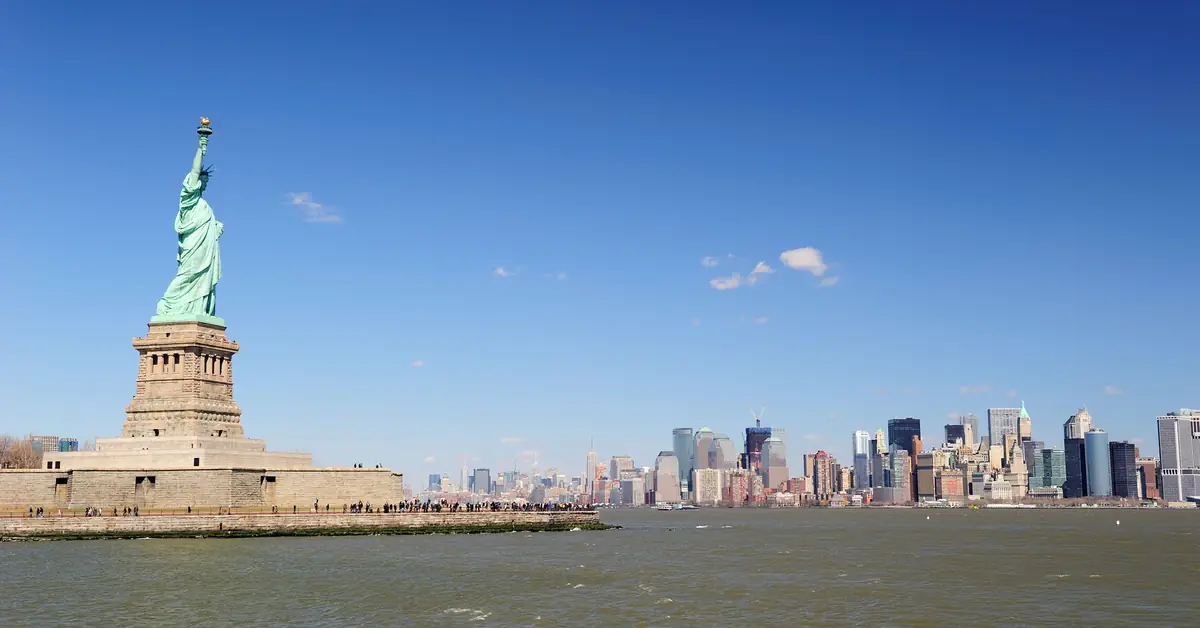
The United States of America, commonly referred to as the United States or the USA, is a federal republic consisting of 50 states, the District of Columbia, and 5 overseas territories. The country covers a floor area of 9.83 million km² (the 3rd largest in the world after Russia and Canada), stretching from the Atlantic Ocean to the Pacific Ocean, bordered by Canada to the north and Mexico to the south.
According to World Bank data for 2024, the population of the United States reached 340,110,988, ranking 3rd in the world behind China and India. Nominal Gross Domestic Product (GDP) in 2024 reached US$29.18 trillion, the largest in the world and accounting for roughly 27.5% of the global economy. GDP per capita reached US$66,682, placing it among the highest of major economies.
As one of the five permanent members of the United Nations Security Council, alongside being a founding member of the North Atlantic Treaty Organization (NATO), the United States maintains its role as the sole global superpower following the Cold War. The United States dollar (USD) serves as the primary international reserve currency, dominating global trade and finance. The nation’s military, technological, cultural, and educational power continues to lead the world.
For Vietnam, the United States is the second-largest trading partner after China, with bilateral trade in goods and services reaching US$155.1 billion in 2024. The two countries upgraded their relationship to a Comprehensive Strategic Partnership in September 2023. The Vietnamese community in the United States numbers roughly 2.3 million people, representing the largest overseas Vietnamese community and the fourth-largest Asian ethnic group in the country.
Message
History
The nation’s history spans from the 17th-century British colonial period to 21st-century global superpower status. Detailed article at History of the United States.
Founding and territorial expansion
The British established the Jamestown colony in Virginia in 1607, marking the beginning of the 13 colonies along the North American East Coast. After Britain imposed heavy taxes and trade restrictions, the colonies rebelled. The Declaration of Independence was adopted by the Continental Congress on 4 July 1776, laying the foundation for the new republic.
The American Revolutionary War (1775–1783) concluded with victory for the colonial forces under the command of George Washington. The Constitution of 1787 established the federal system along with the principle of the separation of powers, and the Bill of Rights added the first 10 amendments in 1791. Throughout the 19th century, the country expanded westward through the Louisiana Purchase from France in 1803, the annexation of Texas, and the war with Mexico.
Tensions between industrial Northern states and agricultural Southern states reliant on slavery led to the Civil War (1861–1865). President Abraham Lincoln led the Union to victory, abolishing slavery through the 13th Amendment. The post-war Reconstruction period and the wave of European immigration drove rapid industrialisation in the late 19th century.

Rise to superpower status
At the beginning of the 20th century, the nation became a leading economic power following the Second Industrial Revolution. Participation in World War I (1917-1918) affirmed its global role, but the Great Depression of 1929-1939 caused a profound crisis. President Franklin D. Roosevelt implemented the New Deal policy to restore the economy.
The attack on Pearl Harbour in December 1941 brought the nation into World War II. Its role in defeating the Axis powers, along with the development of nuclear weapons, turned the country into one of the two world superpowers. Throughout the Cold War (1947-1991), the United States confronted the Soviet Union through proxy wars in Korea and Vietnam, and the arms and space race.
The Civil Rights Movement of the 1950s-1960s under the leadership of Martin Luther King Jr. abolished racial segregation legally. The Voting Rights Act of 1965 guaranteed rights for African Americans. The Watergate scandal forced President Richard Nixon to resign in 1974, strengthening the principle of checks and balances on executive power.
Modern era from 1991 to the present
The collapse of the Soviet Union in 1991 left the United States as the sole superpower. The terrorist attacks of 11 September 2001 opened the “War on Terror” with military campaigns in Afghanistan (2001-2021) and Iraq (2003-2011). The 2008 global financial crisis originated in this nation’s housing market.
Barack Obama became the first African American president in 2009. Donald Trump was elected in 2016 and re-elected in 2024, pursuing an “America First” policy with trade restructuring, border control, and the renegotiation of international agreements. Joe Biden held the position of President from 2021 to 2025, focusing on restoring traditional alliances and promoting the CHIPS Act to support the semiconductor industry.
Considering a residency programme? The Prosperous Living Investment team assesses your profile free of charge and advises on the pathway that fits your goals.
Geography
The diverse area and geographical location create one of the world’s richest ecosystems. Detailed article at Geography of the United States.
Location and area
This nation has a total area of 9.83 million km², including 48 contiguous states, the state of Alaska in the northwest of the North American continent, and the state of Hawaii in the middle of the Pacific Ocean. The mainland borders Canada to the north (a border 8,891 km long, the longest in the world between two countries), Mexico to the south (3,145 km), the Atlantic Ocean to the east, and the Pacific Ocean to the west.
Besides the 50 main states, the territory includes the District of Columbia (the capital, Washington D.C.) and five inhabited overseas territories: Puerto Rico, Guam, the United States Virgin Islands, American Samoa, and the Northern Mariana Islands. The coastline stretches 19,924 km, the longest in the world.
Four main geographical regions
The Census Bureau divides the nation into four geographical regions: Northeast, Midwest, South, and West. The Northeast is the financial and educational centre with New York, Boston, and Philadelphia. The Midwest is a traditional agricultural and industrial region with Chicago and Detroit. The South region has developed strongly in oil, gas, and technology with Houston, Atlanta, and Miami. The West region includes the tech-focused West Coast with California and Washington, and the Rocky Mountain region.
Terrain and climate
The terrain varies from the Appalachian Mountains in the east, the vast Mississippi plains in the middle, to the majestic Rocky Mountains in the west and Death Valley desert. The Mississippi-Missouri river system is the fourth largest river system in the world by length (6,275 km), playing a vital role in agricultural transport. The Great Lakes system contains 21% of the world’s surface freshwater.
The climate spans many zones: from Arctic in Alaska, continental temperate in the Midwest, humid subtropical in the Southeast, to tropical in Hawaii and Florida, and Mediterranean in California. This diversity creates conditions for the world’s largest agricultural sector by export value, while also facing natural disasters such as Atlantic hurricanes, Midwest tornadoes, and West Coast earthquakes.
Politics
The political system is based on the 1787 Constitution, the oldest written constitutional document still in effect in the world. Detailed article at United States politics.
Constitution and separation of powers
The Constitution, enacted on 17 September 1787, established a federal republic with three independent branches of power: legislative (Congress), executive (President), and judicial (Supreme Court). The principle of “checks and balances” ensures that no branch can monopolise power. To date, the Constitution has been amended 27 times, of which the first 10 amendments form the Bill of Rights.
Federal government
The President is the head of state and government, elected indirectly through the Electoral College system with 538 votes. The term is 4 years, with a maximum of two terms according to the 22nd Amendment. The incumbent President is Donald Trump (second term), who took office on 20 January 2025. Powers include serving as commander-in-chief of the military, appointing Cabinet members and federal judges, and signing or vetoing laws.
Congress is a bicameral legislature consisting of the Senate with 100 senators (two per state, 6-year term) and the House of Representatives with 435 representatives allocated by state population (2-year term). The Supreme Court consists of nine justices appointed for life by the President, with the authority to interpret the Constitution and rule on the constitutionality of laws.
The two-party system
Political life revolves around two major parties: the Democratic Party (founded 1828) representing liberal tendencies, a strong federal government, and expanded social security; and the Republican Party (founded 1854) supporting the free market, a reduced role for the federal government, and conservative social values. Minor parties such as the Libertarian Party and the Green Party exist but have no significant influence at the federal level.

Economy
The United States has maintained its position as the world’s largest economy by nominal size since 1894. Detailed article at United States economy.
Scale and growth
According to World Bank, nominal GDP in 2024 reached US$29.18 trillion, accounting for 27.49% of the global economy. The GDP growth rate in 2024 reached 2.8%, exceeding the average of developed economies. Nominal GDP per capita reached US$66,682 in 2024, and US$75,491 by purchasing power parity (PPP). Compared to the global average, the nation’s GDP per capita is 5.28 times higher.
Economic sector structure
The service sector accounts for approximately 77.6% of GDP, with key sub-sectors including finance-insurance, real estate, healthcare services, information technology, and retail. The industrial sector accounts for approximately 17.9%, including the production of automobiles, aircraft, chemicals, oil and gas, and semiconductors. Agriculture accounts for only 1% of GDP but holds the position of the world’s leading agricultural exporter by value, especially in soybeans, corn, and beef.
Global position
The US dollar accounts for approximately 58% of global foreign exchange reserves according to IMF COFER data, and is the primary currency in oil payments (petrodollar) and international trade. Wall Street is the world’s largest financial centre with two leading stock exchanges, the NYSE and NASDAQ. American technology companies such as Apple, Microsoft, Alphabet, Amazon, Meta, and Nvidia dominate global market capitalisation.
This nation has been the world’s largest crude oil producer since 2018 with an output of over 13 million barrels/day, and is also a leading exporter of liquefied natural gas (LNG). The technology industry is concentrated in Silicon Valley (San Francisco Bay Area), leading in the fields of artificial intelligence, cloud computing, semiconductors, and biotechnology, creating the majority of global technological breakthroughs over the past two decades.
Demographics
This nation is one of the most diverse societies in the world with immigrants from every continent. Detailed article at United States Demographics.
Total population and distribution
In 2024, the population reached 340,110,988 people according to the World Bank, ranking third globally after China and India. The population growth rate reached 1.0% per year, maintained mainly through immigration (1.23 million net immigrants in 2025). The average population density is 36 people/km², among the lowest in developed countries.
The population is concentrated in large urban areas: the New York metropolitan area (19.5 million), Los Angeles (12.8 million), Chicago (9.4 million), Dallas-Fort Worth (8.1 million), and Houston (7.5 million). 83% of the population lives in urban areas. The most populous state is California (39 million), followed by Texas (30 million), Florida (22 million), and New York (19 million).
Racial and Ethnic Composition
The Census Bureau classifies the population by race and ethnic origin separately. Approximately 58.9% of the population is non-Hispanic White, 19.1% is Hispanic or Latino, 13.6% is African American, 6.3% is Asian American, and the remainder consists of Native Americans, Native Hawaiians and Pacific Islanders, and mixed-race groups.
The Hispanic community is the largest and fastest-growing ethnic minority group, projected to account for 28% of the population by 2060. Asian Americans are the fastest-growing group by percentage, with major groups including Chinese, Indian, Filipino, Vietnamese, and South Korean. Vietnamese Americans are the fourth-largest Asian ethnic group within the Asian American community.
Demographic trends
The median age of the population reached 38.9 in 2024, reflecting the general ageing trend of developed societies. The fertility rate fell to 1.62 children per woman in 2023, below the population replacement threshold of 2.1. Life expectancy reached 79 years. Immigration continues to be a key driver of population growth, particularly among the young workforce.
Culture
Culture is a unique blend of immigrant traditions from around the world with distinct values shaped over more than two centuries. Detailed article at United States Culture.
The “melting pot” culture
The concept of a “melting pot” describes how cultures from many immigrant origins blend into a common national identity. English is the de facto language of the federation, but there is no official language at the federal level. Spanish is the second most common language, with 43 million speakers. Freedom of religion is guaranteed by the First Amendment, with Christianity accounting for approximately 63% of the population, 28% unaffiliated, and other religions (Judaism, Islam, Buddhism, Hinduism) making up the remainder.
Entertainment and global influence
Hollywood is the world’s film capital, with major studios such as Disney, Warner Bros, Universal, and Paramount producing the majority of international blockbusters. Streaming platforms Netflix, Disney+, Amazon Prime Video, Hulu, and Apple TV+ dominate the global entertainment market. American music, from jazz, blues, and rock and roll to hip-hop, country, and pop, shapes global popular culture.
Professional sports play an important role in social life. The Big Four leagues—the NFL (American football), NBA (basketball), MLB (baseball), and NHL (ice hockey)—have annual revenues exceeding US$50 billion. The NFL’s Super Bowl is the most-watched television programme of the year in the country.
Core values
The “American Dream” is a central concept in the culture, promoting the belief that every individual, regardless of background, has the opportunity to succeed through their own efforts. Individualism, an entrepreneurial spirit, freedom of speech, freedom of religion, and private property rights are core values. A free-market capitalist economy with a federal government role that is limited compared to European countries is a defining characteristic.
Education
The education system is decentralised between federal, state, and local governments. Detailed article at US Education.
K-12 and university systems
K-12 general education (Kindergarten to grade 12) is compulsory and free at public schools, funded primarily by local property taxes. The system includes public schools, private schools, charter schools, and homeschooling. Each state develops its own curriculum, leading to significant disparities in K-12 education quality between states.
Higher education includes nearly 4,000 institutions, ranging from 2-year community colleges to 4-year research universities and specialised graduate schools. Tuition fees vary significantly: public universities for in-state residents are approximately US$11,000 per year, while top private universities can reach US$60,000-80,000 per year, excluding living expenses.
Ivy League and global rankings
The Ivy League is a group of eight prestigious private universities in the Northeast, including Harvard, Yale, Princeton, Columbia, Cornell, Brown, Dartmouth, and the University of Pennsylvania. Together with top technology research schools such as the Massachusetts Institute of Technology (MIT), Stanford, and the California Institute of Technology (Caltech), universities in this country frequently dominate the QS World University Rankings and Times Higher Education. More than 50% of the world’s top 50 universities are based here.
Healthcare
The healthcare system is one of the most advanced in the world in terms of technology and research, but it is also the most expensive and complex. Detailed article at US Healthcare.
Private system and insurance
There is no universal healthcare system at the federal level. The majority of the population relies on private health insurance provided by employers or purchased individually. The three main public programmes are: Medicare for those over 65 and the disabled, Medicaid for low-income individuals, and the Affordable Care Act (ACA, also known as Obamacare), which provides subsidies for the middle class.
As of 2023, approximately 92% of the population has health insurance, leaving about 26 million people uninsured. The average annual medical cost for a household with employer-provided insurance exceeds US$23,000, with employees contributing approximately US$6,500 and the company covering the remainder.
Quality and cost
This country has the highest healthcare spending in the world at approximately 17.8% of GDP (compared to the OECD average of 9.9%), equivalent to US$4.9 trillion in 2023. World-leading hospitals such as the Mayo Clinic, Cleveland Clinic, Johns Hopkins Hospital, and Massachusetts General Hospital attract international patients. The biomedical research system leads globally with institutes such as the National Institutes of Health (NIH) and the Centers for Disease Control and Prevention (CDC).
Legal system
The law is based on the English Common Law tradition, combined with the federal Constitution as the supreme law. Detailed article at The United States legal system.
Common Law and two court levels
The legal system is parallel between federal and state levels. Each state has its own court system, constitution, and code of laws. Federal courts hear cases involving federal law, disputes between states, or between citizens of different states. State courts hear the majority of routine civil and criminal cases.
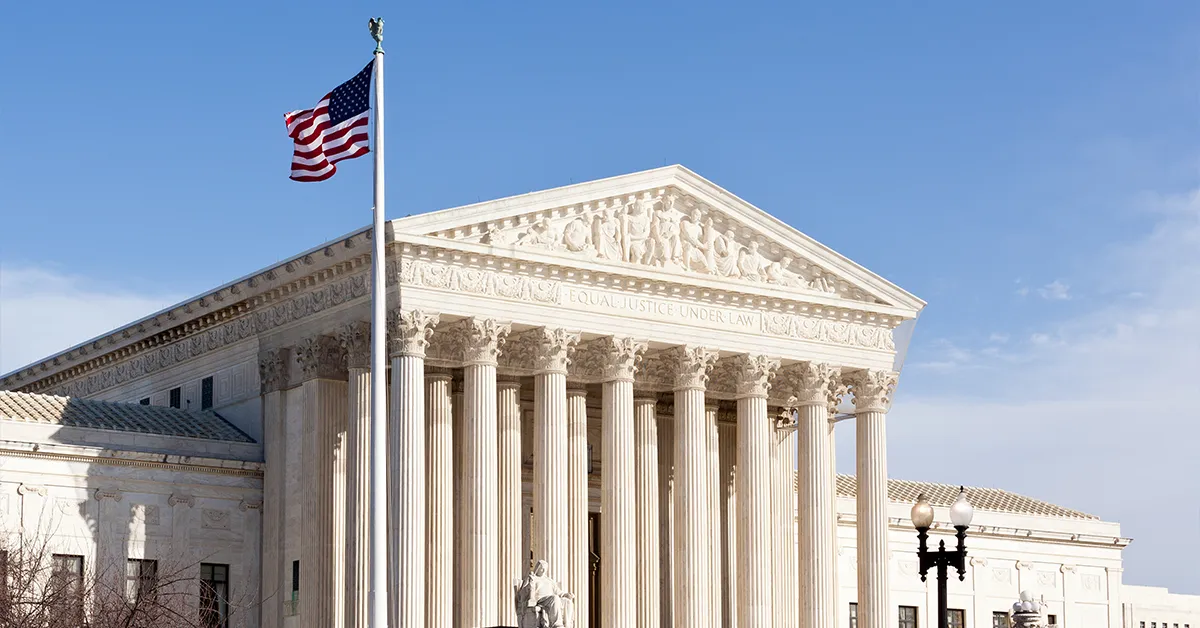
The federal court system has three levels: district courts (94 District Courts), appellate courts (13 Circuit Courts of Appeals), and the Supreme Court at the top of the system. The Supreme Court consists of nine justices appointed for life and hears approximately 80 cases per year that establish legal precedents.
The Constitution and 27 amendments
The 1787 Constitution and 27 ratified Amendments are the supreme law of the land. The first 10 Amendments (the Bill of Rights, 1791) guarantee fundamental rights such as freedom of speech, religion, assembly, the right to bear arms, and the right to a fair trial. Important subsequent amendments include the 13th Amendment, which abolished slavery; the 19th Amendment, which granted women the right to vote; and the 22nd Amendment, which limits the President to two terms.
Financial system
This country is a global financial centre and home to the world’s two largest stock exchanges. Detailed article at The United States financial system.
Wall Street and 12 Federal Reserve Banks
Wall Street in Manhattan, New York, is a global financial symbol, home to the headquarters of major investment banks such as JPMorgan Chase, Goldman Sachs, Morgan Stanley, and Bank of America. The New York Stock Exchange (NYSE) has a market capitalisation of approximately US$28 trillion, and NASDAQ has approximately US$24 trillion, far exceeding the combined capitalisation of the largest European and Asian exchanges.
The Federal Reserve (or Fed) is the central bank, operating through 12 regional Federal Reserve Banks and the Board of Governors in Washington D.C. The Fed sets the benchmark interest rate (federal funds rate), regulates the banking system, and prints the US dollar. Fed interest rate decisions directly influence global financial markets and the economy.
The US dollar and its global role
The US dollar has been the world’s primary reserve currency since the 1944 Bretton Woods Conference. According to the International Monetary Fund (IMF), the USD accounts for approximately 58% of global foreign exchange reserves, far exceeding the euro (20%), Japanese yen (5%), and British pound (5%). Approximately 88% of global foreign exchange transactions involve the USD on one side. Oil exports are primarily priced and settled in USD, creating the “petrodollar” system.
Taxation
The tax structure is one of the most complex in the world, with many overlapping levels. Detailed article at Taxes in the United States.
Federal and state taxes
The tax system is tiered between federal, state, and local levels. The Internal Revenue Service (IRS) manages federal taxes. Federal personal income tax applies seven progressive tax brackets ranging from 10% to 37% in 2025, depending on income and filing status (single, married filing jointly, married filing separately, head of household).
State taxes vary significantly: nine states have no personal income tax, including Texas, Florida, Nevada, Washington, Wyoming, Alaska, Tennessee, New Hampshire, and South Dakota. California has the highest tax rate at 13.3%. Sales tax also varies by state, ranging from 0-9.45%, and is applied at the time of purchase rather than being included in the listed price.
Global tax obligations
The country is one of two in the world (along with Eritrea) that applies citizenship-based taxation. Citizens and permanent residents must file taxes on their global income, regardless of where they live in the world. The Foreign Account Tax Compliance Act (FATCA) requires foreign banks to report accounts held by US citizens and permanent residents. FBAR regulations require the reporting of foreign accounts with a balance exceeding US$10,000 at any point during the year.
International relations
As the sole superpower following the Cold War, the country maintains a global network of allies. Detailed article at U.S. International Relations.
Key alliance systems
The Department of State operates 168 embassies and 88 consulates globally, the largest diplomatic network in the world. NATO is a transatlantic military alliance with 32 members, to which the country contributes approximately 16% of the operating budget and the majority of military capabilities. The Five Eyes intelligence alliance, comprising the United States, the UK, Canada, Australia, and New Zealand, shares high-level intelligence.
In the Asia-Pacific region, strategic alliances include AUKUS (with Australia and the UK, signed in 2021), the QUAD (with Australia, India, and Japan), and bilateral defense treaties with Japan, South Korea, the Philippines, and Thailand. The country maintains approximately 750 military bases in over 80 countries, with 173,000 troops stationed abroad.
Strategic rivals
The greatest current strategic competition is with China, which the National Security Strategy identifies as the “only peer competitor.” Conflict points include trade, semiconductor technology, the South China Sea, Taiwan, and intellectual property rights. Relations with Russia remain tense following the 2022 invasion of Ukraine, with the imposition of economic sanctions. North Korea and Iran are two regional security concerns due to their nuclear and ballistic missile programmes.
Vietnam – United States relations
The two countries normalized relations on 11 July 1995 after two decades following the end of the Vietnam War. In September 2023, General Secretary Nguyen Phu Trong and President Joe Biden upgraded relations to a Comprehensive Strategic Partnership, the highest level in Vietnam’s diplomatic classification system. According to the Office of the United States Trade Representative (USTR), bilateral trade in goods and services reached US$155.1 billion in 2024, an increase of 20.5% compared to 2023.
The 50-state system
The federal structure divides power between the central government and 50 member states. Detailed article at The system of 50 states and US territories.
Federal and territorial structure
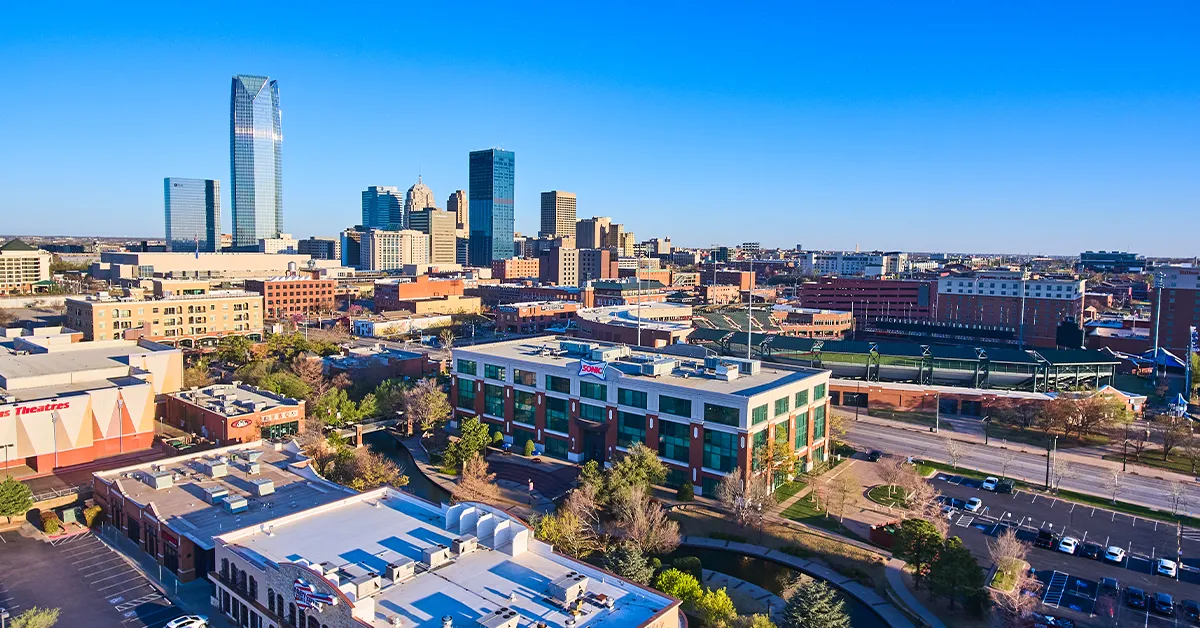
The federation consists of 50 states with full autonomy, the District of Columbia (Washington D.C., which is not a state but has self-governance), and five inhabited overseas territories. Each state has its own constitution, governor, legislature, court system, and autonomy over taxes, education, law enforcement, and many other areas. The 10th Amendment of the federal Constitution reserves to the states all powers not delegated to the federal government.
The five overseas territories include Puerto Rico (Caribbean, 3.2 million people), Guam (Pacific), the US Virgin Islands (Caribbean), American Samoa (Pacific), and the Northern Mariana Islands (Pacific). Residents of these territories hold citizenship (except for American Samoa, which has a unique status) but do not vote in presidential elections.
Top states by economy
California is the state with the largest GDP, reaching approximately US$4.1 trillion in 2024 – if it were an independent country, California would be the 4th-5th largest economy in the world, on par with Japan and Germany. Texas ranks 2nd with a GDP of approximately US$2.4 trillion, strong in energy and technology. New York ranks 3rd with US$2.3 trillion, leading in finance. Florida ranks 4th with US$1.7 trillion, strong in tourism and real estate. Other states with significant scale include Illinois, Pennsylvania, Ohio, Georgia, Washington, and New Jersey.
Life in the United States
High quality of life, but costs and lifestyle differ significantly from Vietnam. Detailed article at Life in the United States.
Cost of living by state
The cost of living varies significantly between states and cities. San Francisco, New York, Boston, Honolulu, and Los Angeles are among the most expensive cities. A four-person household in San Francisco requires a minimum pre-tax income of approximately US$130,000 per year for an average lifestyle, while in Houston this figure is only about US$75,000. States with lower costs include Texas, Tennessee, Mississippi, Arkansas, Oklahoma, and Indiana.
Housing and transport
The homeownership rate is approximately 65% according to the Census Bureau. The national median home price reached US$420,400 in the second quarter of 2024, but regional differences are vast: a home of the same floor area in San Francisco can be 4-5 times more expensive than in Houston. Transport culture is car-dependent, except in some major cities like New York, San Francisco, and Chicago, which have developed subway systems. The Amtrak passenger rail system is limited compared to Europe or Japan. The majority of the population uses private vehicles for daily commuting.
Vietnamese community
The Vietnamese community is one of the immigrant groups with the most distinct history and identity. Detailed article at Vietnamese community in the United States.
Scale and history of migration
According to Census Bureau data and Pew Research Center analysis, the Vietnamese community reached approximately 2,347,344 people in 2023 (including those who identify as partially Vietnamese), of whom 1.3 million were born in Vietnam. This is the largest Vietnamese community outside of Vietnam and the fourth-largest Asian ethnic group in the Asian American community (after Chinese, Indian, and Filipino).
Migration history has undergone four main waves. The first wave in 1975 saw approximately 125,000 refugees leave Saigon immediately after the events of 30 April. The second wave from 1978-1990 consisted of “boat people,” with approximately 800,000 people crossing the sea. The third wave from 1989 occurred through the Orderly Departure Programme (ODP) and the Humanitarian Operation (HO) programme for former officers and officials of the Republic of Vietnam. The fourth wave since the 2000s has primarily been through family reunification.
Distribution by state
California is home to 811,048 Vietnamese people, accounting for more than 35% of the total. Little Saigon in Westminster, Orange County, is a symbol of Vietnamese culture with thousands of Vietnamese businesses. San Jose has 121,631 Vietnamese people, the largest Vietnamese community at the city level. Texas ranks 2nd with 326,084 people, concentrated in Houston and Dallas. Florida has 103,226 people, mainly in Orlando and Tampa. Other states with large Vietnamese populations include Washington (Seattle), Virginia (Northern Virginia near Washington D.C.), and Georgia (Atlanta).
Community life
Vietnamese people are well-known for traditional trades such as nail salons, restaurants, grocery stores, and real estate. According to the Pew Research Center, the median household income for Vietnamese people in 2022 reached US$81,000, below the US$100,000 level for Asian Americans as a whole but equivalent to the national median.
The second and third generations tend to pursue professional careers: information technology in Silicon Valley, medicine, law, and business. Community organisations, Buddhist temples, and Vietnamese Catholic churches play a vital role in maintaining culture, organising the Lunar New Year, and teaching Vietnamese to the younger generation through weekend schools.

United States investment immigration
This country continues to be a leading immigration destination for Vietnamese investors through various distinct pathways. The full article is summarised at United States investment immigration.
Investment category
Programme Visa EB-5 is the most popular investment immigration pathway, requiring capital of US$800,000 (investment in a Targeted Employment Area) or US$1,050,000 (standard investment), along with the condition of creating 10 jobs for American workers. For investors with moderate capital, United States E-2 Visa is an alternative option, although Vietnam does not yet have an E-2 treaty, so Vietnamese applicants must obtain a second citizenship, such as Grenada, to be eligible.
Skilled and professional category
For individuals with extraordinary ability, EB-1A is for those with outstanding achievements in science, arts, education, business, or athletics. Visa EB-2 NIW allows for the waiver of the employer sponsorship requirement if national interest can be proven. The EB-3 category is suitable for United States skilled immigration via employer sponsorship through PERM Labour Certification.
Family category
The family sponsorship category is the most popular pathway in terms of volume. The K-1 visa is for the fiancé/fiancée of a US citizen, requiring marriage within 90 days of entry. CR-1 Visa and IR-1 Visa are issued to spouses of US citizens, with CR-1 (married less than 2 years) for a 2-year conditional green card and IR-1 (more than 2 years) for a 10-year unconditional green card. The spousal sponsorship and child sponsorship categories have the shortest processing times compared to other sponsorship categories.
Roadmap from visa to citizenship
Most immigration categories lead to a United States Permanent Resident Card (green card). After 5 years of holding a green card (or 3 years if married to a US citizen), foreign nationals can apply for United States Naturalisation through a citizenship test and oath of allegiance. United States passport is one of the world’s strongest passports, with visa-free or visa-on-arrival access to more than 180 countries and territories.
Accompanying you on your journey in residency investment
The Prosperous Living Investment team advises on pathways, assesses profiles and manages investments transparently for every residency, citizenship and international property objective.
Free profile assessmentWhere life gets prosperous