

The United States CR-1 and IR-1 visas

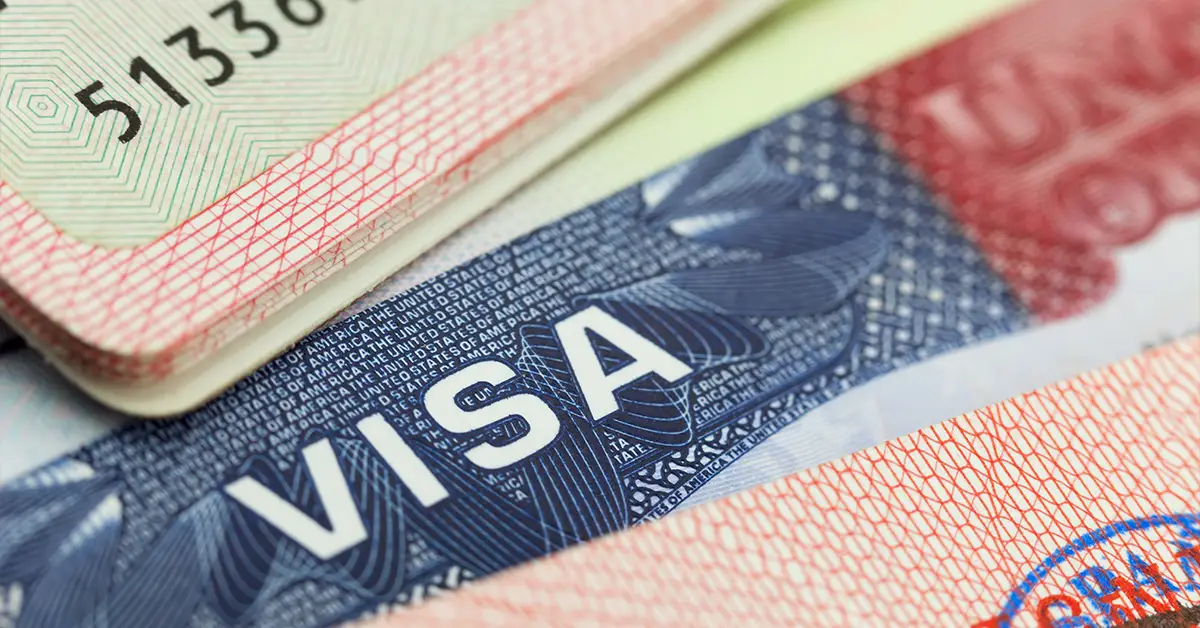
The CR-1 / IR-1 visa is a marriage-based green card allowing a foreign spouse to live in the United States with a spouse who is a citizen or permanent resident.
Message
What is the spousal sponsorship visa?
The CR-1 / IR-1 visa is a type of green card allowing a person from another country to live in the United States with a spouse who is a United States citizen or permanent resident.
Where the couple have been married for less than two years, the sponsored spouse may receive a CR-1 visa (Conditional Resident). Where they have been married for two years or more, the sponsored spouse may receive an IR-1 visa (Immediate Relative).
The current waiting time for thespousal sponsorship visa to the United Statesaverages around several months, although it is considerably longer for foreign nationals married to a United States permanent resident. The CR-1 visa is now regarded as the common alternative to the K-3 visa.
Considering a residency programme? The Prosperous Living Investment team assesses your profile free of charge and advises on the pathway that fits your goals.
What is the CR-1 visa?
The CR-1 visa (or Conditional Resident) is issued to applicants who, on arriving in the United States with their green card, have been married to a United States citizen for less than two years. These visas are issued on a “conditional” basis. Two years after arriving in the United States, the sponsored spouse and the United States citizen spouse must apply to remove the conditions on the green card. At that point, they receive an updated permanent resident card valid for 10 years.
What is the IR-1 visa?
Conversely, the IR-1 visa (or Immediate Relative) is issued to a sponsored spouse who has been married to a United States citizen for more than two years at the time the green card is approved. In this case, the IR-1 visa holder does not need to remove conditions (because there are none) and will have 10 years before needing to renew the permanent resident card.
Note: investment visas such as the EB-5 are also regarded as conditional permanent resident visas and so must be updated after two years. However, within the scope of this article, the term CR-1 is generally used to mean thegreen cardconditional marriage category, valid for 2 years.
Should you choose the IR-1 or the CR-1 visa?
Although the CR-1 visa and the IR-1 visa bring the sponsored spouse similar rights and privileges, they have different timelines.
The CR-1 visa is issued where the couple have been married for less than two years at the time the green card is approved. This means the green card is “conditional” and valid for only two years, after which the foreign spouse applies to remove the conditions to receive a 10-year green card.
The IR-1 visa is issued where the couple have been married for two years or more at the time the green card is approved. This means the green card is valid for 10 years, and the foreign spouse will not need to apply to remove conditions.
The CR-1 visa compared with the IR-1 visa
Visa CR-1:
- For spouses married to a United States citizen for less than two years.
- Also called the “conditional permanent resident” visa because the spouse must live in the United States for two years after entry before their permanent resident status is granted in full.
Visa IR-1:
- For spouses married to a United States citizen for two years or more.
- Also called the “immediate relative” visa because the spouse may apply for permanent residence immediately on entering the United States.
- There is no two-year conditional period for IR-1 visa holders.
CR-1 / IR-1 visa processing times
The current waiting time for the CR-1 or IR-1 visa averages 14.5 months where the applicant is the spouse of a United States citizen, and 35 months where the applicant is the spouse of a lawful permanent resident.
Form I-130 processing times also vary considerably depending on the processing centre. The average processing time for Form I-130 is around 14 months.
Where the applicant is not married to a United States citizen, they may have to wait some time before a visa becomes available. Applicants may check theVisa Bulletinof the United States Department of State to learn the waiting times.
Which visa is faster, CR-1 or IR-1?
The CR-1 and IR-1 visas have the same processing time because both are immigrant visas for the spouses of United States citizens. The difference between them lies in the length of the marriage when the visa is issued: the CR-1 visa is issued where the marriage has lasted less than two years, while the IR-1 visa is issued where it has lasted two years or more.
CR-1 / IR-1 visa requirements
To be eligible for the CR-1 / IR-1 visa, applicants must apply throughConsular Processing — United States consular processing. The following visa types use consular processing:
- The CR-1 / IR-1 visa for spouses and the accompanying CR-2/IR-2 visa for children where the sponsor is a United States citizen.
- The F2A category (F21 spouse; F22 child) where the sponsor is a lawful permanent resident (or green card holder).
The IR-1 / CR-1 visa allows a United States citizen or lawful permanent resident to sponsor a foreign spouse to come to the United States.
The specific requirements comprise:
- The sponsor must be a United States citizen or lawful permanent resident.
- The couple must be lawfully married and provide a valid marriage certificate.
- The genuineness of the marriage must be proved with evidence, for example photographs, flight itineraries and so on.
- The sponsor must undertake to support the spouse and file an affidavit of support. They must have sufficient means to support the household at 125% of the federal poverty level. Where the sponsor does not meet the income requirement, they may use a joint sponsor.
- The sponsor must have a domicile in the United States, meaning they must live in the United States or prove that they plan to return to the United States with the foreign spouse.
CR-1 / IR-1 visa costs
Whether the applicant is applying for the IR-1 or the CR-1 visa, the costs can be divided into 4 basic categories:
Filing Form I-130:
- USD 675 (USD 50 less when filed online)
Processing the Immigrant Visa Application (Form DS-260):
- 325 USD
Immigration medical examination:
- This fee varies by country but averages from USD 200 to USD 500.
Other related costs:
- The applicant will have to cover the cost of obtaining all the related documents and papers, including translation, passport, birth certificate, copying fees and the associated travel costs.
For CR-1 visa holders:
- When the time comes to apply to remove the conditions, the applicant will finally need to pay a fee of USD 750 (for Form I-751).
In general, it is best to list all the expected costs in advance. This will help ensure the applicant has the money ready when needed.
The CR-1 / IR-1 visa application process
How to apply for the CR-1 or IR-1 visa
To apply for the IR-1 or CR-1 visa, the applicant will need to go through consular processing, meaning they will need to apply and interview at the local United States Embassy or Consulate.
Follow these steps to apply for the CR-1 or IR-1 visa through consular processing:
- Make sure the applicant really is eligible for a green card. Most importantly, the applicant will need to prove that they are in a genuine marriage. The applicant’s spouse must also be aged 18 or over and have a “domicile” in the United States.
- The United States citizen sponsor — the applicant’s spouse — will need to complete and file Form I-130 (officially called the “Petition for Alien Relative”).
- The applicant will then need to wait from several months to more than a year for theUnited States Citizenship and Immigration Services (USCIS)form to be processed. Where Form I-130 is approved, the applicant may move to the next step.
- Where approved, the applicant may check the Visa Bulletin to see whether a green card is available. The applicant may skip this step where already married to a United States citizen, but otherwise they may need to wait in the “queue”. The wait can be lengthy, depending on where the applicant lives.
- The petition will then be processed by theUnited States National Visa Center (NVC)of the United States Department of State, where the file will be formally entered into the system.
- The NVC will notify the applicant of any fees and required documents to be submitted during the application. They will also guide the applicant through completing Form DS-260 (officially called the “Immigrant Visa and Alien Registration Application”) — this is the actual green card application, where the applicant answers questions about themselves, including their work and education history.
- After receiving the papers from the NVC, the local United States Embassy or Consulate will send the applicant a letter stating when and where the interview will be held.
- The applicant will need aUnited States immigration medical examinationwith a doctor approved by the Embassy before attending the interview. The applicant may check the Embassy website for the list of approved doctors.
- The applicant will need to have all the related documents and their passport when attending the interview. The applicant may contact the Embassy for an exact list of what will be needed. The applicant will be asked to answer questions — under oath — about their application.
- Where no further investigation is required, the applicant may receive an answer immediately or within about a week of the interview. Where approved, the applicant will receive the visa — placed inside the passport — and a sealed envelope of documents. Do not break the seal on this envelope. The immigration officer at the port of entry is the only person permitted to open it.
- The visa issued by the consular officer is valid for 6 months after the medical examination. Once the United States border officer admits the applicant to the United States — and returns the documents — the visa is valid for 12 months, allowing the applicant to travel freely in and out of the country. The applicant can expect to receive the final green card within that 12-month period.
Note: the CR-1 and IR-1 visas are issued through consular processing. Where the applicant is currently resident in the United States, they will need to go through theAdjustment of Status (AOS)process, which has its own set of requirements and paperwork.
What happens next
Once the applicant has successfully completed the green card process, they may receive either a CR-1 or an IR-1 visa, depending on the length of the marriage at the time of entry to the United States.
Can you work while holding a CR-1 visa?
Yes, the applicant may work while holding a CR-1 visa. On entering the United States with a CR-1 visa, the applicant is automatically eligible to work in the United States. The applicant does not need to apply for a work permit. The stamped passport acts as a temporary green card until the green card arrives, usually within 2-3 months.
Where the applicant has an IR-1 visa, they need only renew the green card 10 years after receiving it. But where the applicant is issued a CR-1 visa, they will need to apply to remove the conditions on the green card within the 90 days before the second anniversary of entry to the United States.
First, both spouses will need to complete and file Form I-751 (officially called the “Petition to Remove Conditions on Residence”). It is very important to file within the 90-day period before the expiry date of the CR-1 green card. Where filed too early, USCIS will return the petition, and where filed too late (without explanation), the petition may be refused outright.
As part of the petition, the applicant will need to submit evidence that they are in a genuine marriage. USCIS will want to see evidence — similar to the kind used for the original green card application — that the marriage has continued over the past two years. The evidence may include:
- Joint bank account statements
- Birth certificates of any children born during the 2-year period
- Property title documents in both names
- Photographs from the period in question
Besides paying the appropriate fees (see the “Costs” section for details), the applicant will need to provide a copy of the conditional permanent resident green card (both front and back).
Common mistakes to avoid with the CR-1 / IR-1 visa
- Inaccurate or missing documents: make sure all the required documents, such as the marriage certificate, birth certificates and financial evidence, are included and properly translated where necessary. Check the list of documents required for the application carefully to avoid delays.
- Filing an incomplete application: complete every section of the visa form fully and accurately. Missing or incomplete information can lead to processing delays or even refusal.
- Inconsistent information: make sure the details on all the forms and supporting documents match exactly, particularly names, dates and addresses. Discrepancies can raise flags and slow the process.
- Insufficient financial evidence: when filing the Affidavit of Support (Form I-864), make sure the minimum income requirements are met and all the required financial documents, such as tax returns and payslips, are provided. Insufficient evidence can lead to a Request for Evidence (RFE).
- Not keeping copies of the documents filed: always make copies of every document and form filed. This will help where USCIS asks for further information or where something is lost in processing.
- Not attending mandatory appointments: missing the visa interview or theUnited States biometrics appointmentwithout prior notice can lead to the application being delayed or refused. Make sure to attend all scheduled appointments.
- Not following the application status: check the application status regularly on the USCIS website or the NVC portal. This keeps the applicant up to date on any action required, such as submitting further documents.
- Overlooking the conditional residence requirements (CR-1): for CR-1 visa holders, forgetting to file Form I-751 to remove the conditions on residence in the 90-day period before the green card expires can lead to loss of status. Mark the calendar and file the petition on time.
- Not updating USCIS on a change of address: where you move house, notify USCIS within 10 days to avoid missing important notices such as a Request for Evidence (RFE) or an interview appointment.
Frequently asked questions about the spousal sponsorship visa
CR-1 stands for the “Conditional Resident” visa, a type of visa granting conditional permanent resident status to the spouse of a United States citizen or lawful permanent resident.
CR-1 visa processing times vary depending on whether the applicant is married to a United States citizen or a green card holder. The waiting times differ between these two cases.
The main drawbacks of consular processing include the long wait for visa approval and the possibility of delay through government processing. In addition, the cost of applying for a visa through consular processing can be higher than by other methods.
The CR-1 spousal sponsorship visa brings several benefits, including:
- The passport stamp acts as a temporary green card
- Permanent resident status
- Work authorisation
- Travel in and out of the United States
Yes, same-sex couples have equal rights with opposite-sex couples in marriage-based immigration. Thanks to the Supreme Court’s decision in Windsor v. United States, the Defense of Marriage Act (DOMA) was declared unconstitutional. As a result, all marriage-based visa applications are assessed in exactly the same way, regardless of sexual orientation.
Yes, the applicant may work in the United States as soon as they enter with a CR-1 visa, and need not apply separately for a work permit.
Yes, as a green card holder the applicant may travel outside the United States. However, the trip must not exceed one year.
The minimum income requirement for most United States sponsors is 125% of the Federal Poverty Guidelines based on household size and area of residence. For a couple living in the 48 contiguous states (the United States mainland) with no children, the current minimum annual income requirement is USD 25,550.
Technically, no. They need to meet the “domicile” requirement, which can be met even where they live abroad. The easiest way to meet this requirement is to live in the United States or one of its territories. Otherwise, they may provide documents proving one of the following:
- They intend to return to the United States as soon as the spouse (the applicant) is admitted to the United States
- They are an employee of an approved organisation
- They are living outside the United States on a temporary basis
In this case, they will need to upgrade the petition by submitting the following evidence to the NVC:
- A copy of the United States passport (biographic page)
- A copy of the certificate of naturalisation
The answer to this question varies depending on the country where the applicant applies, but in general the applicant will need:
- Medical examination papers
- A passport valid for at least 6 months after entry to the United States
- The Affidavit of Support (Form I-864)
- Form DS-260
- Two 2×2 passport-style photographs
- All the civil documents required by the embassy. These may include birth certificates, marriage certificate, police certificates and military records (where applicable)
The purpose of the CR-1 interview is for the interviewing officer to determine whether the marriage is genuine. The applicant will be asked questions about the relationship, including how they met, their daily life as a couple, and their plans for the future.
The CR-1 visa is a temporary green card valid for two years. After two years, the couple will need to apply to “remove the conditions” and receive a permanent green card.
The CR-1 visa is valid for two years, after which the holder must apply to “remove the conditions” on the marriage-based green card to make it permanent and valid for 10 years. After the 10-year period, the applicant may apply to renew it.
The K-1 fiancé visa is currently taking slightly longer to process than the CR-1 spousal sponsorship visa. The K-1 visa also became considerably more expensive when the government raised the fees at the end of 2023. But choosing between these two visa routes depends on each person’s particular situation.
A CR-1 visa holder may apply forUnited States naturalisationafter 3 years living with their spouse in the United States. Applicants are permitted to apply for citizenship 90 days before meeting the 3-year requirement.
When completing the immigrant visa application online, the applicant may opt to receive a Social Security card after entering the United States. This will provide a Social Security number. In this case, the applicant will most likely receive the card within 6 weeks of being admitted. Where for any reason the applicant does not opt to receive a Social Security card, they will have to apply for one with the Social Security Administration.
A CR-1 visa may be refused where the applicant is deemed ineligible, where the application is incomplete or inaccurate, where there are security concerns, or where the applicant has a history of immigration violations or criminal activity.
Where the green card holder divorces their United States citizen spouse during the two-year conditional period, they may still file Form I-751 to remove the conditions on their residence status. Instead of filing jointly, they must file under a waiver and prove that the marriage was entered into in good faith. These waivers are usually granted — provided the marriage was real and not fraudulent.
Importantly, individuals applying for a waiver need not wait the full two years to file Form I-751. Where USCIS refuses the petition, the applicant will receive a Notice to Appear (NTA) in immigration court, where a judge will make the final decision on the case. Alternatively, some individuals may choose to give up the green card and return to their country of residence.
Where the spouse has been abusive during the marriage, the applicant may apply to remove the conditions on permanent resident status without the spouse’s support. The applicant should include evidence of the abuse, such as a restraining order, a statement from a domestic violence shelter, photographs or medical reports detailing the injuries caused by the abuse, or other evidence. Where already divorced, the applicant should include a copy of the final divorce decree.
The applicant cannot switch directly from CR-1 to IR-1 status. However, after two years as a CR-1, the applicant may apply to remove the conditions on their residence status by filing Form I-751 (the “Petition to Remove Conditions on Residence”). Once this petition is approved, the applicant will receive IR-1 status, granting unconditional permanent residence.
It is not compulsory to engage an immigration lawyer when applying for the spousal sponsorship visa, but some couples may benefit from a lawyer’s expertise during the process. An immigration lawyer can also bring extra peace of mind when making a spousal sponsorship visa application.
Accompanying you on your journey in residency investment
The Prosperous Living Investment team advises on pathways, assesses profiles and manages investments transparently for every residency, citizenship and international property objective.
Free profile assessmentWhere life gets prosperous