
United States residency by investment
Introduction

Programme Overview
Investment level
Processing time
Benefits
Job creation
Family
Citizenship
United States permanent resident benefits

Residency by investment pathway

EB-5 Regional Center

EB-5 Direct Investment
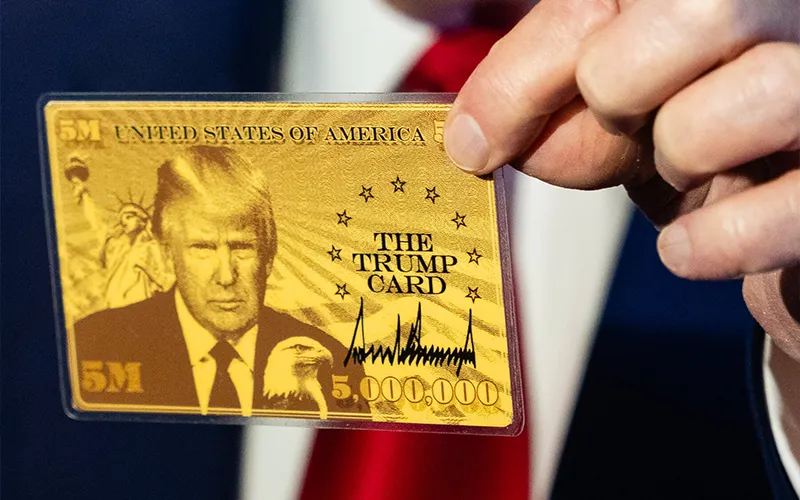
Trump Gold Card
Start your journey with
Prosperous Living Investment
Programme requirements
Lawful source of funds
Investment level
Job creation (EB-5)
Expertise (Gold Card)
Education and language
Background
Implementation process
Consultation and selection
Prepare documentation and submit application
Approval and receipt of conditional Green Card
Removal of conditions (I-829)
Apply for United States citizenship (optional)
Start your residency journey with
Prosperous Living Investment
Prosperous Living Investment is with you from the first assessment to the day residence or citizenship is granted — transparent, professional and entirely personal.
Why choose PLI?
transparenteffectiveprofessional
Effectiveness
Transparency
Professionalism
Frequently Asked Questions (FAQs)

US$800,000 for projects in a TEA (rural or high unemployment) area, or US$1,050,000 for standard areas. The investment amount is scheduled for an inflation adjustment in January 2027. Programme conditions are as announced byUnited States Citizenship and Immigration Services (USCIS).
- The Gold Card requires a US$1,000,000 non-refundable contribution to the United States government, does not require job creation, and is processed faster. However, investors must qualify for EB-1A or EB-2 NIW, each family member must contribute an additional US$1,000,000, and the programme is based on an executive order, meaning it could be changed or cancelled.
- EB-5 has a more robust legal foundation (federal law since 1990), capital is potentially refundable, family members are included at no extra cost, and no special expertise is required.
- EB-5: A conditional green card is typically received in 12–24 months, with Rural TEA applications processed the fastest. The entire process to a permanent green card takes 3–5 years.
- Gold Card: The petition is processed faster (a few weeks), but the actual timeline depends on visa quotas based on nationality.
- EB-5: One application includes the primary investor, spouse, and all unmarried children under 21 — with no additional investment costs.
- Gold Card: Each family member must contribute an additional US$1,000,000 and pay a separate US$15,000 processing fee.
By law, EB-5 capital must be “at risk” — there is no guarantee of capital return. However, many Regional Center projects have strategies for capital repayment after the investor receives their permanent green card, subject to contract terms. The Gold Card is a non-refundable contribution in all cases.
- EB-5 does not require business experience, educational qualifications, English proficiency, or a maximum age — only proof of legal source of funds.
- The Gold Card requires the investor to qualify for EB-1A (extraordinary ability) or EB-2 NIW (national interest waiver).
A TEA (Targeted Employment Area) is a rural area or one with an unemployment rate of at least 150% of the national average. Investment in a TEA requires only US$800,000 (instead of US$1,050,000), receives priority processing, and has a separate visa quota — with Rural TEA currently being the fastest to process.
Yes. After 5 years of holding a green card (calculated from the date of receiving the conditional green card), the investor is eligible to apply for naturalisation to become a United States citizen. This applies to both EB-5 and the Gold Card, provided residency requirements and other naturalisation standards are met.