

United States politics

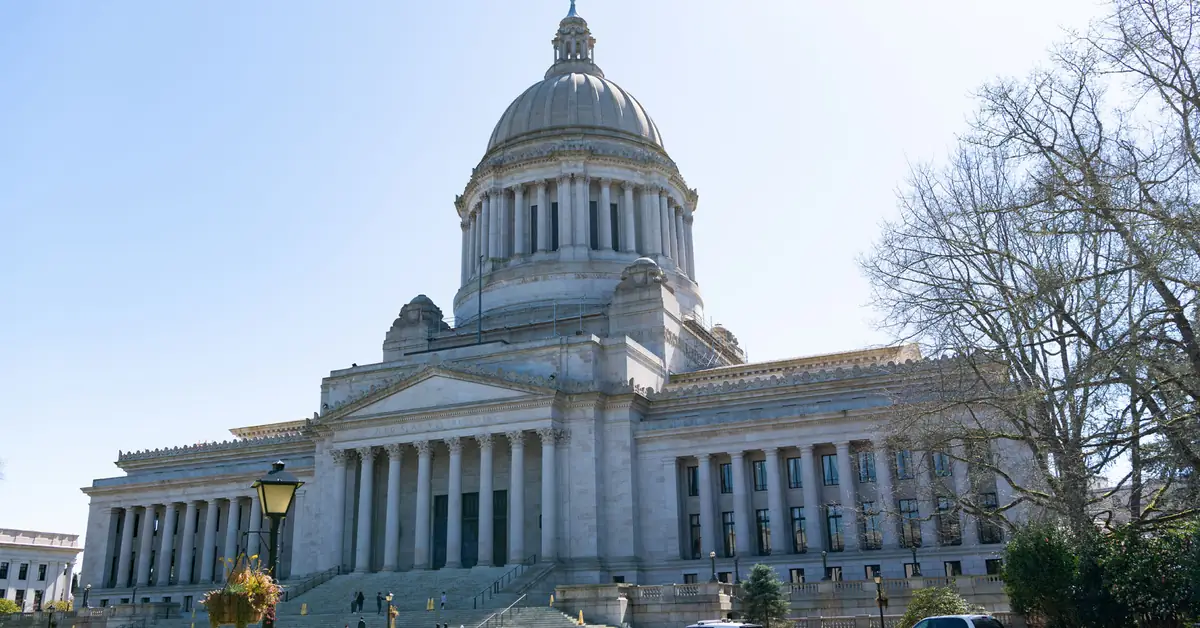
United States politics operates on the foundation of the Constitution of 1787 – the world’s oldest written constitutional document still in force. The system is designed on the principle of the separation of powers with three independent branches: the legislature (Congress), the executive (the President), and the judiciary (the Supreme Court). The “checks and balances” mechanism ensures no single branch can monopolise power.
Political life revolves around the two-party system between the Democratic Party and the Republican Party, with a federal structure distributing power between the central government and 50 states. This article synthesises the United States political structure based on the Constitution, legal documents from Congress, and the White House. This is an extension of the page United States overview.
Message
Constitution and legal foundation
United States politics is built on the foundation of the Constitution promulgated on 17 September 1787 and ratified in 1789. After 235 years of existence, this document remains the oldest written constitution still in effect and has been amended 27 times through Amendments.
The Bill of Rights and the first 10 Amendments
The first 10 Amendments (the Bill of Rights), ratified in 1791, guarantee fundamental citizen rights: freedom of speech, religion, press, and assembly (Amendment 1), the right to bear arms (Amendment 2), protection against unreasonable search without a warrant (Amendment 4), the right against self-incrimination (Amendment 5), the right to a fair trial (Amendment 6), prohibition of cruel and unusual punishment (Amendment 8), and reserved powers for the states (Amendment 10). This is the foundation of civil liberties in United States politics.
Important amendments following the Bill of Rights
The remaining 17 amendments provide many new rights: the 13th Amendment (1865) abolished slavery, the 14th Amendment (1868) guaranteed citizenship rights and equal protection under the law, the 15th Amendment (1870) prohibited voting discrimination based on race, the 19th Amendment (1920) granted women the right to vote, the 22nd Amendment (1951) limited the President to a maximum of two terms, and the 26th Amendment (1971) lowered the voting age to 18. Amending the Constitution requires a proposal from two-thirds of both houses of Congress and ratification by three-fourths of the states – an extremely difficult process.
Considering a residency programme? The Prosperous Living Investment team assesses your profile free of charge and advises on the pathway that fits your goals.
Separation of powers
The core principle of United States politics is the separation of powers — dividing authority among three independent branches to prevent the concentration of power in one individual or group. This is the philosophy of Montesquieu, which James Madison and the Founding Fathers applied to the Constitution.
Checks and balances mechanism
Each branch has the power to check the others: the President has the power to veto legislation passed by Congress, but Congress can override the veto with a two-thirds majority in both houses. The President appoints federal judges, but they must be confirmed by the Senate. The Supreme Court can declare acts of Congress or actions of the President unconstitutional (judicial review). Congress can impeach the President or judges.
The executive branch
The executive branch in United States politics is headed by the President, who also serves as Commander-in-Chief of the military. This branch enforces the law and administers the federal government.
President
The President is elected indirectly through the Electoral College with 538 votes. The term is 4 years, with a maximum of two terms under the 22nd Amendment. The incumbent President is Donald Trump (second term), who took office on 20 January 2025. Key powers include: supreme command of the military, negotiating and signing international treaties (requiring two-thirds Senate approval), appointing Cabinet Secretaries, ambassadors, and federal judges (requiring Senate approval), signing or vetoing legislation, issuing executive orders, and granting pardons for federal crimes.
Vice President and Cabinet
The Vice President is the second-highest official in the executive branch and also serves as President of the Senate (voting only to break a tie). JD Vance has been the incumbent Vice President since 20 January 2025. The Cabinet consists of 15 Secretaries heading federal departments: State, Defence, Justice, Treasury, Interior, Agriculture, Commerce, Labour, Health and Human Services, Transportation, Energy, Education, Veterans Affairs, Homeland Security, and Housing and Urban Development.
Independent agencies and the Executive Office
The Executive Office of the President includes the National Security Council (NSC), the Council of Economic Advisers (CEA), the Office of Management and Budget (OMB), and the Central Intelligence Agency (CIA). Independent agencies include the Federal Reserve (Fed), the Securities and Exchange Commission (SEC), and the Federal Aviation Administration (FAA), United States Citizenship and Immigration Services (USCIS), and the Environmental Protection Agency (EPA). These agencies have specialized regulatory functions and are not directly under the President’s authority.
The legislative branch
The legislative branch of United States politics is the bicameral Congress, consisting of the Senate and the House of Representatives. This structure creates a balance between large and small states — the Senate ensures equality among states, while the House reflects population.
The Senate
The Senate consists of 100 members: each state has two Senators, regardless of area or population. The term is 6 years, with one-third of the seats up for re-election every two years to maintain continuity. Requirements: at least 30 years of age, a United States citizen for at least 9 years, and a resident of the state represented. The Vice President is the President of the Senate. The Senate has special powers: ratifying international treaties (requiring two-thirds), confirming high-level appointments (Secretaries, judges, ambassadors), and conducting impeachment trials. The “filibuster” method allows the minority (41 Senators) to block the passage of legislation.
The House of Representatives
The House of Representatives consists of 435 members, allocated according to state population via the Census every 10 years. California, the most populous, has 52 seats, while Wyoming and Vermont have only one seat each. The term is 2 years, with the entire body up for re-election. Requirements: at least 25 years of age, a United States citizen for at least 7 years, and a resident of the state represented. The Speaker of the House is third in the “presidential line of succession” after the Vice President. The House has the exclusive power to initiate tax and spending bills, and to impeach (with a 50%+1 majority).
Legislative process
For a bill to become law, it must go through several steps: introduction in one chamber, committee review, debate and a vote in that chamber, transfer to the other chamber for the same process, reconciliation of a common version by a “Conference Committee,” and the President signing it into law or vetoing it. If vetoed, Congress can override it with a two-thirds vote in both houses. On average, each two-year Congress reviews 10,000 bills, but only 400-500 become law.
The judicial branch
The judicial branch in United States politics interprets the Constitution and adjudicates legal disputes. The federal court system has three levels: district courts, courts of appeals, and the Supreme Court at the top. For details on the court structure, see the article the United States legal system.
The Supreme Court
The Supreme Court consists of nine justices appointed by the President and confirmed by the Senate. Justices serve for life (until death, resignation, or removal). Each year, the Supreme Court hears approximately 80 cases out of 7,000-8,000 petitions. Supreme Court rulings serve as binding legal precedent nationwide. The incumbent Chief Justice is John Roberts, who has served since 2005. The ideological structure of the 2025 Supreme Court: six conservative justices and three liberal justices — reflecting appointments made under recent Republican Presidents.
Judicial review power
The Supreme Court has the power of judicial review — declaring an act of Congress or an executive action unconstitutional and void. This power is not in the original Constitution but was asserted by the Supreme Court in the 1803 case Marbury v. Madison. Famous rulings include: Brown v. Board (1954) banning racial segregation in schools, Roe v. Wade (1973) legalizing abortion (overruled in 2022 by Dobbs v. Jackson), and Obergefell v. Hodges (2015) legalizing same-sex marriage.
The two-party system
United States politics is characterized by a two-party system dominated by two major parties: the Democratic Party and the Republican Party. The “winner-takes-all” election structure makes it difficult for smaller parties to compete.
Democratic Party
The Democratic Party was founded in 1828 and is the world’s oldest active political party. It represents modern liberal tendencies: a strong federal government, expanded social security (Medicare, Medicaid, Obamacare), high progressive taxes, environmental protection, civil rights, gun control, and support for LGBT+ rights and abortion. The symbol is the donkey. Support base: large urban areas, people of colour, young women, students, intellectuals, and the traditional working class. Recent Presidents: Obama (2009-2017), Biden (2021-2025).
Republican Party
The Republican Party (or GOP — Grand Old Party) was founded in 1854 with a platform opposing the expansion of slavery. It represents conservative tendencies: a small federal government, free markets, tax cuts, a strong military, protection of the right to bear arms, opposition to abortion, and opposition to illegal immigration. The symbol is the elephant. Support base: rural areas, the South, white voters, business owners, and conservative religious groups. Recent Presidents: Bush (2001-2009), Trump (2017-2021 and 2025-).
Minor parties
Beyond the two major parties, there are several minor parties that exist but have no significant influence at the federal level. The Libertarian Party, founded in 1971, advocates for minimal government, absolute free-market economics, and individual liberty. The Green Party, founded in 1991, advocates for the environment and social justice. The Reform Party was founded by Ross Perot in 1995. In presidential elections, minor parties usually capture 1-3% of the vote, sometimes acting as a “spoiler” (changing the outcome). Ralph Nader of the Green Party took 97,000 votes in Florida in 2000, which may have caused Gore to lose to Bush.
Elections and the Electoral College
The electoral system is one of the most unique features of United States politics. The President is not elected directly by popular vote but through the Electoral College system.
Electoral College
The Electoral College has 538 votes – the sum of 100 Senators + 435 Representatives + 3 votes for the District of Columbia (under the 23rd Amendment). Each state has a number of electoral votes equal to its total representation in Congress. California, the most populous, has 54 votes, while Wyoming and several smaller states have only 3. A candidate needs 270 votes to win. Most states use a “winner-takes-all” system – the candidate who wins the popular vote in that state receives all of its electoral votes. Maine and Nebraska allocate votes by district.
Swing states and campaign strategy
Because of the “winner-takes-all” system, presidential candidates focus their campaigns on 7-10 “swing states” that could lean towards either party. These currently include Pennsylvania, Michigan, Wisconsin, Arizona, Georgia, Nevada, North Carolina, and Florida. “Safe” states such as California and New York (Democratic) or Texas and Wyoming (Republican) receive little attention from campaigns. A president can win the election despite losing the national popular vote – as Trump did in 2016 (losing to Hillary by 3 million votes but winning the Electoral College 304-227).
2024 Election Results
The presidential election on 05/11/2024 concluded with the victory of Donald Trump (Republican) over Kamala Harris (Democratic). Trump won both the electoral vote (312-226) and the popular vote (50.1% compared to 48.3%) – the first time a Republican candidate has won the popular vote since 2004. Trump won all 7 swing states. The Republican Party also gained a majority in the Senate and retained a majority in the House of Representatives, creating a “trifecta” that allows Trump to implement his “America First” programme during his second term.
Federal structure
United States politics operates under a federalist structure, which divides power between the central government and the governments of the 50 states. This is a core feature established by the 1787 Constitution.
Division of powers
Federal powers (enumerated powers): national defence, diplomacy, currency issuance, interstate commerce, immigration, and postal laws. Powers reserved for the states (10th Amendment): education, public safety, marriage, driving, and local business laws. Concurrent powers: taxation, infrastructure development, and legislation. Denied powers: no state may declare war or maintain an independent military separate from the federal government.
State government
Each state has its own constitution, mirroring the federal structure of the separation of powers. At the head is the Governor, equivalent to a state-level president. The state legislative body is called the State Legislature, and most states are bicameral (except for Nebraska, which is unicameral). The state court system is independent of the federal system, headed by a State Supreme Court. Each state has an Attorney General who serves as the chief legal officer. The scale of United States politics at the state level varies significantly: California has a budget of US$310 billion, while Wyoming has only US$4 billion.
Local government
Below the state level is local government: counties, cities/towns, school districts, and special districts. Nationwide, there are approximately 89,000 units of local government. Each level has its own authority regarding property taxes, public safety, local roads, and K-12 public schools. This is one of the most complex features of the system of fifty states and a point of interest for Vietnamese investors residency by investment in the United States that must be understood when choosing a place to settle.
Federal-state relations
The federal-state relationship is always tense in United States politics. Some states have distinct laws: California has stricter environmental policies than the federal government, Texas has more liberal gun laws, and Colorado and several other states have legalised cannabis (which remains illegal at the federal level). The Supreme Court often adjudicates disputes between the federal government and the states. The doctrine of “states’ rights” is a subject of ongoing debate between the two parties – the Republican Party traditionally supports decentralisation to the states, while the Democratic Party prioritises federal authority.
Accompanying you on your journey in residency investment
The Prosperous Living Investment team advises on pathways, assesses profiles and manages investments transparently for every residency, citizenship and international property objective.
Free profile assessmentWhere life gets prosperous