
United States Culture

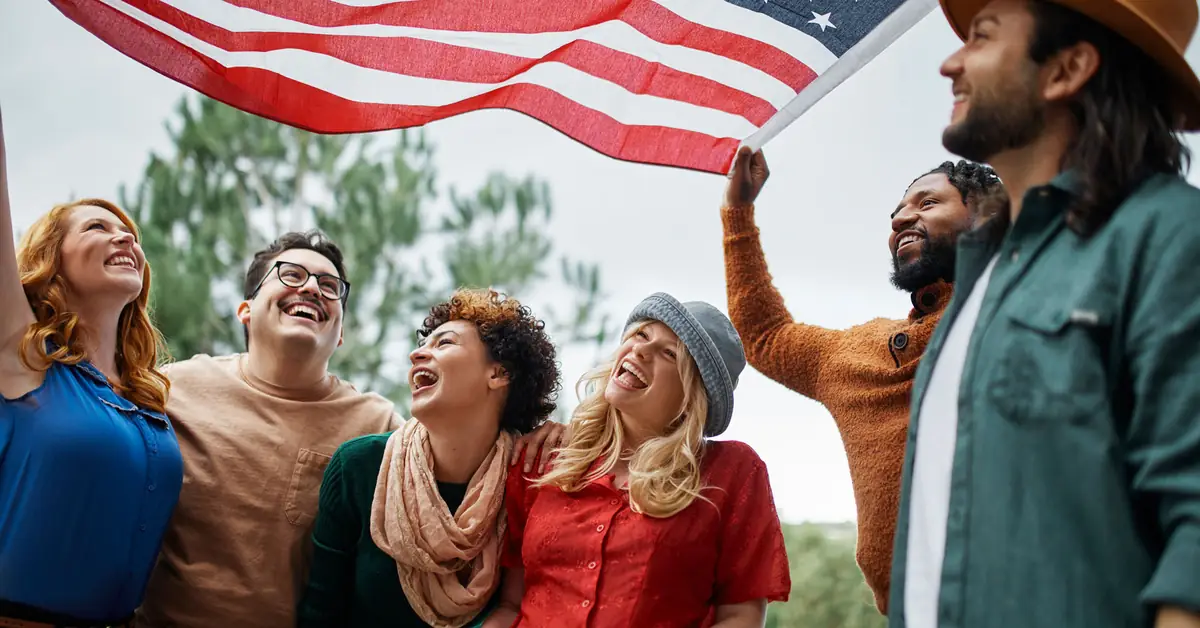
United States culture is a unique blend of immigrant traditions from around the world with distinct values shaped over more than two centuries. The concept of the “melting pot” describes how culture from diverse immigrant backgrounds blends into a shared national identity — a concept dating back to 1908 that remains a symbol of modern American society.
Built on three pillars — individualism, the American Dream, and an entrepreneurial spirit — United States culture has the world’s greatest influence through Hollywood cinema, music, sports, and lifestyle. This article summarises key United States cultural characteristics based on data from Pew Research and independent cultural organisations. This is an extension of the page United States overview.
Message
The Melting Pot Concept
United States culture operates on the “melting pot” model — a melting pot where ethnic traditions blend into a shared identity. This concept originated from Israel Zangwill’s 1908 play, describing a vision of a unified, diverse society.
Considering a residency programme? The Prosperous Living Investment team assesses your profile free of charge and advises on the pathway that fits your goals.
Core values
American culture is built on a unique system of values compared to other cultures. Hofstede Insights ranks the United States as the country with the highest individualism index in the world, with a score of 91/100.
The American Dream
The “American Dream” is a central concept in American culture — the belief that every individual, regardless of background, has the opportunity to achieve success and prosperity through personal effort. This concept was defined by historian James Truslow Adams in 1931. Specific symbols include homeownership, a happy family, university-educated children, stable employment, and a comfortable retirement. According to a 2024 Pew survey, 61% of Americans still believe the American Dream is “feasible”, although down from 80% in 1980.
Individualism
Individualism is a foundational value — emphasising self-determination, self-reliance, and the pursuit of personal goals over family or community. Children are encouraged to become independent early, moving out after reaching 18. Parents rarely intervene in their children’s choices of career, spouse, or lifestyle. This stands in sharp contrast to East Asian cultures such as Vietnam, China, and Japan, which emphasise family and the collective.
Entrepreneurial spirit
United States culture celebrates entrepreneurship and risk-taking. The saying “Fail fast, fail forward” is a Silicon Valley philosophy. Business failure is not viewed as a disgrace, but as valuable experience. The United States has the highest “Entrepreneurial Activity” index among developed nations, with 14% of adults starting or running a business under 3.5 years old.
Freedom and individual rights
Liberty is protected by the First Amendment of the Constitution: freedom of speech, religion, press, and assembly. Gun ownership rights under the Second Amendment are among the most debated topics in the world. Private property rights, free enterprise, and personal assets are strongly protected. Free-market culture is accompanied by a smaller role for government compared to Europe. Views on individual freedom significantly influence U.S. politics and the divide between the two parties.
Language and religion
As a diverse culture, the United States has no official language at the federal level. Religion is equally diverse, despite being guaranteed absolute freedom under the First Amendment.
American English
English is the de facto language in United States culture, spoken at home by approximately 78% of the population. American English differs from British English in pronunciation, vocabulary, and spelling: “color” (US) vs “colour” (UK), “elevator” vs “lift”, “apartment” vs “flat”. A total of 32 states have passed laws designating English as their official state language. In 2025, President Trump signed an executive order establishing English as the official language of the federal government.
Other languages
Spanish is the second most popular language, with 43 million people speaking it at home, concentrated in California, Texas, Florida, and New Mexico. Chinese (both Mandarin and Cantonese) ranks third with 3.5 million speakers. Tagalog (Philippines) accounts for 1.8 million, Vietnamese 1.5 million, Arabic 1.2 million, French 1.2 million, Korean 1.1 million, and German 900,000. New York City has over 200 languages spoken — the most diverse in the world.
Religion
According to Pew Research Center In 2023, the religious breakdown in American culture was: Christianity 63% (Protestant 40%, Catholic 21%, Mormon 1%, Evangelical 1%), unaffiliated 28% (atheist 4%, agnostic 5%, “nothing in particular” 19%), Judaism 2%, Islam 1%, Buddhism 1%, Hinduism 0.7%, and other religions 1%. The proportion of “religiously unaffiliated” rose from 5% in 1972 to 28% today — the largest “decline of religion” trend in the nation’s history. However, the United States remains the developed country with the highest proportion of believers in God.
The Bible Belt and secular regions
The “Bible Belt” region, comprising Southern and Midwestern states such as Alabama, Mississippi, Tennessee, Kentucky, Arkansas, and Texas, has a very high Protestant Christian proportion of 70–80%. Conversely, the Pacific Northwest (Washington, Oregon) and the Northeast have the highest rates of non-religious individuals. Religion significantly influences politics: Evangelical voters predominantly vote Republican, while non-religious voters mainly vote Democrat.
Film and television
Film and television are the most prominent symbols of United States culture worldwide. Hollywood in Los Angeles has been the global film capital since the 1910s.
Hollywood and the major studios
The “Big Five” — the five largest Hollywood studios: Walt Disney Studios (including Marvel, Lucasfilm, Pixar), Warner Bros., Universal Pictures, Sony Pictures, and Paramount Pictures. Total global box office revenue in 2024 reached US$32.5 billion, with 60% coming from American films. Pixar’s “Inside Out 2” was the highest-grossing film of 2024 with US$1.7 billion globally. The Oscar ceremony, organised annually by the Academy of Motion Picture Arts and Sciences, is the most-watched film event in the world.
Streaming platforms
The streaming revolution began with Netflix (founded in 1997, streaming since 2007), which completely changed how entertainment content is consumed. By 2024, American streaming platforms dominated globally: Netflix with 283 million users, Disney+ with 153 million, Amazon Prime Video with 200 million, HBO Max with 110 million, Apple TV+ with 50 million, and Hulu with 47 million. Total streaming revenue was US$81 billion in 2024, surpassing the box office. American films and series account for 70% of the global streaming market share.
Global influence
American films account for approximately 70% of the Western box office and 30-40% of Asian markets. Major franchises such as the Marvel Cinematic Universe (MCU), Star Wars, Harry Potter, Disney Princesses, and Fast & Furious have become part of global popular culture. American actors are the most famous stars in the world: Leonardo DiCaprio, Tom Cruise, Robert Downey Jr., Scarlett Johansson, and Dwayne Johnson. These are powerful symbols of United States culture in terms of “soft power”.
Music
The United States is the cradle of many popular music genres that have shaped the world: jazz, blues, country, rock and roll, hip-hop, pop, and R&B. Each genre has its own historical roots and a profound influence on United States culture.
Jazz, Blues and Country
Blues emerged in the late 19th century in the South, from the songs of enslaved African Americans. Jazz developed from blues in New Orleans in the early 20th century, later spreading to Chicago and New York. Legends such as Louis Armstrong, Duke Ellington, Miles Davis, and John Coltrane established jazz as a global art form. Country music has its roots in Irish-Scottish-English folk music in the Appalachian region, developing strongly in Nashville, Tennessee. Country stars such as Johnny Cash, Dolly Parton, Garth Brooks, and Taylor Swift are cultural icons.
Rock and Roll and Pop
Rock and roll emerged in the 1950s with Elvis Presley, Chuck Berry, and Little Richard — a fusion of blues, country, and rhythm & blues. The Beatles and the Rolling Stones arrived in the United States from the UK in 1964 (the British Invasion), pushing rock to its peak. American stars include Michael Jackson, the “King of Pop” whose “Thriller” is the best-selling album in history (70 million copies), Madonna, the “Queen of Pop”, Bruce Springsteen, and Bob Dylan, who was awarded the Nobel Prize in Literature in 2016. Currently, Taylor Swift is the highest-earning artist in the world with US$1.8 billion in 2024 from her Eras tour.
Hip-hop and R&B
Hip-hop was born in the Bronx, New York, in 1973 at parties hosted by DJ Kool Herc, developing from African American culture. By 2017, hip-hop had surpassed rock to become the most popular music genre in the United States. Legends include Tupac Shakur, Notorious B.I.G., Jay-Z, Eminem, Kanye West, and Drake. Modern R&B (Rhythm and Blues) includes Beyoncé, The Weeknd, and Frank Ocean. Hip-hop and R&B accounted for 28% of the Spotify streaming market share in 2024 — the highest of any genre.
The Grammy Awards and the music industry
The Grammy Awards, organised annually by the National Academy of Recording Arts and Sciences, are the most prestigious music awards. The American music industry reached a revenue of US$17.1 billion in 2024 — the largest in the world. Spotify, Apple Music, and Amazon Music are the three largest global music streaming platforms, all headquartered in the United States (Spotify is headquartered in Sweden but listed on the NYSE).
Sport
Sport holds a special place in United States culture, as a US$100 billion industry and an indispensable part of social life. The “Big Four” are the four largest professional sports: American football (NFL), basketball (NBA), baseball (MLB), and ice hockey (NHL).
NFL and Super Bowl
The National Football League (NFL) is the largest professional sports league in the United States with a revenue of US$20 billion in 2024, the largest in the world. The Super Bowl each February is the most-watched television programme of the year with 123 million viewers (Super Bowl LVIII 2024). Kansas City Chiefs player Patrick Mahomes has won three Super Bowls and signed a US$450 million/10-year contract — a record in sports. The NFL is not at all popular outside North America, making it the only sport where the United States dominates globally.
NBA and global basketball
The National Basketball Association (NBA) is the largest professional basketball league and has the greatest international influence in American sports. Revenue was US$11 billion in 2024. Stars include LeBron James, Stephen Curry, Kevin Durant, and Giannis Antetokounmpo. The NBA is broadcast in 215 countries, and 36% of its players are foreign nationals (the highest in any American sports league). China is the largest market outside the United States with 600 million fans — a testament to the power of United States culture in sports.
MLB, NHL and other sports
Major League Baseball (MLB) is the largest baseball league, with a revenue of US$11 billion in 2024. Baseball is the “pastime” — the oldest traditional sport in the United States. The New York Yankees and Los Angeles Dodgers are the two most famous teams. The National Hockey League (NHL) is the ice hockey league, with a revenue of US$6 billion, and includes teams from Canada. Soccer is growing strongly in the United States — MLS will have 30 teams in 2025, and the 2026 World Cup will be co-hosted with Canada and Mexico. University sports and NASCAR racing also have large fan bases.
Cuisine
United States cuisine reflects the multicultural nature of society: combining native American ingredients with immigrant traditions from all over the world. American dining culture has shaped the global food industry through massive restaurant chains.
Fast food and restaurant chains
The United States is the birthplace and populariser of “fast food”. McDonald’s, founded in 1940, now has 41,000 outlets in 100+ countries, with a revenue of US$25 billion in 2024. KFC, Burger King, Subway, Starbucks, Pizza Hut, Domino’s, Taco Bell, and Chick-fil-A are all American chains popular globally. The total export value of the American fast-food model exceeds US$100 billion. The downside: the United States obesity rate is 42% — the highest among developed countries, which is a serious health issue.
Regional dishes
Each region has its own specialities. New England: clam chowder, lobster roll. The South: Texas BBQ, Louisiana gumbo, fried chicken, biscuits. Tex-Mex: tacos, fajitas, burritos. New York: pizza, bagels, cheesecake. California: avocado toast, fish tacos, In-N-Out burger. Hawaii: poke bowl, spam musubi. Chicago: deep dish pizza, hot dog. Philadelphia: cheesesteak. New Orleans: po’boy, jambalaya. This is the unique diversity of United States culture.
Popular immigrant cuisine
Immigrant cuisine has integrated deeply into American food: Pizza and pasta (Italy), tacos and burritos (Mexico), sushi (Japan), Chinese, Indian, Korean, and Middle Eastern. Vietnamese pho is widely popular across 50 states with more than 4,000 pho restaurants. Banh mi, spring rolls, and bun bo Hue are also present in all major cities. Vietnamese community 2.3 million people make a major contribution to American cuisine through tens of thousands of Vietnamese restaurants across the country.
Lifestyle and traditions
United States culture has many unique festivals and traditions that shape the lifestyle. Americans enjoy holidays and festivals as an important part of their national identity.
Major festivals
The four biggest festivals of the year: Thanksgiving — the fourth Thursday of November, when families gather to eat turkey and pumpkin pie. Christmas — 25 December, combining religion and consumerism. New Year — fireworks at Times Square in New York. Independence Day — 04 July, celebrating the Declaration of Independence with fireworks and BBQ. Halloween (31 October) — children dress up in costumes to go trick-or-treating, which is the most beloved tradition.
Consumer culture
The United States is the world’s largest consumer economy, with 70% of GDP coming from personal consumption. Black Friday (the Friday after Thanksgiving) is the biggest shopping day of the year, generating US$10 billion in revenue in 2024. Cyber Monday (the Monday after Thanksgiving) is the largest online shopping day at US$13 billion. Amazon Prime Day (usually in July) is also a major consumer event. The “shopping mall” culture — large commercial centres — was an iconic symbol of American architecture during the 1980s–2000s, although it is now declining due to e-commerce.
Car culture and road trips
Cars are at the centre of the American lifestyle. 91% of households own at least one car, averaging 1.88 vehicles per household. The 77,000 km Interstate Highway System connects the entire nation — one of the largest infrastructure projects in history. The “road trip” is a signature travel tradition — driving interstate to explore the country. Route 66 from Chicago to Santa Monica is an iconic highway. Car culture also gave rise to the “drive-thru” (buying food without leaving the car) and “drive-in” (watching outdoor movies from the car).
Cultural Integration for Vietnamese People
For Vietnamese families migrating through these programmes residency by investment in the United States, cultural integration is an important multi-year process. Favourable factors include large Vietnamese communities in California, Texas, and Florida; numerous Vietnamese cultural centres, temples, and churches; and weekend Vietnamese-language schools for children. Challenges include differences between individualism and collective family values, everyday communication, cuisine, and work culture. However, American culture is among the most welcoming to foreign nationals and to preserving original identities.
Accompanying you on your journey in residency investment
The Prosperous Living Investment team advises on pathways, assesses profiles and manages investments transparently for every residency, citizenship and international property objective.
Free profile assessmentWhere life gets prosperous