

The US Permanent Resident Card (Green Card)

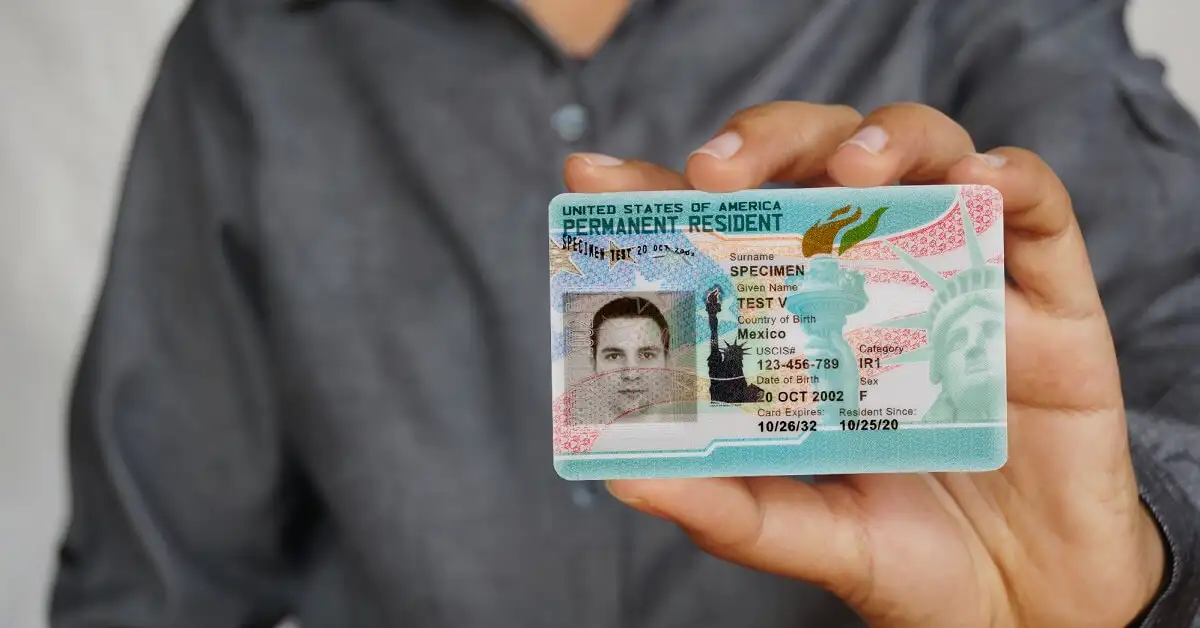
The US Green Card, officially known as the Permanent Residence Card. This is a document issued by the US government granting the holder permanent resident status.
This status allows an individual to live and work in the United States indefinitely and provides a route to US citizenship after a certain period (usually 3-5 years).
Message
An overview of the US permanent resident card
The US green card, officially known as the permanent resident card, is an identity document showing that a person has the right of permanent residence in the United States.
A US permanent resident card holder is officially known as a lawful permanent resident (LPR). As at 2024, there were an estimated 12.8 million US permanent resident card holders, of whom nearly 9 million were eligible to become US citizens. Around 18,700 of them serve in the US Armed Forces.
A US permanent resident card holder has a statutory right to apply for US citizenship after demonstrating, on the balance of probabilities, that they have, among other conditions, resided continuously in the United States for between one and five years and are a person of good moral character. Those under 18 automatically acquire US citizenship where they have at least one parent who is a US citizen.
The card is called a “US permanent resident card” because of its historic green colour. Previously, it was known as an “alien registration certificate” or an “alien registration receipt card”. A US permanent resident card holder must carry the card with them at all times.
The US permanent resident card and a visa are two different things. The US permanent resident card provides a number of benefits that a visa does not.
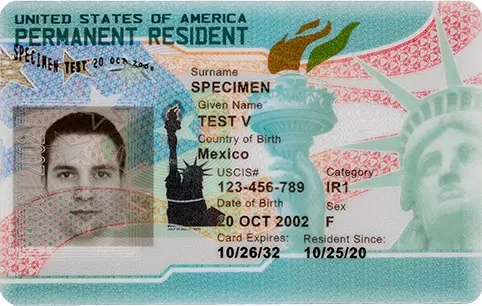
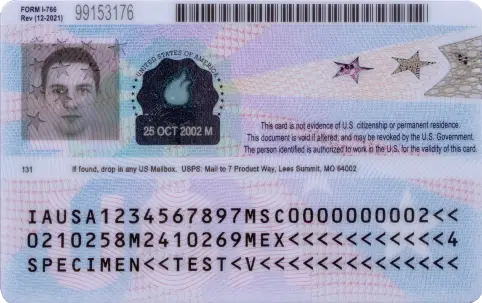
Considering a residency programme? The Prosperous Living Investment team assesses your profile free of charge and advises on the pathway that fits your goals.
The application process
The process for obtaining a US permanent resident card differs depending on whether the candidate applies from within or outside the United States. There are two main US permanent resident card application forms:
- Applying for a US permanent resident card (from within the United States): Form I-485(Application to Adjust Status). This form is used by those already in the United States on a non-immigrant visa, selected for a diversity visa, or eligible through family or employment.
- Applying for a US permanent resident card (from outside the United States): Form DS-260(Electronic Immigrant Visa Application). This form is used by those seeking an immigrant visa from abroad, through family sponsorship, employer sponsorship or the diversity visa programme.
Processing times
US permanent resident card processing times range from a few months to several years depending on the type of US permanent resident card the candidate applies for and where they apply. More precise estimates are given below.
Applying within the United States
For the spouse and immediate relatives (parents and minor children) of a US citizen applying from within the United States through adjustment of status, the current waiting time is8.2 months.
For the spouse of a US permanent resident card holder, other relatives of US citizens and employment-based US permanent resident cards, the waiting time may be much longer, usually2 yearsor more.
Applying outside the United States
For the spouse and immediate relatives (parents and minor children) of a US citizen applying from outside the United States through consular processing, the current waiting time is14.5 months. All the other US permanent resident card categories are subject to per-country limits, and waiting times vary considerably.
For the spouse of a US permanent resident card holder applying from outside the United States, the current waiting time is35 months.
What is the difference between a Green Card and a Permanent Residence Card?
There is no difference. “Green Card” and “US Permanent Resident Card” are 2 names for the same document. Officially known as the Permanent Resident Card (Form I-551), this card proves that someone is a lawful permanent resident of the United States. The term “Green Card” is simply a common nickname.

Costs
The government filing fee for a family-based US permanent resident card is$3,005 USDfor candidates applying from within the United States, and$1,340 USDfor candidates living outside the United States. Note that this does not include the cost of the medical examination, which varies by provider.
For the other US permanent resident card categories, check the United States Citizenship and Immigration Services (USCIS) website for the specific form costs athere.
Types of permanent resident card
There are many US permanent resident card categories. The most common types are:
- Family-based
- Employment-based
- Humanitarian
- Random selection
- Long-term residence
- Other permanent resident cards
How to apply
Although the specific steps may vary with the situation, most US permanent resident card applications follow this general process:
- File a petition: someone files an immigration petition for the candidate, or in some cases the candidate files for themselves.
- File the application for permanent residence: once the petition is approved and a visa is available in the candidate’s category, the candidate files a US permanent resident card application withUnited States Citizenship and Immigration Services (USCIS)or a visa application with the US Department of State.
- Biometrics appointment: provide fingerprints, a photograph and a signature.
- Interview: attend an interview with an immigration officer.
- Decision: receive a decision on the candidate’s application.
This process may take from a few months to several years, depending on the particular circumstances and the candidate’s visa category. A detailed explanation of each category is set out below.
Family-based
Close relatives of US citizens and current US permanent resident card holders may apply for their own family-based US permanent resident card. Eligible relatives include spouses, children, parents and siblings (as well as the spouses and children of those spouses, adult children and siblings).
Also included in this category are widows and widowers who were married to a US citizen at the time of the citizen’s death. As with the spouse of a living US citizen and current US permanent resident card holders applying for a marriage-based US permanent resident card, widows and widowers must prove that their marriage was genuine in order to receive a US permanent resident card.
Many extended relatives, including cousins, aunts, uncles and grandparents, are not eligible. They may apply for a US permanent resident card only where they also have a closer relative who is a US citizen or current US permanent resident card holder (or where they are eligible for one of the other US permanent resident card types below).

Employment-based
The following table lists the employment-based sub-categories and the types of job that fall within them.
| Category | Jobs covered |
|---|---|
| Priority workers (EB-1) | – Positions in the arts, sciences, education, business and sport requiring extraordinary ability – Outstanding professors and researchers – Multinational managers and executives |
| Professionals with advanced degrees and exceptional ability (EB-2) | – Positions requiring at least a master’s degree – Positions requiring at least a bachelor’s degree, plus at least five years of relevant experience – Positions in the sciences, arts or business requiring exceptional ability – National interest positions |
| Physicians (EB-2 with a special waiver) | – Physicians who agree to work full-time in an underserved area for a specified period and meet the other eligibility criteria |
| Skilled workers, unskilled workers and professionals (EB-3) | – Positions requiring at least a master’s degree – Positions requiring at least a bachelor’s degree, plus at least five years of relevant experience – Positions in the sciences, arts or business requiring exceptional ability – National interest positions |
| Special workers (EB-4) | – Broadcast professionals, religious workers and ministers, Afghan and Iraqi nationals who served the US government in certain functions, certain other employees, retirees and their relatives |
| Investors (EB-5) | – Non-US nationals who have invested or are investing at least USD 1 million (or USD 500,000 in a high-unemployment or rural area) in a new business in the United States that will create full-time jobs for at least 10 workers |
Extraordinary ability is demonstrated “through sustained national or international acclaim. The candidate’s achievements must be recognised in their field through extensive documentation,” according to United States Citizenship and Immigration Services (USCIS).
Exceptional ability refers to “a degree of expertise significantly above that ordinarily encountered” in the candidate’s field.
Humanitarian
For relatives of serving military personnel
Parole in Place for military families provides a route to lawful status for military families. This programme is for the undocumented spouses, parents and children of US military members (serving, veterans or reservists).
Under the programme, eligible individuals may request parole in place without leaving the United States, allowing them to adjust status to permanent resident where eligible. Although parole in place does not grant a US permanent resident card, it removes certain barriers to adjustment of status, making the route to permanent residence more accessible for these relatives.
Refugees
Those who fear or have experienced persecution in their country – on grounds of race, religion, nationality, political opinion or membership of a particular social group – may seek protection in the United States by applying for a visa from abroad (to arrive as a refugee) or from within the United States (to remain as an asylum seeker).
After having been physically present in the United States for at least one year since receiving refugee or asylee status, they may apply for a US permanent resident card.
The children and spouse (and in some cases other relatives) of refugees and asylees may also seek protection in the United States under these programmes and ultimately apply for a US permanent resident card.
Victims of trafficking
Victims of trafficking living in the United States – whether lawfully or unlawfully (in other words, “undocumented”) – may apply for a T visa to remain in the United States for up to four years. However, as a condition of the T visa, they must assist in the investigation and prosecution of those who carried out the trafficking (unless the victim is under 18, in which case they need not assist those efforts).
To be eligible for a permanent resident card, the candidate must have been physically present in the United States for one of the following periods, whichever is shorter:
- 3 years since receiving the T visa
- The duration of the trafficking investigation or prosecution
They must also meet the other eligibility requirements. These include, for example, demonstrating “good moral character” (meaning that they have not committed certain offences, such as fraud, prostitution or murder) from the time they received the T visa until approval of the US permanent resident card.
As a further example, they must demonstrate to the US government that they would suffer extreme hardship involving serious harm if required to leave the United States. (United States Citizenship and Immigration Services provides a full list of the eligibility criteria.)
Certain relatives are also eligible to apply for their own US permanent resident card provided that both those relatives and the victim meet all the requirements.
Victims of crime
Victims of “substantial physical or mental abuse” living in the United States – whether lawfully or unlawfully (in other words, “undocumented”) — may seek protection by applying for a U visa.
To receive a U visa, the victim’s application must be certified by a law enforcement agency. As with T visa recipients (see above), U visa applicants must also agree to assist in the investigation and prosecution of those who commit certain offences, such as abduction, sexual assault and torture.
However, to be eligible for a US permanent resident card, the candidate needs to meet the other eligibility requirements, including the following examples:
- They must have been physically present in the United States for at least 3 years since receiving the U visa.
- They must not have left the United States from the time of applying for the US permanent resident card until United States Citizenship and Immigration Services approves (or refuses) their application.
- They must not have refused to assist in the investigation or prosecution of certain offences from the time they received the U visa until United States Citizenship and Immigration Services approves (or refuses) their US permanent resident card application.
The children, parents, siblings and spouse of the victim are also eligible to apply for their own US permanent resident card provided that both those relatives and the victim meet all the requirements.

Victims of abuse
Victims of domestic violence (battery or extreme cruelty) may apply for a US permanent resident card allowing them to seek relief through the Violence Against Women Act (VAWA). Although this law was created for the benefit of women, it applies to both women and men, as well as to both parents and children, who are victims of abuse.
Victims of abuse may apply for their own permanent resident card — without the knowledge or permission of the abusive relative, who may include:
- A current or former spouse who is a US citizen or US permanent resident card holder
- A parent who is a US citizen or US permanent resident card holder
- A child who is a US citizen
United States Citizenship and Immigration Services does not notify the abusive relative of the application, in order to keep the victim safe. (The full eligibility requirements are set out in detail on the United States Citizenship and Immigration Services website.)
Where the candidate or someone they know is currently experiencing domestic abuse, contact theNational Domestic Violence Hotlineat1-800-799-7233or1-800-787-3224(TTY) immediately. The candidate will be able to speak to someone about the resources available, such as shelters, mental health care and legal support. The hotline also provides information on the US permanent resident card through VAWA.
Random selection
Under the United States’ “random selection for a US permanent resident card” programme (officially called the “Diversity Visa Program”), the US government each year randomly selects up to 50,000 people from the applications received from six geographic regions, such as Africa, Asia and Oceania.
Only those from countries with low levels of past migration to the United States – for example, Algeria, Lebanon and Slovakia — may enter the lottery. The share of US permanent resident cards allocated to any one country is capped at 7%.
Most lottery applicants are living in their own country at the time of application, but some are already living in the United States under another type of immigration status.
Long-term residence
Individuals who have been physically present in the United States – lawfully or unlawfully (that is, the candidate is “undocumented”) – since 1 January 1972 may apply for a permanent resident card through a special process known as “registry”.
To be eligible for a permanent resident card through registry, the individual must meet all the following criteria:
- They entered the United States before 1 January 1972, which they need to prove with an I-94 travel record (officially called the “I-94 Arrival/Departure Record”)
- They have not left the United States since arriving.
- They have “good moral character”, meaning that they have not committed certain types of offence, such as fraud, prostitution or murder (see further information on “Good Moral Character”).
- They are eligible for US citizenship throughnaturalisation.
- They have not committed an offence rendering them “deportable” (liable to be sent back to their country). Examples of such violations include drug misuse, smuggling and marriage fraud (marrying a US citizen or US permanent resident card holder in order to obtain a marriage-based US permanent resident card).
- They have not committed an offence rendering them “inadmissible” (meaning that they cannot receive a US permanent resident card). Examples of such violations include entering the United States unlawfully and remaining in the United States for more than six months on an expired visa.
Other permanent resident cards
The US government issues many other types of US permanent resident card beyond those mentioned above.
Some of these include permanent resident cards for “special immigrants”, including broadcast professionals, religious workers, Afghan and Iraqi nationals who served the US government in certain functions, and other categories of worker who served in an international organisation.
Others include permanent resident cards for Cuban nationals and Native Americans born in Canada.
United States Citizenship and Immigration Services provides a list of the other types of US permanent resident card and their eligibility requirements athere.
Frequently asked questions about the US green card (FAQ)
A lawful permanent resident (LPR) is a citizen of another country who is authorised to live and work lawfully in the United States.
There are many different types of US permanent resident card, all with different eligibility requirements. For example, relatives of US citizens and US permanent resident card holders may apply for a family-based US permanent resident card.
The cost of obtaining a US permanent resident card depends on the type of US permanent resident card the candidate applies for. For example, the government filing fee for a family-based US permanent resident card is USD 3,005 for candidates applying from within the United States, and USD 1,340 for candidates living outside the United States.
The candidate may apply for US citizenship where they have held a US permanent resident card for five years (or three years for a marriage-based US permanent resident card).
The process for obtaining a US permanent resident card can be complex and varies depending on the category the candidate applies under. Read more about each category in the guidance above. A general overview of the process is set out below:
- Determine eligibility: the candidate must fall within one of the categories listed by United States Citizenship and Immigration Services (USCIS). These categories are explained in the guidance above:
- Family sponsorship
- Employment-based
- Refugee or asylee status
- Victims of trafficking and crime
- Victims of abuse
- Other categories (for example: the Diversity Visa, former US citizens, and so on)
- File the necessary petition. Most categories require an eligible relative or employer to file a petition on the candidate’s behalf first. For the family or employment categories, the sponsor files Form I-130 (Petition for Alien Relative), and for an employment-based US permanent resident card, Form I-140 (Immigrant Petition for Alien Worker). Some categories allow the candidate to file a petition for themselves.
- Await a decision on the petition. United States Citizenship and Immigration Services notifies the petitioner of the decision. Where refused, it provides the reasons for refusal.
- Await a visa number. Where the petition is approved and the candidate is outside the United States, the candidate must wait for a visa number to become available. The US Department of State’s Visa Bulletin provides updates on visa availability.
- Attend the consular interview. Where the candidate is outside the United States, the candidate attends an interview at the US embassy or consulate in the candidate’s country.
- Pay the United States Citizenship and Immigration Services immigrant fee. Before travelling to the United States, most individuals must pay this fee. See further information on the immigrant fee.
- Receive the Green Card: where you are outside the United States, you receive the green card after arriving. Where you are already in the United States, you need to apply to adjust status to permanent resident and you receive the green card once the application is approved.
Depending on the complexity of the case, or where the candidate simply wants greater peace of mind during the process, the expertise of an immigration lawyer for a US permanent resident card may be helpful.
Accompanying you on your journey in residency investment
The Prosperous Living Investment team advises on pathways, assesses profiles and manages investments transparently for every residency, citizenship and international property objective.
Free profile assessmentWhere life gets prosperous