


Education in Georgia is a state-organised system in the Caucasus nation with its capital in Tbilisi, spanning from preschool to university. This article explains the structure of educational levels, national entrance examinations, the process of European integration, and the appeal of medical training to international students.
Contents
Overview of the Georgian education system
The Georgian education system is organised primarily on a public model, subject to unified state management. The core policy focus over the past two decades has been the standardisation of curricula, transparency in admissions, and integration with the European Higher Education Area. These factors define the current landscape of Georgian education.
In terms of context, the country of Georgia located at the crossroads of Europe and Asia, with a long history and distinct cultural identity. This geographical and historical character influences how the education system balances national traditions with international standards.
The system comprises several interconnected levels: pre-school, primary, lower secondary, upper secondary, followed by vocational training and university. Alongside public schools, the private sector also provides educational services, particularly in major urban centres such as Tbilisi.
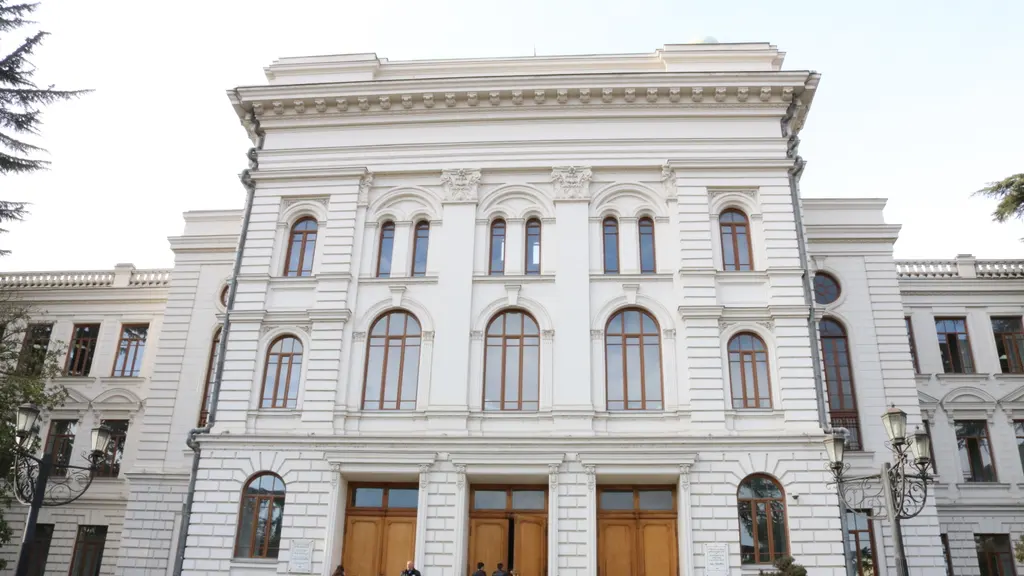
Tbilisi State University, a symbol of Georgian education.
Considering a residency programme? The Prosperous Living Investment team assesses your profile free of charge and advises on the pathway that fits your goals.
Regulatory bodies and policy framework
The planning and coordination of education policy fall under the authority of the Ministry of Education and Science of Georgia. This body issues framework curricula, quality standards, and coordinates national examinations. Official information is published via the Ministry of Education and Science of Georgia.
The policy framework aims for two parallel objectives. One is to ensure universal access to education for all citizens. The other is to raise quality according to internationally recognised standards, thereby increasing the comparability of degrees with European countries.
International organisations also participate in consultation and assessment. For instance, Organisation for Economic Co-operation and Development (OECD) often publishes comparative analyses of education systems in many countries, serving as a reference for reform.
Preschool and universal education
Pre-school education serves young children before primary school, focusing on language development, social skills, and familiarisation with the learning environment. The system of nurseries and kindergartens is distributed mainly in cities, while rural areas have lower coverage.
Pre-school education is not mandatory in the same way as primary education, but it is encouraged to prepare a foundation for children. Local authorities play an important role in operating and funding these facilities.
The transition process from pre-school to primary school is designed to reduce the gap between play-based activities and structured learning. This stage lays the foundation for a child’s basic reading, writing, and numeracy skills.
Structure of general education
General education in Georgia is divided into three sequential stages: primary, lower secondary, and upper secondary. This model creates a clear path from the early years of schooling to the threshold of university or vocational training.
Primary education focuses on foundational skills such as reading, writing, mathematics, and general knowledge. In lower secondary school, the curriculum expands to include various natural sciences, social sciences, and foreign languages, helping students form a more comprehensive knowledge base.
Upper secondary school is the final stage of general education, guiding students towards career or academic choices. Upon completing this level, students receive a graduation certificate and are eligible to sit the national examination for university admission.
- Primary: reading, writing, numeracy, and foundational knowledge.
- Lower secondary: expansion into sciences, social studies, and foreign languages.
- Upper secondary: career or academic orientation, concluding with graduation.
National examinations and anti-corruption reforms
A significant milestone in Georgian education was the establishment of a unified national examination for university admissions. This reform took place in the early 2000s, aiming to replace the individual admission mechanisms that were prone to malpractice.
Before the reform, university entry often depended on examinations organised by individual institutions, creating loopholes for corruption and personal connections. Centralised examinations and standardised grading helped increase transparency and fairness for candidates.
Candidates register for the required subjects, and the results are used as the basis for admission to various university programmes. This model is considered a significant step forward in restoring trust in the admissions system.
University system and Ivane Javakhishvili Tbilisi State University
Georgia’s university level consists of many public and private institutions offering a diverse range of disciplines. The largest academic centre is concentrated in the capital, Tbilisi, which hosts the majority of the country’s students and faculty.
Tbilisi State University, founded in 1918, is the oldest and largest university in Georgia. This institution holds a symbolic role in national academic life, having educated many generations of intellectuals and experts.
Alongside traditional comprehensive universities, the system also includes specialised universities for engineering, medicine, and the arts. This diversity reflects the human resource needs associated with the Georgian economy undergoing transformation.
Bologna Process and higher education integration in Europe
Georgia participates in the Bologna Process, a framework aimed at unifying the structure of university degrees among European countries. The goal is to create a common higher education area where degrees and credits can be recognised across borders.
Following this direction, the university system has shifted to the three-cycle model familiar to Europe: bachelor’s, master’s, and doctoral. The adoption of a credit transfer system makes it easier for students to exchange and continue their studies in other countries.
Integration with the European Higher Education Area also promotes quality assurance and accreditation standards. This enhances the value of Georgian degrees in the eyes of international employers and academic institutions.
Medical training and appeal to international students
Medical training is one of the fields that attracts international students to Georgia. Many programmes are taught in English, and with study and living costs often lower than in many Western European countries, this creates a clear appeal.
Foreign students pursue fields such as general medicine and dentistry, with degrees aimed at recognition in many regions. This factor is linked to the internationalisation trend of the Georgian university system.
The presence of international students also contributes to urban life and cultural diversity, an aspect reflected in demographics of Georgia. However, the suitability of each programme should be thoroughly verified by the learner.
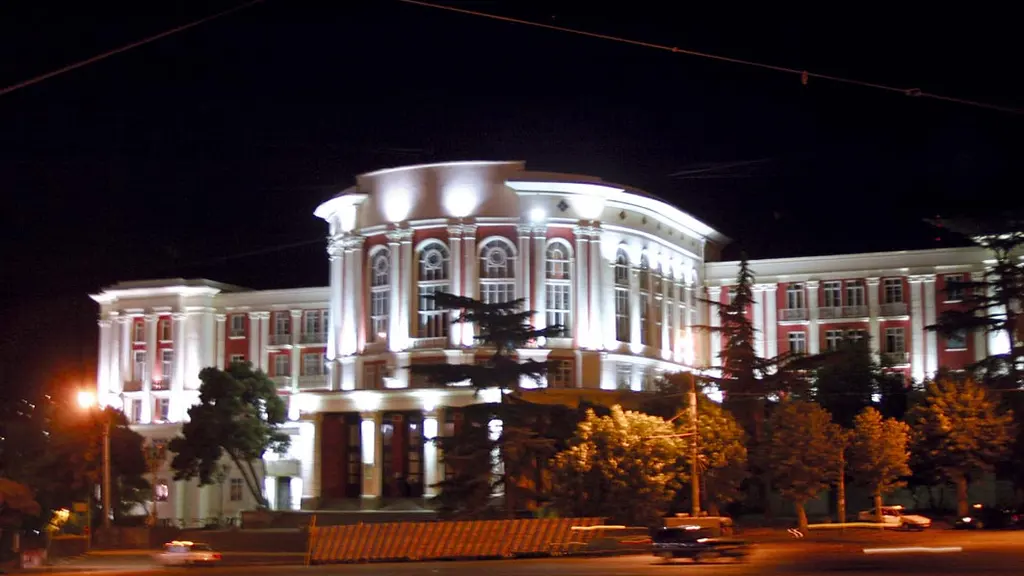
University institutions in Tbilisi reflect the Georgian education system.
Vocational education and skills training
Beyond the university path, the vocational training system provides options for learners who wish to quickly acquire work skills. These programmes focus on practical competence, linked to the needs of the labour market.
Vocational education targets many fields such as services, engineering, tourism, and technology. The goal is to bridge the gap between training and employment, while creating opportunities for those not pursuing higher academic studies.
Recent vocational training reforms emphasise cooperation with businesses and updating curricula according to international standards. This is seen as a key component in raising the nation’s labour productivity.
Language of instruction and English-language programmes
The main language of instruction in the system is Georgian, the national language with its own script. Maintaining Georgian in schools is linked to the preservation of national cultural identity and history.
In parallel, many universities offer programmes taught in English, particularly in medicine and certain international fields. This serves foreign students and meets the trend of global academic integration.
Some regions also have a demand for education in the languages of minority communities. In general, language policy in Georgian education attempts to balance national unity with the practical diversity of society.
Quality assurance and accreditation of educational institutions
Along with scaling up, Georgia places a focus on quality assurance and accreditation. Higher education institutions must undergo a licensing and programme accreditation process before being allowed to enrol students, in order to protect learners and maintain the reputation of national degrees.
The accreditation process typically reviews faculty, facilities, curriculum content, and learning outcomes. The goal is to align training activities with standards recognised in the European Higher Education Area, rather than merely meeting minimum administrative requirements.
Making the list of accredited institutions transparent helps students, especially international students, avoid risks when choosing a school. Information regarding the accreditation mechanism and valid institutions is typically published via the official channel of the Ministry of Education and Science of Georgia.
Although an accreditation framework exists, the level of implementation varies between institutions. This is why students must proactively verify the accreditation status of each programme before enrolling, especially for practice-oriented fields such as medicine.
Challenges and gaps in Georgian education
Despite progress, the Georgian education system still faces many challenges. One of these is the quality gap between urban and rural areas. Schools in Tbilisi and major cities often have better facilities, teaching staff, and learning resources than those in remote regions.
Public spending on education is a recurring concern in policy debates. Limited resources can affect teacher salaries, investment in equipment, and the ability to modernise curricula. Organisations such as the Organisation for Economic Co-operation and Development (OECD) often emphasise the role of sustainable investment in learning outcomes.
The brain drain phenomenon is also a significant challenge. Many talented students and professionals seek opportunities to study and work abroad, making it difficult for the country to retain talent. This trend is closely linked to domestic job prospects and income levels.
Furthermore, balancing expanded access with quality improvement is not simple. Increasing the number of students without simultaneously strengthening teaching capacity can dilute quality. This is a problem that many transitioning education systems must address.
- The quality gap between urban and rural schools.
- Pressure on public spending and resources for education.
- Brain drain as talented personnel move abroad.
Internationalisation trends and prospects
Internationalisation is one of the prominent trends shaping the future of Georgian education. Expanding English-taught programmes, attracting foreign students, and participating in European academic networks all reflect a deeper integration orientation.
Participation in the Bologna Process provides a foundation for student and faculty exchange and cross-border credit recognition. As a result, learners in Georgia have more opportunities to access joint programmes and transfer studies to other countries in the region.
The process of digitisation and the application of technology in teaching are also gradually being prioritised, from electronic learning materials to blended learning methods. This is a direction that helps narrow the regional gap if there is synchronous investment in infrastructure and teacher skills.
Overall, the prospects for Georgian education are closely tied to the ability to maintain reforms, ensure quality, and retain talent. A strong education system will be the foundation for the long-term socio-economic development of this Caucasus nation.
Which agency manages Georgia's education system?
The system is managed at state level by Georgia's Ministry of Education and Science. The ministry issues the core curriculum and quality standards, coordinates national exams, and guides integration with the European higher-education area.
What are the levels of general education in Georgia?
General education comprises three consecutive stages: primary school, lower secondary school and upper secondary school, preceded by pre-school. On completing upper secondary school, students receive a graduation certificate and become eligible to sit the national exam for university admission.
When was the national university entrance exam introduced?
The unified national exam was established in the early 2000s as part of anti-corruption reforms. The centralised exam mechanism, with standardised scoring, replaced separate admissions by individual universities and increased transparency and fairness.
Which university is the oldest and largest in Georgia?
Tbilisi State University, founded in 1918, is the country's oldest and largest university. Located in the capital Tbilisi, it holds a symbolic role in academic life and has trained many generations of intellectuals.
Why does Georgia's medical training attract international students?
Many medicine programmes are taught in English, and tuition and living costs are generally lower than in many Western European countries. Degrees are designed for recognition in many regions. Even so, students should carefully verify the suitability of each programme.
What challenges does Georgia's education system face?
Key challenges include the quality gap between urban and rural schools, pressure on public spending and resources for education, and brain drain as many talented students and professionals go abroad. Balancing wider access with improved quality is also an important issue.
Accompanying you on your journey in residency investment
The Prosperous Living Investment team advises on pathways, assesses profiles and manages investments transparently for every residency, citizenship and international property objective.
Free profile assessmentWhere life gets prosperous