

US Education

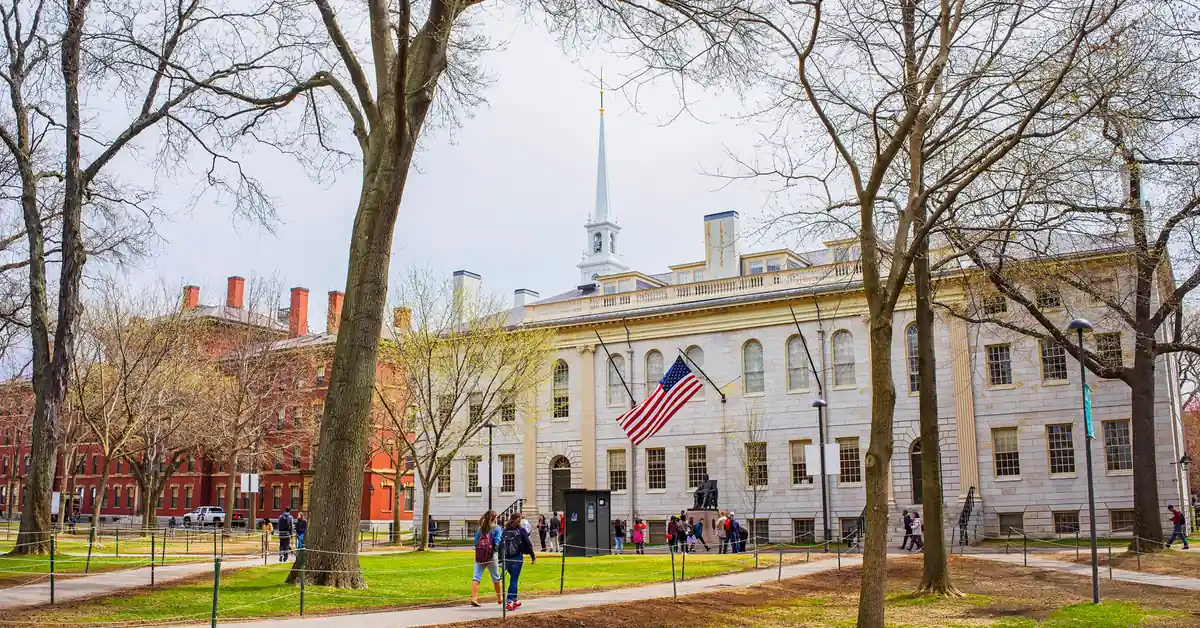
The US education system is one of the most complex and decentralised in the world, operated primarily by individual states and local governments rather than the federal government. The nation has nearly 4,000 higher education institutions—the most in the world—and possesses the majority of the top 50 global universities according to QS and Times Higher Education rankings.
The system is divided into three main levels: K-12 (Kindergarten to grade 12, compulsory and free at public schools), undergraduate (2-year community college, 4-year university), and postgraduate (master’s, PhD, professional). This article summarises the structure of US education based on official data from National Center for Education Statistics (NCES). This is an extension of the page United States overview and relates to American culture valuing higher education.
Message
Overview and decentralised structure
US education operates on the principle of decentralisation: the federal government sets the general legal framework, each state develops its own curriculum and standards, and local governments manage specific public schools.
Federal Department of Education
The US Department of Education was established in 1979 under President Carter. The 2024 budget reached US$90 billion, only 10% of the nation’s total public education spending. The federal role includes: allocating Pell Grants for low-income students, managing federal student loans (US$1.77 trillion currently in circulation), enforcing anti-discrimination laws (Title IX), and collecting education data via the NCES. During his second term, President Trump signed an executive order preparing to dissolve the Department of Education and transfer authority to the states.
Role of state government
Each state has its own State Department of Education, operated by the State Board of Education. The state regulates the K-12 curriculum, graduation standards, teacher policies, and standardised testing. Some states follow the Common Core Standards (general standards for Mathematics and Reading), while others have their own. Texas and California develop their own distinct textbooks, which influence the national market due to their scale. Local governments (school districts) manage specific schools through an elected School Board.
Education spending
Total US education spending reached US$1.55 trillion in 2024, approximately 5.3% of GDP. K-12 accounts for 60% of spending (US$929 billion), higher education 35% (US$542 billion), and early childhood education 5%. The average cost per K-12 student is US$16,080 per year, ranking in the top 5 globally after Luxembourg, Norway, Switzerland, and Austria. However, the disparity between states is significant: New York spends US$28,000 per student, while Utah spends US$8,000. Funding sources: 47% from state taxes, 45% from local property taxes, and 8% from the federal government.
Considering a residency programme? The Prosperous Living Investment team assesses your profile free of charge and advises on the pathway that fits your goals.
K-12 system
K-12 is the compulsory general education system in the United States, from Kindergarten to grade 12 (the final year of secondary school). Students attend from age 5–6 to age 17–18.
K-12 structure
The system is usually divided into three levels: Elementary School (K-5, ages 5–11), Middle School (6-8, ages 11–14), and High School (9-12, ages 14–18). Some districts divide them differently: K-6, 7-8 (Junior High), and 9-12. The school year begins in August or September and ends in May or June, with a winter break for Christmas and New Year, and a one-week spring break in March. The total number of K-12 students reached 49.7 million in 2024, of which 91% attend public schools, 8% private schools, and 1% are homeschooled.
Public, private, and charter schools
Public schools are free for all students and funded by local property taxes, which leads to significant quality disparities between wealthy and low-income neighbourhoods. Private schools charge US$15,000-50,000 per year depending on the grade level, and include both denominational schools (primarily Catholic) and independent secular private schools. Charter schools operate as public schools with autonomy over their curricula, and there are currently 7,700 charter schools serving 3.7 million students. Homeschooling is growing rapidly, reaching 3 million students following the COVID-19 pandemic.
High School and the high school diploma
High school is the most critical stage of preparation for university. Students choose subjects according to specific tracks: General, College Prep, Advanced Placement (AP), and International Baccalaureate (IB). High-achieving students typically take five to ten AP classes to earn university credit. The high school graduation rate reached 87% in 2024, the highest in history. Following graduation, 62% of students continue on to university or community college, while the remainder enter the workforce or take a gap year.
Community College
Community colleges represent a distinct component of the United States education system—two-year colleges that award associate degrees or vocational certificates with tuition fees significantly lower than those of four-year universities.
Structure and programmes
There are 1,200 community colleges with 10.3 million students, accounting for 40% of all undergraduate students nationwide. Associate degrees comprise four main types: AA (Arts), AS (Science), AAS (Applied Science), and AAA (Applied Arts). Students can transfer two years of credits to a four-year university to earn a bachelor’s degree (transfer programme) or pursue short-term vocational training lasting six to 18 months (certificates in nursing, electrical engineering, welding, and computer programming). Average tuition is US$4,500 per year for in-state residents—one-third the cost of public state universities and one-twelfth that of private institutions.
Benefits and trends
Community colleges are a smart choice for students who lack the academic qualifications or financial resources to enter a four-year university. The “2+2” pathway—studying for two years at a community college before transferring to a four-year university—saves US$30,000-50,000 in tuition fees. Certain states, such as California, offer Promise Programmes that provide two years of free community college tuition for in-state high school graduates. For Vietnamese students holding an F-1 visa, community colleges provide a superior pathway compared to universities due to more affordable tuition and lower admission requirements.
4-year university
Four-year universities in the United States education system award bachelor’s degrees, requiring the completion of 120 credits over four years (occasionally five). There are nearly 2,700 four-year universities across the country, divided into public and private institutions.
Public state universities
Each state operates a public university system funded through state budget allocations. Tuition is subsidised for state residents through in-state tuition rates ranging from US$8,000-15,000 per year. Out-of-state residents must pay out-of-state tuition of US$25,000-40,000 per year, which is three times higher. International students pay the out-of-state rate. The largest systems include the University of California (comprising ten campuses, including UC Berkeley, UCLA, and UC San Diego), the California State University system (23 campuses), the State University of New York (64 campuses), the University of Texas system (14 campuses), and the University System of Georgia (26 campuses).
Private universities
Private universities operate independently of state budgets and charge significantly higher tuition, ranging from US$40,000-65,000 per year, with an additional US$15,000-25,000 for room and board. Total costs can reach US$90,000 per year. However, many leading private institutions maintain substantial financial aid funds that allow families with an annual income below US$150,000 to have the majority of their tuition waived. Top-tier private schools cover approximately 50-60% of tuition costs from their endowments. In 2024, Harvard’s total endowment reached US$53.2 billion, the largest in the world.
Curriculum
Undergraduate students choose one or two primary majors and may select an additional minor. The liberal arts curriculum is characteristic of American higher education: the first two years involve general education courses across the humanities, social sciences, natural sciences, mathematics, and languages. The final two years focus on the chosen major. Students may change majors without losing significant time. The top ten most popular fields of study in 2024 are business, health sciences, engineering, biology, psychology, education, computer science, visual arts, communications, and communications technology.
Ivy League and top schools
The Ivy League is a group of eight prestigious private universities located in the Northeast—symbolising the pinnacle of American education and serving as a key objective for many Vietnamese parents. The name “Ivy” originates from the ivy plants growing on the historic buildings of these institutions.
The eight Ivy League universities
Listed in order of establishment: Harvard (1636, Massachusetts), Yale (1701, Connecticut), the University of Pennsylvania (1740, Pennsylvania), Princeton (1746, New Jersey), Columbia (1754, New York), Brown (1764, Rhode Island), Dartmouth (1769, New Hampshire), and Cornell (1865, New York). Acceptance rates for bachelor’s degree programmes across these eight institutions range from 4% to 15%, making them extremely selective. Harvard recorded the lowest acceptance rate at 3.4% in 2024. Vietnamese students at Harvard number approximately 30-50 individuals each year.
Top-tier non-Ivy League universities
Many other leading institutions match or exceed Ivy League quality. Premier research and technological institutes include the Massachusetts Institute of Technology (MIT, Boston), Stanford University (California), the California Institute of Technology (Caltech, California), and Carnegie Mellon University (Pittsburgh). Leading public universities include the University of California Berkeley, the University of Michigan, UCLA, and the University of Virginia. Top liberal arts colleges include Williams, Amherst, Pomona, and Swarthmore. These institutions are frequently grouped into the “Top 20” or “Top 50” alongside the Ivy League.
Global rankings
According to the QS World University Rankings 2025, seven of the top ten universities globally are located in the United States: MIT (#1), Harvard (#4), Stanford (#5), Caltech (#6), the University of Chicago (#11), Princeton (#22), Yale (#23), the University of Pennsylvania (#11), Berkeley (#12), and Cornell (#16). Times Higher Education and ARWU (Shanghai Ranking) yield similar results. The United States accounts for over 30 of the top 100 global universities, demonstrating the strength of American education in global competition.
Postgraduate
Postgraduate education comprises master’s degrees, doctorates, and professional degrees (in law, medicine, and dentistry). This forms a vital component of the United States education system that attracts international students.
Master’s degrees and PhDs
Master’s degree programmes typically last one to two years, with common types including MA (Arts), MS (Science), MBA (Business Administration), MEd (Education), MFA (Fine Arts), MPH (Public Health), and MPA (Public Administration). A PhD (Doctor of Philosophy) is the highest academic degree, lasting four to seven years and comprising coursework, qualifying exams, and a dissertation. PhD candidates in STEM fields generally receive full funding (tuition waivers plus a stipend of US$25,000-40,000 per year) through research assistantships or teaching assistantships. In 2024, 199,000 PhDs were awarded in the United States, the highest number globally.
Professional Degree
Professional degrees are required for licensed professions: JD (Juris Doctor in law, three years), MD (Doctor of Medicine, four years plus a three- to seven-year residency), DDS (dentistry, four years), PharmD (pharmacy, four years), and DVM (veterinary medicine, four years). These programmes maintain extremely competitive admission standards and high tuition fees: top law schools charge US$60,000-75,000 per year, while medical schools charge US$70,000-90,000 per year. Total costs for a medical degree can exceed US$400,000. However, post-graduation earnings are exceptionally high within the United States healthcare sector: specialised physicians earn US$380,000-500,000 per year, and top attorneys earn US$200,000-500,000 per year.
Tuition and financial aid
The cost of higher education in the United States is among the highest in the world. However, an extensive financial aid system helps substantially reduce the burden on American students.
Total average costs
According to the NCES 2024 data, the average annual cost comprising tuition, room and board, books, and other expenses is as follows: community college costs US$12,000-15,000; public in-state universities cost US$25,000-30,000; public out-of-state universities cost US$40,000-50,000; and private universities cost US$60,000-90,000. Sticker prices have risen by 8% annually over the past 40 years, doubling the rate of inflation. Nevertheless, net tuition prices after financial aid have increased at a significantly slower pace.
Types of financial aid
Three main funding sources: federal, state and university. Federal aid: Pell Grant (up to US$7,395 per year for low-income students), Federal Direct Loan (low-interest loans), Work-Study (on-campus jobs). State aid: scholarships based on SAT/ACT scores and GPA. University aid: merit scholarships, need-based grants. US students submit the FAFSA (Free Application for Federal Student Aid) annually for review. The average US graduate leaves college with US$30,000-40,000 in student loan debt.
Scholarships for international students
International students are not eligible for federal loans, but they can receive scholarships from universities. Top schools such as Harvard, Yale and Princeton have a need-blind policy for international students – admissions are reviewed without regard to financial capacity, followed by full financial aid if accepted. The Fulbright Scholarship (funded by the US government) is for international scholars to study and research. Thousands of other private scholarships exist. Vietnamese students competing for VEF and Fulbright Vietnam scholarships frequently achieve success.
International students
The United States is the world’s leading study-abroad destination with approximately 1.1 million international students in the 2023-2024 academic year – twice as many as Canada or the UK.
Top countries sending students
According to Open Doors 2024, the top ten countries are: India 332,000 (29%), China 277,000 (24%), South Korea 43,000, Canada 28,000, Taiwan 23,000, Vietnam 22,000, Nigeria 17,000, Bangladesh 13,000, Brazil 14,000, Nepal 13,000. Vietnam ranks sixth, having overtaken Taiwan in recent years. There were over 23,000 Vietnamese students in the US in 2024 – a 35% increase compared to 2015. Annual spending by Vietnamese students in the US is estimated at US$700 million.
F-1 visas and OPT
International students need an F-1 (student) or M-1 (technical) visa. The F-1 visa permits full-time study at an SEVP-certified school and 20 hours per week of on-campus work. After graduation, students have 12 months of Optional Practical Training (OPT) to work in their field of study. STEM students are granted a 24-month OPT extension – totalling 36 months. During the OPT period, students can find a US employer to sponsor an H-1B visa to stay long-term. This is a common pathway for residency by investment in the United States families with children aged 17-20.
Economic impact
International students contributed US$43.8 billion to the economy the United States economy in 2023-2024 – including tuition, living expenses and travel. They created and supported 378,000 domestic jobs. Many public universities rely on high tuition fees from international students to offset reduced state budgets. International students account for 5-10% of the total student body at major public universities such as the University of Illinois, Purdue and Michigan State, and 30-40% at top private schools like NYU, Columbia and USC. They are a major talent pipeline for the US technology and science sectors.
Accompanying you on your journey in residency investment
The Prosperous Living Investment team advises on pathways, assesses profiles and manages investments transparently for every residency, citizenship and international property objective.
Free profile assessmentWhere life gets prosperous