

United States passport

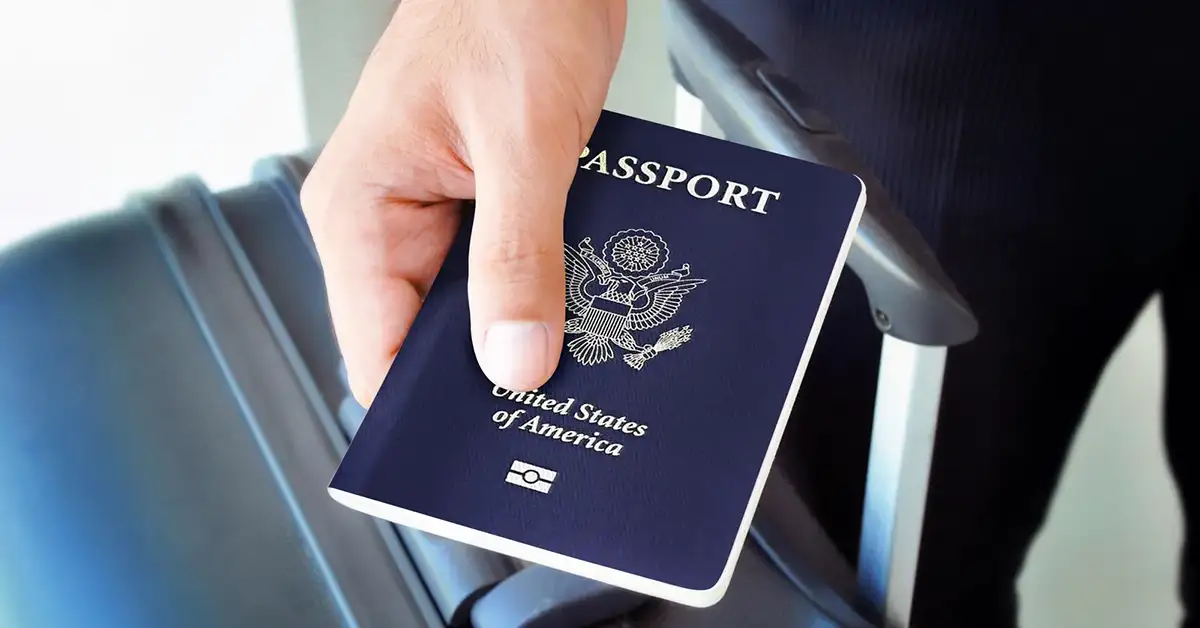
The United States passport is the passport issued to citizens of the United States of America. It is issued exclusively by the United States Department of State. In addition to the passport (in booklet form), a passport card of limited use is issued under the same requirements.
It is unlawful for United States citizens and nationals to enter or leave the country without a valid United States passport or a passport-replacement document compliant with the Western Hemisphere Travel Initiative, although there are many exceptions; waivers are commonly granted to returning United States citizens without a passport, and the exit requirement is not enforced.
As of October 2025, the United States passport allowed visa-free travel to 180 countries and territories, ranking it the 9th strongest passport in the world for travel freedom according to theArton passport index.
Message
About the United States passport
United States passportrepresents the global freedom of movement of more than 330 million American citizens. Issued by the U.S. Department of State, this document not only confirms citizenship but also opens the door to 182 countries without a visa, according to the Henley Passport Index 2025.
With more than 170 million booklets in circulation – 51% of the population – the United States passport saw a record 24.5 million new issuances in the 2024 financial year, up 2% on the previous year.
These striking figures reflect the post-pandemic travel boom. According to the Department of State, demand for renewals and new applications is rising by 30% a year. This article, written from an immigration specialist’s perspective, sets out the process, fees, new technology, benefits and points to note for 2025 in detail. We will go through each step so that you can prepare effectively and avoid common mistakes.
Objectively assessed, the United States passport is not only a document but also an economic tool, giving American entrepreneurs easy access to global markets. Let us begin.
Considering a residency programme? The Prosperous Living Investment team assesses your profile free of charge and advises on the pathway that fits your goals.
The development of the United States passport
The United States passport has its origins in 1782, when Thomas Jefferson issued the first one to an American citizen. Initially no more than a letter of confirmation, it evolved through successive wars. By the First World War, the Passport Act of 1918 made it compulsory for entry and exit.
After the Second World War, the United States passport became a symbol of freedom with the blue design introduced in 1941. The 2000s saw the e-passport with an anti-counterfeiting RFID chip. By 2025, the new-generation passport introduced a polycarbonate data page and laser engraving, raising security to 99.9%.
This development has gone hand in hand with global technology. From 1 million booklets a year in the 1980s to today’s record, the United States passport reflects American strength.
Types of United States passport
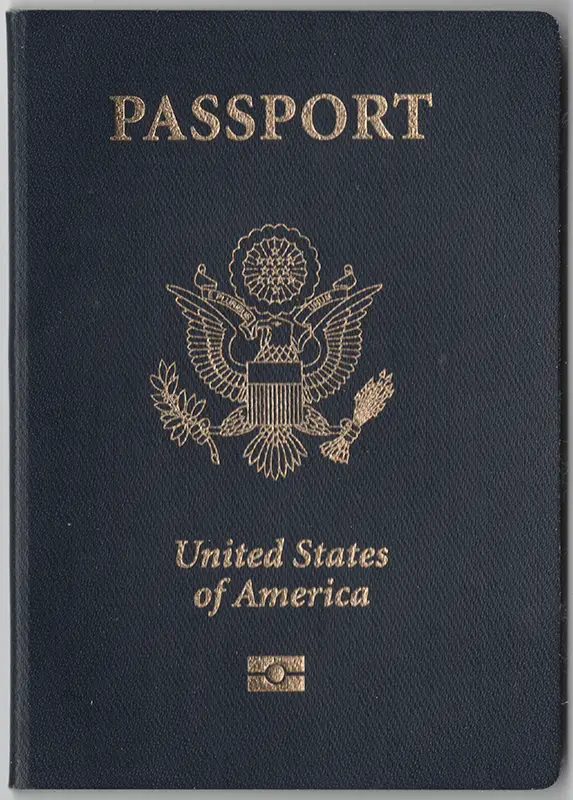
Regular passport (dark blue cover)
May be issued to all citizens and non-citizen nationals. Validity: for those aged 16 and over, usually ten years from the date of issue; for those aged 15 and under, usually five years from the date of issue.
A sub-category of the regular passport is the no-fee passport, which may be issued to citizens in designated categories for designated purposes, such as American seafarers travelling in connection with duties aboard a US-flagged vessel.
Validity: usually 5 years from the date of issue. No-fee passports carry an endorsement prohibiting their use for any purpose other than the designated one.
Service passport (grey cover)
May be issued to “certain non-personal services contractors travelling abroad in support of and under contract with the US government”, to show that the passport holder is “performing work in support of the US government while also indicating that the traveller has a looser relationship with the US government, insufficient for the issue of a diplomatic or official passport.”
Validity: usually five years from the date of issue.
Cover of the biometric official passport
Official passport (maroon cover)
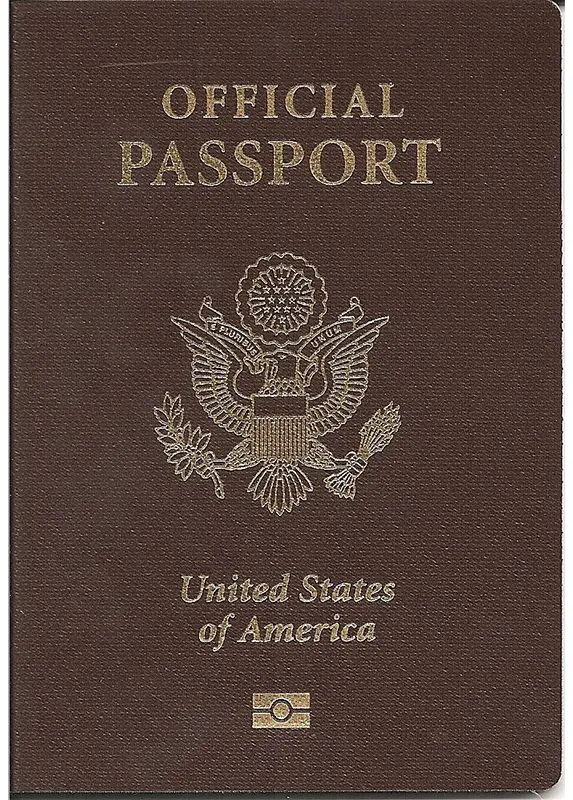
May be issued to United States citizen employees assigned abroad, permanently or temporarily, and their eligible dependants, as well as to certain members of Congress travelling abroad on official business. It is also issued to US military personnel when deployed abroad.
Validity: usually five years from the date of issue.
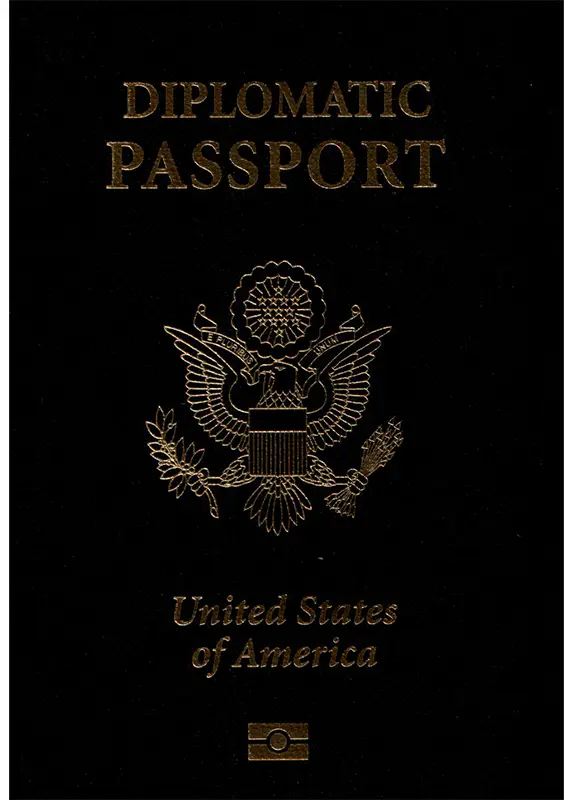
Cover of the diplomatic passport.
Diplomatic passport (black cover)
May be issued to accredited American diplomats abroad and their eligible dependants, to citizens residing in the United States and travelling abroad on diplomatic business, to the President of the United States, the President-elect, the Vice President and the Vice President-elect, as well as to former presidents and vice presidents.
The Chief Justice of the Supreme Court, the Justices of the Supreme Court, sitting cabinet members, former secretaries and deputy secretaries of state, the Attorney General and the Deputy Attorney General, certain members of Congress and retired career ambassadors are also eligible for a diplomatic passport.
A diplomatic passport issued to an individual who is not a current office holder is known as a “courtesy diplomatic passport.”
Validity: usually five years from the date of issue.
Refugee travel document (green cover)
Although also referred to as a “Refugee Passport”, it is not a full passport; it is issued to foreign nationals who have been classified as refugees or granted asylum.
Re-entry permit (green cover), the cover bearing the title “Travel Document”
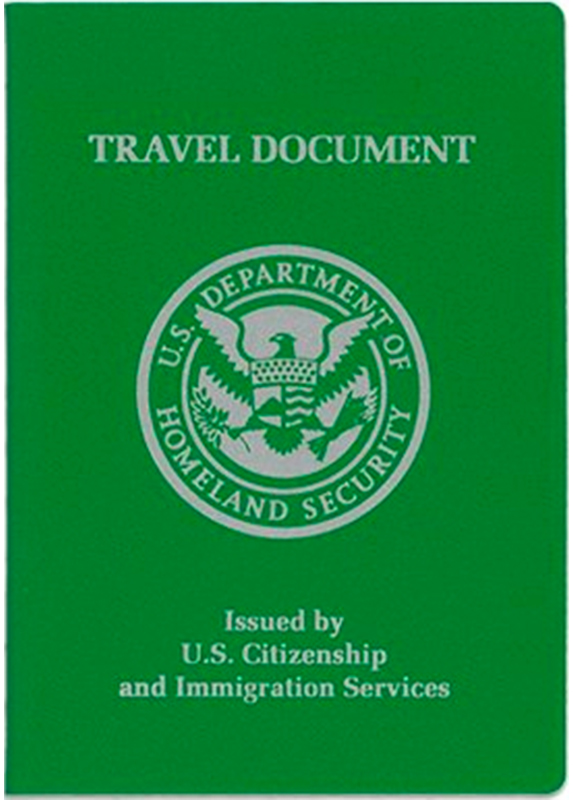
Not a full passport; it is issued to foreign permanent residents in place of a passport.
The re-entry permit assures them that they will be allowed to re-enter the United States and is usually valid for two years.
The re-entry permit may also be used by permanent residents who are stateless or unable to obtain a passport for international travel, or who wish to visit a country they cannot visit on their own passport.
Emergency passport (purple cover)
May be issued to citizens abroad in an emergency, for example the imminent death and funeral of a family member, the loss or theft of a passport while abroad, or a similar situation. Validity: usually one year from the date of issue. An emergency passport may be exchanged for a full-validity passport.
The United States passport card
Not a full passport, but a small ID card issued by the US government for crossing land and sea borders with Canada, Mexico, the Caribbean and Bermuda.
Everyone eligible for a regular passport is eligible for a passport card. The card does not record the holder’s official or diplomatic status, if any. The ID card is valid for 10 years for those aged 16 and over and 5 years for minors under 16.
The passport card is not valid for international air travel. A United States passport card may be held alongside a regular passport. These ID cards comply with the WHTI and Real ID, making them valid for domestic air travel, and they carry digitally signed biometrics in an internal RFID chip that can be read at land or sea ports of entry to or from the United States.
Requirements and procedure for a new United States passport
A new application requiresForm DS-11submitted in person at 7,500 acceptance facilities (post offices, libraries). It applies to first-time applications, children, and lost or damaged passports.
Procedure for adults (16+)
- Complete the DS-11 online and print it without signing.
- Proof of citizenship: original birth certificate.
- ID: driving licence + photocopy.
- 2×2 inch photo.
- Pay the fee and have your signature witnessed.
Procedure for children under 16
Both parents present, with FormDS-3053 if one is absent. The fee is $100 for the passport booklet.
Common mistakes
- Photograph not to standard: use the toolcheck.state.gov
- Missing photocopy: print single-sided on A4.
- For example: in 2024, 15% of refusals were due to a poor photograph.
Checklist of required documents:
- Birth certificate bearing a seal.
- 2 forms of parental ID.
- Payment of the fee.
- An appointment if it is busy.
In assessment, the process provides a high level of security, with a wait of 4 – 6 weeks.
Guide to renewing a United States passport in 2025
Renewal is straightforward if the old passport is <15 years old and undamaged. FormDS-82by post or by registering online.
Online renewal (new in 2025)
Go totravel.state.gov/renew-online:
- Go totravel.state.gov/renew-online
- Upload a photograph
- Pay by card.
- Wait 4-6 weeks for delivery by post.
Renewal by post
Send the following documents by post:
- DS-82
- The old passport
- Photo
- Passport fee US$130 (add US$60 if expedited service is required)
Urgent
Book an agency appointment if you are travelling within 14 days.
Note: a change of name requires supporting documents. Applying online saves 70% of the time.
Design of the United States passport
In 2007 the passport was redesigned, following the previous redesign in 1993. The 28-page version of the passport carries 13 quotations and patriotic imagery in the background of the pages.
The biometric passport carries the e-passport symbol at the bottom. The biometric passport has 32 pages. Frequent travellers may request a 52-page passport at no extra cost.
Visa pages could previously be added to a passport, but from 1 January 2016 the service was discontinued entirely for security reasons.
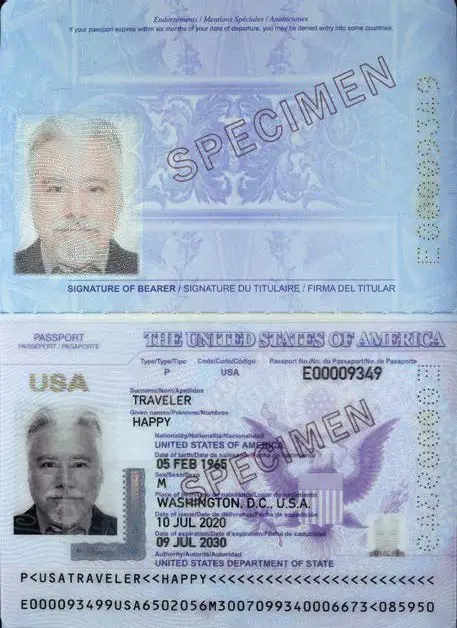
Every passport has one data page and one signature page.
The data page is the page carrying the passport holder’s details. It is the only page in the United States passport that is laminated to prevent forgery. The data page has a visual zone and a machine-readable zone. The visual zone carries a digital photograph of the holder, data about the passport, and data about the holder:
- Photo
- Type (of document, which is “P” for “passport”)
- Code (of the issuing country, which is “USA” for “United States”)
- Passport number
- Surname
- Given names
- Nationality (United States)
- Date of birth
- Place of birth (see below)
- Sex (Male, Female)
- Date of issue
- Date of expiry
- Authority (United States Department of State)
- Endorsements
The machine-readable zone runs along the bottom of the page.
The signature page carries a line for the holder’s signature. A passport is not valid until it has been signed by the holder in black or blue ink. If the holder is unable to sign their own passport, it must be signed by a person with the legal authority to sign on the holder’s behalf.
Accompanying you on your journey in residency investment
The Prosperous Living Investment team advises on pathways, assesses profiles and manages investments transparently for every residency, citizenship and international property objective.
Free profile assessmentWhere life gets prosperous