
Search EN

Saint Kitts and Nevis citizenship by investment

The Saint Kitts and Nevis citizenship by investment programme from Prosperous Living Investment opens a path to owning a second passport with a contribution starting from US$250,000.

Introduction

The Saint Kitts and Nevis citizenship by investment programme from Prosperous Living Investment opens a path to owning a second passport with a contribution starting from US$250,000.

The Saint Kitts and Nevis citizenship by investment programme is a long-standing CBI programme, offering visa-free access to 136 countries including the EU Schengen Area, the UK, and Singapore, with no residency requirement and a processing time of 4–6 months.

Contact for advice

Learn more about the programme

Saint Kitts and Nevis Citizenship by Investment

Programme Overview

  • Investment level

    From US$250,000 (SISC or Marriott PBO) for a family of up to 4 people

  • Processing time

    4–6 months from the submission of a complete application

  • Passport

    Visa-free access to 136 countries, including the EU Schengen Area, the UK, Singapore, South Korea and Hong Kong

  • Residence requirement

    No minimum residency requirement in Saint Kitts and Nevis

  • Family

    Includes spouse, children under 18, and dependent parents aged 55 and over

  • Generational citizenship

    Permanent citizenship, passed down to future generations by descent

Benefits of Saint Kitts and Nevis citizenship

  • High-ranking passport

    A Saint Kitts and Nevis passport allows visa-free or visa-on-arrival access to 136 countries, including the entire EU Schengen Area, the UK, Singapore, South Korea and Hong Kong.

  • No residency requirement

    The programme does not set a requirement for time spent in Saint Kitts and Nevis. Investors can continue to live and work in Vietnam after receiving citizenship.

  • Dual citizenship

    Saint Kitts and Nevis allows citizens to hold dual citizenship. Investors do not need to renounce their Vietnamese citizenship when receiving Saint Kitts and Nevis citizenship.

  • Tax incentives

    No personal income tax, inheritance tax, capital gains tax, or tax on foreign-sourced income. A favourable financial environment for individuals and businesses.

  • Marriott Bonvoy Logo Green

    Marriott Bonvoy

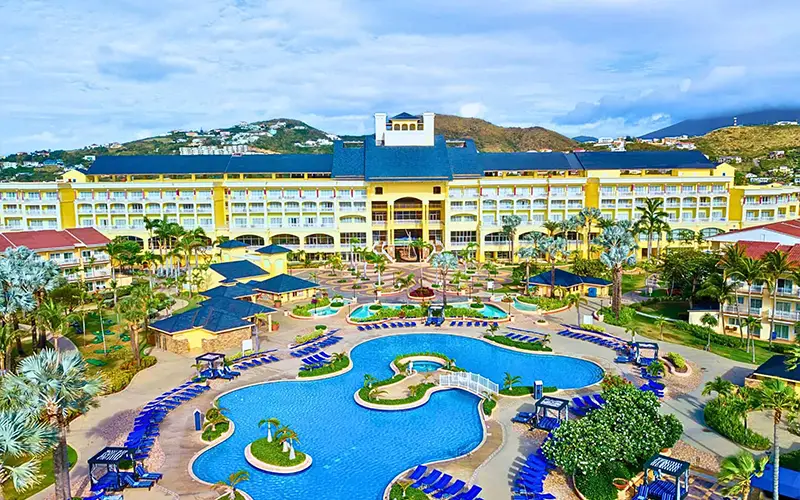
    When investing through the PBO route at St. Kitts Marriott Resort, investors receive 250,000 Marriott Bonvoy points or 13 nights of resort accommodation, along with a residential address in Saint Kitts.

  • Lifetime citizenship

    Saint Kitts and Nevis citizenship is permanent, does not require renewal, and can be passed down to children by descent through subsequent generations.

Start your journey with

Free consultation – Tailored solutions for every client

Prosperous Living Investment’s team of experts is ready to accompany you through every global investment and residency decision.

Contact us now


Citizenship by investment roadmap

  • Sustainable Island State Contribution (SISC)

    A non-refundable contribution from US$250,000 to the Sustainable Island State Contribution (SISC) – supporting national development priorities including renewable energy, healthcare, and education. This applies to individual investors or families of up to four members. Additional dependents incur separate fees. This is a simple route with a processing time of 4 to 6 months.

  • Approved real estate

    Approved real estate

    Minimum investment of US$325,000 in a government-approved real estate project (over 35 projects) or US$600,000 for private housing. Property must be held for at least 7 years before resale. Investors own actual assets in the Caribbean, combining the benefits of citizenship with the potential for long-term property appreciation.

  • Public Benefit Option (PBO)

    Public Benefit Option (PBO)

    Minimum contribution of US$250,000 to government-approved infrastructure and community development projects. Unlike the SISC, the PBO route includes an unlimited number of family members within the base investment level — particularly suitable for large family applications. Investment capital is allocated directly to specific works such as schools, hospitals, and tourism infrastructure.

Programme requirements

  • Net worth

    No minimum net worth requirement. You only need sufficient financial resources to make the investment of US$250,000 and provide proof of legal source of funds.

  • Experience

    No business or management experience required. The programme is open to all foreign nationals aged 18 and over.

  • Investment

    A minimum contribution of US$250,000 to the SISC Fund (for a family of up to 4). Alternatively, purchase approved real estate from US$325,000 (apartment/project) or US$600,000 (private home).

  • Education

    No minimum educational requirement. The programme does not set conditions regarding degrees, professional certifications, or knowledge tests.

  • Language

    No requirement to demonstrate proficiency in English or any other language when submitting a citizenship application.

  • Health and background

    Must meet criminal record check requirements. Investors must not have a serious criminal record. Applications undergo security vetting by the government of Saint Kitts and Nevis and independent agencies in Europe, the UK, and the United States.

Start your residency journey with

Prosperous Living Investment accompanies you from initial profile assessment to the day you receive permanent residence and citizenship — transparent, professional, and fully personalised.

Profile assessment
Contact for advice


Completely free


Information security


End-to-end support

Implementation process

Obtain Saint Kitts and Nevis citizenship and passport in 4–6 months with the team of experts at Prosperous Living Investment.

  • Consultation and profile assessment

    Prosperous Living Investment specialists assess personal, financial, and family circumstances. Based on this, we propose the most suitable investment route: SISC, real estate, or PBO.

  • Preparation and submission of application

    Prosperous Living Investment coordinates with authorised agents in Saint Kitts and Nevis to prepare a complete application, including proof of funds, criminal records, and consular-legalised documents. The application is officially submitted to the CIU.

  • Vetting and preliminary approval

    The CIU conducts background checks through independent international firms. Investors may be required to attend an online interview. Once requirements are met, the CIU issues an Approval-in-Principle letter before the investment is made.

  • Making the investment

    After receiving preliminary approval, the investor proceeds with the investment according to the chosen route and pays government fees. Prosperous Living Investment monitors the entire fund transfer process through official banking channels.

  • Receiving citizenship and passport

    The CIU issues Certificates of Citizenship and passports to the investor and their entire family. Passports offer visa-free travel to 136 countries, including the Schengen Area, the United Kingdom and Singapore. Lifetime citizenship with dual citizenship permitted.

Why choose Prosperous Living Investment?

  • Efficiency

    Rather than a one-size-fits-all approach, Prosperous Living builds a personalised strategy for each profile based on financial capacity, business experience, and family goals. This strategic approach helps optimise time, resources, and the chances of success throughout the immigration journey.

  • Transparency

    Prosperous Living is committed to providing legally compliant advice, clear procedures, and the latest policy updates from host governments. Every roadmap, cost, and risk is explained in detail from the outset, enabling clients to make investment decisions with complete peace of mind.

  • Professionalism

    Prosperous Living’s advisory team follows a standardised process, working closely with immigration and legal experts and global partners. From profile assessment and document preparation to post-settlement support, every step is executed systematically and seamlessly.

Frequently asked questions

Below are common questions from clients regarding the Saint Kitts and Nevis citizenship by investment programme. If you require more detailed advice, please contact us.

What is the minimum investment required to obtain Saint Kitts and Nevis citizenship?

The minimum investment is US$250,000 through a contribution to the SISC Fund or a Public Benefit Option (PBO), applicable to individual investors or families of up to 4 members. If choosing the real estate route, the minimum is US$325,000 for an approved project or US$600,000 for a private home. Conditions and investment levels are as announced by the Saint Kitts and Nevis Citizenship by Investment Unit

How long does the application processing take?

The entire process from application submission to receiving the passport takes approximately 4 to 6 months. The actual time depends on the completeness of the application and the chosen investment route.

Can family members be included in the application?

Yes. Investors may include a spouse, children under 18, children aged 18–30 who are studying or financially dependent, and parents or grandparents aged 55 or older who are dependent. With the PBO route, the number of family members is not limited within the base investment amount.

Do investors need to live in Saint Kitts and Nevis?

No. The programme does not require minimum residency. Investors can continue to live and work in Vietnam or any other country after receiving citizenship. The entire process can be completed remotely without needing to visit Saint Kitts and Nevis.

How many countries does the Saint Kitts and Nevis passport provide visa-free access to?

A Saint Kitts and Nevis passport allows visa-free or visa-on-arrival access to 136 countries and territories, including the entire Schengen Area (Europe), the United Kingdom, Singapore, Hong Kong, South Korea, and many nations across Asia and Latin America.

Do investors need to renounce their Vietnamese citizenship?

No. Saint Kitts and Nevis allows dual citizenship and does not require notification to the country of origin. Investors retain their Vietnamese citizenship upon receiving Saint Kitts and Nevis citizenship.

When must the investor make the investment?

Unlike many other CBI programmes, Saint Kitts and Nevis requires investors to make the investment only after receiving an Approval-in-Principle letter from the CIU. This protects the investor – funds are only transferred once the application has been approved in principle.

Can the investment property be resold?

Yes, but it must be held for a minimum of 7 years from the date of purchase. After 7 years, the investor is free to sell or transfer it. The sold property may be used by a new buyer for a CBI application if it meets additional investment conditions (construction, renovation).