

The K-1 visa

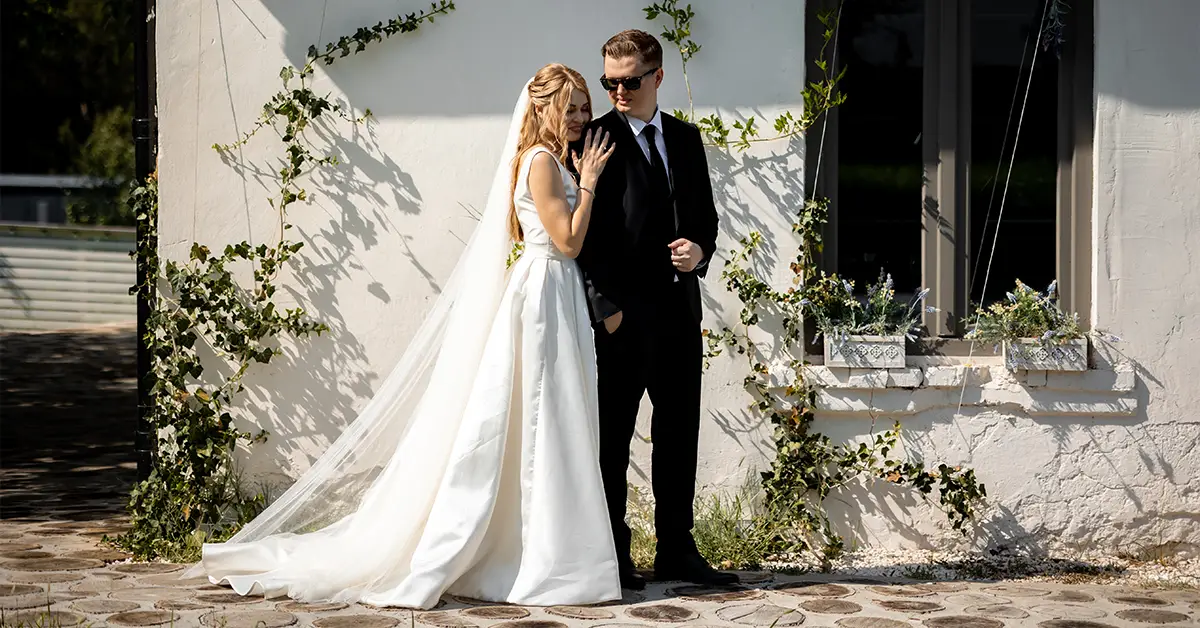
The K-1 visa is a non-immigrant visa allowing the fiancé or fiancée of a United States citizen to enter the country to marry within 90 days of arrival. Once lawfully married, the visa holder may apply for aUnited States Permanent Resident Card (green card)through the adjustment of status process.
It is one of the most popular settlement routes for foreign nationals engaged to a United States citizen — but it also carries a fairly high refusal rate and serious consequences where the marriage does not take place in time.
Message
What the K-1 visa is
The K-1 visa (full name: K-1 Nonimmigrant Visa for Fiancé(e) of a U.S. Citizen) is a non-immigrant visa with special conditions — allowing temporary entry while opening the way to permanent resident status through marriage. The visa is approved byUnited States Citizenship and Immigration Services (USCIS)at the petition stage and issued by the United States Department of State (DOS) at the consular interview stage.
The most important feature of the K-1 visa is the 90-day limit — after entering the United States, the fiancé or fiancée MUST marry the sponsor within 90 days. After the wedding, the visa holder may remain in the United States and fileForm I-485 Adjustment of Status (AOS)to apply for a green card. Where the marriage does not take place within 90 days, the visa holder must leave the United States immediately and cannot change to another visa category from within the country.
The K-1 visa comes with a variant, the K-2 visa, for the unmarried children under 21 of the fiancé or fiancée. K-2 children may travel with the K-1 parent or follow later, but may NOT enter the United States before the parent does.
Considering a residency programme? The Prosperous Living Investment team assesses your profile free of charge and advises on the pathway that fits your goals.
Who is eligible for a K-1 visa
For a K-1 visa application to be approved, both the sponsor and the beneficiary must meet specific conditions.
The conditions for the sponsor
- They must be a United States citizen. Permanent residents (green card holders) may NOT sponsor under the K-1 category — they must marry abroad first and then file Form I-130 to sponsor a spouse under the permanent resident category.
- Meeting the minimum income — at least 100% of the Federal Poverty Guidelines for the corresponding household size. Serving military personnel must meet 125%.
- Being legally free to marry at the time of filing — not in another lawful marriage.
The conditions for the beneficiary
- Having a genuine intention to marry the sponsor within 90 days of entering the United States.
- Being legally free to marry — not in another lawful marriage. Every previous marriage must have been lawfully ended (divorce, annulment, or the death of the former spouse).
- Meeting the general health and security conditions for admission to the United States — no serious criminal record, no infectious disease dangerous to public health, and no history of immigration violations.
The 2-year in-person meeting rule
An important and often troublesome requirement is the in-person meeting rule. Both parties must have met in person at least once within the 2 years before Form I-129F is filed. Meetings by video, telephone or online messaging do NOT satisfy this requirement.
USCIS accepts evidence of meeting such as dated photographs together, flight tickets, passports with entry stamps, hotel bookings, and restaurant receipts with matching dates. In certain special cases, sponsors may apply for a waiver of the meeting requirement where they can prove that meeting would seriously breach cultural or religious custom, or would cause extreme hardship. However, waiver applications are assessed very strictly and the approval rate is low.
The sponsor’s income requirement
K-1 visa sponsors must prove they have enough financial means to support the fiancé or fiancée and prevent them becoming a “public charge”. The income requirement has two levels corresponding to two stages:
- The K-1 visa stage:proving a minimum income of 100% of the Federal Poverty Guidelines through Form I-134 (Affidavit of Support).
- The green card stage after marriage:proving a minimum income of 125% of the Federal Poverty Guidelines through Form I-864 — a considerably higher requirement.
The federal poverty level is published annually by the United States Department of Health and Human Services (HHS) and varies with household size. As at 2026, a household of 2 (the sponsor and the fiancé or fiancée) needs a minimum income of around USD 26,430 a year for the K-1 stage.
Where the sponsor’s income is not enough, a joint sponsor may be added — a friend or relative in the United States with sufficient income who is willing to undertake financial support. The joint sponsor must file their own Form I-134 and provide full documentation of their income.
The cost of a K-1 visa
The cost of a K-1 visa divides into fees paid to United States government bodies and the incidental costs arising.
The fixed fees comprise:
- The Form I-129F filing fee:the largest item, paid to USCIS when the petition is filed. Filing online usually carries a reduced fee compared with paper.
- The DS-160 visa processing fee:paid at the United States Embassy or Consulate before the interview.
- The immigration medical examination fee:ranging from around USD 200 to 500 depending on the clinic designated by the DOS, and outside USCIS’s control.
Since 01/01/2026, USCIS has applied an annual fee adjustment mechanism indexed to inflation under Public Law 119-21. Applicants should check the latest fee schedule on theUSCIS Filing Feespage and the United States Department of State page before filing.
Besides the fees above, applicants need to allow for certified translation of Vietnamese documents, photocopying, passport photographs, thecriminal record certificate, birth certificate, the flight to the United States, and the fees for the green card applications after the marriage (Forms I-485, I-765, I-131). The true total cost of the whole route from filing the I-129F to holding the green card usually ranges from USD 3,000 to 4,000, excluding lawyers’ fees.
The K-1 visa documents
The K-1 visa file divides into two sets corresponding to the two processing stages.
The USCIS stage file (Form I-129F)
The sponsor prepares the Form I-129F file comprising:
- A fully completed and signed Form I-129F.
- Evidence of the sponsor’s United States citizenship — a copy of the United States passport, certificate of naturalisation or birth certificate.
- A statement of intent to marry from both parties — a signed document confirming they will marry within 90 days of the fiancé or fiancée entering the United States.
- Evidence of a bona fide relationship — photographs together across several periods, message history, letters, and photographs with both families.
- Evidence of having met in person within the most recent 2 years — flight tickets, passport stamps, bookings, and dated photographs.
- Passport-size photographs of both parties.
- A copy of the biographic page of the fiancé or fiancée’s passport.
- Certificates of the ending of any previous marriages (where applicable) — divorce decrees, death certificates.
- A copy ofForm I-94, the arrival and departure recordwhere the fiancé or fiancée has previously travelled to the United States.
The consular stage file (DS-160)
Once USCIS approves the I-129F and the National Visa Center forwards the file to the Embassy or Consulate, the fiancé or fiancée prepares:
- A completed online Form DS-160 with the confirmation page printed.
- Two recent photographs in the United States visa format.
- A passport valid for at least 6 months beyond the intended date of entry.
- The birth certificate of the fiancé or fiancée and of any K-2 children.
- Criminal record certificates issued by every country where the fiancé or fiancée has lived for more than 6 months since the age of 16.
- A sealed medical certificate from a doctor designated by the DOS.
- Form I-134 Affidavit of Support together with evidence of the sponsor’s income.
- Evidence of the continuing relationship, updated from the time the I-129F was filed to the present.
- The passports of every accompanying family member (K-2 children).
The K-1 visa process
The complete process from filing to holding the visa to enter the United States usually runs through the following 5 steps:
- The sponsor files Form I-129F:The United States citizen files Form I-129F with the complete file to USCIS. On receipt, USCIS sends Form I-797C Receipt Notice as confirmation within 30 days. During this stage, USCIS may issue a Request for Evidence (RFE) where further information is needed.
- USCIS approves the I-129F:After around 8 to 12 months (depending on the service center and the complexity of the case), USCIS makes a decision. Where approved, USCIS sends Form I-797 Approval Notice and forwards the file to theNational Visa Center (NVC).
- The NVC processes and forwards the file to the Embassy:The NVC takes around 4 to 6 weeks to assign a case number and forward it to the United States Embassy or Consulate in the fiancé or fiancée’s country. For Vietnamese applicants, the file is usually sent to the United States Consulate General in Ho Chi Minh City.
- The interview at the Embassy or Consulate:The fiancé or fiancée completes Form DS-160 online, pays the visa processing fee, has theimmigration medical examination, assembles the consular stage documents and attends the scheduled interview. The consular officer usually decides on the day or within a few days of the interview.
- Visa issue and entry to the United States:Where approved, the fiancé or fiancée receives their passport with the K-1 visa and a sealed document package for the CBP officer at the United States port of entry. The K-1 visa is valid for 6 months for a single entry — meaning they must travel to the United States within 6 months of the visa being issued.
After entering the United States
When the fiancé or fiancée enters the United States on a K-1 visa, the 90-day clock starts running. During this period, there are several important steps to take:
The first is holding a lawful wedding with the sponsor within 90 days. The wedding must comply with the law of the state where it is held and must be recorded on a Marriage Certificate. This is the crucial legal evidence for the steps that follow.
After the marriage, the Vietnamese spouse files Form I-485 to apply for a green card through adjustment of status. Alongside Form I-485, they may file at the same timeForm I-765to apply for a work permit and Form I-131 to apply for advance parole for travel abroad while awaiting the green card.
An important note: where the marriage does not take place within 90 days, the K-1 visa holder loses lawful status and must leave the United States immediately. They may NOT change to another non-immigrant visa category from within the United States — one of the biggest differences between the K-1 and other visa categories.
Why K-1 visa applications are usually refused
The K-1 visa refusal rate is far higher than for other visa categories — around 1 in 4 applications in 2026. Some common causes:
- Insufficient evidence of a genuine relationship:USCIS and consular officers are particularly strict with cases involving a large age gap, different languages, few in-person meetings, or a short period of acquaintance.
- Not meeting the income requirement:the sponsor’s income is insufficient and there is no joint sponsor.
- Breaching the 2-year meeting rule:having only evidence of online meetings, or of a meeting more than 2 years ago.
- A criminal record or a problematic immigration history:where either party has a conviction for domestic violence or sexual abuse, or the beneficiary has previously breached United States immigration law.
- An incomplete or inconsistent file:information that does not match across the documents, a missing signature, the wrong fee amount, or missing certificates of the ending of a previous marriage.
- An unconvincing interview:the consular officer forms the view from both parties’ answers that the relationship is not bona fide.
The K-1 visa compared with the CR-1/IR-1
Many couples weigh the K-1 visa against the CR-1/IR-1 marriage visa (marrying first, then travelling to the United States). Each option has its own advantages and drawbacks:
- Visa K-1is usually faster in getting the fiancé or fiancée to the United States, allows the wedding to be held in the United States with the sponsor’s family, and suits couples wanting to build a life together in the United States from the outset. However, the total cost is higher (because of the additional I-485 after the wedding), and there is a lengthy adjustment of status process to go through.
- Visa CR-1/IR-1requires the marriage to take place first (usually in the fiancé or fiancée’s country), but the sponsored spouse travels to the United States as a permanent resident immediately — with a green card and the right to work from the moment of entry. The total cost is usually USD 1,500 to 1,700 lower than the K-1.
The choice between the two categories depends on the particular circumstances: where the couple want to marry, the budget, the urgency, and their long-term plans.
Summary
The K-1 visa opens a route to settling in the United States for Vietnamese people through marriage to a United States citizen. It is a popular route designed for the convenience of family reunion, but comes with strict relationship evidence requirements and a relatively high refusal rate.
To improve the chances of success, couples need to prepare the file carefully from the Form I-129F stage — paying particular attention to evidence of meeting in person, a continuous relationship history, and a clear statement of intent to marry. For cases with complications such as a large age gap, a criminal record, or a previous immigration violation, consulting an experienced immigration lawyer is essential in building the right case strategy. Most importantly, couples need to prepare mentally for a long timeline (usually a year or more from filing to entry) and plan financially for the whole route through to the green card stage.
Accompanying you on your journey in residency investment
The Prosperous Living Investment team advises on pathways, assesses profiles and manages investments transparently for every residency, citizenship and international property objective.
Free profile assessmentWhere life gets prosperous