

History of the United States

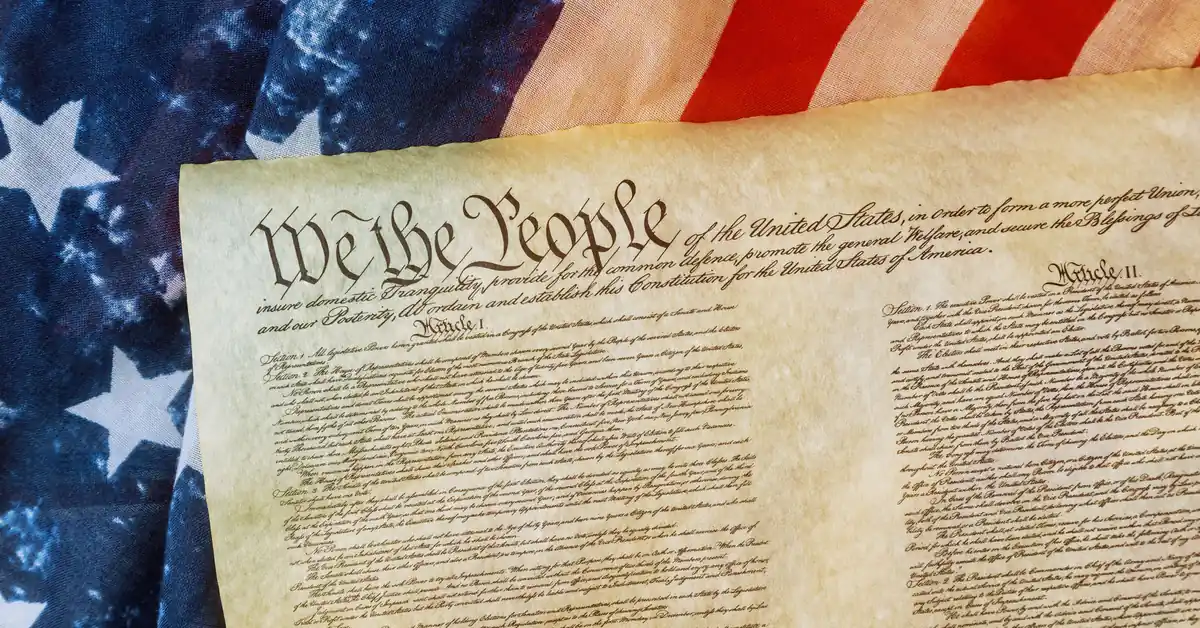
The history of the United States spans nearly two-hundred and fifty years since thirteen British colonies in North America declared independence in 1776, progressing from a nascent nation to the world’s sole global superpower after the Cold War. This journey comprises four major phases in US history: nation-building and territorial expansion, industrialisation and the Civil War, rising to a superpower through two World Wars, and the modern era from 1991 to the present.
This article synthesises the most important milestones in US history by period, based on official documents from the National Archives, the Department of Defense and Tier 1 historical sources. Alongside military and politicalevents, social movements and technological breakthroughs have shaped this nation today. For Vietnamese investors interested residency by investment in the United States, understanding US history helps better assess institutional stability and long-term trends.
Message
British colonial period (1607-1775)
Modern US history began with the British establishment of the Jamestown colony in Virginia in 1607, under the patronage of the Virginia Company of London. This was the first successful permanent British colony in North America, following failed attempts at Roanoke in the late sixteenth century.
Jamestown and Plymouth
In 1620, the Mayflower ship carrying 102 Puritans (Pilgrims) docked at Plymouth in present-day Massachusetts, seeking religious freedom. The Mayflower Compact signed on board was the first self-governing document of the colonies, laying the foundation for the democratic and self-governing spirit characteristic of later American society.
The formation of the thirteen colonies
By the mid-eighteenth century, the British had established thirteen colonies along the northeastern coast of North America, divided into three distinct regions. The New England region (Massachusetts, Connecticut, Rhode Island, New Hampshire) developed based on maritime trade and small-scale manufacturing. The Middle Colonies (New York, Pennsylvania, New Jersey, Delaware) were ethnically and religiously diverse, with wheat farming as the mainstay. The Southern Colonies (Virginia, Maryland, North Carolina, South Carolina, Georgia) depended on tobacco, rice and cotton plantations alongside the institution of slavery.
Conflict with the British administration
Following the Seven Years’ War (1756-1763), Britain incurred heavy debts and imposed heavy taxes on the colonies via the Stamp Act (1765), Townshend Acts (1767) and Tea Act (1773). The slogan “taxation without representation” became the primary rationale for resistance. The Boston Tea Party in December 1773, when Americans threw 342 chests of East India Company tea into Boston Harbor, was the flashpoint for tension.
Considering a residency programme? The Prosperous Living Investment team assesses your profile free of charge and advises on the pathway that fits your goals.
Revolution and nation-building (1775-1789)
The American Revolutionary War began with battles at Lexington and Concord in Massachusetts in April 1775. The Second Continental Congress met in Philadelphia and appointed George Washington as Commander-in-Chief of the Continental Army.
Declaration of Independence 1776
According to official documents from National Archives, on 11 June 1776, the Continental Congress formed the “Committee of Five” comprising Thomas Jefferson, John Adams, Benjamin Franklin, Roger Sherman and Robert Livingston to draft the Declaration of Independence. Jefferson was the primary author. On 2 July 1776, Congress passed the Lee Resolution declaring independence. On 4 July 1776, the Declaration of Independence was officially adopted and became US Independence Day.
Victory at Yorktown
After six years of fighting with support from France, Spain and the Netherlands, American troops under the command of George Washington besieged British forces at Yorktown, Virginia. General Cornwallis surrendered on 19 October 1781, effectively ending the war. The Treaty of Paris on 3 September 1783 officially recognised US independence and set the western border at the Mississippi River.
Constitution of 1787 and the Bill of Rights
Following the ineffective Articles of Confederation period (1781-1789), the Constitutional Convention met in Philadelphia in the summer of 1787, chaired by George Washington. James Madison played a major role in drafting the Constitution, earning him the title “Father of the Constitution”. The document was completed on 17 September 1787, establishing a federal system with three branches of government. Amendments one through ten (the Bill of Rights) were ratified in 1791, guaranteeing fundamental rights such as freedom of speech, religion, assembly and the right to bear arms.
19th-century territorial expansion
Throughout the nineteenth century, US history witnessed the nation expand from thirteen small colonies along the Atlantic coast to the entirety of North America. This expansion was justified through the doctrine of “Manifest Destiny”, the belief that Americans had a divine mission to spread democracy and civilisation from the East Coast to the West Coast.
Louisiana Purchase from France (1803)
In 1803, President Thomas Jefferson acquired the 2.1 million km² Louisiana territory from Napoleon for US$15 million (approximately 4 cents per acre). This transaction doubled the nation’s area through a single treaty, extending territory from the Mississippi River to the Rocky Mountains. The Lewis and Clark Expedition (1804-1806) explored the new land, paving the way for westward settlement.
War of 1812 with Britain
The War of 1812 (1812-1815) was the second conflict with Britain, caused by trade disputes and British support for native tribes against American expansion. In August 1814, British troops attacked and burned the capital of Washington D.C., including the White House and the Capitol. The Treaty of Ghent in 1814 ended the war in a status quo ante bellum. The national anthem “The Star-Spangled Banner” was composed by Francis Scott Key during this period.
The Annexation of Texas and the Mexican-American War
Texas declared its independence from Mexico in 1836 and joined the Union in 1845. This annexation triggered the Mexican-American War (1846–1848). The 1848 Treaty of Guadalupe Hidalgo forced Mexico to cede California, Nevada, Utah and parts of Arizona, New Mexico, Colorado and Wyoming to the United States — an area equivalent to 1.36 million km². In the same year, gold was discovered in California, sparking the California Gold Rush with hundreds of thousands of people migrating west.
The Purchase of Alaska from Russia (1867)
In 1867, Secretary of State William Seward acquired Alaska from the Russian Empire for $7.2 million (approximately 2 cents per acre). This transaction was initially mocked as “Seward’s Folly” because Americans thought Alaska was a useless wasteland. However, the discovery of gold in 1896 and oil in the 20th century proved this to be one of the most profitable real estate transactions in history.
Civil War and Reconstruction (1861-1877)
The Civil War was the bloodiest conflict in United States history, with approximately 620,000–750,000 soldier fatalities, exceeding the total number of American deaths in all wars from the Revolution to the Vietnam War. The underlying cause was the conflict between the industrial Northern states and the agricultural Southern states over slavery. The issue of the system of fifty states and the degree of state autonomy was also at the root of the conflict.
Causes and Outbreak
Abraham Lincoln of the Republican Party won the presidential election in November 1860 on a platform opposing the expansion of slavery. In December 1860, South Carolina declared secession from the Union, followed by six other states that formed the Confederate States of America (CSA). On 12 April 1861, CSA forces attacked Fort Sumter in South Carolina, marking the start of the Civil War.
The Emancipation Proclamation and the Gettysburg Address
On 1 January 1863, Lincoln issued the Emancipation Proclamation, declaring freedom for all slaves in the Confederate states. In November 1863, following the decisive Battle of Gettysburg, Lincoln delivered the Gettysburg Address with the famous phrase “government of the people, by the people, for the people” — redefining the nature of American democracy.
The End of the Civil War and the 13th–15th Amendments
CSA General Robert E. Lee surrendered to General Ulysses S. Grant at Appomattox Court House on 9 April 1865. Six days later, Lincoln was assassinated at Ford’s Theatre in Washington D.C. by John Wilkes Booth. Over the next five years, Congress passed three key amendments: the 13th Amendment (1865) abolishing slavery, the 14th Amendment (1868) guaranteeing citizenship and equal protection of the laws, and the 15th Amendment (1870) granting voting rights regardless of race.
Industrialisation and rise as a superpower
The late 19th and early 20th centuries in United States history are known as the Gilded Age, characterized by unprecedentedly rapid industrialisation. The country rose to become the world’s leading industrial superpower in steel, oil, rail and manufacturing output. This period shaped the foundation the United States economy modern.
The European Immigration Wave
From 1880 to 1920, more than 20 million immigrants poured in from Europe, mainly from Italy, Eastern Europe, Ireland and Germany. Ellis Island in New York Harbor became the main port of entry, processing 12 million immigrants from 1892 to 1954. This abundant labour supply drove industrialisation and the growth of major cities such as Chicago, Pittsburgh, Cleveland and Detroit.
The Industrial Barons
This period produced the “Robber Barons” — the largest tycoons in economic history. John D. Rockefeller built Standard Oil to dominate the oil industry. Andrew Carnegie controlled the steel industry. J.P. Morgan dominated finance. Cornelius Vanderbilt owned a railroad empire. Rockefeller’s wealth peaked at the equivalent of US$400 billion today, making him the richest person in modern history.
The Progressive Movement and the Antitrust Era
In the early 20th century, Presidents Theodore Roosevelt (1901–1909) and Woodrow Wilson (1913–1921) broke up monopolies through the Sherman and Clayton Antitrust Acts. Standard Oil was split into thirty-four subsidiary companies in 1911. The 16th Amendment (1913) established the federal income tax. The 17th Amendment (1913) allowed for the direct election of Senators. The 19th Amendment (1920) granted women the right to vote.
Two World Wars (1914-1945)
The two World Wars were a decisive turning point in United States history, transforming the country from a regional power into a global superpower, with a decisive role in defeating the Axis empires. U.S. International Relations post-1945 bears the deep imprint of these two wars.
World War I (1917–1918)
After maintaining a policy of neutrality for nearly three years, President Wilson declared war on Germany in April 1917 due to German U-boat attacks on American merchant ships and the Zimmermann Telegram (Germany’s proposal of a military alliance with Mexico against the US). Approximately 2 million American Expeditionary Forces soldiers fought in Europe. Total casualties: 116,000 American soldiers killed. The 1919 Treaty of Versailles ended the war, but the Senate refused to ratify it and the US did not join the League of Nations.
The Great Depression and the New Deal
On 29 October 1929 (Black Tuesday), the Wall Street stock market crashed, ushering in the Great Depression. Unemployment rose from 3% to 25% in 1933. GDP fell by 30%. President Franklin D. Roosevelt took office in March 1933 and implemented the New Deal — the largest economic reform package in history with a series of programmes: the Social Security Act (1935), the Securities and Exchange Commission, the Federal Deposit Insurance Corporation, and the Works Progress Administration, which created jobs for 8.5 million people.
World War II and the Atomic Bomb
On 7 December 1941, Japan attacked Pearl Harbor, Hawaii, killing 2,403 Americans. The following day, Roosevelt declared war on Japan, and three days later Germany and Italy declared war on the United States. The country mobilized 16 million soldiers to fight on both the European and Pacific fronts. The Normandy landings on 6 June 1944 (D-Day) opened the Western Front. The Manhattan Project developed nuclear weapons. On 6 and 9 August 1945, two atomic bombs were dropped on Hiroshima and Nagasaki. Japan surrendered on 2 September 1945. Total US casualties: approximately 405,000 soldier fatalities.
The Cold War (1947-1991)
The Cold War era marked the most complex period in 20th-century United States history. Following World War II, the United States and the Soviet Union emerged as two superpowers locked in confrontation for nearly half a century. Competition took place on all fronts: military, ideological, economic, technological, cultural and spatial.
NATO and the Marshall Plan
In 1947, the Truman Doctrine was introduced with the aim of containing the spread of communism. The Marshall Plan (1948–1952) provided $13 billion in aid (equivalent to $150 billion today) to rebuild Western Europe, binding these nations to the capitalist bloc. In 1949, NATO was established with twelve founding members, laying the foundation for the trans-Atlantic military alliance that persists today.
Proxy Wars: Korea and Vietnam
The Korean War (1950–1953) was the first hot confrontation: the US and its allies supported South Korea, while China and the Soviet Union supported North Korea. It ended with an armistice that maintained the 38th parallel dividing the two regions. The Vietnam War (1965–1973 for direct US involvement) was the most controversial conflict, resulting in 58,220 American soldier deaths and deep social division. The withdrawal of troops in 1973 and the events of 30 April 1975 marked the greatest failure of United States foreign policy.
The Civil Rights Movement
The 1950s and 1960s witnessed the Civil Rights Movement led by Martin Luther King Jr. The Supreme Court’s Brown v. Board of Education (1954) decision declared racial segregation in schools unconstitutional. The Civil Rights Act (1964) banned racial discrimination in employment and public services. The Voting Rights Act (1965) guaranteed voting rights for African Americans. King was assassinated in 1968 in Memphis, Tennessee.
The Space Race and Apollo 11
After the Soviet Union launched the Sputnik satellite in 1957, President John F. Kennedy set the goal of landing a man on the moon before the end of the 1960s. NASA’s Apollo programme achieved a historic milestone on 20 July 1969 when Neil Armstrong and Buzz Aldrin set foot on the moon, accompanied by the famous phrase “That’s one small step for man, one giant leap for mankind”. This was considered a symbolic victory for the United States in the Cold War.
The Collapse of the Soviet Union
President Ronald Reagan (1981-1989) intensified the arms race through the Strategic Defense Initiative (SDI, also known as “Star Wars”), which placed economic pressure on the Soviet Union. The Berlin Wall fell on November 9, 1989, precipitating the dissolution of the Eastern Bloc. The Soviet Union officially dissolved on December 26, 1991, leaving the United States as the world’s sole superpower.
Modern era from 1991 to the present
Following the Cold War, this period of United States history witnessed unprecedented global dominance, alongside new challenges from terrorism, financial crisis, and competition from emerging powers.
The 1990s: The Clinton era and the dot-com bubble
Bill Clinton (1993-2001) reformed social welfare, signed NAFTA in 1994, and achieved a budget surplus for the first time in decades. The internet boomed with the emergence of technology companies Yahoo, Amazon, Google, and eBay. The dot-com bubble burst in 2000-2002, causing NASDAQ to lose 78% of its value.
11 September 2001 Terrorist Attacks and the War on Terror
On the morning of 11 September 2001, 19 Al-Qaeda hijackers seized four commercial aircraft. Two struck the Twin Towers of the World Trade Center in Manhattan, one crashed into the Pentagon, and the fourth crashed in Pennsylvania. A total of 2,977 people were killed. This was the largest terrorist attack in history on United States soil. President George W. Bush launched the “War on Terror” with two major military campaigns in Afghanistan (2001-2021) to overthrow the Taliban, and Iraq (2003-2011) to overthrow Saddam Hussein.
The 2008 Financial Crisis
The United States housing bubble burst in 2007-2008 due to subprime mortgage lending. Investment bank Lehman Brothers went bankrupt on 15 September 2008, triggering a financial crisis, the largest globally since the Great Depression. The government launched a US$700 billion TARP bailout package to rescue the banking system. The unemployment rate peaked at 10%. Barack Obama was elected President in November 2008, becoming the first African-American President.
From Obama to Trump 2.0
Barack Obama’s two terms (2009-2017) saw the signing of the ACA (Obamacare) healthcare reform act and the order to kill Osama bin Laden in 2011. Donald Trump (2017-2021) represented economic nationalism, withdrew from the TPP, imposed trade tariffs on China, and recognised Jerusalem as the capital of Israel. Joe Biden (2021-2025) restored traditional alliances, signed the CHIPS Act to support the semiconductor industry, and withdrew troops from Afghanistan in 2021. Donald Trump was re-elected in 2024 with a resounding victory, opening Trump’s second term from 20 January 2025 with an expanded “America First” agenda.
Current challenges and opportunities
Contemporary United States history faces major challenges: strategic competition with China, climate change, rising economic inequality, internal political polarisation, and the wave of immigration at the southern border. At the same time, the country continues to lead new technological revolutions, including artificial intelligence, biotechnology, and renewable energy. Culture and The 2.3 million-strong Vietnamese community in the United States continues to grow steadily. Against this backdrop, United States residency by investment programmes continue to attract capital from HNWIs in Vietnam and developing countries.
Accompanying you on your journey in residency investment
The Prosperous Living Investment team advises on pathways, assesses profiles and manages investments transparently for every residency, citizenship and international property objective.
Free profile assessmentWhere life gets prosperous