

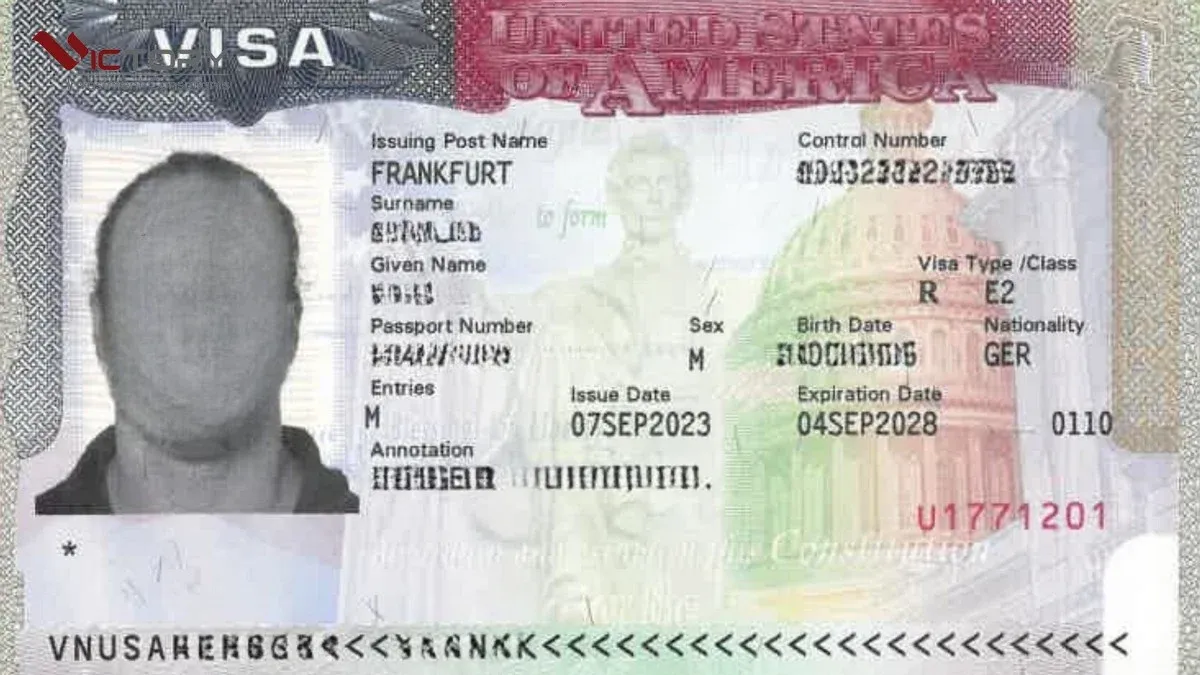
The United States E-2 visa


To qualify for an E-2 visa, the applicant’s country of origin must have a special trade treaty with the United States.
Some key points to note: the investment may be in a new business or an existing business in the United States; E-2 visa holders may work for the business they have invested in; they may also bring employees from their country of origin to work for the business. The “E” in E-2 stands for “Treaty”. The E visa is a non-immigrant visa granted on the basis of treaties between the United States and other countries.
When an E-2 visa is first granted, the holder may stay in the United States for up to 2 years at a time, but may extend in 2-year increments from within the United States, or may leave and re-enter on a valid visa to extend the permitted period of stay. There is no limit on the number of E-2 visa extensions.
Message
E-2 visa eligibility requirements
The E-2 visa has certain general requirements applying to all applicants, although there may be minor differences depending on the country of origin.
Nationality: the investor or investing entity must demonstrate that they are a national of a country with a treaty of commerce and navigation with the United States. There are currently more than 80 treaty countries, and the full list can be found on the United States Department of State website. See the list of countries with trade treaties with the United States athere.
Considering a residency programme? The Prosperous Living Investment team assesses your profile free of charge and advises on the pathway that fits your goals.
What is a trade treaty?
A trade treaty is a formal agreement between countries establishing and regulating trade relations, with the main aim of promoting economic growth and creating jobs in both countries.
- Investment:The applicant must have invested, or be in the process of investing, a substantial sum in a genuine business in the United States. This investment must be fully committed and at risk, meaning it cannot be withdrawn at will. The investment must be large enough to ensure the business operates successfully and generates income significantly above a basic livelihood.
- Active management:Entry as an E-2 investor usually requires the investor to play an active role in managing the business in the United States. This means controlling and owning at least 50% of the business, taking part in key decisions and overseeing day-to-day operations by travelling to or residing in the United States.
- Type of business:An E-2 business must be a genuine, lawful business and must not be marginal, meaning it must show potential for growth and job creation in the United States. The business must be capable of generating income above the minimum, that is, capable of producing more than a minimal living for the investor and their dependants.
- Source of funds:As with demonstrating that the business is lawful, E-2 applicants must demonstrate the lawful source of the funds invested in the business in the United States. This requirement ensures that the money used for the investment was lawfully generated, including tracing the source of the funds and demonstrating the flow of money from the investor or investing entity into the business in the United States.
Investment criteria for a business in the United States: qualifying and non-qualifying investments
| Usually meets the E-2 criteria | Usually does not meet the E-2 criteria |
|---|---|
| Investment in an operating business | Merely owning undeveloped land |
| Capital fully committed and at risk | Capital not yet committed, sitting in a bank account |
| An investment large enough to ensure the business succeeds | A speculative investment with no active involvement |
| A business generating income above a livelihood for the investor | A business meeting only the investor’s basic living needs |
| The investor plays a key role in running the business, or an employee can demonstrate an essential or qualifying role | The investor takes no part in managing the business |
| Capital that may be lost where the business fails | A safe or guaranteed investment with no risk of loss |
E-2 visa processing times
Obtaining an E-2 visa usually takes several months, whether applying from abroad through a United States Consulate or filing a change of status from within the United States throughUnited States Citizenship and Immigration Services (USCIS). Times may vary from consulate to consulate.
Where in the United States: most applicants (80%) receive a decision within 3.4 months, unless the application is filed with premium processing to shorten the time.
Where applying from outside the United States: the waiting time depends on where the application is filed, and may be from a few weeks to a few months. Each United States consulate has its own requirements, filing methods and processing times. Find the details athere.
E-2 visa premium processing: E-2 applicants may request premium processing of Form I-129 for an additional fee. Where granted, USCIS usually processes the application within 30 calendar days.
How to apply for an E-2 visa
Where applying from within the United States, the steps are: confirming that you are a national of an E-2 treaty country and meet all the requirements as to the business and your role; preparing and filing Form I-129 (Petition for a Nonimmigrant Worker); gathering documents about the business and evidence of eligibility; considering premium processing for a faster decision within 30 days. Where approved, status is changed to E-2 from the date on the Form I-797 approval notice.
Where applying from outside the United States (consular processing), the steps are: confirming that you meet all the E-2 requirements as to nationality, the business and your role; completing and filing Forms DS-160 and DS-156E; after the consular officer reviews the file, booking and attending a visa interview at the United States Embassy or Consulate in your country of origin; where approved, your passport is stamped with the E-2 visa, usually valid for 5 years, and produced on entry to the United States.
Does the E-2 visa lead to a green card?
The E-2 visa is a non-immigrant visa, meaning there is no direct route to lawful permanent residence or agreen card. In addition, the E-2 visa does not permit dual intent — that is, you cannot enter the United States on an E-2 visa while intending to apply for a green card.
Some routes to a green card include employment-based preference categories such asvisa EB-1, visa EB-2, visa EB-3and family sponsorship.
E-2 visa costs
In considering the cost of applying for a new E-2 visa as an investor, there are 2 main costs to bear in mind:
- The investment cost (the sum invested in the business in the United States, with no fixed minimum but which must be substantial)
- The filing cost (comprising the government filing fee and possibly professional service costs such as a lawyer and a business plan writer where needed).
How does the government determine a “substantial” investment?
There is no specific dollar figure defining a “substantial investment” for the E-2 visa. In general, the lower the cost of the business, the higher the proportion of investment needed. A small service business, for example, may require a higher proportion of investment than a capital-intensive business. In addition, the business cannot be designed merely to provide an income for the investor and their family but must show the potential to create a significant economic impact.
E-2 visa filing fees
- Filing from within the United States (a change of status): Form I-129 from USD 510 to USD 1,015 depending on the size of the business; Form I-539 at USD 470 for a spouse and children under 21; the optional Form I-907 at USD 2,805 for premium processing (an expedited review within 15 working days).
- Filing from outside the United States (consular processing): Form DS-160 has no separate fee but there is a visa processing fee, which in 2025 for the E-2 is USD 315; a reciprocity fee applies to nationals of countries that charge high fees for United States visas; the optional Form I-907 at USD 2,805 for premium processing.
- On biometrics fees: in 2024, the Department of Homeland Security (DHS) abolished the separate biometrics fee for most non-immigrant visas, including the E-2. However, where applying from outside the United States through a consulate, a biometrics fee may still be payable at some locations as each consulate has its own procedures.
After the E-2 visa is approved
Where applying from within the United States (a change of status): USCIS will send a Form I-797 approval notice confirming the change of status to E-2; those approved are permitted to work immediately for the business they have invested in; where they need to travel abroad, they must obtain an E-2 visa stamp at a United States consulate before returning — this is not merely a simple stamping formality but requires a full E-2 application to be filed and reviewed by the consulate.
Where applying from abroad (consular processing): the United States consulate will stamp the E-2 visa in the passport; the visa holder may enter the United States and is inspected by a Customs and Border Protection (CBP) officer at the port of entry; the CBP officer will create an I-94 record stating the E-2 status and period of stay — this record should be checked for accuracy; the visa holder is permitted to begin working for the business they have invested in.
An important note for both cases: a Social Security number must be applied for (where not already held) in order to work lawfully in the United States; E-2 visa holders must comply with United States tax law and file federal and state tax returns for all income earned in the United States.
The types of business accepted under the E-2 visa
Setting up an entirely new business is perfectly feasible, as is buying an existing business or a franchise. Buying a franchise may be a suitable option thanks to a proven business model and brand recognition.
Most types of business may qualify for the E-2, including personal service providers such as hair salons, cafés or consultancy firms; law offices with the appropriate qualifications and practising certificates; commercial businesses such as import-export, manufacturing, retail and many other fields with a substantial investment and a genuine commitment to growth.
A detailed article onA comparison of the EB-5 and the United States E-2 visa.
Frequently asked questions about the E-2 visa
No. The E-2 visa is itself evidence of the right to work. Holders are permitted to work lawfully specifically in the business they have invested in.
In some cases, employees of a treaty investor may also qualify for an E-2 visa where they hold the same nationality as the main investor and will perform executive, supervisory or essential duties.
Although this is possible, note that the E-2 visa requires proof of “non-immigrant intent”, meaning the applicant intends only to enter the United States to work under the E-2 and then leave. This may create complications that need careful consideration.
Treaty investors and qualifying employees may initially stay for up to 2 years. Where more time is needed, an extension may be applied for, each extension being for up to 2 years. It is also possible to leave and re-enter on a valid E-2 visa to obtain a new period of E-2 stay.
Yes. E-2 treaty investors may travel abroad and are usually granted an automatic 2-year extension on returning to the United States. However, frequent or lengthy absences may raise questions from the authorities.
Yes. Investors and employees may include a spouse and unmarried children under 21 in the application. Spouses and children may generally apply as E-2S or E-2Y dependants and, where approved, are granted the same period of stay as the main employee. Note: the spouse and children need not hold the same nationality as the treaty investor or employee.
Yes. In most cases, the dependent spouse of an E-2 visa holder (in E-2S status) is automatically granted the right to work without needing to apply for an Employment Authorization Document (EAD). A dependent spouse may use an unexpired Form I-94 stating E-2S status as evidence of the right to work.
No. E-2 visa holders are generally permitted to work only in the business in the United States they have invested in and applied for the visa on the basis of. However, they may change position or role within the same company originally invested in, or may move to a subsidiary or parent company of the original E-2 business.
Accompanying you on your journey in residency investment
The Prosperous Living Investment team advises on pathways, assesses profiles and manages investments transparently for every residency, citizenship and international property objective.
Free profile assessmentWhere life gets prosperous