



Canadian politics operates under a constitutional monarchy and Westminster-style parliamentary democracy model, combined with a federal structure consisting of ten provinces and three territories. As one of the world’s most stable and long-standing democracies, the country is renowned for its strong rule of law, transparent governance, and reliable political institutions.
For Vietnamese interested in immigration, understanding how the government system works helps in grasping the legal and social environment where they will live.
Detailed article on the the country of Canada.
Message
Overview of Canadian politics
The Canadian political system is built on the foundation of a constitutional monarchy and parliamentary democracy. This is a model inherited from the British Westminster tradition, combined with a unique federal structure.
Nominally, the head of state is the Monarch, currently Charles III, represented in the country by the Governor General. However, actual power lies in the hands of the elected government, led by the Prime Minister and the Cabinet.
The country is a federation where power is divided between the federal government and the provinces. This system is based on the principle of a government accountable to an elected parliament. Understanding this model helps new arrivals grasp how decisions affecting their lives are made, from healthcare and education to immigration policy.
Considering a residency programme? The Prosperous Living Investment team assesses your profile free of charge and advises on the pathway that fits your goals.
Constitutional monarchy model
A fundamental feature of Canadian politics is the constitutional monarchy model. Although it is a fully independent nation, the country maintains a monarchy with the Monarch as the nominal head of state.
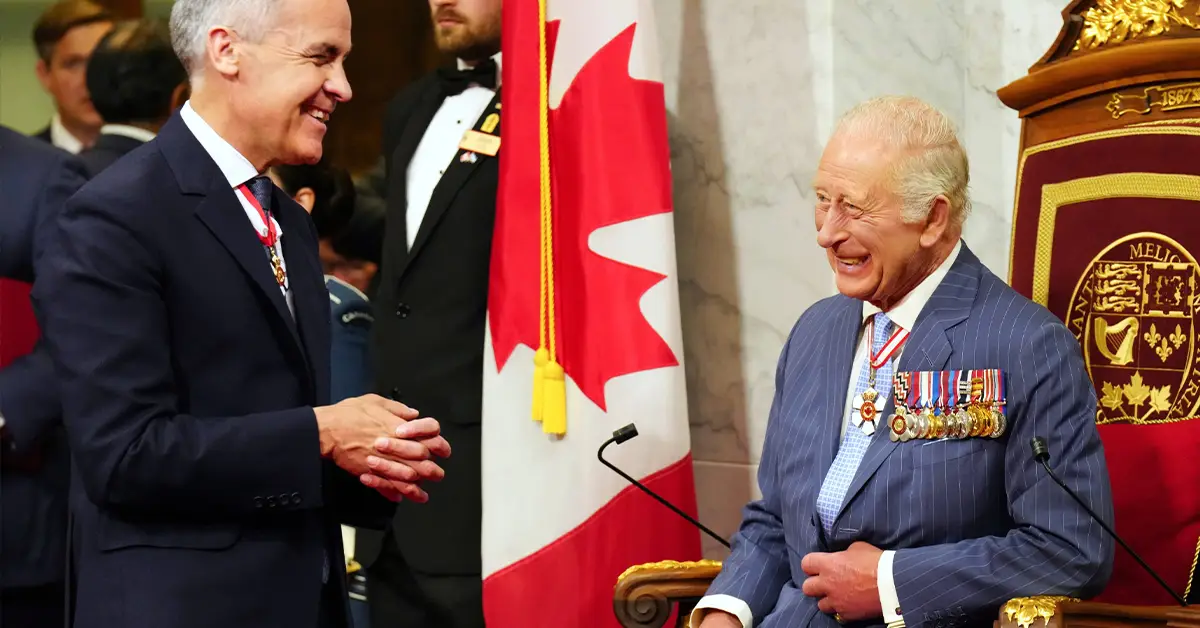
The Monarch, currently Charles III, plays a primarily ceremonial and symbolic role. In the country, the Monarch is represented by the Governor General at the federal level and Lieutenant Governors at the provincial level. Currently, the Governor General is Mary Simon.
The role of the monarchy is primarily constitutional and ceremonial, while actual power belongs to elected institutions. This is a combination of historical tradition and modern democracy, a characteristic of Commonwealth nations. This model provides stability and continuity to the political system.
Federal parliamentary system
The focus of Canadian politics is the federal parliamentary system, where legislative power is exercised. Parliament consists of two houses, operating under the Westminster model.
The House of Commons is the elected body, consisting of members of parliament directly elected from constituencies across the country. This is the most important house, where laws and budgets are passed. The party that wins the majority of seats forms the government.
The Senate is an appointed body that functions to review bills and represent regions. The head of government is the Prime Minister, the leader of the party with the majority in the House of Commons. Currently, the Prime Minister is Mark Carney. The Prime Minister and the Cabinet manage the daily affairs of the federal government and set national policy.
Federal structure and division of powers
An important aspect of Canadian politics is the federal structure, with a division of power between the federal and provincial levels. This is a core feature that shapes how the country is governed.
According to information from Government of Canada, the Constitution divides authority between the two levels of government. The federal government is responsible for national issues such as defence, foreign affairs, currency, and part of immigration policy.
Meanwhile, the provinces hold power in many areas that directly affect daily life, such as healthcare, education, and natural resources. Some areas, such as immigration, are shared between the two levels, allowing provinces to have their own nomination programmes. This division creates a multi-layered governance system, which is sometimes complex but flexible. For Vietnamese immigrants, understanding which level manages which area helps in resolving administrative matters more effectively.
Party system and elections
Canadian political life revolves around the activities of political parties and periodic elections. The multi-party system creates competition and choice for voters.
The country has many major political parties, representing different paths from centre-left to centre-right, along with regional parties and smaller parties. Parties compete for seats in the House of Commons through each general election.
Voters in each constituency elect a representative to parliament. The party that wins the most seats typically forms the government, and its leader becomes the Prime Minister. A free and fair electoral system, alongside an independent media, ensures transparency and accountability. The peaceful transfer of power through elections is a hallmark of this mature democracy.
Rule of law and citizenship
The rule of law is a pillar of Canadian politics, ensuring the rights and freedoms of all people. The Charter of Rights and Freedoms is the legal foundation that protects fundamental rights.
The Charter protects many essential rights, such as freedom of speech, freedom of religion, equality rights, and the right to a fair trial. These rights apply to everyone within the territory, creating a society that respects human rights and diversity.
An independent judicial system ensures that laws are enforced fairly, free from political pressure. For immigrants, a strong rule of law provides peace of mind and protection. Upon becoming permanent residents and then citizens, Vietnamese people enjoy full rights and can participate in political life. To understand more about the living environment, you should learn about Canada’s demographics.
Federal relations and Quebec identity
A specific aspect of political life is the relationship between the federal government and the provinces, particularly Quebec. This is a factor that shapes many important political debates.
Quebec, a French-speaking province, has a distinct cultural and linguistic identity, leading to specific demands for autonomy. The issue of Quebec’s identity has been a central theme of national politics for decades, reflecting the complexity of a bilingual, multicultural nation.
The relationship between the provinces and the federal government is generally managed through dialogue and negotiation, although there are sometimes tensions regarding budget allocation or jurisdiction. A flexible federal mechanism allows for a balance between national unity and local autonomy. This is a characteristic that helps the nation maintain stability despite many regional and cultural differences.
Summary: Canadian politics is stable and reliable
Canadian politics operates under a stable constitutional monarchy and parliamentary democracy model, with a federal system, strong rule of law, and reliable institutions. The combination of the Westminster tradition and modern democracy creates one of the world’s premier political environments.
For Vietnamese people, a stable political system, strong rule of law, and quality public services are important factors that reinforce the country’s appeal as an immigration destination. Understanding this system helps new arrivals integrate and make good use of their rights.
To complete the picture, you should read more about history of Canada and Canadian economy, thereby grasping a solid foundation for all decisions related to this land.
Accompanying you on your journey in residency investment
The Prosperous Living Investment team advises on pathways, assesses profiles and manages investments transparently for every residency, citizenship and international property objective.
Free profile assessmentWhere life gets prosperous