

The Turkish Passport: Visa-Free Access to 110+ Countries and the US E-2 Pathway

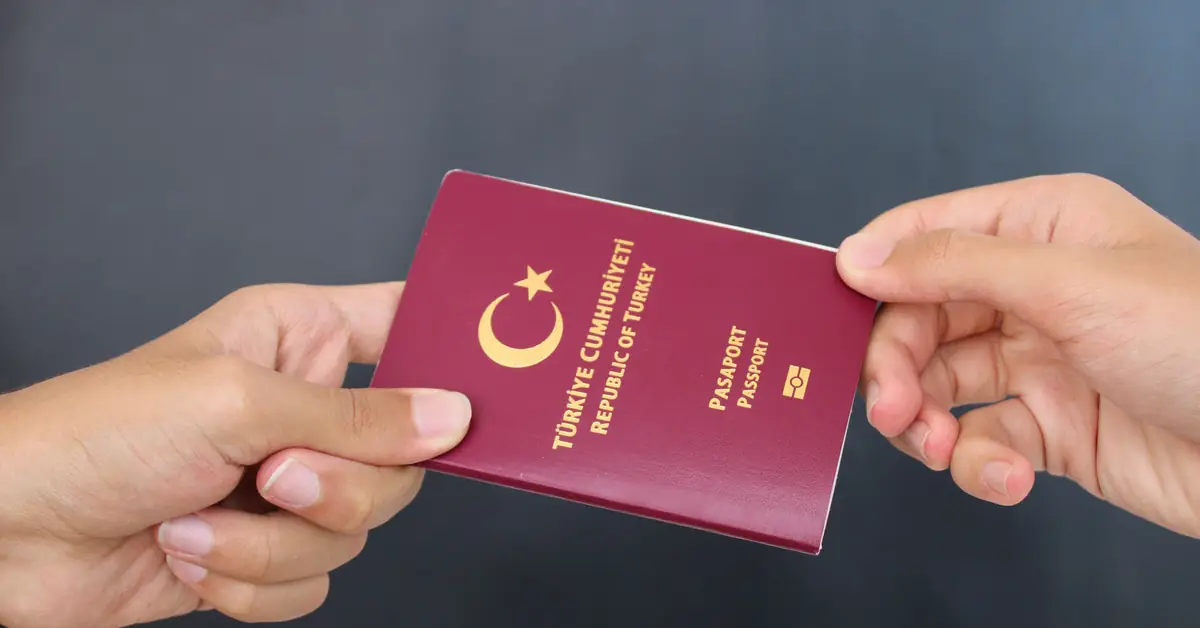
The Türkiye passport is one of the world’s mid-to-strong travel documents, granting visa-free or e-visa entry to more than 110 countries and territories. Although not in the strongest tier, it holds a rare strategic advantage — treaty-country status for E-1/E-2 visas with the United States.
This is the factor that turns the citizenship-by-investment programme of Türkiye into a preferred choice for investors from countries with no direct E-2 treaty, such as Vietnam, China, India or Nigeria.
This article examines the travel benefits of the Türkiye passport in 2026 in detail, unpacks the route that combines Turkish citizenship by investment with the US E-2 visa, clarifies the 3-year domicile requirement under the AMIGOS Act, and compares it directly with the EB-5 programme.
Message
The Türkiye Passport’s Position on the 2026 Global Ranking
According to the Henley Passport Index for Q1 2026, the Türkiye passport ranks 51st-52nd globally, giving access to around 113-118 destinations visa-free or with a visa on arrival. Other indices, such as Arton Capital’s Passport Index, record a higher figure (up to 121-126 destinations) because they also count e-Visa access.
This passport’s ranking has improved steadily throughout 2018-2026 thanks to new bilateral agreements with a number of countries in East Asia, the Middle East and Latin America. Regionally, the Türkiye passport sits alongside the Serbian, Montenegrin and Russian passports, but still trails Caribbean passports such as Saint Kitts and Nevis or Antigua and Barbuda in the number of visa-free destinations.
Considering a residency programme? The Prosperous Living Investment team assesses your profile free of charge and advises on the pathway that fits your goals.
The Türkiye Passport’s Visa-Free Map in 2026
This passport’s visa-free access spans all 6 continents, concentrated most heavily in Asia, the Middle East, non-Schengen Eastern Europe and parts of Latin America.
East and Southeast Asia
This is the region where the Türkiye passport has a standout advantage. Turkish citizens can enter visa-free or with a visa on arrival in Japan (90 days), South Korea (90 days, via the K-ETA), Singapore (90 days), Hong Kong (90 days), Macau (30 days), Malaysia (90 days), Thailand (30 days), Indonesia (30 days), the Philippines (30 days) and Brunei. This is a major point of difference from many other mid-to-strong passports.
The Middle East
This passport benefits from special bilateral arrangements with most Middle Eastern countries. Citizens enjoy visa-free entry or visa-on-arrival with Qatar, Jordan, Oman, Kuwait, Bahrain, Lebanon, the UAE and Iran. Across the GCC as a whole, travel privileges are more favourable than those offered by the passports of many other Asian countries.
Non-Schengen Eastern Europe and the Balkans
All Eastern European countries outside the Schengen area grant visa-free entry to Turkish citizens. The list includes Serbia, Montenegro, Bosnia and Herzegovina, Albania, North Macedonia, Kosovo, Moldova, Ukraine, Belarus and Georgia. Maximum stays typically range from 30 to 90 days depending on the country, and in some cases, such as Georgia, stays of up to 360 days are permitted.
Latin America and the Caribbean
This passport allows visa-free entry to Brazil, Argentina, Chile, Colombia, Peru, Uruguay, Paraguay, Panama, Costa Rica, the Dominican Republic and Honduras. In the Caribbean, Turkish citizens enjoy visa-free entry with Antigua and Barbuda, Bahamas, Barbados, Belize, Dominica, Jamaica, Saint Lucia and Saint Vincent and the Grenadines.
Africa
Most African countries require a visa-on-arrival or an e-visa for Turkish passport holders. Notable exceptions include Morocco (90 days visa-free), Tunisia (90 days visa-free), South Africa (30 days visa-free) and Senegal.
Restricted Regions: Schengen, the United States, the UK and Canada
Although it carries broad visa-free access, this passport still requires a visa for the destinations that matter most to international investors. The Schengen area, the United States, the United Kingdom, Canada, Australia and New Zealand all require a visa before departure.
However, Turkish citizens benefit from special terms for two major destinations. For the Schengen area, under the bilateral EU-Turkey agreement, citizens can apply for a multiple-entry C-2 Schengen visa valid for up to 5 years — double the standard validity granted to citizens of other third countries. This visa allows a stay of up to 90 days in every 180 days across the whole Schengen area.
For the United States, the B-1/B-2 visa for Turkish citizens is valid for 10 years with multiple entries, each stay of up to 6 months. This is the longest validity the United States grants for a nonimmigrant visa, and is a significant benefit for investors who need to travel regularly between Vietnam, Türkiye and the United States.
The US E-2 Route: The Türkiye Passport’s Strategic Advantage
The most important advantage of this passport is not the visa-free list — it is treaty-country status for the E-1/E-2 categories with the United States. This is the key that allows investors from countries without an E-2 treaty (such as Vietnam, China, India, Nigeria, South Africa) to access the US business market through a multiple-citizenship strategy.
The US-Türkiye E-1/E-2 treaty background
The US-Türkiye Treaty of Commerce and Navigation, signed in 1933, entitled Turkish citizens to E-1 (Treaty Trader) status. On 18 May 1990, the two countries signed a supplementary bilateral investment treaty, opening the way for Turkish citizens to apply for the E-2 (Treaty Investor) visa. This is one of the few E-2 treaties that grants this privilege to citizens of a country outside the developed Western bloc.
According to official figures from the the US Department of State’s list of E-1/E-2 treaty countries, Türkiye belongs to the group of countries with a full treaty covering both visa categories. The E-2 visa allows investors from treaty countries to enter the United States to operate a business there.
Core requirements and benefits of the E-2 visa
Under the published rules of United States Citizenship and Immigration Services (USCIS), the US E-2 visa has four core requirements for an individual investor.
- Be a citizen of a country with a treaty of commerce and navigation or a bilateral investment treaty with the United States
- Have invested, or be in the process of investing, a substantial amount of capital in a bona fide enterprise operating lawfully in the United States
- Own at least 50% of the enterprise or hold actual operational control
- Enter the United States for the purpose of developing and directing that enterprise (not merely to hold a passive ownership position)
Unlike the EB-5 programme, the E-2 visa has no fixed investment threshold. In practice, US consular officers typically expect a minimum investment of US$100,000 to US$200,000, depending on the industry and the scale of the business. Service businesses may require less capital than manufacturing operations or restaurants.
The greatest benefit of the E-2 visa is that it can be renewed indefinitely. Each renewal grants a further 2 years, with no limit on the number of renewals. An accompanying spouse can apply for E-2S status and is permitted to work freely in the United States. Children under 21 can attend US public schools without a separate student visa.
The 3-year domicile requirement under the AMIGOS Act
This is a critical point investors must understand clearly. In December 2022, the US Congress passed the AMIGOS Act, introducing stricter rules for investors who obtained citizenship through a citizenship-by-investment (CBI) programme. Specifically, citizens naturalised through CBI must have maintained domicile in the treaty country for at least 3 years before becoming eligible to apply for the E-2 visa.
The US definition of domicile is not the same as a requirement for continuous physical residence. The term “domicile” under US law refers to establishing a permanent home with the intention to remain — which can be demonstrated through property ownership, running a business, tax records, service contracts, a valid residence permit, and regular (though not necessarily continuous) presence in that country. In practice, each US consulate may apply different evidentiary standards.
The implications of the AMIGOS Act for Turkish CBI investors are clear. Someone naturalised in 2026 needs a careful domicile plan for the 3 years after receiving citizenship, before filing the E-2 application. This requires maintaining the property or asset investment in Türkiye (which already overlaps with the CBI’s 3-year asset-retention requirement), combined with other evidence of genuine residence.
The E-2 visa process after obtaining Turkish citizenship
The standard process for applying for an E-2 visa from Türkiye follows five main steps.
- Complete Turkish citizenship through the CBI programme (6-9 months)
- Maintain domicile in Türkiye for 3 years as required by the AMIGOS Act
- Establish or acquire a US business, open a bank account and transfer the investment capital
- Prepare the E-2 application (including a detailed business plan, proof of capital, source-of-funds documentation, a lease agreement and job-creation projections)
- File the application at the US Embassy in Ankara or the US Consulate General in Istanbul and attend the visa interview
Processing time for the E-2 application at the US Embassy in Türkiye typically ranges from 2 to 4 months from the date the complete application is submitted. Once granted, the E-2 visa carries an initial validity of up to 5 years with multiple entries, each stay of 2 years, and can be renewed indefinitely.
Comparing the E-2 Visa (via the Türkiye Passport) with Direct EB-5
For Vietnamese investors whose ultimate goal is to live and work in the United States, the choice between the E-2 route (via Turkish citizenship) and a direct EB-5 investor immigration programme is a major strategic decision. The two categories differ sharply on four fronts.
Aspect 1: Legal nature
The E-2 visa is a nonimmigrant visa — it does not lead to a green card or US citizenship, even though it can be renewed indefinitely. EB-5 is an immigrant visa — it leads directly to a conditional green card for 2 years, followed by permanent residence and eligibility for US citizenship after 5 years.
Aspect 2: Investment threshold
The E-2 visa has no fixed investment threshold, and in practice runs from US$100,000-200,000; however, roughly a further US$400,000 is needed to obtain Turkish citizenship — a total of around US$500,000-600,000. EB-5 requires a fixed investment of US$800,000 in a targeted employment area (TEA) or US$1,050,000 in a standard area, excluding service fees.
Aspect 3: Processing time
E-2 via Türkiye requires roughly 6-9 months for citizenship + 3 years of domicile + 2-4 months for E-2 processing — a total of around 4 years before setting foot in the United States. EB-5 has an I-526E processing time of roughly 3-5 years for Vietnamese applications (due to retrogression), but investors can receive their green card immediately upon arrival in the United States.
Aspect 4: Operational requirements
E-2 requires the investor to personally run the business in the United States — it is not suited to passive investors. EB-5 (through the Regional Center model) allows passive investment — investors only need to contribute capital, without operating the business.
In short, the E-2 route via a Turkish passport suits investors with US$500,000-600,000 in capital who are willing to run a business in the United States and do not necessarily need a green card. EB-5 suits investors with larger capital (US$800,000+) whose ultimate goal is US citizenship.
Renewal and Maintenance Requirements for the Passport
A Turkish passport is generally valid for 10 years for those over 18, and 5 years for children under 18. New-issue and renewal fees range from around US$27 to US$30 at 2026 rates, payable directly at the Directorate General of Civil Registration and Citizenship or at Turkish consulates abroad.
Turkish citizens naturalised through investment have the same rights and obligations as citizens naturalised through other routes. Rights include voting, standing for office, access to public healthcare, and attending Turkish public schools. The most notable obligation is military service registration for men — however, dual citizens living abroad can pay a substitute fee (bedelli askerlik) to be exempted from actual service.
Conclusion and next steps
In 2026, the Turkish passport offers a distinctive combination of broad visa-free access (110+ countries) and privileged access to the US E-2 visa — a factor that makes the Turkish CBI programme one of the most strategic multiple-citizenship tools available today. Although it does not carry visa-free entry to Schengen, this passport offers the privilege of a 5-year C-2 Schengen visa and a 10-year US B-1/B-2 visa.
For Vietnamese investors aiming to do business in the United States but unwilling to commit the US$800,000 EB-5 budget, the route of Turkish citizenship combined with an E-2 visa is worth considering. The conditions attached include accepting the 3-year domicile requirement under the AMIGOS Act and being ready to run a business in the United States.
To better understand the specific investment options, investors can refer to the article $400,000 real estate investment for Türkiye CBI, US$500,000 bank deposit Türkiye CBI and Turkish CBI overview 2026. For those wishing to compare this strategy directly with Caribbean programmes, the article comparison of Turkish CBI and Caribbean CBI provides a detailed analysis of the travel benefits, cost and US E-2 pathway of these two groups of programmes.
Accompanying you on your journey in residency investment
The Prosperous Living Investment team advises on pathways, assesses profiles and manages investments transparently for every residency, citizenship and international property objective.
Free profile assessmentWhere life gets prosperous