


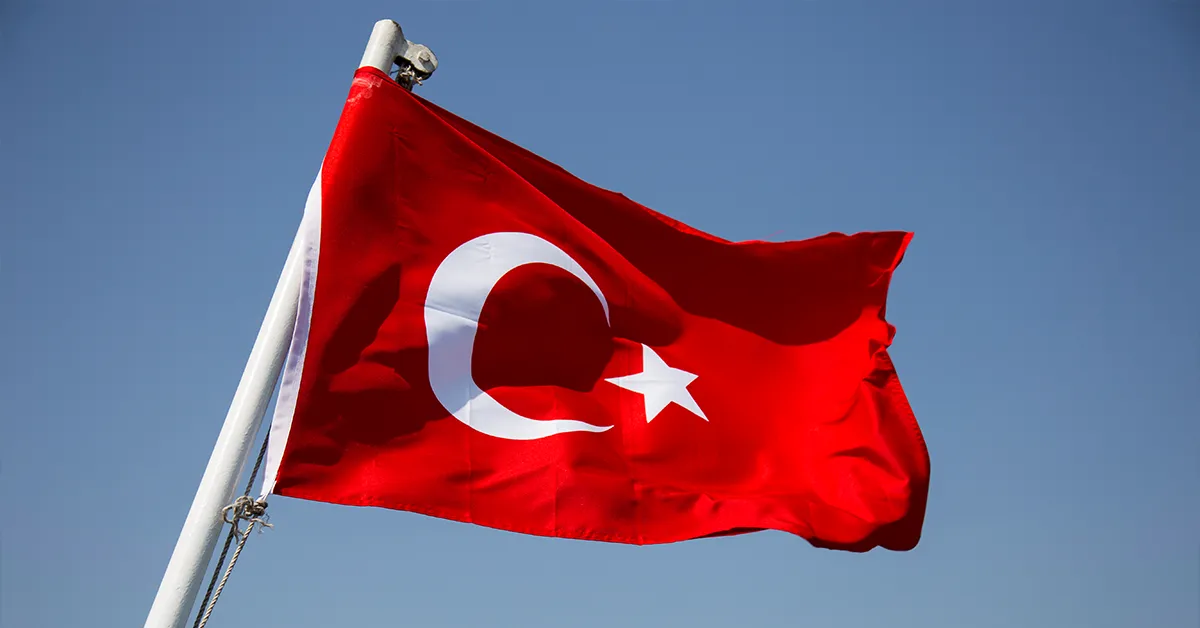
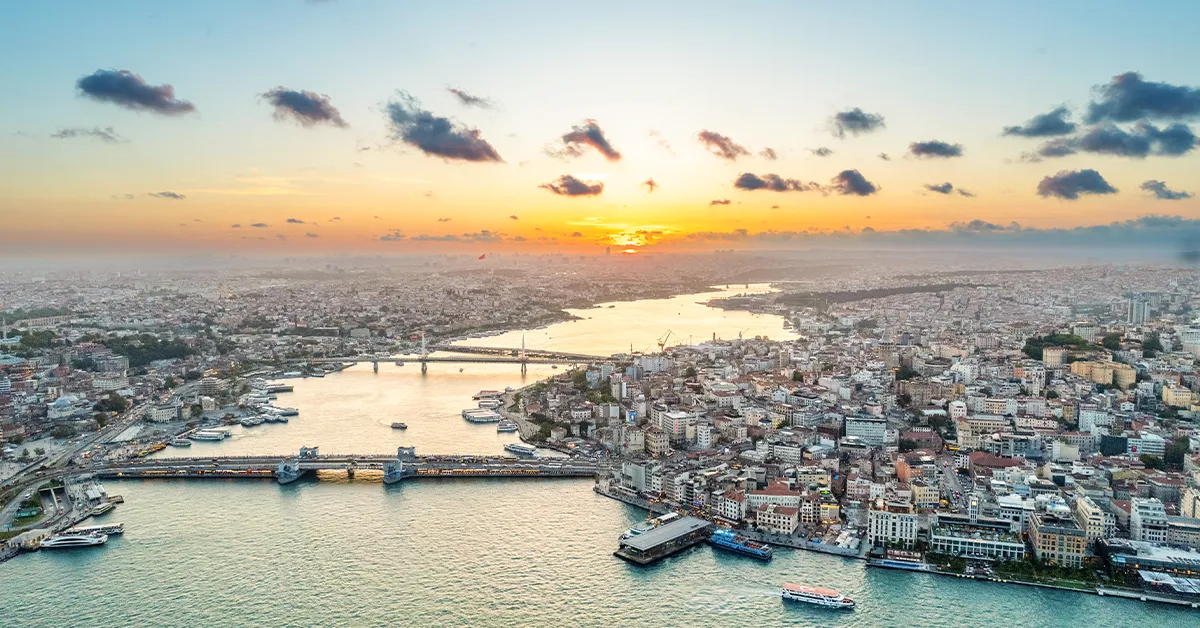
Turkey (officially the Republic of Türkiye, Turkish: Türkiye Cumhuriyeti) is a transcontinental country at the meeting point of Europe and Asia. With an area of 785,350 km² and a population of around 87.9 million (2026 estimate), it is the world’s 18th most populous country and has the 19th largest economy by nominal GDP. The capital is Ankara, but the largest city and economic and cultural centre is Istanbul — a metropolis of more than 15 million people straddling both banks of the Bosphorus, where Europe and Asia meet.
Throughout history, Turkey has been both a bridge and a barrier between the two continents, the meeting place of Greek, Roman, Byzantine, Seljuk and Ottoman civilisations. The modern state was founded in 1923 by Mustafa Kemal Atatürk on secular, national and parliamentary democratic foundations. Today, Turkey is a member of NATO and the G20, and runs acitizenship-by-investmentprogramme attracting international investors from more than 100 countries.
Message
Basic information
| Basic information | Details |
|---|---|
| Official name | The Republic of Türkiye (Türkiye Cumhuriyeti) |
| Capital | Ankara |
| Largest city | Istanbul (more than 15 million) |
| Area | 785.350 km² |
| Population | ~87.9 million (2026 estimate) |
| Official language | Turkish |
| Currency | The Turkish lira (TRY) |
| Time zone | UTC+03:00 (TRT) |
| Form of government | Presidential republic |
| President | Recep Tayyip Erdoğan (since 2014) |
| National day | 29 October 1923 |
| Internet country code | .tr |
| Government portal | https://www.turkiye.gov.tr/ |
| International dialling code | +90 |
| Driving | On the right |
| Membership of international organisations | NATO, the G20, the OECD, the Council of Europe, the OIC |
Considering a residency programme? The Prosperous Living Investment team assesses your profile free of charge and advises on the pathway that fits your goals.
Name
The international name “Turkey” derives from the medieval Latin “Turchia”, meaning the land of the Turks. In 2022, the Turkish government formally requested the United Nations and the international community to use the name “Türkiye” in English instead of “Turkey”, to express its cultural identity and avoid negative associations (the word “turkey” in English also means the bird). The United Nations accepted this request in June 2022.
Turks have called their country “Türkiye” since 1923 when the Republic was founded. The native name comes from “Türk” combined with the possessive suffix “-iye”, meaning “land of the Turks”.
National symbols
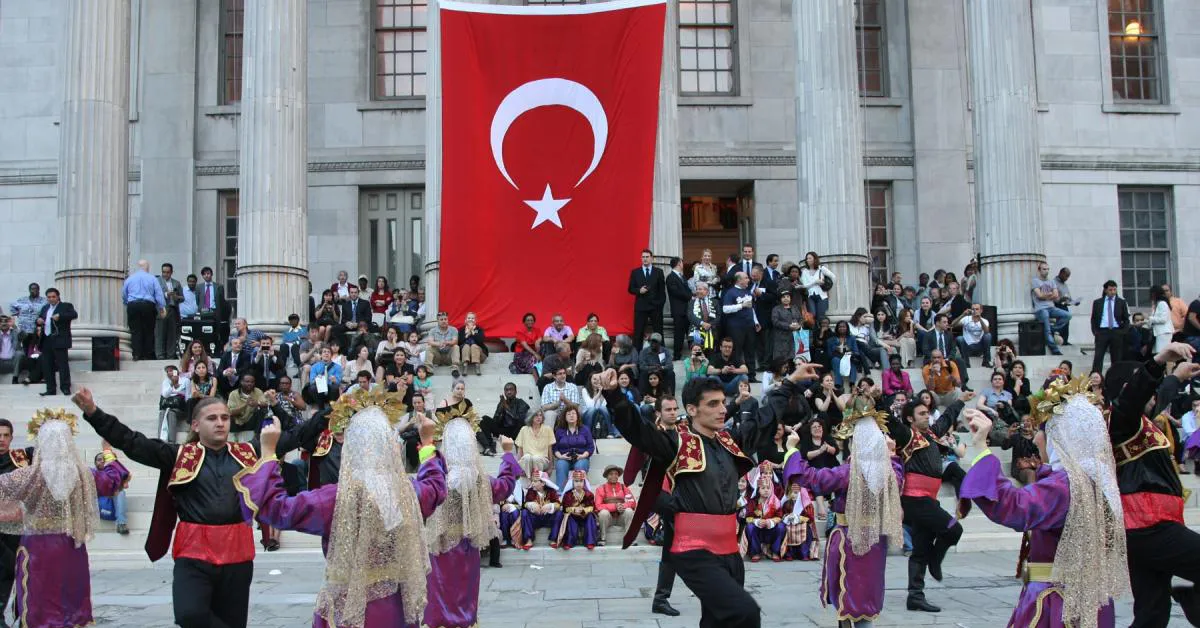
The flag of Turkey has a red field with a white crescent moon and star — an emblem originating in Ottoman times. The flag is called “Ay Yıldız” (moon and star) and was formally adopted in 1936.
The national anthem is “İstiklâl Marşı” (the Independence March), written by the poet Mehmet Akif Ersoy in 1921 during the War of Independence and formally adopted as the national anthem in 1921.
National day: 29/10 (Republic Day — marking the founding of the Republic in 1923).
History
Detailed article:The history of Turkey
The ancient and medieval periods
The Anatolian peninsula (the Asian part of present-day Turkey) is one of the longest continuously inhabited lands in the world. It was the centre of many great civilisations: the Hittites (around 1600–1178 BC), the ancient Greeks with their Aegean coastal cities, the Persian Empire, the empire of Alexander the Great, and the Roman Empire. In 330, Emperor Constantine I moved the capital to Byzantium and renamed it Constantinople (today’s Istanbul), marking the birth of the Byzantine Empire, which lasted more than 1,000 years.
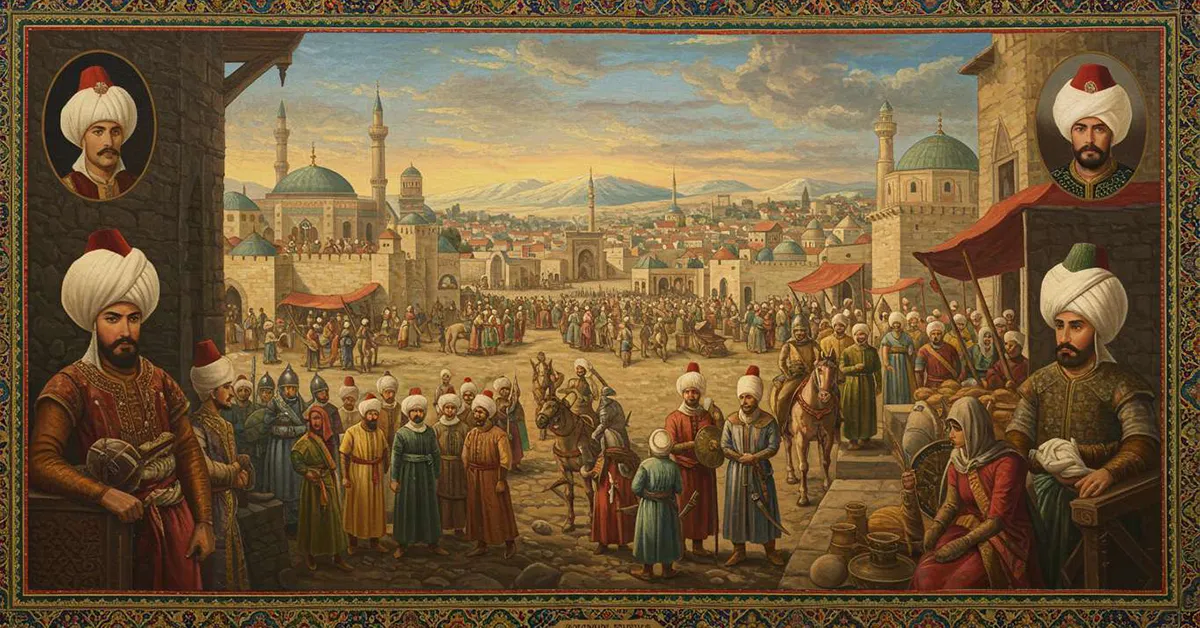
In the 11th century, Turkmen tribes from Central Asia entered Anatolia and founded the Seljuk Empire. In the 14th century, the Ottoman Empire began expanding rapidly. In 1453, Sultan Mehmed II conquered Constantinople, ending the Byzantine Empire and making the city the Ottoman capital. The Ottoman Empire reached its height in the 16th–17th centuries under Suleiman the Magnificent, controlling territory stretching from south-eastern Europe, the Middle East and North Africa to the Gulf.
The fall of the Ottomans and the modern Republic
After the First World War (1914–1918), the Ottoman Empire — on the losing side with the Central Powers — collapsed. Its territory was carved up by the Entente powers under the Treaty of Sèvres (1920). Mustafa Kemal Atatürk led the War of Independence (1919–1923), defeating the occupying forces and founding the Republic of Türkiye on 29/10/1923 with its capital at Ankara.
Atatürk carried out a series of sweeping reforms to modernise and secularise the country: abolishing the Caliphate (1924), replacing the Arabic script with the Latin alphabet (1928), giving women the vote (1934), and separating religion from politics. These reforms — known as “Kemalism” — have shaped modern Turkish identity to this day.
Contemporary Turkey
After the period of one-party rule under Atatürk and his successor, Turkey moved to a multi-party system from the 1950s. The country went through several military coups (1960, 1971, 1980, 1997) before stabilising. In 1952, Turkey joined NATO, becoming an important member of the Western defence alliance.
In 2017, a referendum approved the change from a parliamentary to a presidential system, giving the president considerably expanded executive powers. President Recep Tayyip Erdoğan — in power since 2003 (initially as Prime Minister, and as President since 2014) — won the 2023 election and remains in office. In February 2023, two catastrophic earthquakes in south-eastern Turkey killed more than 50,000 people, injured 107,000 and destroyed 1.9 million housing units — one of the most serious natural disasters in the country’s modern history.
Geography
Detailed article:The geography of Turkey
Turkey has a total area of 785,350 km², larger than any European country. Around 97% of its territory lies on the Anatolian peninsula (Asia), with the remaining 3% on the Balkan peninsula (Europe) — the part known as Eastern Thrace. The country borders 8 countries: Bulgaria and Greece to the north-west/west; Georgia, Armenia and Azerbaijan to the north-east/east; Iran to the east; Iraq and Syria to the south-east. Its coastline runs around 7,200 km along the Black Sea (north), the Aegean (west) and the Mediterranean (south).
Terrain
Turkey’s terrain is highly varied and largely mountainous. The Taurus range in the south and the Pontic range in the north form two parallel arcs enclosing the Anatolian plateau in the centre. To the east is the Armenian Highland with Mount Ararat at 5,137 metres — Turkey’s highest peak, close to the Armenian and Iranian borders. More than a quarter of the country lies above 1,200 metres, and the national average elevation is 1,132 metres.
The Bosphorus, the Sea of Marmara and the Dardanelles (together known as the Turkish Straits) are the only waterway linking the Black Sea with the Mediterranean — of global strategic importance. Control of these straits is one of Turkey’s most crucial geopolitical assets.
Climate
Turkey’s climate is highly varied because of its complex terrain. The Aegean and Mediterranean coasts have a typical Mediterranean climate with hot dry summers and mild wet winters. The Black Sea region has a humid oceanic climate year round. The central Anatolian plateau has a harsh continental climate with large temperature swings — summers may reach 40°C and winters fall below -20°C. South-eastern Anatolia is the driest, with summer temperatures regularly above 45°C.
Turkey lies on the Alpide seismic belt and is one of the most seismically active countries in the world — around 70% of the population lives in seismic zones 1 and 2.
Politics and government
Detailed article:The politics of Turkey
Turkey is a presidential republic (since the 2017 referendum). The President is both head of state and head of government, directly elected by the people for a 5-year term, with a maximum of 2 terms. The President has the power to issue decrees and appoint ministers and senior officials without parliamentary approval.
The Parliament of Turkey (the Grand National Assembly of Türkiye — Türkiye Büyük Millet Meclisi) is a unicameral legislature of 600 members, elected for 5-year terms. The legal system is based on European civil law, separated from religion since Atatürk’s reforms.
The major political parties are the Justice and Development Party (AKP, governing), the Republican People’s Party (CHP, the main opposition), the Nationalist Movement Party (MHP), and the Peoples’ Democratic Party (HDP/DEM).
Administration
Turkey is divided into 81 provinces (il), each headed by a governor (vali) appointed by the President. The provinces are grouped into 7 geographical regions: Marmara, the Aegean, the Mediterranean, the Black Sea, Central Anatolia, Eastern Anatolia and South-Eastern Anatolia. The 10 largest cities by population are: Istanbul (more than 15 million), Ankara (around 5.7 million), Izmir, Bursa, Antalya, Adana, Gaziantep, Konya, Mersin and Diyarbakır.
Economy
Detailed article:The economy of Turkey
Turkey has the world’s 19th largest emerging market economy by nominal GDP. According to the World Bank, real GDP growth averaged 5.4% in the period 2002–2022, doubling income per capita and reducing the poverty rate from over 20% (2007) to 7.6% (2021). Growth reached 3.2% in 2024, and is projected at 3.5% in 2025 and 3.7% in 2026.
The main economic sectors
Turkey’s economy is diverse with 3 main pillars. The service sector (including tourism, finance and trade) contributes most of GDP. Tourism is an important source of foreign currency — Turkey welcomes more than 50 million international visitors a year, among the world’s top 10 tourist destinations. Manufacturing is strong, particularly in cars, textiles, electronics, chemicals and steel. Agriculture — though a declining share — still employs a significant part of the workforce, with main products including wheat, cotton, tobacco, olives, grapes, fruit and vegetables.
Currency and inflation
The currency is the Turkish lira (TRY). The exchange rate as at March 2026 is around TRY 44 = USD 1. The lira has fallen considerably in recent years, contributing to high inflation — projected to fall from around 65% (2024) to 29% by the end of 2025 and 18% by the end of 2026 on World Bank forecasts. The lira’s depreciation is one reason Turkish property has become attractive to foreign investors holding hard currency.
The citizenship-by-investment programme
Turkey has run a citizenship-by-investment (CBI) programme since 2017, allowing foreign nationals to obtain citizenship through a property investment of at least USD 400,000 or other financial investment routes. The programme has attracted billions of dollars of foreign investment, particularly into the property market, and is one of the world’s most popular CBI programmes thanks to fast processing (4–8 months) and thevisa E-2treaty with the United States.
Demographics
Detailed article:The demographics of Turkey
Turkey’s population is estimated at around 87.9 million (mid-2026), ranking 18th in the world. In addition, around 2.31 million Syrian refugees are living in Turkey under temporary protection — making Turkey the world’s largest refugee-hosting country.
Ethnicity
Turks make up 70–75% of the population. Kurds are the largest minority at around 19%. Other ethnic groups (6–11%) include Armenians, Arabs, Assyrians, Albanians, Bosniaks, Circassians, Georgians, Greeks, Laz, Roma and Jews.
Language
Turkish is the sole official language, using the Latin alphabet since the 1928 reform. Kurdish (Kurmanji and Zazaki) is widely used within the Kurdish community. Other minority languages include Arabic, Armenian and Greek.
Religion
Around 99% of the population is Muslim, mostly Sunni of the Hanafi school. However, a significant group (8–20 million people) follows Alevism — a distinctively Turkish branch of Islam combining Sufi, Shia and Anatolian traditions. Religious minorities include Christians (Greek Orthodox, Armenian, Catholic) and Jews. Although the population is predominantly Muslim, Turkey has been formally secular since the 1924 Constitution.
Urbanisation
Around 77.5% of the population lives in urban areas. Istanbul is the largest city with more than 15 million people — nearly 1/6 of the country’s total population. Life expectancy is around 76 years. The median age is 33.9 — indicating a relatively young population.
Education
Detailed article:Education in Turkey
Turkey has 12 years of compulsory education (4 years primary + 4 years lower secondary + 4 years upper secondary). Literacy is around 98% among men and 92% among women. The country has more than 200 universities, many of international standing such as Boğaziçi University, Middle East Technical University (METU), Bilkent University and Koç University. The higher education system is expanding rapidly and increasingly attracting international students.
Healthcare
Turkey has had universal healthcare since 2008, providing health insurance to all citizens. The doctor density is around 1.75 per 1,000 people, and the hospital bed density around 2.7 per 1,000. Turkey is also developing medical tourism strongly, particularly in hair transplants, dentistry, cosmetic surgery and eye surgery — attracting hundreds of thousands of international patients each year.
Culture
Detailed article:The culture of Turkey
Turkish culture is a rich meeting of Ottoman heritage, Central Asian influences, Islamic tradition and modern Western trends.
Food
Turkish cuisine ranks among the world’s greatest, combining nomadic Central Asian, Ottoman court and Mediterranean traditions. The signature dishes include kebab (in dozens of varieties), baklava (honey and pistachio pastry), börek (cheese-filled pastry), dolma (stuffed vine leaves), lahmacun (thin flatbread with minced meat), pide (Turkish pizza), and Turkish tea (çay) — the national drink, consumed at an average of 3.2 kg per person a year, the highest in the world. Turkish coffee is recognised by UNESCO as Intangible Cultural Heritage.
World heritage
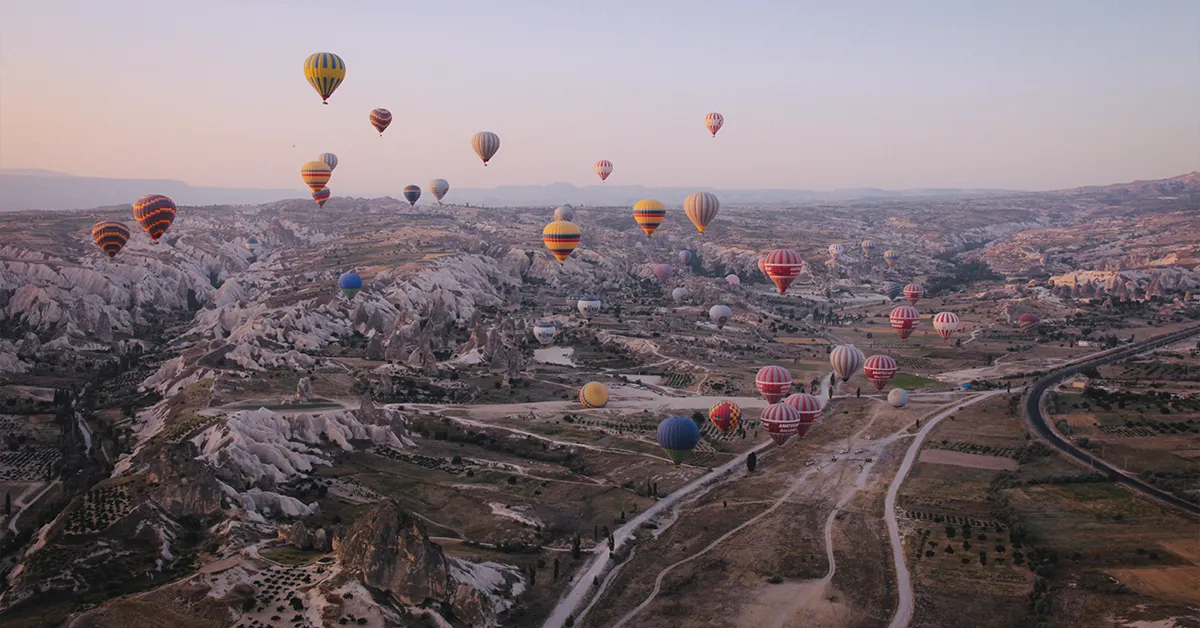
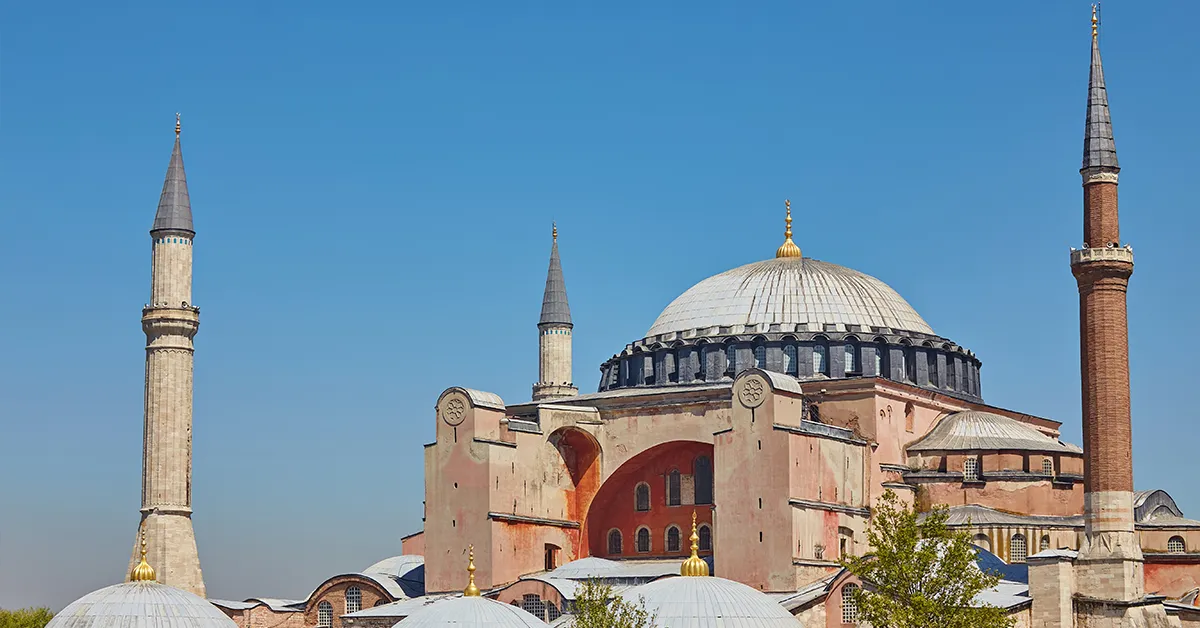
Turkey has 21 UNESCO World Heritage Sites, including iconic destinations: Hagia Sophia and the historic areas of Istanbul, the rock landscape of Cappadocia with its cave churches and famous hot-air balloons, the ruins of Troy, the limestone terraces of Pamukkale, the ancient city of Ephesus, Mount Nemrut with its colossal stone heads, and Göbekli Tepe — the oldest known temple in the world (around 9,500 BC).
Art and entertainment
Turkey has a strongly developed film and television industry — Turkish television drama (dizi) is exported to more than 150 countries, ranking second in the world after the United States for television content export revenue. Carpet weaving, Iznik pottery, Ottoman calligraphy and mosque architecture are notable artistic traditions.
Defence
The Turkish Armed Forces (Türk Silahlı Kuvvetleri) are the second largest military in NATO (after the United States) by personnel, with around 355,000 regular troops and hundreds of thousands of reservists. The armed forces comprise 3 branches: the Army, the Navy and the Air Force. Turkey has conscription for men. The defence industry is strongly developed, producing drones (the globally renowned Bayraktar TB2), armoured vehicles, missiles and warships.
Sport
Football is the most popular sport, with the Süper Lig the top national league. The major clubs are Galatasaray, Fenerbahçe and Beşiktaş — all based in Istanbul. The national team finished third at the 2002 FIFA World Cup. Basketball, volleyball (particularly women’s volleyball), wrestling and winter sports are also well developed. The Kırkpınar oil wrestling tournament (in Edirne) is the world’s oldest continuously held sporting event, staged annually since 1362.
Transport
Turkey has a well-developed transport system. Istanbul Airport (IST), opened in 2018, is one of the largest and busiest airports in the world, serving more than 90 million passengers a year. Other important international airports are at Ankara, Antalya, Izmir and Dalaman. The motorway network runs more than 68,000 km. The high-speed rail system (YHT) connects Ankara with Istanbul, Konya and Eskişehir. The Bosphorus is crossed by 3 suspension bridges and the Marmaray undersea tunnel — the world’s only intercontinental railway line.
Environment
The main environmental issues are air pollution in the major cities, water pollution from industry, deforestation, soil erosion and water resource management. Turkey is party to the Paris Agreement on climate change and is increasing investment in renewable energy, particularly wind and solar power.
International relations
Turkey is a member of NATO (since 1952), the G20, the OECD, the Council of Europe, and the Organisation of Islamic Cooperation (OIC). The country has been a candidate for European Union membership since 1999, but the negotiation process has stalled over disagreements on democracy, human rights and the Cyprus question.
Turkey has maintained an E-2 visa treaty with the United States since 1990, allowing Turkish citizens to apply for a business investor visa to live and work in the United States — a key advantage attracting international investors to the citizenship-by-investment programme. Turkey also plays an important diplomatic mediating role in many regional conflicts, including the Russia–Ukraine war, the Syrian conflict and tensions in the Middle East.
Accompanying you on your journey in residency investment
The Prosperous Living Investment team advises on pathways, assesses profiles and manages investments transparently for every residency, citizenship and international property objective.
Free profile assessmentWhere life gets prosperous