

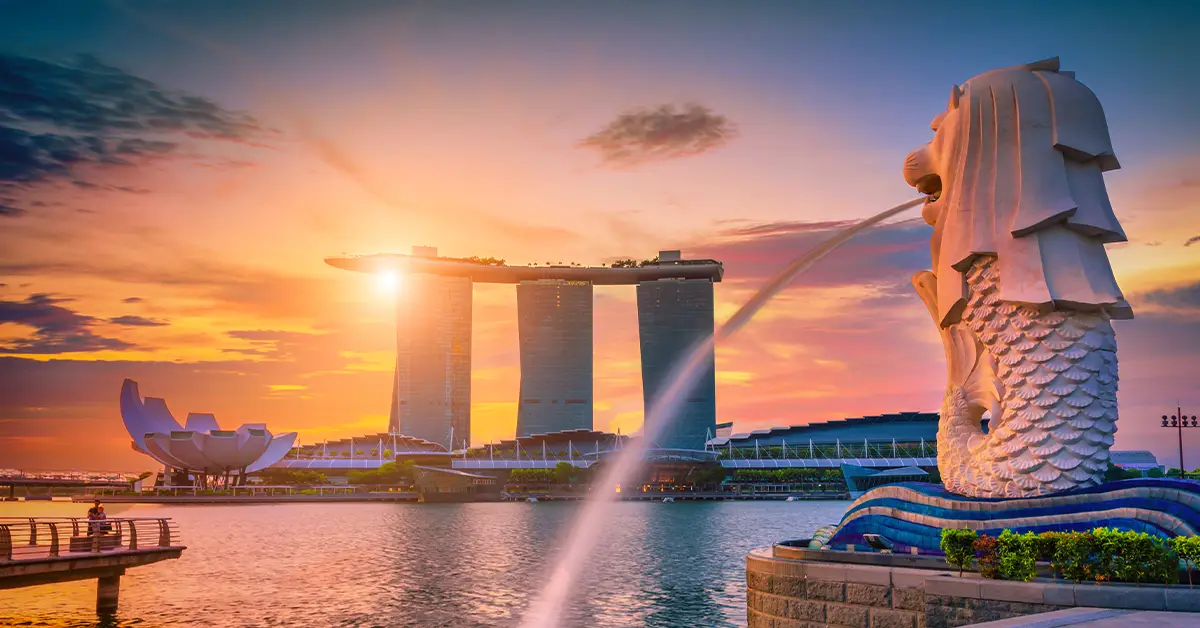
Singapore is an island nation at the southern tip of the Malay Peninsula, in South-East Asia. With an area of only around 735 km² and a population of more than 6 million, it is known as one of the world’s leading financial, trade and logistics centres. Singapore is also one of the few countries to have transformed from a small fishing village into a developed economy in under 60 years since gaining independence in 1965.
This article provides an overview of Singapore across its founding history, geographical position, political system, economic structure, population characteristics, education system, cultural life and international role. This is the foundational information helping readers understand one of the most influential countries in the Asia-Pacific region.
Message
The founding history of Singapore
A detailed article onThe history of Singapore.
Singapore’s history can be traced to the 11th century, when the area was known as Temasek, a small port within the maritime empires of South-East Asia. In 1819, Sir Stamford Raffles, representing the British East India Company, laid the foundations of modern Singapore by establishing a free trading post on the island.
In 1867, Singapore formally became a British Crown Colony as part of the Straits Settlements together with Penang and Malacca. During the Second World War, the island was occupied by the Japanese army from 1942 to 1945. After the war ended, Singapore returned to British control and was gradually granted internal self-government in 1959.
An important turning point came on 16 September 1963, when Singapore joined the newly formed Federation of Malaysia together with Malaya, North Borneo and Sarawak. However, deep political, economic and ethnic differences between Singapore’s People’s Action Party (PAP) and the ruling Alliance in Kuala Lumpur led to escalating tension.
On 9 August 1965, the Malaysian Parliament voted 126-0 to pass a constitutional amendment expelling Singapore from the federation. At the historic press conference the same day, Prime Minister Lee Kuan Yew declared Singapore a sovereign, independent and democratic nation. On Singapore Parliament archive records, this date is formally recognised as National Day.
After declaring independence, Singapore was quickly admitted to the United Nations on 21 September 1965 as its 117th member. In October the same year, the country joined the Commonwealth. Two years later, Singapore became one of the five founding members of the Association of Southeast Asian Nations (ASEAN) in August 1967, laying the foundation for the regional role it holds today.
Considering a residency programme? The Prosperous Living Investment team assesses your profile free of charge and advises on the pathway that fits your goals.
Geographical position and natural features
A detailed article onThe geography of Singapore.
Singapore lies at around 1°22′ North and 103°48′ East, only 137 km north of the equator. The country consists of one main island together with around 60 smaller islands, between the Strait of Malacca and the South China Sea. To the north, Singapore borders the Malaysian state of Johor across the Johor Strait; to the south it faces Indonesia’s Riau Islands across the Singapore Strait.
Singapore’s total natural land area is around 735 km², of which the main island accounts for most. Notably, this area has grown by more than 25% since independence through large-scale land reclamation, turning marshland and shallow sea into building land for economic and urban development.
Singapore’s terrain is relatively flat, with the highest point at Bukit Timah Hill, only 163 metres above sea level. Singapore has no major rivers, no significant mineral resources, and must import most of its fresh water from Malaysia, alongside desalination plants and the modern NEWater wastewater recycling system.
Singapore’s climate is tropical monsoon, hot and humid year round with average temperatures ranging from 25°C to 31°C. Average annual rainfall is around 2,300 mm, fairly evenly distributed through the year but concentrated more heavily in the two monsoon seasons: the north-east monsoon from December to March and the south-west monsoon from June to September.
Despite its limited natural resources, Singapore has an invaluable strategic advantage: a position at the junction of the Indian and Pacific Oceans, commanding one of the busiest shipping lanes in the world. The Port of Singapore is now one of the largest container ports in the world by cargo throughput.
The political system and government
A detailed article onThe politics of Singapore.
The Republic of Singapore is a parliamentary republic on the British Westminster model. The Constitution was first promulgated in 1965 after separation from Malaysia, and has since been amended several times to keep pace with the country’s development.
The President is the head of state, directly elected since 1991 for a 6-year term. Before that, the President’s role was purely ceremonial. After constitutional reform, the President has the power to veto certain important decisions relating to the national reserves, the appointment of key public offices and internal security matters. The current President is Tharman Shanmugaratnam, who took office in September 2023.
The Prime Minister heads the government and holds real executive power. By convention, the Prime Minister is the leader of the party holding a majority of seats in Parliament. The current Prime Minister is Lawrence Wong, who took office on 15 May 2024, becoming Singapore’s fourth Prime Minister and the first born after independence.
The Singapore Parliament is a unicameral legislature with members elected by universal suffrage. Alongside the directly elected Members of Parliament, Parliament has two special kinds of member: Non-Constituency Members of Parliament (NCMPs) representing opposition parties with a high share of the vote but no seats won, and Nominated Members of Parliament (NMPs) representing non-political professional groups.
The People’s Action Party (PAP) has governed continuously since 1959, a rare record among modern democracies. The Singapore political system is often described as a multi-party democracy on paper but operating as a de facto one-party dominant state. The judiciary is independent, based on English common law, and is highly regarded internationally for its efficiency and transparency.
The Singapore economy and its standing as a regional financial centre
A detailed article onThe economy of Singapore.
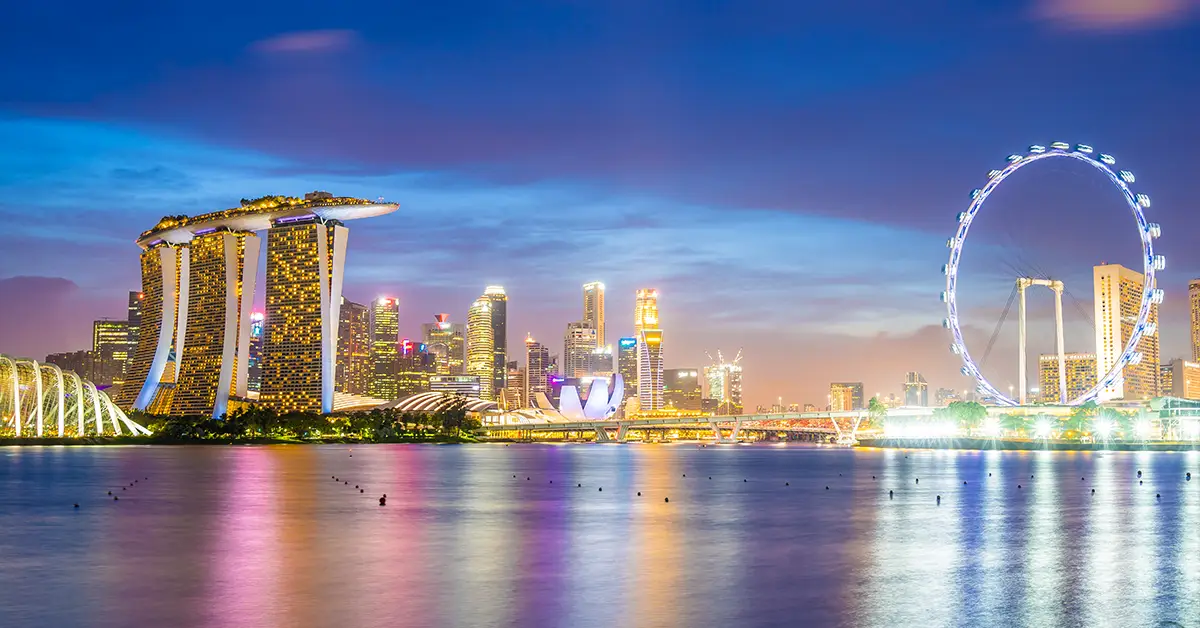
The Singapore economy is one of the most impressive success stories of the 20th and 21st centuries. From a country without natural resources and GDP per capita of only around USD 500 in 1965, Singapore has risen to become one of the most prosperous economies in the world in just a few decades.
On figures published bythe Singapore Ministry of Trade and Industry (MTI) through the Singapore Department of Statistics, the economy grew 6.9% year on year in the fourth quarter of 2025. The GDP growth forecast for 2026 has been raised to between 2.0% and 4.0%. Singapore’s GDP per capita is now among the highest in Asia, surpassing many developed countries in Europe and North America.
The Singapore economy rests on four main pillars. The first is financial services, with Singapore one of Asia’s four largest financial centres alongside Hong Kong, Tokyo and Shanghai. The second is high-technology manufacturing, particularly electronics, biopharmaceuticals and petrochemicals. The third is logistics and aviation, with the Port of Singapore and Changi Airport consistently ranked among the world’s best. The fourth is trade, tourism and education services.
Singapore applies a policy of thoroughgoing trade openness, having signed more than 27 free trade agreements with partners worldwide. The country is an active member of regional economic frameworks such as the Comprehensive and Progressive Agreement for Trans-Pacific Partnership (CPTPP), the Regional Comprehensive Economic Partnership (RCEP) and the ASEAN Economic Community.
The official currency is the Singapore dollar (SGD), managed by the Monetary Authority of Singapore (MAS) on a managed exchange rate basis. The MAS acts as both central bank and integrated financial regulator, a model relatively different from most countries. The stability of the SGD and a transparent legal environment are what attract international investors.
Singapore’s tax system is designed to encourage investment and business. Corporate income tax is capped at 17%, among the lowest in the region. Goods and services tax (GST) has been 9% since 2024. The country levies no capital gains tax and no inheritance tax, creating favourable conditions for long-term wealth accumulation.
The population and demographic composition of Singapore
A detailed article onThe demographics of Singapore.
On the Population in Brief 2025 report by the National Population and Talent Division, Singapore’s total population as at June 2025 reached 6.11 million, up 1.2% on the previous year. The population increase came mainly from the non-resident group, particularly foreign workers on major infrastructure projects such as Changi Airport Terminal 5.
Singapore’s population is classified into three main groups. Singapore citizens number around 3.66 million, around 60% of the total. Permanent residents (PRs) remain steady at approximately 540,000. The remainder are foreign nationals working and living long-term on various kinds of permit.
On ethnic composition, Singapore’s population reflects the multicultural character of an island nation at the crossroads of East-West trade. Chinese make up around 74% of the citizen population, Malays around 13.5%, Indians around 9% and other ethnicities around 3.5%. This structure has remained relatively stable since independence.
Singapore faces a serious challenge in population ageing. The total fertility rate (TFR) for 2026 is forecast at only 0.97 children per woman, among the lowest in the world and far below the replacement level of 2.1. The median age of the population has reached around 36.8, and the proportion over 65 is rising quickly.
To respond to these adverse demographic trends, the Singapore government applies a controlled immigration policy, prioritising highly skilled talent through employment visa schemes such as the Employment Pass, Tech.Pass and ONE Pass. At the same time, policies supporting marriage and childbearing such as the Baby Bonus, paid maternity leave and childcare leave are being pushed strongly.
The education system
A detailed article onEducation in Singapore.
Singapore has one of the most highly regarded education systems in the world. Its pupils regularly top the international rankings in mathematics, science and reading in the OECD’s PISA programme. English is the main language of instruction at every level, alongside the mother tongue.
Compulsory education runs for 6 years of primary school, after which pupils sit the PSLE to be streamed into different kinds of secondary school. Secondary school may last 4 or 5 years depending on the programme, ending with the GCE O-Level or N-Level examinations. After secondary school, pupils may choose a Junior College to prepare for A-Levels and university, or a Polytechnic or ITE for vocational study.
The country has six autonomous public universities, of which the National University of Singapore (NUS) and Nanyang Technological University (NTU) are regularly in the world top 20 on the QS and Times Higher Education rankings. In addition, Singapore hosts campuses of several prestigious international universities such as INSEAD, Yale-NUS and Singapore Management University.
Investment in education is around 2.8% of GDP a year, with the government funding most of the cost of education from primary to university level for citizens. Adult literacy is above 97%, among the highest in the region. The education system focuses not only on academic achievement but on developing critical thinking, creativity and digital skills.
Culture and social life in Singapore
A detailed article onSingapore culture.
Singapore’s culture is a distinctive blend of Chinese, Malay, Indian and Western traditions, reflecting the migration and trading history of the region. The Constitution recognises four official languages — English, Mandarin, Malay and Tamil — of which Malay is the national language and English the common administrative language.
Religious life in Singapore is highly diverse. On the most recent census, Buddhism accounts for around 31%, Christianity 19%, Islam 16%, Taoism 9%, Hinduism 5%, and around 20% of the population follows no religion. The government maintains a strict policy of religious freedom while closely regulating proselytising activity that could cause conflict between communities.
Singapore’s cuisine was recognised by UNESCO as Intangible Cultural Heritage in 2020 through its hawker culture. Hawker stalls serve distinctive dishes such as Hainanese chicken rice, laksa, char kway teow, satay and chilli crab at affordable prices. The culinary variety reflects the meeting of cultures that gives the island nation its distinctive character.
The major festivals are celebrated publicly and draw participation from many different communities. Chinese New Year, Hari Raya Puasa for Malay Muslims, Deepavali for Hindu Indians and Christmas are all public holidays nationwide, expressing the spirit of multicultural harmony the Singapore state regards as the foundation of social stability.
Singapore’s healthcare system is highly rated by the World Health Organization (WHO) for efficiency. A mixed public-private model combined with compulsory personal medical savings (Medisave) gives people access to high-quality services at reasonable cost. Life expectancy in Singapore is around 84, among the highest in the world.
The international role and diplomatic relations
A detailed article onSingapore’s international relations.
Despite its small geographical size, Singapore plays an important role in the international system thanks to its economic standing and diplomatic reputation. The country is a member of the United Nations, the World Trade Organization (WTO), the Non-Aligned Movement and the Commonwealth, and is one of the five founding members of ASEAN. The Secretariat of the Asia-Pacific Economic Cooperation (APEC) forum is also based in Singapore.
Singapore’s foreign policy rests on pragmatism, balance between the major powers and respect for international law. The country maintains close relations with both the United States and China, while developing strategic partnerships with many countries in Asia, Europe and the Middle East. In 2026, Singapore continues to hold key roles in the regional forums, particularly as it prepares to chair ASEAN.
Relations between Singapore and Vietnam were upgraded to a Comprehensive Strategic Partnership in 2025, the highest level of bilateral cooperation. The two countries cooperate across trade, investment, renewable energy, carbon credits and the digital economy. The network of Vietnam-Singapore Industrial Parks (VSIP) is the emblem of economic cooperation between the two countries over nearly three decades.
Singapore also serves as an important financial bridge for Vietnamese investors wanting access to regional and international markets. Many Vietnamese businesses have set up representative offices or regional headquarters in Singapore to make use of the favourable business environment, transparent legal system and well-developed international banking network.
The Singapore passport is ranked among the most powerful in the world on the international passport indices, giving its citizens visa-free entry or visa on arrival to most countries. Compared with theVietnamese passport, the gap in passport power reflects a marked difference in diplomatic standing and international integration between the two countries. It is the result of Singapore’s proactive diplomacy and high standing in the international community.
Summary
Singapore is a special case in the history of modern development, where a small island nation without resources has risen to become one of the world’s leading developed economies in just six decades. The combination of a strategic geographical position, an open economic policy, a transparent legal system, heavy investment in education and human capital, and a harmonious multicultural policy has created the distinctive development model known as the “Singapore Model”.
For Vietnamese people interested in Singapore — whether for study, work, investment or research — understanding the history, political system, economic structure and social characteristics of the country is essential to making the right decisions. Singapore will continue to be one of the most attractive destinations in the Asia-Pacific region for decades to come, particularly against a background of global economic and geopolitical volatility.
Accompanying you on your journey in residency investment
The Prosperous Living Investment team advises on pathways, assesses profiles and manages investments transparently for every residency, citizenship and international property objective.
Free profile assessmentWhere life gets prosperous