


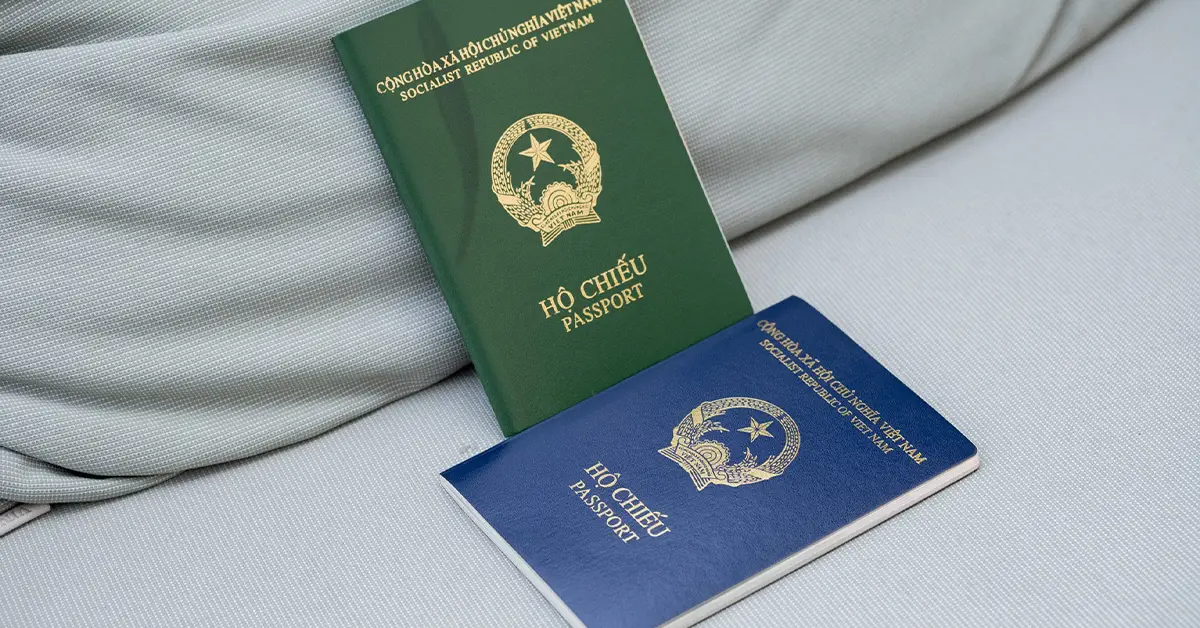
An introduction to the Vietnamese passport
The Vietnamese passport is an official document issued by the State to citizens to prove their nationality and exercise the right to travel internationally. As an important part of the national immigration and security system, the Vietnamese passport serves not only for entry and exit purposes but also replaces certain domestic administrative documents.
Millions of citizens are issued a new or renewed passport each year, reflecting the growing travel needs of Vietnamese people.
Data from the Immigration Department show that, from 2022 to the present, the Vietnamese passport has been upgraded with biometric technology, improving security.
The Vietnamese passport reflects the development of Vietnam’s immigration management system. From the strict rules of the early days to today’s international integration, it demonstrates the balance between national security and freedom of movement. Let us join the experts at Prosperous Living Investment in analysing and exploring the history, design and features of the Vietnamese passport.
Message
Considering a residency programme? The Prosperous Living Investment team assesses your profile free of charge and advises on the pathway that fits your goals.
The history of the Vietnamese passport
The history of the Vietnamese passport begins with Decree No. 389/TTg of 27 October 1959, signed by Prime Minister Phạm Văn Đồng. This was the first legal document governing the issue of passports, with strict conditions on validity and eligibility. Under this Decree, an individual passport was valid for a maximum of 3 years, a collective passport for 18 months, extendable but not beyond 5 years in total.
In 1960, Decree No. 53-CP extended this to students on long-term study with a validity of no more than 10 years. The rules at the time emphasised strict control, requiring reports when travelling abroad and the surrender of the passport on return. By 1966, Decree No. 38-CP provided for the issue of official and ordinary passports mainly for official purposes, such as for experts, journalists or students studying abroad.
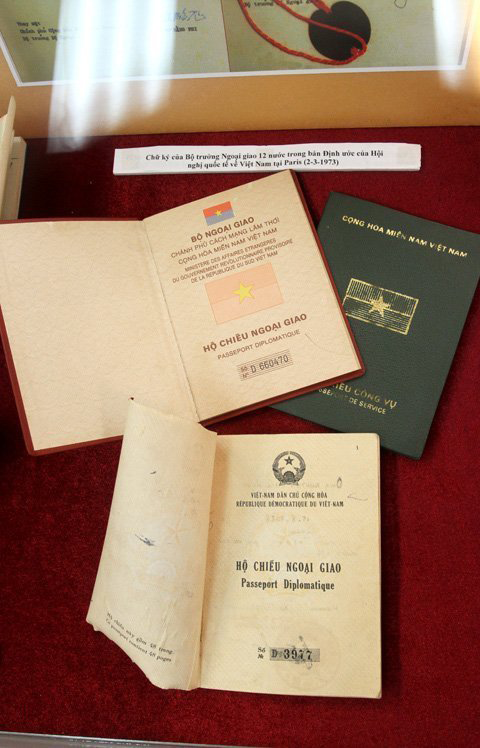
After more than 30 years, Decree No. 389/TTg ceased to have effect and was replaced by Decree No. 48-CP of 1993 signed by Prime Minister Phan Văn Khải, reflecting the spirit of international integration. The new rules were more relaxed, issuing passports to citizens from the age of 16, with a validity of 5 years and allowing an appeal where an application was refused. In 1995, Decree 24/CP still made issue difficult, but by Decree No. 05/2000/NĐ-CP of 2000, ordinary passports were issued to all citizens, marking a major step forward.
The current rules are based on Decree No. 136/2007/NĐ-CP and Decree No. 94/2015/NĐ-CP, with passports produced to ICAO standards. Technically, this development reflects a shift from strict control to openness, in keeping with the open economy following Đổi Mới. The number of passports issued has risen sharply year on year, reaching millions a year.
The design and structure of the Vietnamese passport
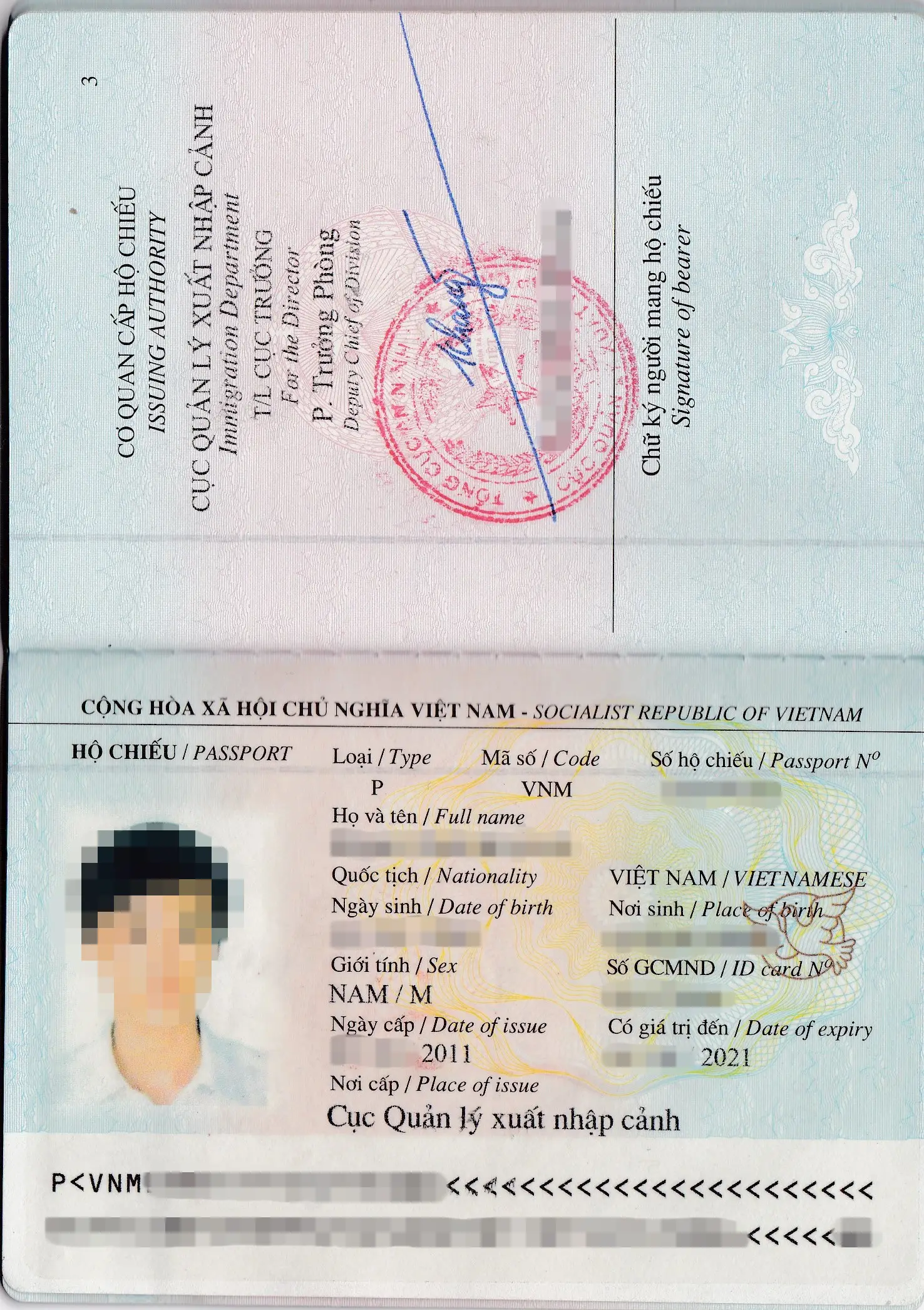
The design of the Vietnamese passport complies with international standards, with 48 content pages and 2 cover pages. The first cover page states, in Vietnamese and English, that it is state property and requests assistance from other countries. The identity information page includes the following:
- Type (passport)
- Code (country)
- Passport number
- Surname
- Middle name and given name
- Nationality
- Date of birth
- Sex
- Place of birth
- Personal identification number / identity card number
- Date of issue
- Date of expiry
- Machine-readable zone (MRZ)
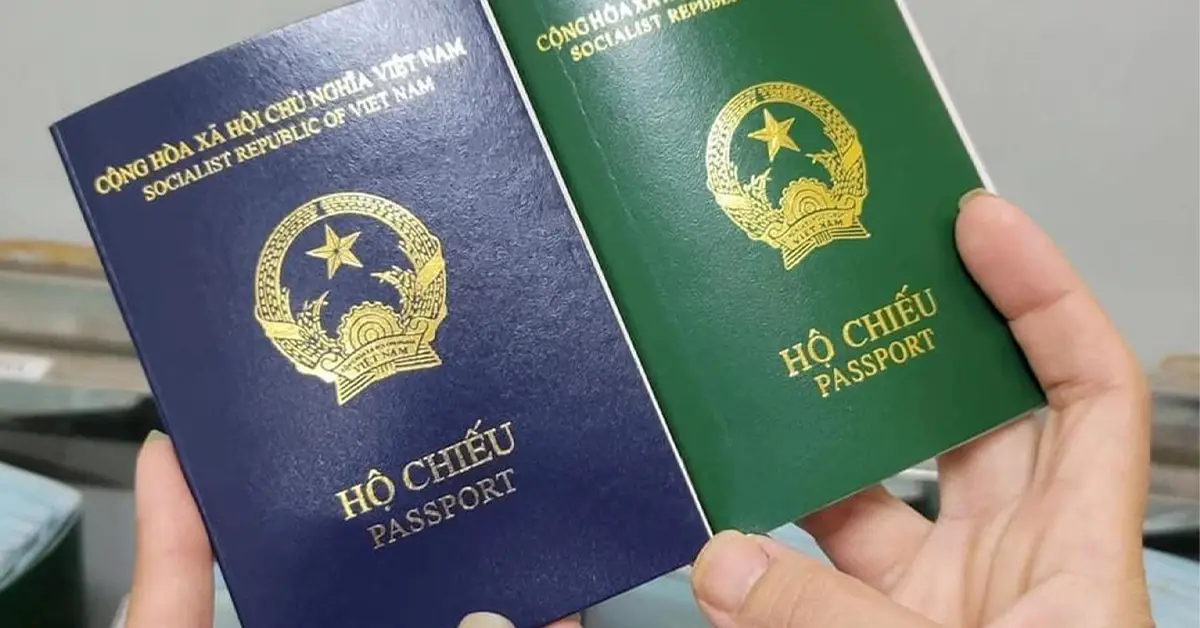
The new version from 1 July 2022 has 50 pages, a dark violet cover, with watermarked images of heritage sites such as:
- The National Assembly building of Vietnam
- The Temple of Literature
- The Bình Ngô Đại Cáo lacquer painting
- The Lũng Cú flag tower
- Mount Fansipan
- The Đồng Văn Karst Plateau
- Hạ Long Bay
- The Hùng Kings Temple
- The Thăng Long Imperial Citadel
- Đường Lâm ancient village
- Tràng An
- The Hồ Dynasty Citadel
- The Imperial City of Huế
- Hội An Ancient Town
- The Mỹ Sơn Sanctuary
- Tò Vò Gate – Lý Sơn Island
- Dray Sap Waterfall
- Nhà Rồng (the Dragon House)
- The Bạch Hổ oil rig
- Hanoi Opera House
This not only enhances the aesthetics but also improves security against forgery. Described in detail, the motifs are printed in special ink, visible only under UV light, depicting landscapes from the north to the south.
The Vietnamese passport uses watermarking technology and luminescent ink, in line with ICAO Doc 9303 standards. Compared with the 2001 version, the current design is more refined, with a QR code line and an electronic chip in some types.
This design makes checks at border crossings more convenient.
Types of Vietnamese passport
The Vietnamese passport is divided into 3 main types:
- The ordinary passport: the ordinary passport is valid for no more than 10 years, issued to all citizens, with a validity of 5 years for children under 14. Children under 9 may be recorded jointly on a parent’s passport.
- The standard ordinary passport
- The seafarer’s ordinary passport
- The abridged ordinary passport
- The official passport: the official passport is valid for no more than 5 years, extendable once for a maximum of 3 years, issued to cadres and civil servants paid from the state budget and certain other groups. It covers a spouse and children under 18 accompanying or visiting them.
- The diplomatic passport: the diplomatic passport is similar to the official passport, issued to senior leaders and diplomatic staff, with a validity of 5 years and an extension of 3 years.
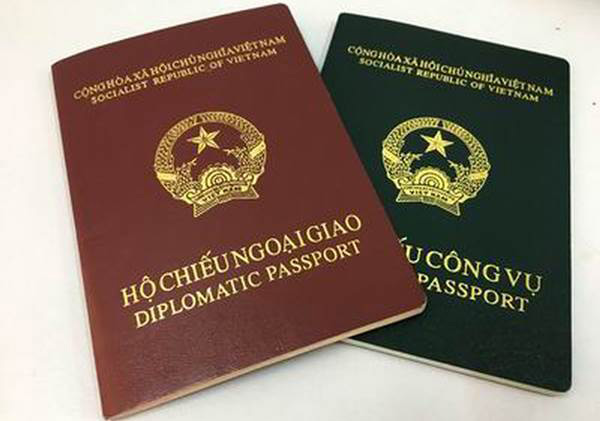
This classification ensures alignment with different immigration needs. The ordinary passport accounts for the largest share of the total passports issued each year; official and diplomatic passports account for a small share, mainly serving state business.
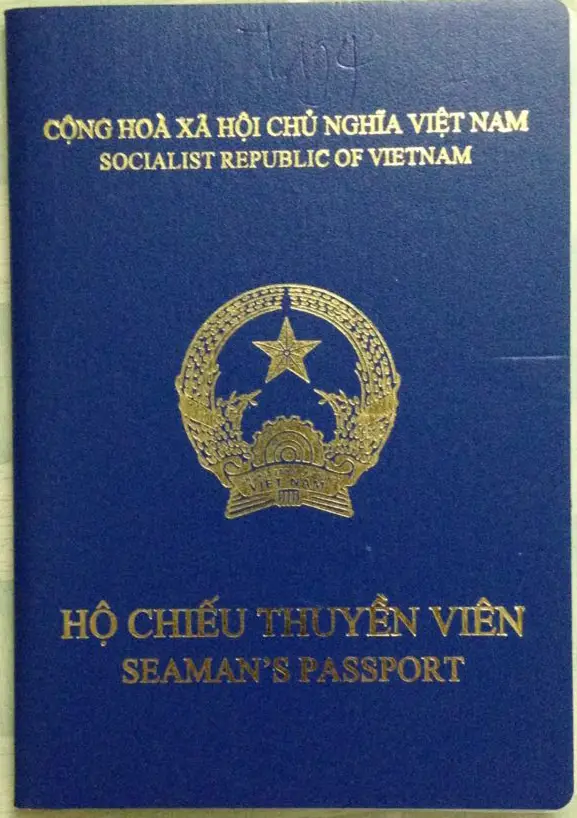
A summary table of the types of Vietnamese passport:
| Passport type | Validity | Main holders | Features |
|---|---|---|---|
| Ordinary | 10 years (5 years for children under 14) | All citizens | Replaces the identity card in certain cases |
| Official | 5 years (extendable by 3 years) | Cadres and civil servants | Covers accompanying family |
| Diplomatic | 5 years (extendable by 3 years) | Senior leaders and diplomats | Requires senior approval |
The process for issuing a Vietnamese passport
The Vietnamese passport is issued through the Immigration Department or a diplomatic mission abroad. For an ordinary passport, citizens submit an application to the provincial authority, in person or online through the Ministry of Public Security’s Public Service Portal. The application includes a declaration form, photographs, a copy of the birth certificate for children, and presentation of the identity card.
Processing takes no more than 5 working days, with a fee of VND 200,000 for a new issue. Citizens abroad apply at the embassy with proof of nationality. The online process, introduced in 2022, has shortened waiting times.
For a border laissez-passer, applications are made in the border province with a fee of VND 50,000 and a processing time of 3 days. These rules are based on Decree 136/2007/NĐ-CP, ensuring transparency and efficiency.
Consult the process for issuing a Vietnamese passport and apply for a passport online on the Ministry of Public Security website here:
- Issue of an ordinary passport within the country (at provincial level)
- Issue of an ordinary passport within the country (at central level)
Security features in the Vietnamese passport
The security features of the Vietnamese passport meet ICAO standards, with an MRZ line for automatic machine reading. From 1 March 2023, the biometric passport was introduced, storing fingerprint data. An electronic chip encrypts personal information, readable only with specialist equipment.
Described in detail, under UV light the heritage motifs become visible, providing effective protection against forgery. This technology helps reduce the rate of forged passports. Chipped passports have been issued since 2021, with a blue-violet cover, improving security at international border crossings.
Other travel documents relating to the Vietnamese passport
Alongside the passport, there is a border laissez-passer for crossing into neighbouring countries, valid for 12 months. A repatriation laissez-passer is issued to citizens settled abroad returning for permanent residence, valid for 6 months.
These documents complement the passport, serving specific purposes such as crossing border areas into neighbouring countries.
Recent controversies and updates on the Vietnamese passport
In 2022, the new passport did not record the place of birth in words, which caused controversy and led some countries such as Germany and Spain to suspend visa issue. From 2023, an update restored the place of birth, resolving the issue.
This affected a section of citizens needing visas during that period. The design update makes the Vietnamese passport more consistent with international standards, reducing the risk of refusal of entry.
Accompanying you on your journey in residency investment
The Prosperous Living Investment team advises on pathways, assesses profiles and manages investments transparently for every residency, citizenship and international property objective.
Free profile assessmentWhere life gets prosperous