


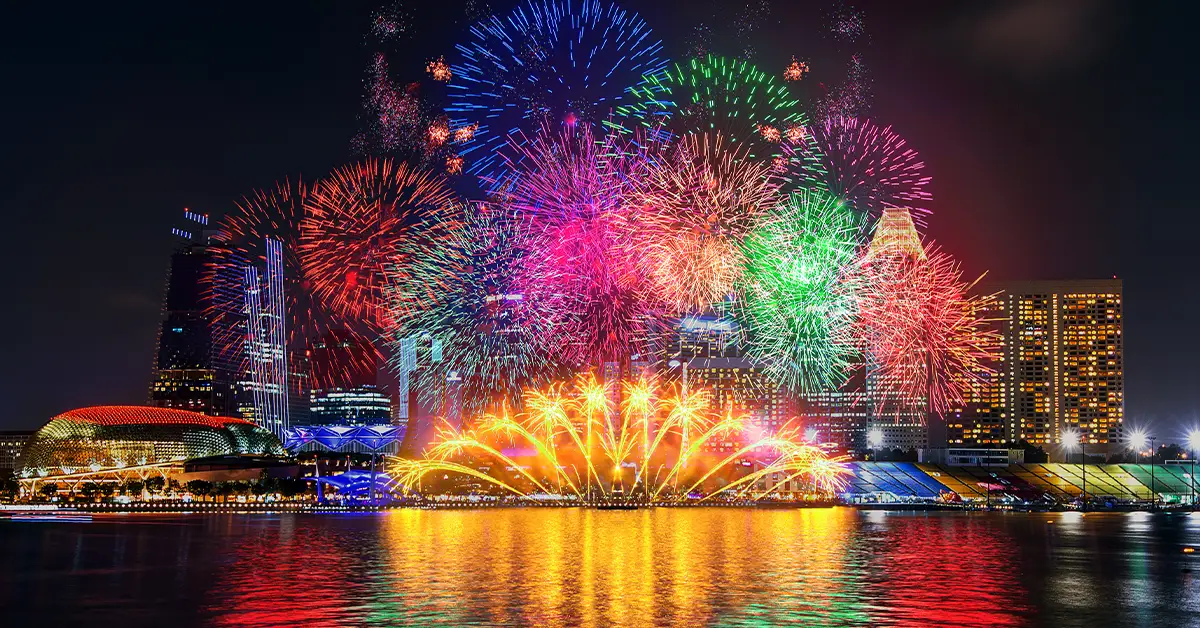
Singaporean culture is a unique blend of Chinese, Malay, Indian and Western traditions, the result of more than two centuries of trade and migration at the crossroads of global shipping routes. In December 2020,Singapore’s hawker culture was inscribed by UNESCO as an Intangible Cultural Heritage of Humanity, an important international recognition of the island nation’s multicultural identity.
This article analyses the key elements that make up the culture ofSingapore, from its bilingual language policy, diverse religious life and distinctive hawker cuisine to multi-ethnic festivals and etiquette in everyday life. It provides essential background for Vietnamese people interested in working, investing or settling in the island nation.
Detailed article onSingapore.
Message
The four official languages of Singaporean culture
Singapore is one of the few countries in the world with four official languages recognised by its Constitution: English, Mandarin, Malay and Tamil. Malay is recognised as the national language, and the national anthem “Majulah Singapura” is written in Malay, reflecting the island nation’s indigenous roots in Southeast Asia.
English serves as the common language of administration, business and education. All students in Singapore learn science, mathematics and social studies in English. Choosing English as the common language was a strategic decision by the nation’s founders to lay the foundation for global competitiveness and avoid favouring any one ethnic group.
The compulsory bilingual education policy requires every student to learn English and a second language — known as the “mother tongue” — corresponding to their ethnicity. Chinese students learn Mandarin, Malay students learn Malay and Indian students mainly learn Tamil. This is an important factor in preserving cultural traditions across generations.
A unique product of the multilingual environment is Singlish — Singaporean English with structures and vocabulary mixed from many other languages. Although it is not an official language and is sometimes discouraged by the government, Singlish remains a distinctive cultural hallmark that people love to use in everyday conversation. Words such as “lah”, “lor”, “leh” and “kiasu” have become emblems of the island nation.
The “Speak Mandarin” campaign was launched in 1979 to unify the language of Singapore’s Chinese community. Before that, Chinese Singaporeans spoke many different dialects such as Hokkien, Teochew, Cantonese, Hainanese and Hakka. Encouraging the use of Mandarin helped unite the community and boost trade with mainland China.
Considering a residency programme? The Prosperous Living Investment team assesses your profile free of charge and advises on the pathway that fits your goals.
Religious diversity in Singapore
Religious life in Singapore is highly diverse, with places of worship of many different faiths coexisting harmoniously in a small urban space. The Constitution guarantees freedom of religion, and the government maintains a strictly secular policy, not interfering in personal beliefs but closely regulating activities that could cause conflict.
According to the most recent census, the island nation has six main religions that are widely practised: Buddhism, Christianity, Islam, Taoism, Hinduism and Sikhism. This religious makeup has been fairly stable for decades, with some minor shifts. There is also a segment of the population with no religion.
Buddhism and Taoism are practised mainly in the Chinese community, often combining the two traditions with Chinese folk beliefs. Famous temples such as the Buddha Tooth Relic Temple in Chinatown and Thian Hock Keng Temple attract both locals and international visitors. Vesak and the Mid-Autumn Festival are important occasions in Buddhist and Taoist life.
Islam is closely associated with the Malay community and part of the Indian community. The island nation has more than 70 mosques, with the Sultan Mosque in Kampong Glam as a prominent landmark. The Islamic Religious Council of Singapore (MUIS) oversees the religious affairs of the Muslim community. Ramadan and Hari Raya Puasa are important occasions in Singaporean culture.
Christianity has grown rapidly in recent decades, especially among highly educated young people. The island nation has hundreds of Protestant and Catholic churches, from historic churches such as St. Andrew’s Cathedral to large modern churches. Hinduism and Sikhism are common in the Indian community, with temples concentrated in Little India.
Cuisine and the distinctive hawker culture
Singaporean cuisine is one of the greatest sources of pride in Singaporean culture, recognised by UNESCO as an Intangible Cultural Heritage of Humanity in December 2020 through its hawker culture. This is international recognition for the island nation’s distinctive network of affordable food centres (hawker centres).
Hawker culture originated with street vendors in the 19th and early 20th centuries. To improve hygiene and urban management, the government began relocating them to centralised hawker centres in the 1970s. Today the island nation has more than 110 hawker centres serving millions of affordable meals every day.
Signature dishes at hawker centres reflect Singapore’s ethnic diversity. Hainanese chicken rice is considered by many to be the national dish. Laksa — spicy coconut noodle soup — showcases distinctive Peranakan cuisine. Char kway teow is Hokkien-style stir-fried flat noodles with rich flavours. Satay is traditional Malay grilled skewered meat. Roti prata is an Indian flatbread served with curry.
An important cultural feature of hawker centres is “chope” — reserving a seat by leaving a packet of tissues or a water bottle on the table. This habit reflects the community spirit and trust between people in Singaporean society. Hawker centres are places where people from all walks of life, from workers to business people, enjoy meals side by side.
Alongside hawker food, fine dining in Singapore has also flourished. According to the Michelin Guide Singapore 2025, the island nation has 288 restaurants recognised in the Michelin Star, Bib Gourmand and Selected categories. The three prestigious 3-star restaurants are Odette, Les Amis and Zén, all French or French-inspired. Notably, Hill Street Tai Hwa Pork Noodle and Hong Kong Soya Sauce Chicken Rice and Noodle became the world’s first two hawker stalls awarded a Michelin star in 2016, marking international recognition of street food.
Major festivals celebrated nationwide
Singaporean culture is clearly expressed through its major festivals, which are officially recognised and celebrated nationwide. A notable feature is that the government recognises the festivals of all major ethnic groups and religions as public holidays, reflecting the spirit of multicultural harmony that underpins social stability.
Chinese New Year is the Chinese community’s biggest festival, lasting 15 days and including 2 official public holidays. Chinatown is lavishly decorated with red lanterns, stalls selling traditional food and lion dance performances. The River Hongbao festival at Marina Bay is a large-scale cultural event that draws hundreds of thousands of visitors every year.
Hari Raya Puasa — the Malay Muslim festival marking the end of Ramadan — is an important time for family reunions. Geylang Serai becomes the centre of the festivities with night bazaars and cultural activities. It is followed by Hari Raya Haji — commemorating the Prophet Ibrahim’s willingness to sacrifice his son at God’s command — which is also a public holiday.
Deepavali (or Diwali) — the Hindu “Festival of Lights” of the Indian community — is celebrated with great fanfare in Little India with dazzling rows of oil lamps and traditional rangoli. It celebrates the victory of light over darkness and good over evil. Indian cultural events such as Bharatanatyam and Bhangra dance performances are also widely held.
Christmas is celebrated openly and on a surprisingly large scale for an Asian country. Orchard Road turns into an avenue of lights, with decorations lasting for weeks. Major shopping centres invest heavily in decorations and performances. This is an expression of the pluralism of Singaporean culture, with a Christian festival embraced by society as a whole.
National Day on 09 August is the biggest national event, celebrated since 1965. The National Day Parade (NDP) combines a military parade with large-scale performances and is broadcast live nationwide. The event affirms the national identity and unity of Singapore’s multicultural society.
Singaporean culture in art, music and film
Singapore’s arts and popular culture have developed strongly in recent decades, supported by government investment and the creative diversity of its communities. The National Arts Council (NAC) is responsible for managing and promoting the development of the arts across the island nation.
Esplanade – Theatres on the Bay, with its distinctive durian-shaped architecture, has become a cultural icon of Singapore. The centre hosts thousands of performances every year, from classical music and opera to contemporary dance and experimental theatre. The National Museum of Singapore and National Gallery Singapore are the two largest museums showcasing Southeast Asian art and the island nation’s history.
Singaporean cinema has developed since the 1990s, notably through the success of directors such as Eric Khoo, Jack Neo and Royston Tan. Anthony Chen’s “Ilo Ilo” won the Camera d’Or at the 2013 Cannes Film Festival, marking the international standing of the island nation’s cinema. The annual Singapore International Film Festival is an important film event in the region.
Singaporean music is diverse, blending Chinese, Malay, Indian and Western genres. Artists such as JJ Lin, Stefanie Sun and Tanya Chua have found success in mainland China and across Asia. In recent years, young artists on digital platforms have created a new wave in the island nation’s music.
Singaporean literature has developed in all four official languages. Prominent authors such as Catherine Lim, Edwin Thumboo and Alfian Sa’at have been translated into many languages. The annual Singapore Writers Festival is a major literary event in Southeast Asia, attracting many international authors and readers.
Etiquette and everyday life
Singaporean culture has strict codes of conduct and public regulations, a distinctive part of the social order of the island nation. For newcomers, understanding these rules helps avoid unwanted situations and integrate quickly.
Singapore’s laws and public regulations are strictly enforced with high fines. Littering can be fined SGD 300 or more for a first offence. Smoking in prohibited areas, eating or drinking on MRT public transport, or spitting out chewing gum all carry significant fines. Importing chewing gum is essentially banned except in certain special cases.
In social interactions, Singaporeans typically show respect to elders and superiors. Addressing people by title or surname with “Mr.”, “Mrs.”, “Sir” or “Madam” is common in the workplace. When meeting older Chinese people, calling them “Auntie” or “Uncle” is a respectful form of address even without any family relationship.
Queueing is strictly observed everywhere, from bus stops to supermarkets and hawker centres. This is one of the cultural traits that sets Singapore apart from many Asian countries. Cutting in line or ignoring the order can provoke strong reactions from locals.
In business, Singaporeans are generally pragmatic, punctual and direct in communication. Business cards are exchanged with both hands when meeting important partners, especially with Chinese and Japanese counterparts. Gifts should be chosen with care for certain cultures — for example, giving a clock to a Chinese person is considered a bad omen.
Singapore’s multicultural life is also reflected in respect for dietary and religious practices. Muslims do not eat pork and eat only halal food. Hindu Indians generally do not eat beef. Most restaurants and shops in Singapore offer suitable options for these groups, showing multicultural respect in everyday life.
Summary
Singaporean culture is proof that a multi-ethnic, multi-religious and multilingual society can survive and thrive in harmony. UNESCO’s recognition of hawker culture is an international highlight affirming the unique identity the island nation has built over more than two centuries of trade and migration.
For Vietnamese people interested in working, investing or settling in the island nation, understanding Singaporean culture is an important factor for successful integration. Pragmatism, respect for diversity, compliance with the law and a high regard for social order are core values newcomers need to understand. Hawker culture and multi-ethnic festivals also offer a rich lifestyle that is hard to find elsewhere.
Accompanying you on your journey in residency investment
The Prosperous Living Investment team advises on pathways, assesses profiles and manages investments transparently for every residency, citizenship and international property objective.
Free profile assessmentWhere life gets prosperous