


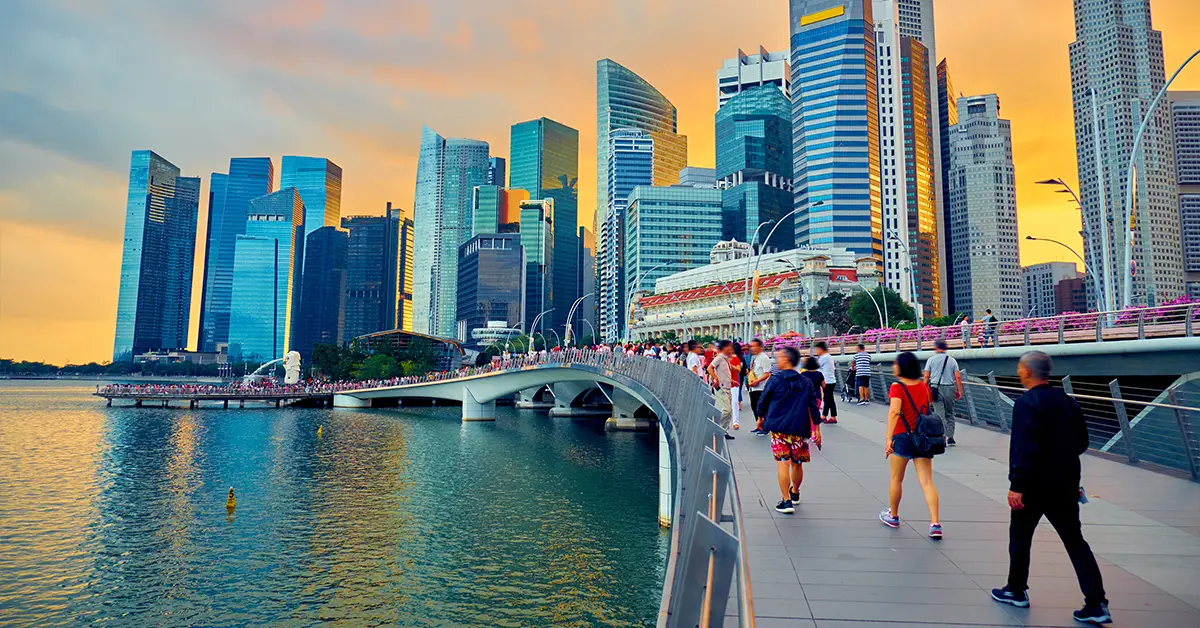
Singapore’s demographics reflect the unique character of an island nation with a rich history of migration and strategic human development policies. According to the Population in Brief 2025 report by the National Population and Talent Division (NPTD), Singapore’s total population reached 6.11 million as of June 2025, up 1.2% from the previous year.
This article analyses Singapore’s population components, ethnic composition, religious distribution, ageing trends and population policies, based on official data from the Department of Statistics Singapore and the NPTD. It is important background information for investors and individuals interested in the island nation’s labour market and society.
Detailed article onSingapore.
Message
Population overview in Singapore’s demographics
According to the latest release from theNational Population and Talent Division of Singapore, the island nation’s population reached 6.11 million in June 2025. Population density is about 8,300 people/km², among the highest in the world, reflecting its nature as an island state with limited land.
Singapore’s population is classified into three main groups by residency status. Singapore citizens number about 3.66 million, about 60% of the total population. Permanent residents (PRs) remain stable at approximately 540,000. The remaining group consists of foreign nationals working and living long-term under various passes, numbering about 1.9 million.
Average population growth in 2020-2025 was 1.5% a year, higher than the 0.5% of 2015-2020. Recent growth has come mainly from non-residents, especially foreign workers on major infrastructure projects such as Changi Airport Terminal 5 and the expansion of housing supply.
The citizen population grew 0.7%, from 3.64 million in June 2024 to 3.66 million in June 2025. This increase came mainly from births and partly from a selective naturalisation policy. This population structure shows that the island nation relies on immigration to offset low fertility.
Considering a residency programme? The Prosperous Living Investment team assesses your profile free of charge and advises on the pathway that fits your goals.
Ethnic composition in Singapore
Singapore is one of the world’s most distinctively multi-ethnic societies, the result of migration over more than two centuries. The Constitution recognises multiculturalism and equality among ethnic groups as the foundation of social stability.
According to the most recent census, the ethnic composition of Singapore citizens is as follows: Chinese about 74%, Malays about 13.5%, Indians about 9% and other groups (Eurasians, Peranakans and smaller communities) about 3.5%. This structure has been relatively stable since the island nation gained independence in 1965.
Chinese Singaporeans are mainly descendants of migrants from southern China in the 19th and early 20th centuries. They come from many dialect groups such as Hokkien, Teochew, Cantonese, Hainanese and Hakka. The government has promoted Mandarin as the standard language to unite the Chinese community through the “Speak Mandarin” campaign since 1979.
Malays are the indigenous community with the longest history in the island nation, belonging to the Austronesian peoples. The community holds a special cultural role, as Malay is recognised by the Constitution as the national language. Singapore’s national anthem, “Majulah Singapura”, is written in Malay. Malays are mainly Muslim and play an important role in the armed forces and public service.
Most Indian Singaporeans are descendants of Tamils from southern India, along with smaller groups from Punjab, Bengal, Sindh and Sri Lanka. They came to the island during British colonial rule to work on plantations and in construction. Little India is the community’s most prominent cultural symbol, with many Hindu temples and specialty restaurants.
Religious distribution and spiritual life
Religious life in Singapore is highly diverse, reflecting the multi-ethnic nature of its society. The Constitution guarantees freedom of religion, and the government maintains a strictly secular policy, not interfering in religious activity unless it affects public order.
According to the most recent census, the religious distribution among residents aged 15 and over is as follows: Buddhism about 31%, Christianity (including Protestants and Catholics) about 19%, Islam about 16%, Taoism about 9%, Hinduism about 5%, other religions about 1%, and about 20% of the population has no religion.
Buddhism and Taoism are practised mainly in the Chinese community, often combining the two traditions with Chinese folk beliefs. The island nation has hundreds of temples, with the Buddha Tooth Relic Temple and Thian Hock Keng Temple among its famous cultural sites.
Christianity has grown rapidly in recent decades, especially among highly educated young people and the Eurasian community. Islam is closely associated with the Malay community and some Indians, and is administered through the Islamic Religious Council of Singapore (MUIS). Hinduism and Sikhism are common in the Indian community.
A unique feature of Singapore’s demographics is that the government maintains an active religious management policy to prevent conflict between communities. The Maintenance of Religious Harmony Act allows the authorities to intervene when there are signs of incitement to religious hatred. The major festivals of each religion are recognised as public holidays nationwide.
The challenges of an ageing population and low fertility
One of the most serious challenges in Singapore’s demographics today is rapid population ageing. The island nation’s total fertility rate (TFR) in 2024 was just 0.97 children per woman, unchanged from 2023, among the lowest in the world and far below the replacement level of 2.1.
According to the Department of Statistics Singapore, the median age of Singapore residents rose from 39.6 in 2015 to 43.2 in June 2025. The share of residents aged 65 and over has also risen rapidly, from 11.8% in 2015 to 18.8% in 2025, and is projected to keep rising in the coming decades. This puts heavy pressure on healthcare, pensions, the workforce and social services.
The causes of Singapore’s low fertility are complex and varied. High living costs, especially housing and education, lead many young couples to delay marriage and having children. Career pressure in a highly competitive economy is also an important factor. In addition, the trend of women joining the workforce and pursuing careers leads to later family formation.
Singaporeans’ life expectancy of about 84 years — among the highest in the world — also accelerates ageing. High-quality healthcare combined with healthy lifestyles and material comfort helps people live decades longer than previous generations.
To respond to these unfavourable demographic trends, the government has introduced many policies to support marriage and parenthood. The Baby Bonus provides a significant cash grant for each child born. Paid maternity and childcare leave has been extended. The HDB public housing system gives priority to young families and families with children. However, the effectiveness of these policies remains limited as fertility continues to fall.
Immigration and foreign labour policy
Singapore applies a selective and tightly controlled immigration policy, prioritising highly skilled talent and workers needed by the economy. This is a key strategy to offset low fertility and sustain economic growth.
The work pass system is clearly tiered by qualifications and salary. The Employment Pass is for highly skilled professionals, the S Pass for mid-skilled workers and the Work Permit for lower-skilled workers. Each type has different criteria and quotas depending on the economic sector and labour market needs.
For top talent, the island nation has special programmes such as the Tech.Pass for senior technology experts and the ONE Pass (Overseas Networks & Expertise Pass) for high earners in target sectors. For investors, the Global Investor Programme (GIP) grants permanent residence directly for investments of SGD 10 million or more.
The path from a work pass to permanent residence and eventually citizenship is a common route for many foreign nationals. However, the process is highly competitive and not every application is approved. Singapore follows a policy of keeping citizens as the majority to preserve national identity and social harmony.
A distinct group within the foreign population is Migrant Domestic Workers (MDWs), mainly from Indonesia, the Philippines and Myanmar. They work in Singaporean households and play an important role in freeing Singaporean women to join the workforce. According to Singapore’s Ministry of Manpower, the number of MDWs reached a five-year high of about 294,800 in June 2024.
Future trends in Singapore’s demographics
Demographic projections show that Singapore will continue to face major challenges in the coming decades. The United Nations projects that the island nation’s population could peak at about 6.3 million around 2030 and then begin to decline gradually without stronger immigration policies.
The old-age dependency ratio (the number of people over 65 divided by the working-age population) is projected to rise from about 12% today to more than 30% by 2050. This means each working-age person will have to support more and more elderly people, placing serious pressure on social security and the economy.
In response, the government is implementing a range of measures. The statutory retirement age has been raised, and the island nation encourages older people to stay in the workforce through retraining programmes. Heavy investment in automation and artificial intelligence aims to reduce dependence on labour.
In addition, the island nation is stepping up the selective attraction of foreign talent and workers. New visa programmes are regularly fine-tuned to match economic needs. Naturalisation continues in a controlled way to replenish the citizen population without disrupting the social structure.
Summary
Singapore’s demographics reflect the success of a strategically managed multicultural society, while also revealing significant structural challenges ahead. Its diverse ethnic makeup and rich religious life are valuable cultural assets, while low fertility and rapid ageing are issues that require long-term solutions.
For Vietnamese investors and individuals, a clear understanding of the island nation’s demographic structure helps assess more accurately the labour market, consumer purchasing power and investment opportunities in areas such as elderly care, health technology, real estate and financial services. It is also an important factor when planning to settle or build a long-term career in Singapore.
Accompanying you on your journey in residency investment
The Prosperous Living Investment team advises on pathways, assesses profiles and manages investments transparently for every residency, citizenship and international property objective.
Free profile assessmentWhere life gets prosperous