

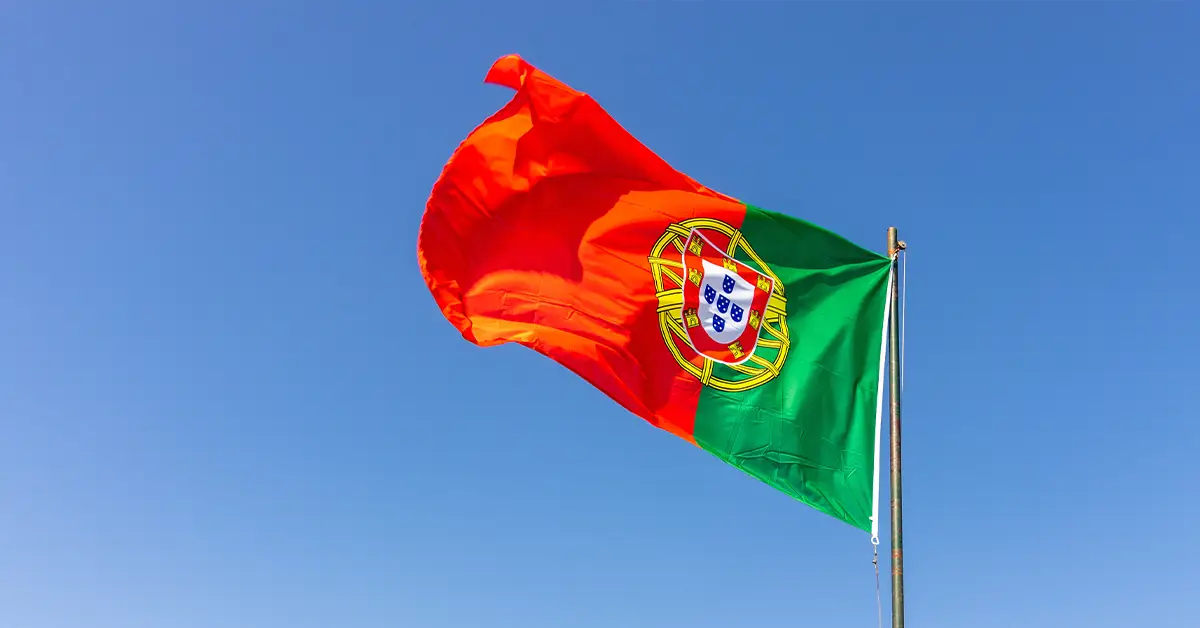
Portugal is a Southern European country covering 92,226 km², with a population of around 10.7 million and Lisbon as its capital. Lying at the westernmost tip of continental Europe, it is one of the oldest countries on the continent, with borders stable since 1139. Portugal has been a European Union member since 1986, a NATO member since 1949, and has used the euro since 1999.
This article provides an overall picture of Portugal — from history, geography, politics and population to the economy, education, culture and international relations — helping readers form a comprehensive view before weighing settlement programmes such as theGolden Visa, Visa D7orVisa D8.
Message
A basic profile of Portugal
Portugal (officially the Portuguese Republic — República Portuguesa) is a semi-presidential republic in the west of the Iberian Peninsula, in Southern Europe. The country’s only land border is with Spain, running 1,224 km to the east and north, while to the west and south it faces the Atlantic with a coastline of around 1,793 km.
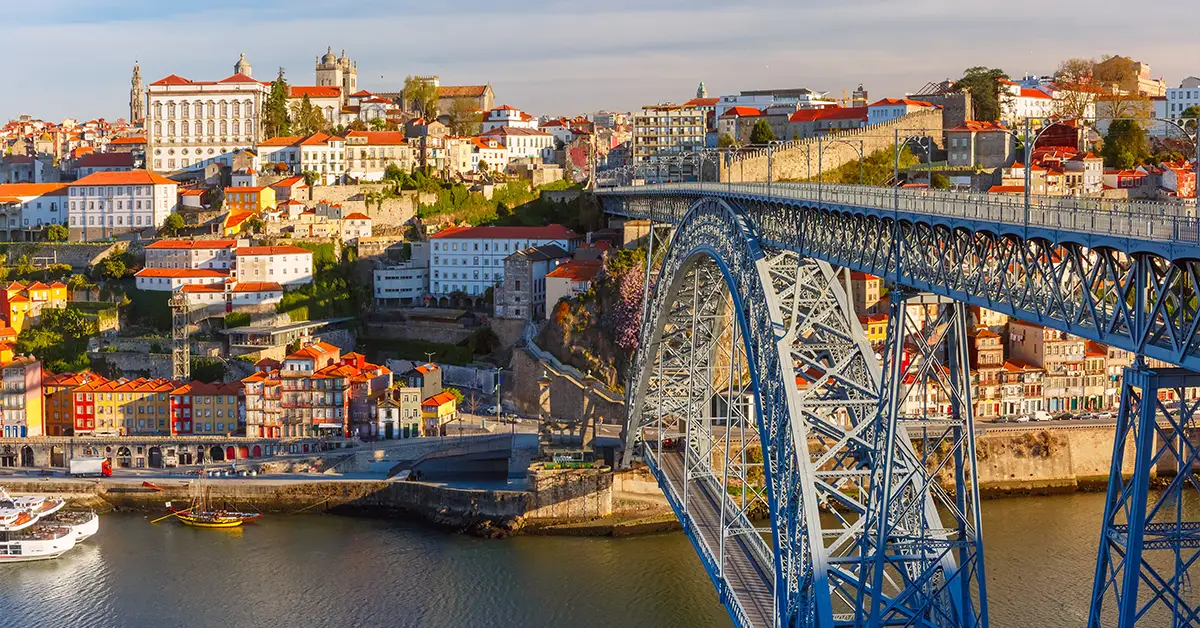
The capital and largest city is Lisbon, at the mouth of the Tagus. The second largest city is Porto in the north, associated with the world-famous Douro wine region. Besides the mainland on the Iberian Peninsula, Portugal also has two autonomous regions: the Azores archipelago in mid-Atlantic and the Madeira archipelago off North Africa.
Theo the European Union, Portugal currently has around 10.75 million inhabitants on Eurostat 2025 figures, with an average density of 117 per km². The official language is Portuguese (português), one of the EU’s 24 official languages and spoken by more than 260 million people worldwide, mainly in Brazil, Angola, Mozambique and the countries of the Community of Portuguese Language Countries (CPLP).
The currency is the euro (€). Portugal joined the eurozone on 01/01/1999 and replaced the escudo with the euro on 01/01/2002. Internationally, it is a founding member of NATO (1949), an EU member (01/01/1986), a Schengen member (26/03/1995) and a member of many other international bodies including the United Nations, the OECD and the WTO.
Considering a residency programme? The Prosperous Living Investment team assesses your profile free of charge and advises on the pathway that fits your goals.
History and civilisational heritage
Detailed article:The history of Portugal
Portugal’s history stretches over more than 2,500 years, beginning with the indigenous Celtic civilisations, the Roman period (Lusitania) and the rule of the Visigothic and Moorish empires. Portugal was formally recognised as an independent kingdom in 1139 under Afonso I Henriques, marking the birth of the first nation state in Europe with borders that have remained almost unchanged to this day.
The 15th and 16th centuries were Portugal’s glorious “Age of Discovery”. Navigators such as Vasco da Gama, Pedro Álvares Cabral and Ferdinand Magellan opened the way to a maritime empire stretching from Brazil and Africa to India, South-East Asia, China and Japan. The Portuguese Empire was the earliest and longest-lasting colonial empire in modern history, ending formally only in 1999 with the handover of Macau to China.
The Carnation Revolution of 25/04/1974 ended the 48-year Estado Novo regime of prime minister Salazar and his successor Caetano, opening the way to modern democracy. The current republican constitution was adopted in 1976 and has been amended several times.
Geography and climate
Detailed article:The geography of Portugal
Portuguese geography shows a marked contrast between north and south. The mountainous north, with the Serra da Estrela range, is the highest part of the mainland, its highest peak reaching 1,993 m. The south is a region of plains and low hills with a warmer climate, running down to the Algarve coast famous for its golden sand beaches and cliffs.
Portugal’s climate is largely Mediterranean, with hot dry summers and mild wet winters. The north is more humid with abundant rainfall, while the south is drier with more than 3,000 hours of sunshine a year. The Azores and Madeira archipelagos have a subtropical oceanic climate, mild all year round.
The Tagus (Tejo), 1,038 km long, is the largest river on the Iberian Peninsula, flowing through Lisbon before reaching the Atlantic. The other major rivers comprise the Douro, Guadiana, Mondego and Minho. Many areas along these rivers are UNESCO World Heritage Sites, particularly the Douro region — home to Port wine, the world’s oldest wine region with controlled designation of origin, dating from 1756.
The political and administrative system
Detailed article:The politics of Portugal
Portugal is a multi-party semi-presidential republic. The President is the head of state, directly elected for a 5-year term, with the power to appoint the Prime Minister and members of the government. The Prime Minister heads the government and is usually the leader of the party holding a majority in Parliament.
The Portuguese Parliament (Assembleia da República) has 230 seats, with members elected by proportional representation for 4-year terms. The two traditional major parties are the Socialist Party (PS, centre-left) and the Social Democratic Party (PSD, centre-right). Since 2024, Chega (populist far right) has risen to become the third force, creating a new and more complex political picture.
Administratively, Portugal is divided into 308 municipalities (concelhos), subdivided into 3,092 civil parishes (freguesias). The two autonomous regions of the Azores and Madeira have their own governments with regional parliaments and executives. The mainland is organised into 18 traditional administrative districts (distritos), although these no longer serve as an intermediate tier of self-government.
Population and society
Detailed article:The demographics of Portugal
Portugal’s population reached around 10.75 million at the start of 2025 on National Statistics Institute (INE) figures. However, Portugal faces several demographic challenges: a low fertility rate of around 1.4 children per woman, a rapidly ageing population with around 23% over 65, and the emigration of young workers during the debt crisis decade of 2010–2014.
Conversely, Portugal has seen strong immigration since 2017, with Brazilian, Indian, Nepali, Ukrainian and, more recently, Vietnamese communities. Foreign nationals now make up more than 10% of the total population, particularly concentrated in the Lisbon, Porto and Algarve areas. An open migration policy together with favourable tax programmes has made the country one of the most attractive destinations in the EU.
On religion, around 80% of the population is Roman Catholic, although the level of observance has fallen considerably among the younger generation. The urbanisation rate is around 67%, with the two metropolitan areas of Lisbon and Porto holding nearly half the national population.
The economy and labour market
Detailed article:The economy of Portugal
Portugal is a high-income economy, ranking 14th in the EU by nominal GDP and 12th by GDP at PPP. GDP per capita at PPP was around 81% of the EU average in 2025. Services account for around 76.5% of GDP, industry around 20.6% and agriculture 2.9%.
According to the European Union, Portugal’s GDP per capita in 2023 was 30,800 euros, below the EU average of 38,100 euros. The country contributes around 1.6% of total EU GDP. Unemployment in 2025 was around 5.8% — among the lowest in the country’s modern history. Tourism contributed around 11.4% of GDP in 2024, reflecting its standing as one of the world’s leading tourist destinations.
The spearhead economic sectors comprise tourism, textiles, footwear, motor vehicles (the Volkswagen AutoEuropa plant at Palmela), information technology, renewable energy (Portugal regularly generates more than 60% of its electricity from renewables), wine (Port, Douro, Alentejo) and olive oil. Lisbon is emerging as a leading technology startup hub in Southern Europe, with the Web Summit held there annually.
Education and science
Detailed article:Education in Portugal
Education in Portugal is organised on the EU’s Bologna system, with nursery (ages 3–6), 6 years of primary school (6–12), 3 years of lower secondary school (12–15), 3 years of upper secondary school (15–18) and higher education. Compulsory education lasts 12 years, from age 6 to 18 or until the pupil completes secondary school.
The university system comprises traditional public institutions such as the University of Coimbra (founded 1290, one of the oldest universities in Europe and a UNESCO site), the University of Lisbon, the University of Porto, the University of Aveiro and NOVA University Lisbon. The reputable private institutions comprise Universidade Católica Portuguesa and the Nova School of Business and Economics.
Portugal ranked 31st on the Global Innovation Index in 2025. The major research centres comprise the Gulbenkian Institute of Molecular Research, the International Iberian Nanotechnology Laboratory and the Champalimaud Foundation — one of the world’s leading centres for neuroscience and oncology research.
Culture and heritage
Detailed article:The culture of Portugal
Portuguese culture is a meeting of Latin and Catholic traditions, Moorish influence and a global heritage from the colonial era. Fado — the traditional music carrying the melancholy of saudade — was recognised by UNESCO as Intangible Cultural Heritage in 2011, and is bound up with the old quarters of Lisbon such as Alfama and Mouraria.
Theo UNESCO World Heritage Centre, Portugal had 17 World Heritage Sites as at 2025, comprising the Belém Tower and the Jerónimos Monastery in Lisbon, the Historic Centre of Porto, the Historic Centre of Évora, the Batalha Monastery, the Alcobaça Monastery, the Douro wine region, the island of Madeira (the Laurisilva forest), the Côa archaeological area, and many other sites.
Portuguese cuisine is famous for salt cod (bacalhau — joked to have 365 ways of being cooked), fresh seafood, Alentejo black pork, pastel de nata custard tarts, Port and Vinho Verde. Its literature has such great figures as Luís de Camões (the epic Os Lusíadas), Fernando Pessoa, and José Saramago — winner of the Nobel Prize in Literature in 1998.
International relations
Detailed article:Portugal’s international relations
Portugal has been a founding member of NATO since 04/04/1949 and joined the United Nations in 1955. The country joined the European Economic Community (EEC) — the forerunner of the EU — on 01/01/1986 alongside Spain, marking a turning point in integration after the isolation of the Estado Novo years.
Portugal’s foreign policy priorities focus on four main axes: close relations with the EU and the eurozone, the NATO military alliance, the 9-member Community of Portuguese Language Countries (CPLP), and a strategic partnership with the United States. The Portuguese armed forces currently have more than 1,100 troops deployed on NATO, EU and United Nations international missions.
Portugal maintains a special relationship with the countries of its former empire: Brazil, Angola, Mozambique, Cabo Verde, Guinea-Bissau, São Tomé and Príncipe, and East Timor. Portuguese is spoken by more than 260 million people, creating a broad cultural and commercial network similar to the British Commonwealth.
Investment and settlement opportunities in Portugal
Portugal attracts international investors strongly for three reasons: a flexible immigration policy, a cost of living reasonable by Western European standards, and a high quality of life. ThePortugal Golden Visaprogramme is one of the most successful residence by investment programmes in Europe since its launch in 2012, although it was substantially changed in 2023 with the removal of the traditional property investment route and a shift towards investment funds, job creation, scientific research and cultural activities.
Besides the Golden Visa, the country has several other residence visas suiting different groups.The Portugal D7 visais for those with passive income sufficient to live on in Portugal, such as retirement income, a pension, dividends or rental income.The Portugal D8 visais for those working remotely for an employer or clients outside Portugal, commonly called the “digital nomad” category.
The cost of living in Portugal, particularly outside the Lisbon and Porto areas, is considerably lower than in other EU countries. A couple can live comfortably on a budget of 2,000–3,000 euros a month in mid-sized cities such as Coimbra, Braga, Aveiro or Funchal (Madeira). House prices in central Lisbon and Porto have risen sharply over the past decade but remain below Paris, Amsterdam or Milan.
Healthcare is covered by the National Health Service (SNS), under which lawful residents have free or nominal-cost access. Further details can be found in the article onPortuguese healthcare for foreign nationals.
Summary
Portugal is a Southern European country with a deep historical and cultural heritage, a strategic position at the gateway to the Atlantic and a stable living environment. With 10.75 million people, Lisbon as its capital, EU membership since 1986, the euro as its currency and a high human development index (HDI 0.874, ranked 42nd in the world), it is one of the most attractive destinations in Europe for investors, retirees and young families wanting a change of environment.
For Vietnamese people interested in Portugal, the first step is to understand the political system, the culture, the cost of living and the immigration programmes that fit. From there they can choose the residence by investment route matching their budget and personal objectives, the most popular options today being the Golden Visa, the D7 visa and the D8 visa. Readers may also consultSettling in PortugalandPortugal Golden Visa statisticsfor full information before making a final decision.
Accompanying you on your journey in residency investment
The Prosperous Living Investment team advises on pathways, assesses profiles and manages investments transparently for every residency, citizenship and international property objective.
Free profile assessmentWhere life gets prosperous