

Education in Portugal is a well-developed public system, free and compulsory at school level, with the quality of education rising steadily in recent decades. From a country with high illiteracy in the mid-20th century, Portugal has made remarkable progress to become one of the fastest-improving education systems in Europe. Understanding education in Portugal helps readers — especially families with young children — assess the learning environment and development opportunities for the next generation.
Detailed article onthe country of Portugal.
Message
Overview of the Portuguese education system
The Portuguese education system follows a modern model, divided into clear levels from preschool to university. The state plays the leading role in providing public education, alongside private and international schools.
Education is a fundamental right guaranteed by the constitution. The state is committed to providing free and compulsory education to all children of the prescribed ages, regardless of economic or social circumstances.
The Portuguese Ministry of Educationis responsible for management, curriculum development and quality oversight nationwide. The system is designed to ensure consistent quality across regions.
Over many decades, Portugal has invested heavily in education, seeing it as a key driver of economic and social development. As a result, illiteracy has fallen sharply and the population’s educational attainment has risen significantly.
Considering a residency programme? The Prosperous Living Investment team assesses your profile free of charge and advises on the pathway that fits your goals.
Preschool and primary education
Preschool education in Portugal is for children aged 3 to 6. Although not compulsory, it is widely encouraged and supported by the state, with a network of public preschools across the country.
The goal of preschool education is the all-round physical, intellectual and social development of children. It is an important foundation preparing children to enter formal schooling.
Compulsory education begins at primary level, when children turn 6. Primary education lasts several years and is divided into cycles, focusing on basic skills such as reading, writing, mathematics and general knowledge.
During this stage, pupils follow a unified curriculum issued by the Ministry of Education. Teaching methods increasingly focus on developing thinking, creativity and practical skills rather than rote learning.
Secondary education
After primary school, pupils move on to secondary levels. Secondary education is divided into lower and upper secondary, with increasing difficulty and specialisation.
Compulsory education in Portugal lasts until students complete 12 years of schooling or turn 18. This is a progressive policy ensuring that all young people have a solid educational foundation.
At upper secondary level, students have many choices of study path. They can choose an academic track to prepare for university or a vocational track to enter the labour market sooner.
Vocational education is receiving growing attention to meet the economy’s need for skilled workers. Vocational programmes combine theory and practice, giving students real-world skills.
Undergraduate and postgraduate education
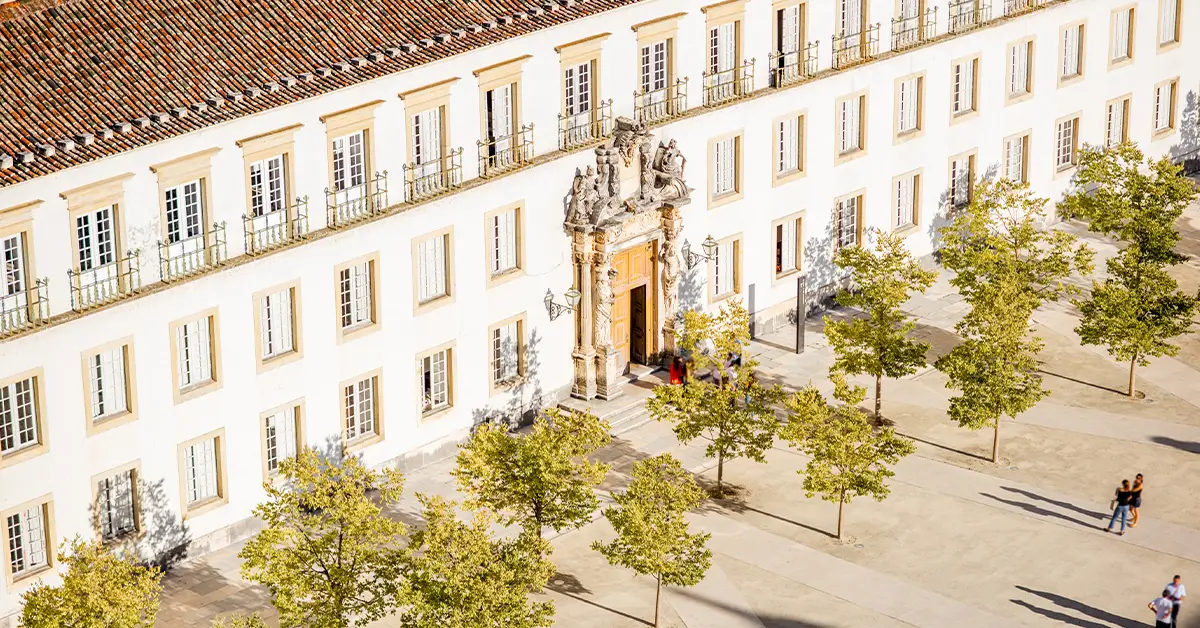
Portugal has a long-established and prestigious higher education system. The University of Coimbra, one of the oldest universities in Europe and the world, has been recognised as a World Heritage Site for its historical and cultural value.
Higher education comprises two main types: universities focused on academic study and research, and polytechnics focused on applied and professional training. This division helps meet the diverse needs of learners.
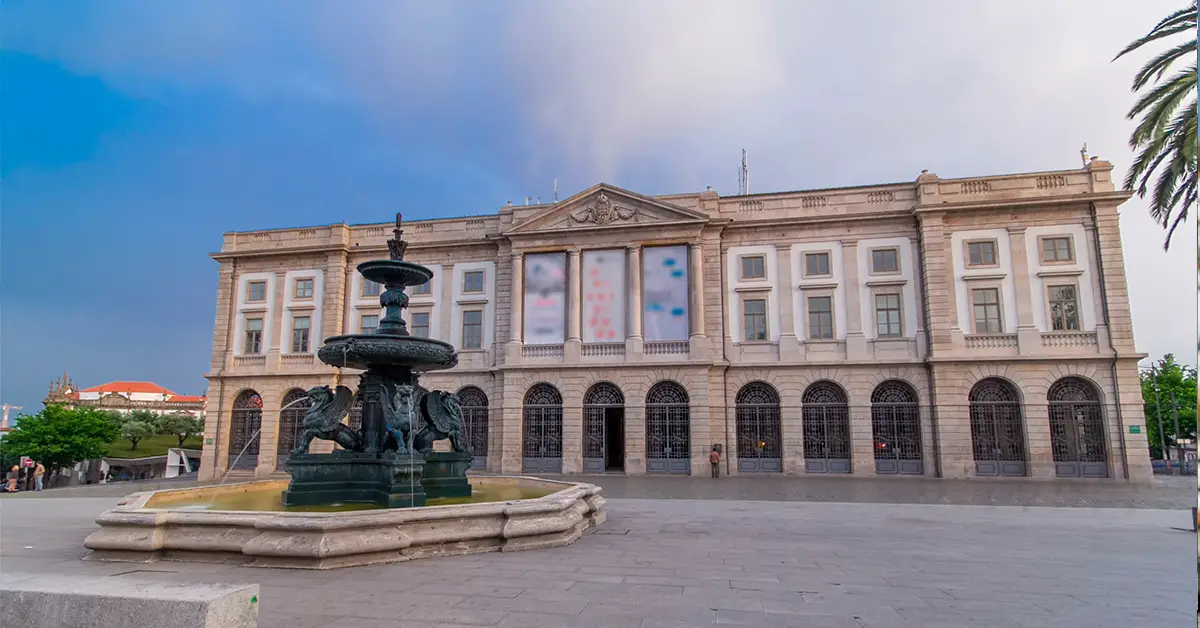
The major universities are concentrated in Lisbon, Porto and Coimbra, attracting students from across the country and abroad. Many programmes meet European standards, with degrees widely recognised in the region and worldwide.
As part of the European Higher Education Area, Portugal uses a degree system aligned with the Bologna Process. This facilitates credit transfer, student exchange and degree recognition between European countries.
International schools and options for foreigners
For foreign families, Portugal offers a wide range of educational options. Besides the public system, international and private schools are popular choices for the children of foreigners.
International schools are concentrated mainly in Lisbon, Porto and the Algarve, where large foreign communities live. These schools usually teach in English and follow internationally recognised curricula.
The International Baccalaureate and British and American education systems are used by many international schools. This makes it easy for foreign children to transition when their families move between countries.
Fees at international schools are significantly higher than at public schools but are still considered reasonable compared with many other developed countries. For families settling long-term, sending children to public school is also a good way to integrate into the culture and language.
Quality and significant improvements
The quality of education in Portugal has made remarkable progress over the past few decades. The country has been recognised as one of the fastest-improving education systems among developed countries.
Portuguese students’ results in international assessments have risen significantly, approaching or exceeding the average of developed countries in some areas. This is evidence of the effectiveness of the education reforms.
The improvement stems from many factors, including increased public investment, better teacher quality, innovative teaching methods and wider access to education. The policy of extending compulsory education has also played an important part.
The share of young people graduating from university has risen sharply, reflecting the new generation’s aspiration to learn and develop. A more highly educated population is the foundation for economic development based on knowledge and innovation.
English and language training
One advantage for foreigners is that a fairly high proportion of Portuguese people speak English, especially among the young. The education system emphasises foreign language teaching from the early years.
English is taught as the main foreign language in schools nationwide. Many students also learn a third language such as French, Spanish or German, broadening their ability to communicate internationally.
People’s good command of English makes it easier for foreigners to integrate in the early stages of settling. This is especially helpful in big cities and tourist areas.
For foreigners who want to learn Portuguese, language centres and courses for immigrants are widely available. Mastering the local language makes the integration process more complete.
What education means for settling families
A high-quality and diverse education system is one of the key factors attracting foreign families to Portugal. For parents, their children’s educational future is always a top concern when choosing where to settle.
Free public education and high-quality international schools offer many options to suit each family’s circumstances. Children can access a European-standard education at a reasonable cost.
The opportunity to study at prestigious universities with internationally recognised degrees opens up broad career prospects for young people. It is a long-term investment in the future of settlers’ children.
A safe, multicultural and increasingly open learning environment helps foreign children integrate smoothly. For families looking to build a new life, the quality of education is a significant plus for Portugal.
Summary
Education in Portugal has undergone a remarkable transformation, from a country with low educational attainment to a modern, high-quality and continuously improving system. The free public system, diverse international schools and prestigious universities offer many options for both residents and foreigners.
For families considering settling, a high-quality educational environment at a reasonable cost is an important factor in their decision. Understanding the country’s education system helps readers picture the path of learning and development for their children in one of Europe’s most liveable destinations.
Accompanying you on your journey in residency investment
The Prosperous Living Investment team advises on pathways, assesses profiles and manages investments transparently for every residency, citizenship and international property objective.
Free profile assessmentWhere life gets prosperous