


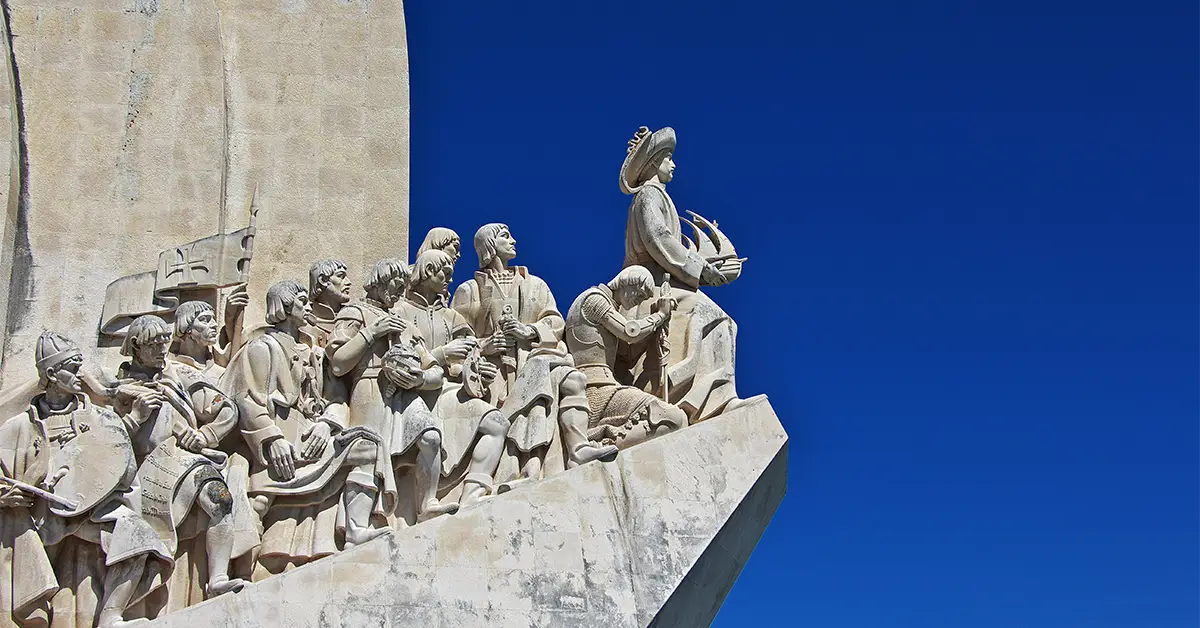
The history of Portugal is the story of a small nation on the southwestern edge of Europe that rose to become one of the world’s largest maritime empires. Spanning nearly nine centuries since its founding, the country has traversed periods of glory and decline, from the age of oceanic discovery to the Carnation Revolution that ushered the nation into modern democracy.
Understanding the history of Portugal helps readers grasp the cultural roots, geopolitical standing, and identity of one of Europe’s oldest nations.
Detailed article on the the country of Portugal.
Message
Early founding and the Middle Ages
The land that is now Portugal has traces of habitation from prehistoric times, with the presence of the Celts, the indigenous Lusitanians, and later the Romans. The Roman Empire annexed this region into the province of Lusitania, leaving a deep imprint on language, law, and road infrastructure. The name “Portugal” originates from Portus Cale, an ancient port located at the mouth of the Douro River.
After the fall of the Roman Empire, Germanic tribes such as the Suebi and the Visigoths ruled the Iberian Peninsula in succession. By the early 8th century, Moorish Muslims from North Africa swept in and controlled most of the peninsula for several centuries.
The process of reclaiming land from the Moors, known as the Reconquista, shaped the northern Christian kingdoms. In this context, the County of Portugal gradually formed as a territory dependent on the Kingdom of León.
In 1139, Afonso Henriques declared himself king, marking the official birth of the Kingdom of Portugal. By 1143, the Kingdom of León recognised Portugal’s independence through the Treaty of Zamora, and in 1179, the Pope also acknowledged this new nation.
In the following centuries, Portugal continued to expand its territory to the south. In 1249, King Afonso III completed the reconquest of the Algarve region, establishing land borders that have remained almost unchanged to this day. This makes Portugal one of the countries with the oldest stable borders in the world.
Considering a residency programme? The Prosperous Living Investment team assesses your profile free of charge and advises on the pathway that fits your goals.
The Age of Discovery and the maritime empire
The 15th and 16th centuries are considered the golden age of Portuguese history. Under the patronage of Prince Henry the Navigator, the nation initiated the era of maritime discovery, opening up previously unknown sea routes.
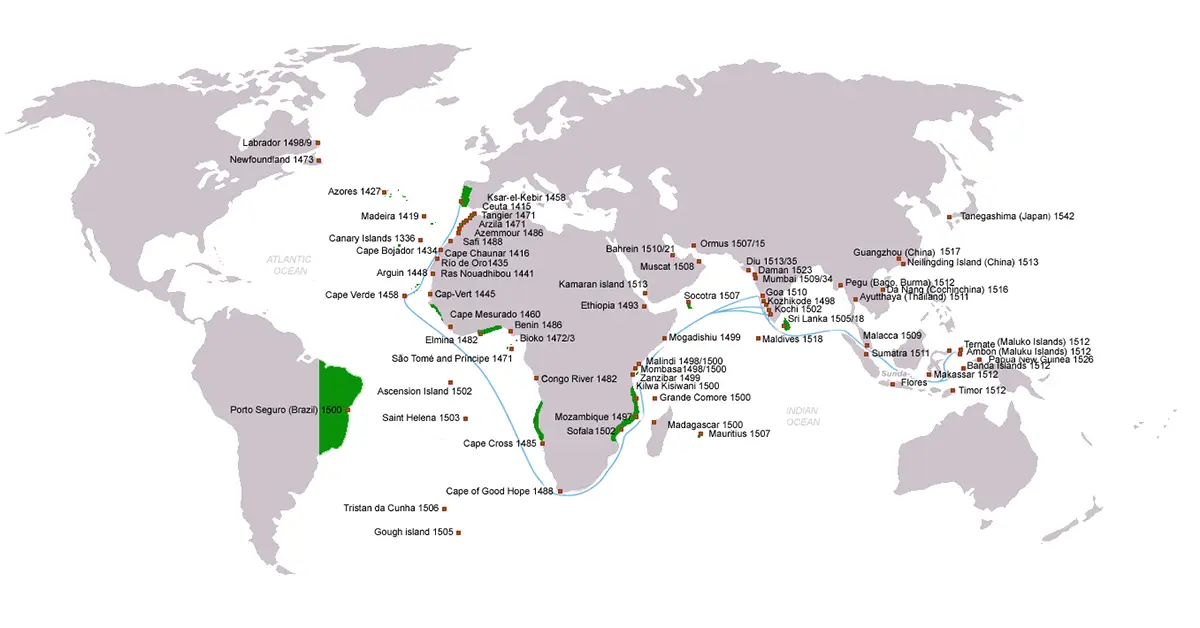
Portuguese navigators conquered the oceans one after another. In 1488, Bartolomeu Dias rounded the Cape of Good Hope at the southern tip of Africa. By 1498, Vasco da Gama opened a direct sea route to India, breaking the spice trade monopoly of intermediaries.
In 1500, Pedro Álvares Cabral arrived in Brazil, laying the foundation for the empire’s largest and most important colony. Portugal built a trade and colonial network stretching from Brazil in the Americas, through trading posts in Africa, to Goa in India, Malacca in Southeast Asia, and Macau in China.
The Treaty of Tordesillas in 1494, signed with Spain under the mediation of the Pope, divided the newly discovered world into two spheres of influence. This is one of the most far-reaching diplomatic documents in world history, shaping the colonial map of the two Iberian powers.
The wealth from the spice, gold, and sugar trade turned Lisbon into one of the most prosperous cities in Europe at the time. However, this peak also contained the seeds of later decline.
Decline and union with Spain
From the late 16th century, the Portuguese empire began to enter a period of weakness. In 1578, King Sebastião died in the Battle of Alcácer-Quibir in North Africa without leaving a direct heir, causing a serious succession crisis.
In 1580, King Felipe II of Spain claimed the right to the Portuguese throne, opening the Iberian Union which lasted for 60 years. During this time, the two kingdoms shared a monarch but maintained their own laws and institutions.
This union dragged Portugal into Spain’s wars, severely damaging its trade and colonial network. The Dutch and the British took the opportunity to seize many of Portugal’s important trading posts in Asia and Africa.
In 1640, an uprising broke out and Portugal restored its independence, bringing the House of Braganza to the throne. The war for independence lasted until 1668 when it was officially recognised by Spain. Although sovereignty was regained, Portugal’s position on the international stage was no longer what it had been during its golden age.
The 18th and 19th centuries and major upheavals
The 18th century witnessed both disaster and reform. On 01/11/1755, a horrific earthquake accompanied by a tsunami and fire flattened most of the city of Lisbon, claiming the lives of tens of thousands of people. This was one of the most devastating natural disasters in European history.
The reconstruction of Lisbon, directed by the Marquis of Pombal, modernised the city with pioneering earthquake-resistant planning. Pombal also implemented many important administrative and economic reforms, consolidating central power.
In the early 19th century, the Napoleonic Wars heavily affected Portugal. When French troops invaded in 1807, the Portuguese royal family fled to Brazil and turned Rio de Janeiro into the temporary capital of the empire.
In 1822, Brazil declared independence, causing Portugal to lose its wealthiest and most significant colony. The remainder of the 19th century was a period of political instability marked by civil wars between royalist and liberal factions, alongside efforts to establish a constitutional monarchy.
From republic to dictatorship
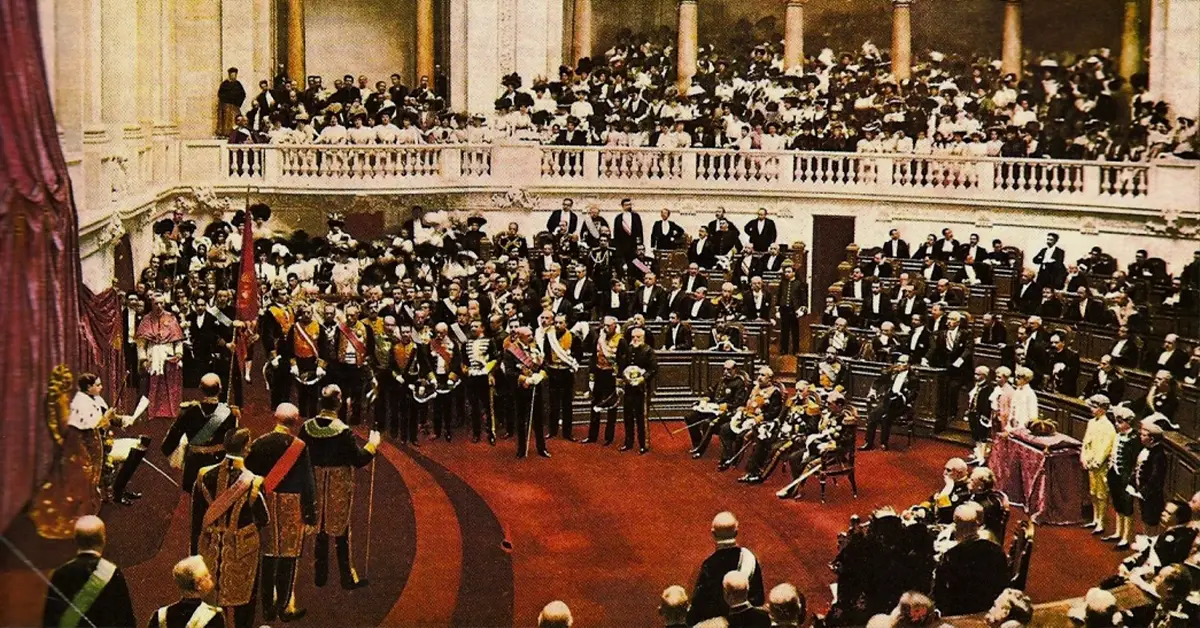
On 5 October 1910, a revolution overthrew the monarchy, giving birth to the First Portuguese Republic. However, this young republic was fraught with instability, with a series of governments collapsing in quick succession.
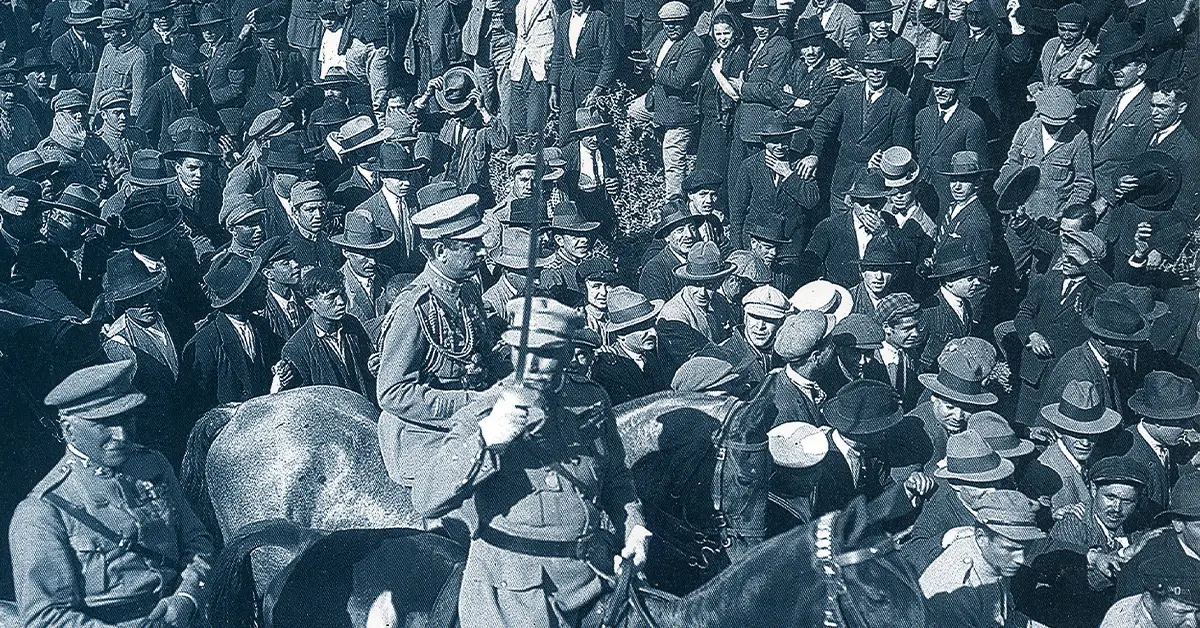
In 1926, a military coup ended the First Republic. By 1933, António de Oliveira Salazar had established the Estado Novo, a conservative authoritarian regime that lasted for nearly half a century.
Under Salazar, Portugal maintained a policy of neutrality during the Second World War but retained vast African colonies such as Angola, Mozambique, and Guinea-Bissau. Colonial wars, which began in 1961, drained national resources and caused social discontent.
The Estado Novo regime strictly controlled political life, censored the press, and suppressed opposition through a secret police force. Economic and political isolation made Portugal one of the least developed countries in Western Europe by the mid-20th century.
The Carnation Revolution and modern democracy
On 25 April 1974, a nearly bloodless military coup overthrew the Estado Novo regime. This event is known as the Carnation Revolution, named after the flowers that citizens placed into the soldiers’ gun barrels.
The revolution initiated a rapid process of democratisation. Portugal granted independence to its African colonies, ending the last colonial empire in Europe. Hundreds of thousands of people of Portuguese descent returned from the colonies, creating a major wave of migration.
In 1976, Portugal adopted a new democratic constitution and held free elections. The country gradually stabilised its parliamentary republic system with an elected president and prime minister.
A major turning point came in 1986, when Portugal officially joined the European Economic Community, the predecessor to the European Union (EU). European integration brought massive investment, driving the modernisation of infrastructure and the economy.
In 2002, Portugal was one of the first countries to adopt the Euro. Today, the country is an active member of the EU, NATO, and the United Nations, while maintaining a special relationship with the community of Portuguese-speaking countries worldwide.
Portugal’s historical legacy and national identity
The history of Portugal has left a deep mark not only domestically but also globally. Portuguese is currently one of the most widely spoken languages in the world, serving as an official language in Brazil, Angola, Mozambique, and many other nations.
Monuments from the Age of Discovery, such as the Belém Tower and the Jerónimos Monastery in Lisbon, have been United Nations Educational, Scientific and Cultural Organization (UNESCO) recognised as World Heritage sites. These structures serve as reminders of the era when Portugal led the world in maritime exploration.
The spirit of saudade, a characteristic concept expressing deep nostalgia, reflects the soul of a nation that has experienced perilous journeys across the oceans. This emotion is infused in traditional fado music, a cultural icon inscribed by UNESCO.
For those interested in residency by investment in Portugal, understanding the depth of this nation’s history will help them fully appreciate the land they have chosen. A country with nearly nine centuries of statehood offers stability and a cultural identity that is hard to match.
Summary
The historical journey of Portugal is a testament to the enduring vitality of a small but ambitious nation. From its founding in 1139, through the great Age of Discovery, to the ups and downs of the declining empire and dictatorship, the country finally found its path to democracy and European integration.
Today, Portugal is a stable republic, a reliable member of the international community, and an attractive destination for foreigners. Its long history and rich cultural heritage form a solid foundation for Portugal’s position in the modern world. To learn more about this country, readers can continue to explore its geography, culture, and lifestyle.
Accompanying you on your journey in residency investment
The Prosperous Living Investment team advises on pathways, assesses profiles and manages investments transparently for every residency, citizenship and international property objective.
Free profile assessmentWhere life gets prosperous