


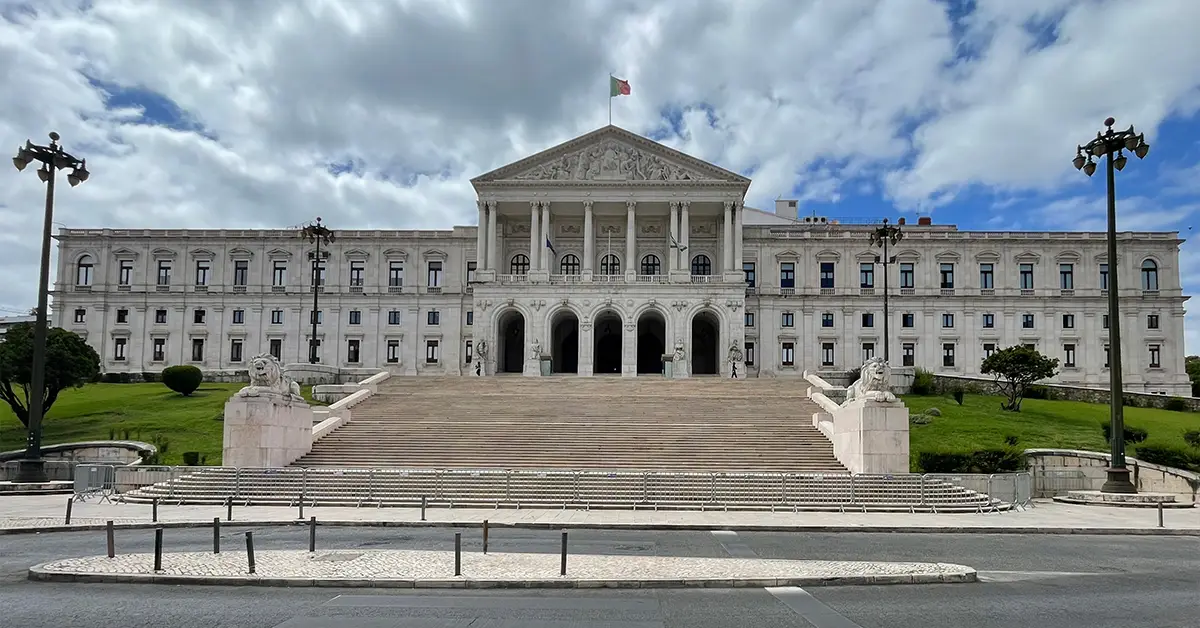
Portuguese politics operates under a semi-presidential parliamentary republic model, a stable democratic system established after the Carnation Revolution in 1974. Over nearly five decades, the country has built a mature democracy with a clear separation of powers, independent institutions, and a tradition of peaceful power transitions. Understanding Portuguese politics helps readers grasp how the country is governed, its international standing, and the stability it offers to both its citizens and foreigners.
Detailed article on the the country of Portugal.
Message
The constitutional foundation of Portuguese politics
The current Constitution of Portugal was adopted in 1976, shortly after the collapse of the Estado Novo dictatorship. This document laid the foundation for a democratic state governed by the rule of law, with a commitment to protecting the fundamental rights of citizens.
Portugal is a parliamentary republic following a semi-presidential model. This means that power is shared between a directly elected president and a prime minister who heads the government and is accountable to parliament.
The Constitution has undergone many amendments to adapt to the context of European integration and social changes. However, the core principles of democracy, decentralisation, and the protection of human rights have been maintained throughout.
The Portuguese state is organised on the principle of the separation of powers, comprising the legislative, executive, and judicial branches. The independence between these three branches of power is an important guarantee for transparency and accountability in the governance of the country.
Considering a residency programme? The Prosperous Living Investment team assesses your profile free of charge and advises on the pathway that fits your goals.
The President and the role of Head of State
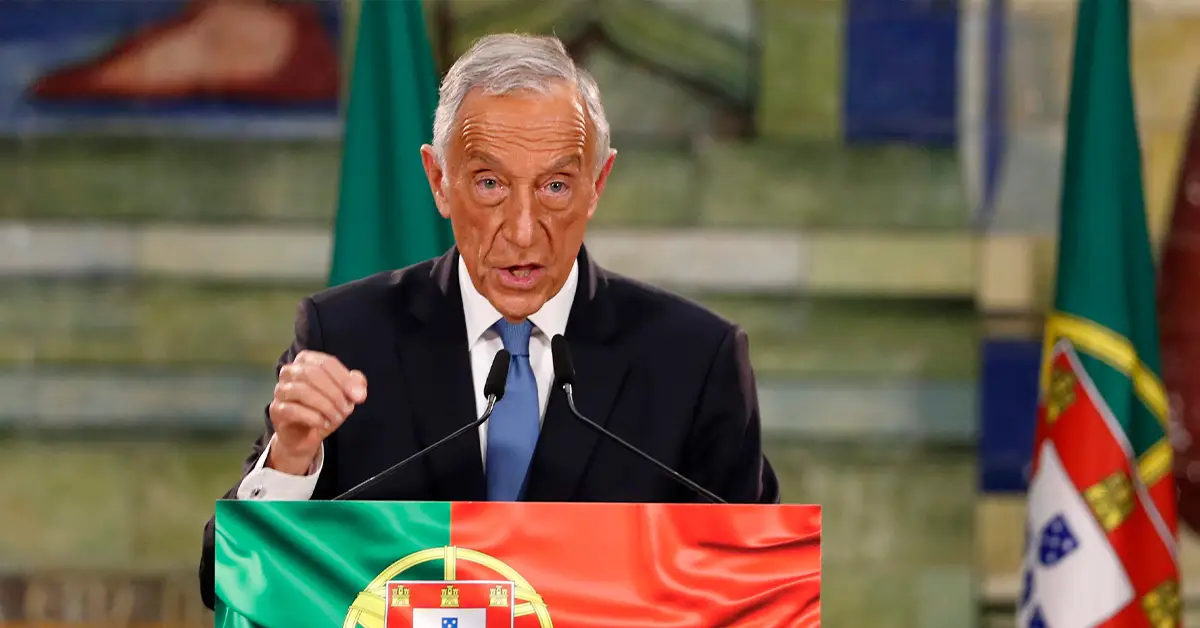
The President of Portugal is the Head of State, directly elected by the people for a 5-year term, with a maximum of two consecutive terms. This is a highly symbolic position that also holds substantive powers.
The President acts as a political arbiter, standing above political parties and ensuring the stable operation of state institutions. In normal circumstances, the president does not directly manage the day-to-day government.
However, the president holds several important powers. They can dissolve parliament and call for early elections, veto legislation, appoint the prime minister, and refer legal documents to the Constitutional Court to review their constitutionality.
The President is also the Commander-in-Chief of the Armed Forces and represents the nation in foreign relations. This role makes the president a symbol of national unity, especially during times of political crisis.
Parliament and legislative power
The legislative body of Portugal is the Assembly of the Republic, a unicameral parliament consisting of 230 members. Members are elected through proportional representation for a 4-year term.
Parliament is the centre of political life, where laws are passed, the state budget is approved, and the activities of the government are overseen. The proportional election method helps reflect the diversity of political views in society.
Due to the proportional representation system, it is rare for one party to win an absolute majority to govern alone. This leads to a culture of coalition and political negotiation, which is characteristic of many European parliamentary democracies.
The parliament also has the power to pass a vote of no confidence in the government, forcing it to resign if it loses the support of the majority of members. This mechanism ensures the government remains accountable to the people’s representative body.
The Government and executive power
The Portuguese government, led by the Prime Minister, is the body that holds executive power and effectively runs the country. The Prime Minister is typically the leader of the party or coalition that holds the majority of seats in parliament.
The Prime Minister is appointed by the President after each election but must receive the support of parliament to govern. This reflects the parliamentary nature of the Portuguese political system.
The cabinet consists of ministers responsible for specific areas such as finance, foreign affairs, internal administration, education, and health. The government is responsible for developing and implementing policy, managing public administration, and proposing the national budget.
The relationship between the Prime Minister and the President can sometimes create periods of tension, especially when the two offices are held by different political factions. However, the system of checks and balances generally operates stably and effectively.
The political party system
Portuguese political life revolves around many parties with diverse ideological leanings. The two largest parties are traditionally a centre-right party and a centre-left party, which have alternated in power for decades.
Alongside the two major parties, the political system includes left-wing parties, right-wing parties, and emerging parties representing contemporary social trends. This diversity reflects the open nature of the democracy.
In recent years, the Portuguese political landscape has seen significant fluctuations with the rise of new parties, altering the familiar status quo. This has led to coalition governments and early elections.
Despite these changes, transfers of power in Portugal have always taken place peacefully and in accordance with constitutional procedures. This is a testament to the maturity of the democracy after nearly half a century.
Independent judicial system
Judicial power in Portugal is exercised by an independent court system, separate from the legislative and executive branches. This independence is the foundation of the rule of law.
The Constitutional Court plays a particularly important role, with the authority to review the constitutionality of laws and resolve disputes related to the constitution. This body is the supreme guardian of the constitutional order.
The court system generally consists of several levels, from courts of first instance to courts of appeal and the Supreme Court. There are also administrative and audit courts that handle specialized areas.
As a member of the European Union (EU), Portugal is also bound by European law and the jurisdiction of European courts in many areas. This raises legal standards and protects citizens’ rights.
Regional and local government
Portugal has a unitary state structure but grants autonomous status to the two archipelagos of the Azores and Madeira. These two regions have their own parliaments and regional governments, deciding many internal matters themselves.
The autonomous status of the two archipelagos reflects the geographical differences and specific management needs of territories located far from the mainland. This is a flexible solution that helps reconcile national unity with local specificities.
The mainland is divided into administrative districts, and further into municipalities and civil parishes. Local governments are responsible for essential public services close to the lives of the people.
Following administrative reforms, the local government system continues to be adjusted to improve management efficiency and better serve the public. Decentralisation of power is a trend that has been emphasised in recent years.
International standing and political stability
Portugal is a member of many important international organisations, playing an active role in the community of democratic nations. The country is a founding member of NATO and joined the European Union in 1986.
Political stability is one of Portugal’s most valuable assets. According to assessments from Organisation for Economic Co-operation and Development (OECD), a transparent and stable institutional environment is a key factor in attracting foreign investment to the country.
For foreigners considering residency or investment, political stability provides long-term peace of mind. A mature democracy with clear laws helps protect the assets and rights of residents, regardless of their nationality.
Portugal is also renowned for its high level of safety and peaceful society. The country is frequently ranked among the most peaceful nations in the world, partly due to its stable politics and tradition of dialogue.
Summary
Portuguese politics is a model of a stable parliamentary democracy, matured over nearly half a century since the Carnation Revolution. With a clear separation of powers between the President, parliament, government, and an independent judiciary, the country maintains its constitutional order and tradition of peaceful transfers of power.
Political stability, combined with a solid position within the European Union and the international community, makes Portugal a reliable destination for foreigners. For those seeking a long-term home, understanding the country’s political system is an important basis for evaluating the future living and investment environment.
Accompanying you on your journey in residency investment
The Prosperous Living Investment team advises on pathways, assesses profiles and manages investments transparently for every residency, citizenship and international property objective.
Free profile assessmentWhere life gets prosperous