


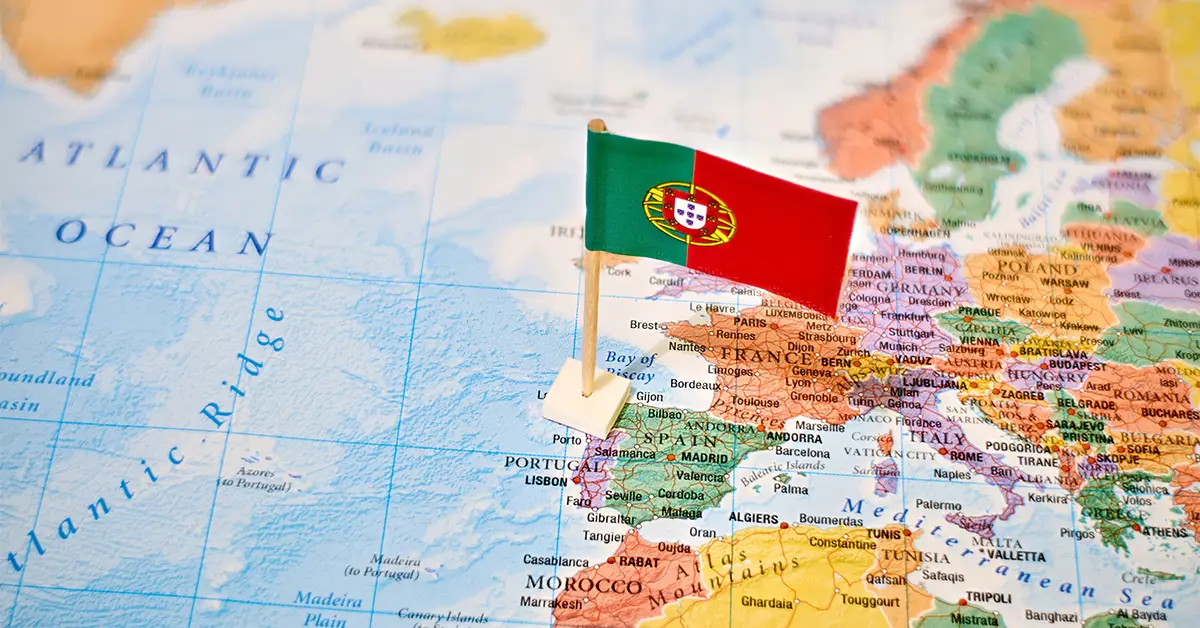
The geography of Portugal offers a surprisingly diverse natural landscape for a country of modest size. Located on the southwestern edge of the Iberian Peninsula, the country possesses a long coastline, majestic mountains in the north, vast plains in the south, and two autonomous archipelagos in the middle of the Atlantic Ocean. Understanding the geography of Portugal not only helps readers visualise the landscape but also explains why the country enjoys a mild climate, rich agriculture, and strong tourism appeal.
Detailed article on the the country of Portugal.
Message
Geographical location of Portugal and borders
Portugal is located at the westernmost part of the European continent, occupying about one-sixth of the Iberian Peninsula. The country has only one land border, which it shares with Spain to the north and east.
The entire west and south of the country face the Atlantic Ocean. This coastal position has shaped the entire course of Portugal’s history and culture, turning the country into a maritime gateway connecting Europe to the rest of the world.
The border with Spain is one of the oldest and most stable in the world, having remained almost unchanged since the 13th century. The total length of the land border is approximately 1,200 km, while the coastline extends to nearly 1,800 km if the islands are included.
Portuguese territory consists of three main parts: the mainland on the Iberian Peninsula, the Azores archipelago, and the Madeira archipelago. These two archipelagos are located in the middle of the Atlantic Ocean and have autonomous status, playing a significant role in terms of strategy and ecology.
Considering a residency programme? The Prosperous Living Investment team assesses your profile free of charge and advises on the pathway that fits your goals.
Area and general characteristics
The total area of Portugal is approximately 92,000 km², making the country similar in size to Hungary and placing it among the smaller nations in Europe. However, the diversity of terrain within this small area is truly remarkable.
The geography of Portugal stretches in a north-south direction on the mainland, with a length much greater than its width. This creates a clear transition in climate and landscape from the humid mountainous north to the dry, hot plains of the south.
The Tagus River, the longest river on the Iberian Peninsula, flows westward and empties into the Atlantic Ocean near the capital, Lisbon. This river divides the country into two distinct geographical regions: the rugged, mountainous north and the gently rolling plains of the south.
Topography and mountain ranges
The topography of Portugal changes significantly from north to south. The north is characterised by mountainous terrain, which is an extension of the Iberian Peninsula’s mountain system, featuring deep valleys and slopes covered in vineyards.
The highest mountain range on the mainland is Serra da Estrela, located in the central part of the country. The highest peak of this range is called Torre, reaching an altitude of 1,993 metres above sea level. This is also the only ski resort on the Portuguese mainland.
However, the highest point of the entire Portuguese territory is not on the mainland. Mount Pico on Pico Island in the Azores, an extinct volcano, reaches an altitude of 2,351 metres, far exceeding the Torre peak.
Further south, the terrain becomes flatter. The vast Alentejo region south of Lisbon is a stretch of immense plains and rolling hills, known as the country’s breadbasket.
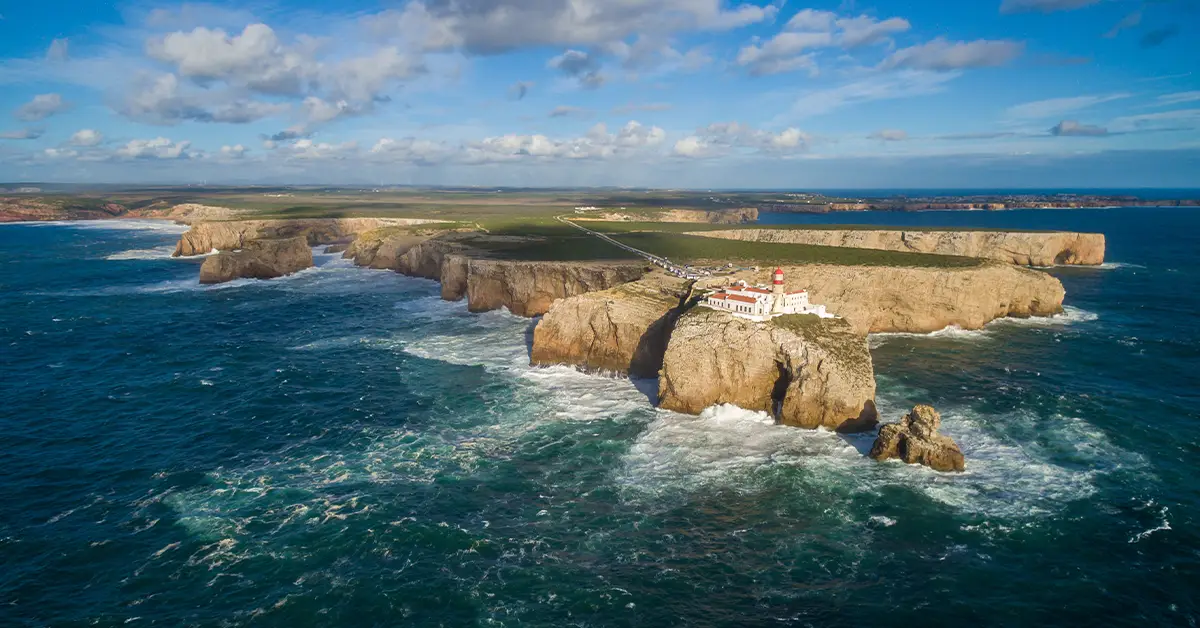
The southernmost region is the Algarve, famous for its white sandy beaches, limestone cliffs, and beautiful coastal caves. This area has a typical Mediterranean climate and is the country’s leading tourist destination.
River systems
Portugal has many important rivers, most of which originate in Spain and flow through Portugal before emptying into the Atlantic Ocean. These rivers not only provide water but also shape the landscape and economic life.
The Tagus is the most important river, bisecting the country and flowing into the sea at Lisbon. The Tagus estuary forms a vast natural bay, ranking among the finest seaports in Europe.
The Douro River in the north is famous for the terraced vineyards along its banks, where the renowned Port wine is produced. The Douro Valley has been recognised as a World Heritage site for its unique cultural landscape.
Other notable rivers include the Minho in the far north, which marks part of the border with Spain, and the Guadiana in the south. The Mondego is the longest river entirely within Portuguese territory, originating in the Serra da Estrela range.
Climate diversity by region
Portugal has a generally temperate Mediterranean climate, with mild winters and warm, dry summers. However, due to its north-south orientation and diverse topography, the climate varies significantly between regions.
The north has a cooler and wetter climate, with abundant rainfall. This creates conditions for fertile agriculture and lush forests. Snow occasionally falls in the high mountains of the Serra da Estrela during winter.
The area around the capital, Lisbon, and the central coastline has a transitional climate that is pleasant year-round. This is one of the reasons why this region is densely populated and economically robust.
The south, particularly the Algarve region, has the driest, hottest, and sunniest climate. In mid-summer, this area can receive up to 12 hours of sunshine per day, making it ideal for holiday tourism and outdoor activities.
According to data from European Commission, a stable climate and high sunshine hours are among the factors that strongly attract foreigners to live and invest in Portugal.
The Azores and Madeira archipelagos
Beyond the mainland, Portugal possesses two autonomous archipelagos located in the middle of the Atlantic Ocean, each with its own distinct beauty and geographical characteristics.
The Azores archipelago consists of nine volcanic islands located approximately 1,500 km west of the mainland. This is a region of intense geological activity, featuring craters, hot springs, and volcanic lakes. Pico Island is home to the highest peak in the country.
The Madeira archipelago is located to the southwest, closer to the African coast. Famous for its warm, subtropical climate year-round, Madeira is known as the island of eternal spring. Its rugged mountain landscapes and rich vegetation make it an attractive destination for eco-tourism.
Both archipelagos have autonomous status with their own regional governments, yet remain an inseparable part of Portuguese territory. They play a vital strategic role due to their position between Europe, Africa, and the Americas.
Natural resources and the environment
Portugal is not rich in minerals but possesses many valuable natural resources. The country is the world’s largest producer of cork, thanks to the vast cork oak forests in the Alentejo region.
The long coastline provides abundant marine resources, contributing significantly to the country’s cuisine and economy. The fishing industry, particularly for sardines and cod, is linked to the long-standing traditions of coastal towns.
In recent years, Portugal has promoted the development of renewable energy, leveraging its advantages in wind, solar, and hydroelectric power. The country has repeatedly set records for operating its electricity system entirely on renewable energy for several consecutive days.
The diverse natural landscape also serves as the foundation for nature reserves and national parks. These areas not only protect ecosystems but also contribute to the development of sustainable tourism, a direction that is increasingly being prioritised.
Geographical significance for life and investment
Favourable geographical features are one of the reasons why Portugal has become an attractive destination for foreigners. The temperate climate, beautiful coastline, and clean environment offer a high quality of life, especially for those seeking a long-term place to reside.
Its position as a gateway between Europe, Africa, and the Americas facilitates international trade and travel. Airports in Lisbon, Porto, and Faro connect Portugal with many major cities globally.
Regional diversity also opens up many choices for living and property investment. From the vibrant pace of life in Lisbon and the solemn beauty of Porto to the tranquillity of the Algarve or Madeira, each region has its own appeal. Those interested in opportunities here can learn more about Portugal residency by investment.
Summary
The geography of Portugal is a harmonious combination of mountains, plains, rivers, and the sea within a modest area. From the snow-capped peaks of the Serra da Estrela to the golden sunny beaches of the Algarve, and from the Douro Valley to the volcanic archipelagos in the middle of the Atlantic, this country possesses a rare richness of natural landscapes.
It is this geographical diversity and temperate climate that have shaped the identity, economy, and lifestyle of the Portuguese people over the centuries. For foreigners, understanding the geography of this nation is an important first step to fully appreciating the beauty and potential of one of the most liveable destinations in Europe.
Accompanying you on your journey in residency investment
The Prosperous Living Investment team advises on pathways, assesses profiles and manages investments transparently for every residency, citizenship and international property objective.
Free profile assessmentWhere life gets prosperous