


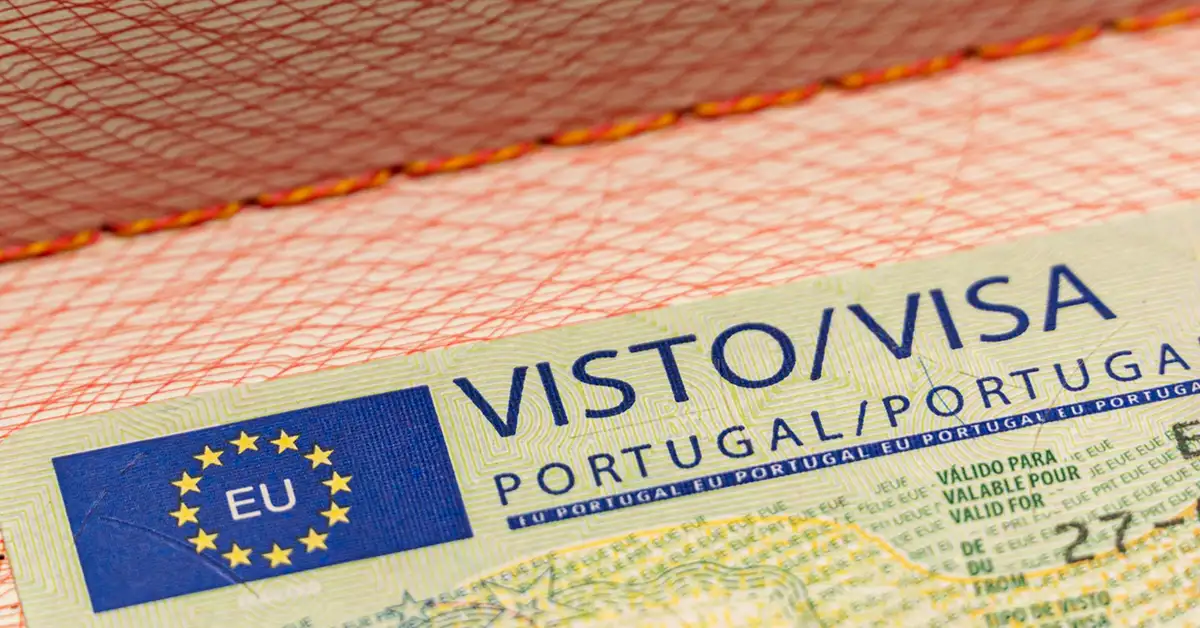
Launched in 2007, the D7 visa, also known as the Portugal retirement visa or passive income visa, is a residence visa allowing non-EU/EEA/Swiss nationals, including British and American citizens, to obtain 1 year of residence rights. Applicants need to demonstrate passive income of at least EUR 8,460 a year in 2025. This income may come from a pension, transferable capital, property, intellectual property or financial investments.
The minimum income requirement increases by 50% for a spouse and 30% for each dependent child. This applies regardless of the person’s country of origin. Moreover, provided the requirements continue to be met, the applicant may renew.
Message
Quick facts about the D7 visa in 2025
- Minimum income requirement: annual income of EUR 8,460
- Processing time: around 60 days
- Visa validity: 2 years
- Renewal: available
- Eligible applicants: non-EU/EEA nationals
- Age limit: applicants over 18
- Route to citizenship: yes, through naturalisation
Considering a residency programme? The Prosperous Living Investment team assesses your profile free of charge and advises on the pathway that fits your goals.
What is the Portugal D7 retirement visa?
The D7 visa allows the applicant and their family to reside lawfully in Portugal. This visa is intended to attract retirees and those living on passive income to settle in Portugal in order to boost the economy. Holders of this visa are also not prohibited from professional activity in Portugal.
The applicant may file a D7 visa application at a Portuguese consulate through a series of residence applications. Once the visa is obtained, immediate family are also issued residence permits under the family reunification rules.
This visa also allows visa-free travel through the Schengen Area, as it is registered in the Schengen Information System.
The benefits of the passive income visa (D7) in Portugal
Through the Portugal retirement visa,retiring in Portugalbrings a number of benefits:
- High global mobility
- Permanent residence and ultimately citizenship
- Access to resident benefits in Portugal
- A low refusal rate
High mobility
The D7 visa allows visa-free travel through the Schengen Area, bringing greater global mobility for spendingretirement in Europe.
Permanent residence and ultimately citizenship
On obtaining the D7 visa, the applicant is issued a residence permit in Portugal for 1 year. It may then be renewed for 2 consecutive years.
After 5 years of lawful residence, the applicant may apply for permanent residence. The applicant may also apply for Portuguese citizenship through naturalisation. The applicant must also pass a Portuguese language test.
However, with the recent update to Portuguese nationality law, the period for applying for citizenship has been extended to 10 years. This is not yet law; presidential approval is still required. We will provide updates on the process.
Resident benefits in Portugal
On becoming a resident in Portugal, the applicant enjoys a number of state benefits. These benefits include:
- Access to the National Health Service
- Access to the National Education Service and schools in Portugal
- Carrying out any professional activity as an independent professional
- Access to and protection under Portuguese law and the legal system
- Access to vocational schools in Portugal
Family reunification
Once the D7 visa is obtained, the applicant’s family is permitted to come to Portugal. The applicant needs to request family reunification at AIMA (formerly known as SEF). The applicant must lawfully prove their relationship with all and any family members they wish to include in this programme.
The list of family members who may be eligible for family reunification under the D7 visa is set out below:
- A spouse or partner
- Children under 18, or incapacitated children of the couple or of one of the spouses/partners
- Children over 18 who are financially dependent on the applicant or the spouse. This means that they are unmarried and studying at an educational institution
- The parents of the applicant or of the spouse/partner, provided they are dependent on the applicant
- Minor siblings of the applicant
A low refusal rate
The D7 visa has a low refusal rate, and common reasons for refusal include incomplete documents or failing to meet the income requirement. As it is a passive income visa, the applicant may be refused where they have active income, such as a salary or wages from employment.
Eligibility for the Portugal D7 visa
The D7 visa is commonly known as the passive income visa. Non-EU/EEA/Swiss residents with a stable income from foreign sources are eligible to apply for the Portugal D7 visa.
To be eligible:
- The applicant must be a non-EU national,
- The applicant has funds to support themselves during their stay in Portugal,
- The applicant has a clean criminal record certificate,
- The applicant can prove a residential address in Portugal,
- The applicant is able to spend at least 16 months in Portugal during the first 2-year period.
- The applicant must be at least 18 years old and have a clean criminal record,
- The applicant must have valid private health insurance.
- The applicant must demonstrate passive income of at least EUR 8,460 a year.
- Where there are dependants, the total increases. The applicant is expected to demonstrate EUR 4,230 for a spouse and EUR 2,538 for each dependent child.
Portugal D7 visa requirements in 2025
There is a set of criteria for eligibility for the Portugal D7 visa. The applicant may apply for a D7 visa in Portugal where they meet the Portugal D7 visa requirements:
Income requirements for the D7 visa in Portugal
The D7 visa is commonly called the retirement visa, but there is no age requirement. The emphasis is on establishing stable passive income meeting the minimum requirement (EUR 8,460 a year for a single applicant).
This income may come from a pension, rental property, investments or other non-employment sources. The applicant may apply for a D7 visa at any age.
What tax applies to D7 visa holders?
Becoming a tax resident through the Portugal D7 visa means having tax obligations that the applicant needs to understand and be aware of from the start of the journey. To become a formal tax resident in Portugal, the requirement is to spend more than 183 days in the country in a given tax year or to have a residence in Portugal at the end of the year. On becoming a Portuguese tax resident, the change is that the applicant’s worldwide income becomes subject toPortuguese tax.
However, before the old NHR regime ended in 2023, the NHR (Non-Habitual Resident) scheme allowed reduced tax rates for a specific period of up to 10 years. The new Portuguese government is planning to create a new NHR scheme in June 2024 to support highly qualified professionals.
The new NHR regime aims to provide potential tax benefits on foreign-source income for identified applicants. This new NHR system is expected to provide a flat or reduced rate for various types of income.
Minimum stay requirements for the Portugal D7 visa
The priority is to achieve the expected outcome by meeting the Portugal D7 visa requirements. Where an individual does not meet the minimum stay requirement without demonstrating a valid reason for being absent from the country, their residence permit may be cancelled.
- To retain a temporary residence permit, an individual should not be absent from the country for 6 consecutive months or 8 non-consecutive months during the overall period of validity of the residence.
- To retain a permanent residence permit, an individual should not be absent from the country for 24 consecutive months or 30 non-consecutive months over 3 years.
In particular cases where special rules apply, this practice may vary. In some cases such as professional assignments and force majeure, the period of absence may be exceeded.
The cost of living
The applicant may live in Portugal on sustainable passive income, but it is helpful to learn about the cost of living and the financial environment in Portugal. The applicant therefore needs to think about financial planning, and it is essential to be able to meet the necessary living costs in Portugal.
Remember that this varies by region and lifestyle choices. The applicant may therefore need a deeper analysis, considering the location where they will live. However, generally,the cost of living in Portugalis considerably lower than in many Western European countries.
The Portuguese minimum wage is important because it can help give a basic idea of the cost of living in Portugal. Having a general idea of estimated monthly costs, including housing, utilities, food, transport and healthcare, also supports budget planning.
Banking requirements for the Portugal D7 visa
Financial stability is important to demonstrate where the objective is to secure the D7 visa. The applicant may achieve this objective throughPortuguese bank account.
Bank statements demonstrate monthly passive income over the previous 6 months. On the minimum income, the applicant needs EUR 820 of monthly passive income. That becomes EUR 9,840 calculated annually. Where planning to bring family, the applicant may consider a further 50% for a spouse and 30% for each child. This equates to a further EUR 5,220.00 for a spouse and EUR 3,132 for each child.
Opening a bank account in Portugal is similar. The applicant needs to be present in Portugal in person or to have a power of attorney from Portugal. The most essential documents for opening a bank account in Portugal are a passport, the Portuguese tax number (NIF) and proof of address.
The motivation letter for a D7 application in Portugal
During the application process, the applicant is required to submit a motivation letter reflecting their intentions. This letter must cover why, how and when the applicant intends to move to Portugal. To do so, the applicant may begin by providing basic information about themselves, stating their name, nationality and source of income.
The applicant may then continue by mentioning why they intend to move to Portugal. Where there are particular reasons, these should be set out. The applicant also needs to talk about their source of income. Does the applicant receive income from a pension, rental income, dividends or savings? Where the answer is yes, each should be highlighted in the letter.
The applicant may then move on to the next step: banking information. Where a Portuguese bank account has been opened, the applicant may state this here to underline their eligibility for the programme, as this is one of the requirements. Here, the applicant should also mention how they intend to receive their income regularly.
Next come the accommodation plans in Portugal. The applicant must provide details of where they will stay during the period of validity of the Portugal retirement visa. At this point, the applicant may also set out how they will integrate into life there by emphasising that it will be a smooth process. This may be done through learning Portuguese or contributing to society.
How to apply for the Portugal D7 visa
Step 1: Obtain a NIF number and open a bank account
The first thing the applicant needs to do before any legal formalities in Portugal is to obtain a NIF number. This number is the applicant’s legal tax number, allowing them to carry out financial activity in the country. The applicant may grant a power of attorney to obtain that number on their behalf without entering Portugal.
After obtaining the NIF number, the applicant needs to open a bank account in Portugal, which may also be done remotely.
Step 2: Secure accommodation
As part of the D7 visa application process, the applicant needs to secure suitable accommodation in Portugal. The applicant may do this by renting or purchasing a property there.
Step 3: File the D7 visa application at the Portuguese consulate
The applicant cannot file a Portugal D7 visa application online through the official website. The applicant needs to book an appointment online at the Portuguese consulate in their current region. The exact documents required may vary between regions. In most cases, the applicant needs the following document checklist:
- The Portuguese visa application form.
- A motivation letter written for the D7 visa (explaining why, how and when they wish to move to Portugal based on their personal story)
- A passport valid for at least 6 months beyond the expiry date of the Portugal passive income visa
- Two recent colour passport-sized photographs
- A statement setting out the reasons for seeking Portuguese residence
- A health insurance policy providing cover in Portugal
- Alternatively, the applicant may provide a sworn declaration stating that they will purchase health insurance in Portugal within 90 days of arriving there
- A criminal record certificate
- Travel insurance
- Evidence of accommodation in Portugal. This may be a title deed, a tenancy agreement or a property loan agreement
- Evidence of sufficient funds available to the applicant in Portugal
- Evidence of reasonable regular net passive income
- To be eligible, the applicant must demonstrate a pension or equivalent income over 12 months: EUR 8,460 for the applicant, plus 50% of that amount for a spouse and 30% for each dependent child.
Step 4: Apply for a residence permit in Portugal
Where the applicant wishes to apply for a D7 passive income residence permit, they need to enter Portugal on the D7 visa after the steps above. The visa specifically allows up to 2 entries and residence in Portugal for up to 4 months. During those 4 months, the applicant needs to enter Portugal and apply for the residence permit.
To apply for the residence permit, the applicant needs the following documents:
- The applicant’s passport, containing the D7 visa issued by the Portuguese consulate in their region
- Evidence of accommodation (the same as submitted to the Portuguese consulate)
- Evidence of sufficient financial means (the same as submitted to the Portuguese consulate)
- The health insurance policy, where purchased in Portugal
Generally, it is best to consult a professional, as the bureaucratic system can be somewhat complex. The applicant may always contact us with any questions.
Portugal D7 visa processing times
Gathering all the documents usually takes around a month. We strongly recommend engaging a professional to help gather all the required documents; otherwise, it may take several months simply to find the right ones.
At the consulate and the visa application centre, the process may take up to 60 days to be ready. That is, of course, where all the correct documents are submitted in person and the process is well established. Where a form is missing or completed incorrectly, the process takes considerably longer. Each time an error is identified, the consulate notifies the applicant, and the applicant usually has to attend in person to fill in the gaps or clarify the issue.
Once in Portugal, the first thing the applicant needs to do is file an application with AIMA (SEF).
The time to obtain the residence permit depends largely on where the applicant chooses to live. For example, in Lisbon or Porto, it may take an average of 120 days to book an appointment with SEF. This is because of high demand there. However, where the applicant chooses to live in the countryside or a less populated city, they may book an appointment with AIMA (SEF) within 15 days.
| Portuguese residence application stage | Estimated timeframe |
|---|---|
| Gathering documents | Months 0–1 |
| Consulate & visa application | Months 2–4 |
| Visa approval & travel to Portugal | Month 5 |
| AIMA (SEF) appointment | Months 6–9 |
| Issue of the residence permit | Months 10–12 |
| Renewal | Years 2–3 |
| Permanent residence or citizenship | Year 5 |
Portugal D7 retirement visa fees
The actual government fees for the Portugal D7 visa are very small. They are usually between EUR 50 and EUR 300 per applicant. The applicant also needs to pay around EUR 160 for the residence permit fee. Beyond these, the main costs are travel, renting or purchasing a property, professional fees, and so on.
| Minimum bank balance requirements by applicant type (2025) | Description | Minimum bank balance (EUR) |
|---|---|---|
| A single applicant | An individual applicant | 8,460 |
| Applicant + spouse | The principal applicant and spouse | 15,660 |
| Applicant + spouse and 2 children | The principal applicant, spouse and two children | 21,924 |
The route to residence and citizenship through the Portugal D7 visa
The Portugal D7 visa process may leave the applicant wondering about the route to residence or citizenship. Throughout this process, the applicant needs to renew the residence permit in order to meet the conditions for permanent residence in Portugal, and ultimately may pursue the option of applying for Portuguese citizenship.
The residence renewal process
On receiving the D7 visa, the applicant may initially obtain temporary residence in Portugal. This is a residence permit valid for 2 years. Where the aim is to continue staying in Portugal after the 2-year permit, the applicant needs to remember to renew before the permit’s expiry date. Once the first renewal is complete, the applicant also receives a 2-year extension.
There are a number of requirements for securing renewal of the residence permit. The applicant needs to spend at least 16 months in the country during the first 2-year period of residence. The applicant is also expected to maintain stable passive income meeting the minimum requirement.
Permanent residence
The applicant may meet the eligibility criteria for Portuguese permanent residence on completing 5 years of lawful residence in the country, including the period of temporary residence.
Applying for citizenship
On applying for Portuguese citizenship, a D7 visa holder may apply for citizenship or permanent residence after 5 years of lawful residence*. The applicant must also pass the Portuguese language requirement at level A2. Once the process is complete and the legal requirements are met, the applicant may obtain Portuguese citizenship and a passport.
- 2025 update: the Portuguese citizenship period may be extended to 10 years where the proposed law is passed in June
What is life like in Portugal?
There are many aspects to assess when applying for a retirement or digital nomad visa in Portugal. Living conditions are considered, including the national health system, accommodation options and the wider lifestyle options as a retiree or digital nomad.
The healthcare system in Portugal
As one of the best countries for healthcare, Portugal has a comprehensive and cost-effective public health system. Becoming a Portuguese resident under the D7 visa grants access to this system.
Property and accommodation options
The applicant will find many opportunities in Portugal relating to property and accommodation. The applicant may purchase a property in Portugal or sign a tenancy agreement. There are many options depending on the region chosen, whether central Lisbon and Porto or around the Algarve, which promises a more peaceful environment.
Retirees living in Portugal as retirees
Where the applicant is a retiree and plans to live in Portugal through the D7 visa, they will discover many benefits beyond the country’s relaxed lifestyle and temperate climate. The applicant also has easier access to visit other European countries with the D7 visa as an attraction of Portuguese residence.
Potential challenges
To forestall potential challenges when applying for the D7 visa, preparation helps. Provided the income requirement, the residence obligations and all the other necessary formalities are met, the applicant is more likely to have a smooth process when applying for this type of visa.
Comparing the D7 and the Portugal Golden Visa
A number of factors distinguish the two programmes. Before explaining further, we may start with the leading distinguishing factor: the motivation for applying. Where the plan is to obtain residence in Portugal through investment or to establish a plan B through residence by investment in Portugal, the applicant may follow the Portugal Golden Visa route.
However, the D7 visa is based primarily on the applicant’s passive income, and no investment is required, whereas with the Portugal Golden Visa the applicant is expected to make, for example, a EUR 500,000 fund investment. There are also a number of other investment options with different criteria.
Frequently asked questions (FAQ)
Yes, the applicant can. The residence permit under this visa is issued for 1 year. After that year, the applicant may renew this visa for consecutive 2-year periods. After 5 years of lawful residence, the applicant may apply for a permanent residence permit or Portuguese citizenship.
Portugal has been attracting retirees for decades. The country has a high standard of living, a low cost of living, excellent healthcare and many social activities for retirees. All this makes retiring in Portugal a very attractive option. The Portugal retirement visa (the Portugal D7 visa) is the option for moving to Portugal and finding the most convenient location for retirement.
No. In fact, the cost of living in Portugal is very cheap given the quality of life there. A couple can live comfortably in a small town in Portugal on EUR 1,500-2,000 a month.
The NIF number is the applicant’s legal tax number in Portugal. With a NIF number, the applicant may carry out financial activity in the country.
Bitcoin is tax-free in Portugal, which is why many cryptocurrency traders move to the country. Be sure to speak to a lawyer and an accountant before planning the move.
Yes, Portugal taxes social security benefits and foreign income. However, the applicant may benefit from tax relief where income is below a certain threshold.
One disadvantage may be considered to be the minimum income requirement. However, it is not as high as the proof of funds expected by some other visa programmes. Even so, to retain the visa status, the applicant must demonstrate stable passive income on an ongoing basis.
The applicant is not required to own property in Portugal in order to obtain a D7 visa. The applicant may rent or buy a home to reside in.
No, generally the applicant cannot apply for a D7 visa without stable monthly passive income. The core requirement of the D7 visa is that the applicant must demonstrate stable and sufficient passive income to support themselves while living in Portugal. Where there is no monthly income, the applicant may still use savings as a means of demonstrating financial resources; however, remember that it must be at least EUR 1,000.
Accompanying you on your journey in residency investment
The Prosperous Living Investment team advises on pathways, assesses profiles and manages investments transparently for every residency, citizenship and international property objective.
Free profile assessmentWhere life gets prosperous