

EB-5 vs the US E-2 visa: settlement or temporary residence for investors

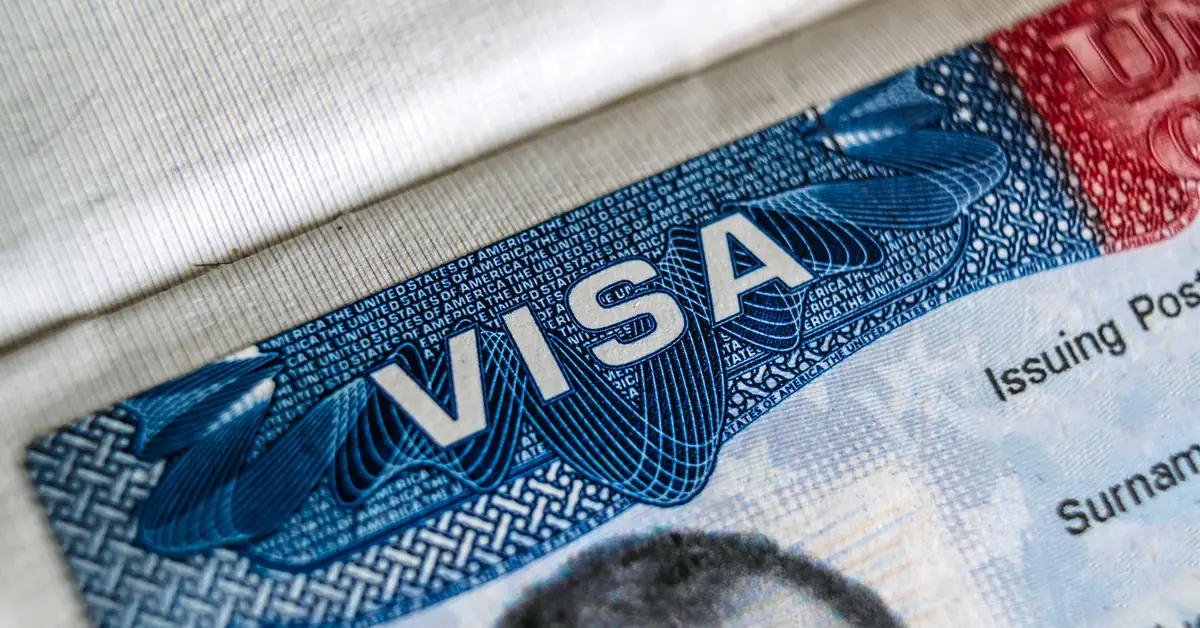
Comparing EB-5 and the E-2 visa is a question most investors considering the United States face when drawing up their financial and settlement plans. Both programmes are based on investment but lead to two completely different legal statuses: one is a permanent resident green card, the other a temporary nonimmigrant visa.
Visa EB-5is an investment-based immigrant visa programme that leads directly to aUS permanent resident cardand then to citizenship. Meanwhile,Visa E-2is a nonimmigrant visa for investors from countries with trade treaties with the United States, allowing them to live and work in the United States with unlimited renewals but not leading to a green card.
This article analyses in detail the differences between the two programmes and points out the particular barrier Vietnamese investors must overcome if they want to choose the E-2 visa — because Vietnam is not currently on the list of countries with a treaty with the United States.
Message
Overview of the two programmes
EB-5 belongs to the Employment-Based Fifth Preference group, one of five employment-based immigrant visa categories. According toU.S. Citizenship and Immigration Services (USCIS), investors must invest $800,000 USD (for projects in a Targeted Employment Area — TEA) or $1,050,000 USD (outside a TEA), create 10 full-time jobs for US workers and sustain the investment throughout the 2-year conditional green card period.
The E-2 visa belongs to the Treaty Trader/Investor Visa group and is issued by theUS Department of State (DOS)at embassies and consulates. The E-2 allows investors to come to the United States to develop and run a business in which they have invested a substantial amount of capital. The E-2 visa is usually issued for an initial 2 to 5 years and can be renewed indefinitely as long as the business is still operating and meets the criteria.
The core difference: EB-5 leads to a green card and citizenship, while the E-2 only leads to temporary residence tied to business activity.
Considering a residency programme? The Prosperous Living Investment team assesses your profile free of charge and advises on the pathway that fits your goals.
Nationality requirements — the biggest barrier for Vietnamese people
This is the most important difference when Vietnamese investors compare EB-5 and the E-2 visa.
EB-5 has no nationality requirement for investors. Citizens of any country, including Vietnam, can file an EB-5 petition if they meet the capital and lawful source of funds requirements. Vietnamese investors do not need a second passport to join EB-5.
By contrast, the E-2 visa is only issued to citizens of countries that have signed a treaty of commerce and navigation with the United States (Treaty Countries). According to theDepartment of State’s list of Treaty Countries, Vietnam is not on the list of E-2 treaty countries.
The practical consequence: Vietnamese citizens cannot apply directly for an E-2 visa with only a Vietnamese passport. To access the E-2 visa, Vietnamese investors must acquire the citizenship of a country that has an E-2 treaty with the United States.
Some common options for this route include:Grenada citizenship by investment(Grenada is an E-2 treaty country, with a CBI investment of about $235,000 USD as a donation or $270,000 USD in real estate);Turkish citizenship by investment(Turkey is an E-2 treaty country, with a real estate investment of $400,000 USD).
This two-step route — known as the CBI → E-2 combo — will be analysed in detail in separate dedicated articles. The important thing to remember here is that the total combo budget (CBI + the E-2 business investment) is usually still lower than EB-5, but the result is temporary residence, not a green card.
Comparing investment thresholds
The investment thresholds of the two programmes differ in both amount and nature.
EB-5 has two fixed levels: $800,000 USD for projects in a TEA and $1,050,000 USD for projects outside a TEA. The investment must be determined by USCIS to be at risk (subject to possible loss) and sustained throughout the conditional green card period. Once the I-829 is approved and the project completes its cycle, the investor has the opportunity to recover the capital under the terms of the investment agreement.
The E-2 visa has no fixed minimum in law. USCIS and the DOS require the investment to be “substantial” — significant relative to the total cost of setting up a viable business of that type. In practice, common E-2 cases involve investments of $100,000 USD to $200,000 USD, with some reaching $500,000 USD depending on the industry.
The E-2 investment must be used to buy, set up or expand a real business. The money cannot sit waiting in an account — it must already have been spent on, or irrevocably committed to, the business before applying.
| Criterion | EB-5 | Visa E-2 |
|---|---|---|
| Minimum investment | $800,000 USD (TEA) or $1,050,000 USD | No hard minimum, usually $100,000 — $500,000 USD |
| Nature of the investment | At risk, recoverable after the cycle | An active business that must genuinely be run |
| Job creation requirement | 10 full-time jobs per investor | Creating jobs for US citizens, with no fixed number |
| Form of investment | Can be through a Regional Center (indirect) | Must be a real business run by the investor |
Comparing legal rights
Legal rights are the clearest difference between EB-5 and the E-2 visa.
EB-5 gives the investor and family a 2-year conditional green card, which becomes a 10-year permanent green card once the I-829 is approved. Permanent residents have the right to live, work and study in any state, receive social security benefits under the rules, travel in and out freely and, after 5 years of residence, become eligible to apply for naturalisation onUS Form N-400.
The E-2 visa gives the investor “nonimmigrant” status. E-2 holders may only work for the business they invested in and cannot change employers freely as a green card holder can. When the business closes, goes bankrupt or is sold by the investor, E-2 status ends and the holder must leave the United States or switch to another type of visa.
For families, the E-2 visa allows spouses and children under 21 to accompany the investor as E-2 dependants. E-2 spouses can apply for work authorisation to work for any business, a significant advantage of the E-2 over some other nonimmigrant visas. E-2 dependent children can attend public schools free of charge from primary through high school.
An important limitation of the E-2: children cannot keep E-2 dependent status after turning 21. This is one of the reasons many E-2 families have to plan a switch to EB-5 or other green card categories before their children come of age.
The path to citizenship — only with EB-5
This is the final point but also the most strategic one when comparing EB-5 and the E-2 visa.
EB-5 leads directly to US citizenship through the standard process: a 2-year conditional green card → a permanent green card → 5 years of permanent residence → filing the N-400 → becoming a US citizen. The total time from filing the I-526E to taking the citizenship oath is usually about 7 to 10 years depending on backlogs.
The E-2 visa has no direct path to citizenship. E-2 holders can keep their status indefinitely (through renewals), but years spent on an E-2 do not count towards the residence requirement for naturalisation. To go from E-2 to citizenship, the investor must take one of two routes: switching to a green card through EB-5 or other employment-based categories such asEB-1, EB-2; or through family sponsorship if they have a relative who is a US citizen.
For many investors, the E-2 is used as an intermediate solution — entering the United States first, running a business, and then investing further to switch to EB-5 when finances allow.
EB-5 vs the E-2 visa on processing times
The E-2 visa has a clear speed advantage. The usual E-2 process involves: preparing the business plan and investment file (1–3 months); filing the DS-160 and booking a consular interview (2–8 weeks depending on the consulate); and the interview and decision (usually immediate or within 1–2 weeks). The total time from starting preparation to receiving the E-2 visa is usually 4 to 6 months.
EB-5 takes much longer. The process involves: preparing the petition and proving source of funds (3–6 months); I-526E adjudication (12–36 months depending on quotas); waiting for the priority date (from a few months to a few years depending on the applicant’s country); applying for an immigrant visa or adjusting status (6–12 months); the 2-year conditional green card; and filing the I-829 (12–24 months of processing). The total time from filing the I-526E to a permanent green card is usually 5 to 8 years.
For investors who need to get to the United States quickly and are willing to invest in a business they run themselves, the E-2 significantly shortens the timeline. However, this speed advantage comes at the cost of not having a permanent green card.
Business operation requirements
The two programmes have very different operating requirements, which affect how investors actually live and work in the United States.
With EB-5 through a Regional Center (the majority of cases), the investor acts as a passive limited partner in the project — with no need to manage it or be present at the project site regularly. The investor can live in any state, do any job or choose to retire.
With direct EB-5 investment (Direct EB-5), the investor must take part in managing the business, but still has more flexibility than with the E-2.
With the E-2, the investor must come to the United States to genuinely develop and direct the business. An E-2 business cannot be a passive investment such as buying bonds or holding a minority stake in a listed company. The E-2 investor must own at least 50% of the shares or have actual operational control.
This requirement makes the E-2 suitable for younger people with business experience who are willing to run a business in the United States. EB-5, by contrast, is better suited to established investors who want a green card to immigrate for benefits and education, with no plans to run a business in the United States themselves.
Comparing total budgets
When it comes to total costs, the two programmes are structured very differently.
The total EB-5 cost for a typical Vietnamese family (a couple and 2 children) is usually around $850,000 — $1,150,000 USD: $800,000 USD of investment capital; Regional Center fees of $50,000 — $80,000 USD; legal and USCIS fees of $30,000 — $50,000 USD; and other costs (translation, notarisation, travel) of $10,000 — $20,000 USD. Note that the largest part ($800,000 USD) can potentially be recovered after the project cycle.
The total cost of a direct E-2 (without CBI) for a citizen of a treaty country is usually around $150,000 — $300,000 USD: $100,000 — $200,000 USD of business investment; legal fees of $15,000 — $30,000 USD; business plan costs of $5,000 — $15,000 USD; and consular and filing fees of $5,000 — $10,000 USD. The business investment can be recovered if the business is sold.
For Vietnamese citizens, the total cost of the CBI + E-2 combo route adds the CBI cost: $235,000 USD (Grenada donation) or $400,000 USD (Turkish real estate, which can be resold after 3 years). A Grenada → E-2 combo usually totals about $400,000 — $550,000 USD; a Turkey → E-2 combo usually about $550,000 — $700,000 USD.
So both CBI → E-2 combo options are still significantly cheaper than EB-5, with the added benefit of a permanent second citizenship. In return, the result in the United States is temporary residence rather than a green card.
Which option suits Vietnamese investors
Comparing EB-5 and the E-2 visa leads to a choice based on three main factors: budget, settlement goals and willingness to run a business.
EB-5 suits investors with a budget of $850,000 USD or more whose main goal is a permanent green card and US citizenship for the whole family, who prioritise university education for their children (citizen/resident tuition is much lower than for international students), and who do not want to run a business in the United States.
The CBI → E-2 combo suits investors with a lower budget (from $400,000 USD) who are younger and have business experience, are willing to run a business in the United States, prioritise getting to the United States quickly and accept nonimmigrant status conditional on keeping the business going.
Some investors choose a combined route: starting with the CBI → E-2 combo to enter the United States quickly and run a business, then after 2–5 years, once family finances are stable and the business has grown, investing further to switch to EB-5 and obtain a green card.
Summary
Comparing EB-5 and the E-2 visa shows that the two programmes serve two different groups of investors with different goals. EB-5 is the direct road to a green card and citizenship but requires a large budget and a long wait; the E-2 is a fast and flexible route but only offers temporary residence tied to business activity.
For Vietnamese citizens, the treaty country barrier forces investors who want the E-2 to invest additionally in a second citizenship. The CBI → E-2 combo therefore becomes an alternative to EB-5 with a lower budget but a weaker legal outcome in terms of permanence.
PLI’s team of immigration specialists recommends that investors fully weigh their actual budget, their children’s education goals, their retirement or business plans in the United States, and their willingness to run a business before deciding. Consulting a US-licensed immigration lawyer is a necessary step in assessing each family’s specific case.
Accompanying you on your journey in residency investment
The Prosperous Living Investment team advises on pathways, assesses profiles and manages investments transparently for every residency, citizenship and international property objective.
Free profile assessmentWhere life gets prosperous