


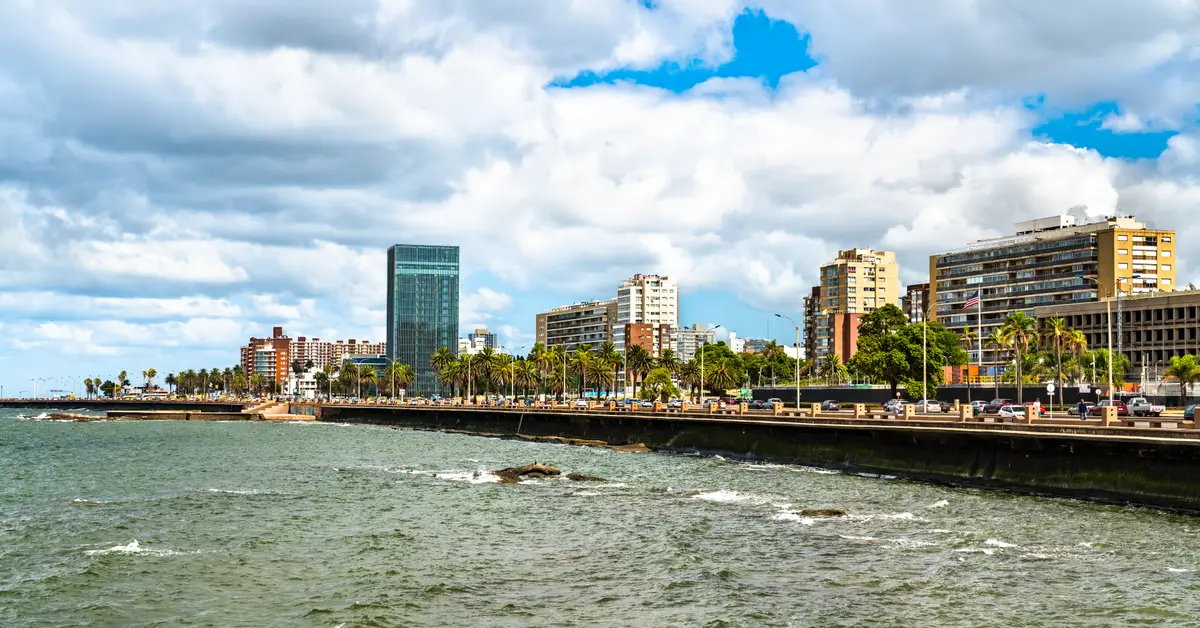
Uruguay is a small nation in south-eastern South America, situated along the Atlantic Ocean between its two giant neighbours, Argentina and Brazil. With its capital, Montevideo, it is one of the most stable democracies with one of the highest standards of living in the region, renowned for its transparent institutions and moderate social traditions.
Contents
Location and overview of Uruguay
Uruguay is located on the south-eastern edge of the South American continent, on the shores of the Atlantic Ocean. The country borders Argentina to the west and Brazil to the north, with much of its western boundary defined by the Uruguay River and the vast Río de la Plata estuary. Its position wedged between two regional powers has shaped Uruguay’s history and identity as an independent buffer zone.
Compared to its neighbours, it is a country with a modest land area and a small population. However, Uruguay is often cited as a beacon of political stability, democratic institutions, and quality of life. The country’s full name is the Oriental Republic of Uruguay (República Oriental del Uruguay), where “Oriental” refers to its location east of the Uruguay River.
The majority of the population and economic activity is concentrated around the capital, Montevideo, and the southern coastline. The relatively flat geography, temperate climate, and attractive coastline make Uruguay both a highly urbanised society and one that retains vast rural spaces for livestock and agriculture.
Considering a residency programme? The Prosperous Living Investment team assesses your profile free of charge and advises on the pathway that fits your goals.
Key data on Uruguay
Below are some basic indicators for Uruguay, compiled from sources such as the World Bank, the United Nations Development Programme (UNDP), and the national statistics agency. Economic and population data are updated periodically and may change from year to year.
- Capital: Montevideo
- Area: approximately 176,215 km²
- Population: approximately 3.4 million people
- GDP per capita: approximately US$22,000–23,000 (in 2024)
- Human Development Index (HDI): 0.862 in 2023 (very high group)
- Currency: Uruguayan peso (UYU)
The figures above are for reference at the time of compilation. For official purposes or decision-making, the latest data should be verified with the aforementioned bodies, as GDP, population, and development rankings are subject to annual adjustments.
History of the formation of an independent nation
Detailed article on the History of Uruguay
Before Europeans arrived, this land was home to indigenous communities, among whom the Charrúa are the most frequently mentioned. The area around the Río de la Plata subsequently became a point of prolonged dispute between Spain and Portugal, two colonial powers seeking to control this strategic trade route.
The process of gaining independence is linked to the figure of José Gervasio Artigas, who is considered a national hero. After a period of struggle and intervention by neighbouring countries, Uruguay’s independence was declared in 1825 and officially recognised in 1828. Readers can delve deeper into the thematic article on the history of Uruguay to follow the major milestones in full.
The 19th century saw prolonged internal conflicts between two traditional political factions. Entering the 20th century, extensive reforms under José Batlle y Ordóñez laid the foundations for an early welfare state, with many social policies that were progressive for that era.
Like many countries in the region, Uruguay experienced a period of military dictatorship between approximately 1973 and 1985, before the democratic process was restored. Since then, the country has maintained a stable democracy and is highly regarded for its rule of law.
Geography, climate, and natural landscapes
Detailed article on the Geography of Uruguay
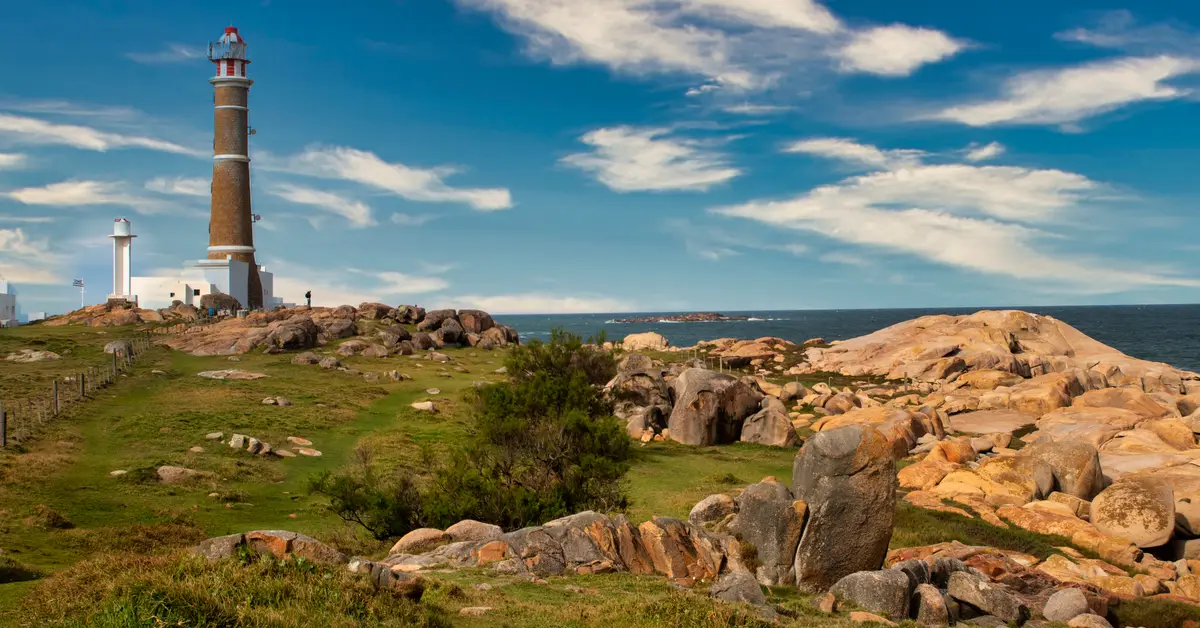
In terms of topography, Uruguay consists mainly of plains and low, rolling hills, known locally as cuchillas. This is not a country of high mountains, but a land of vast grasslands, a continuation of the famous pampas of South America. This landscape is particularly favourable for large-scale livestock grazing.
The river network plays an important role in life and national boundaries. The Uruguay River flows along the western border, while the Río Negro river divides the territory from east to west. The southern part opens into the vast Río de la Plata estuary and then connects to the Atlantic Ocean, creating an important coastline and port area.
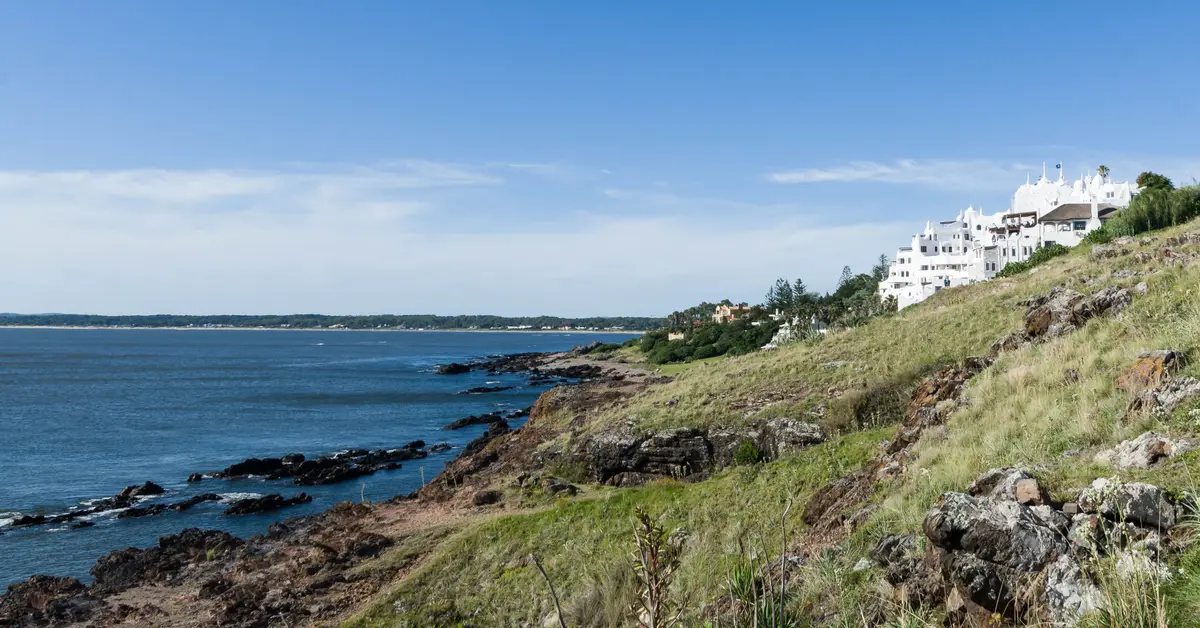
Uruguay’s climate is temperate, with four relatively distinct seasons and no extreme weather conditions. The eastern coastline is famous for its beaches and resorts, with Punta del Este being a widely known destination in the region. To visualise this more clearly, you can read the additional analysis on the geography of Uruguay.
The combination of fertile grasslands, an abundant river system, and a pleasant climate has helped shape a strong agricultural economy, while also supporting the development of summer coastal tourism.
Uruguay’s economy: agriculture, services, and technology
Detailed article on the Uruguayan economy
In the regional picture, Uruguay is often classified in the high-income group with notable economic stability. According to the country profile of World Bank, it is a high-income economy with relatively good social indicators compared to the Latin American average. Further details are presented in the article on the economy of Uruguay.
The traditional pillars remain export-oriented agriculture and livestock. Key commodities include beef, soy, dairy products, as well as timber and pulp. The image of the gaucho cowboy on the vast grasslands has become a symbol associated with the country’s rural economic activity.
Alongside agriculture, the service sector plays an increasingly large role, including tourism, finance, and especially software services and exported information technology. Uruguay is noted as one of the countries with a dynamic software industry in the region, thanks to a qualified workforce and a transparent institutional environment.
The national currency is 1,000 UYU (Uruguayan peso). The country also operates free trade zones and has a high proportion of renewable energy in its electricity mix, thanks to significant investment in wind and hydroelectric power. Specific figures may change annually, so it is necessary to consult updated sources when high accuracy is required.
- Agricultural exports: beef, soybeans, dairy, timber, and pulp.
- Services: tourism, finance, software, and information technology.
- Energy: high renewable share, with a focus on wind and hydroelectric power.
Political system and stable democracy
Detailed article on the Uruguayan political system
Uruguay is a presidential republic. The President is both the head of state and the head of government, elected for a fixed term. This power structure creates a centralised executive branch that remains subject to the oversight of an independent legislature and judiciary.
The legislative body is a bicameral parliament, known as the General Assembly (Asamblea General), consisting of the Senate and the Chamber of Representatives. This system operates on the foundation of a written constitution and a long-standing tradition of the rule of law. Official information regarding the state apparatus can be found via the portal Government of Uruguay.
Administratively, the territory is divided into provinces, called departamentos, each with its own local government. This division model helps balance centralised management in the capital, Montevideo, with the administrative needs of the regions. Further details are analysed in the article on Uruguayan politics.
The most frequently cited point is the stability and continuity of its institutions. Uruguay is often highly rated by international organisations for its level of transparency and the quality of its democracy, a rare characteristic in a region that has historically been volatile.
Population and demographics
Detailed article on the Uruguay demographics
Uruguay has a small population, estimated at approximately 3.4 million people. A very large proportion of the population lives in the capital, Montevideo, and its surrounding metropolitan area, making it one of the most highly urbanised countries in South America. The interior is vast but sparsely populated, primarily serving agriculture.
Regarding demographics, the majority of Uruguayans are of European descent, particularly from Spain and Italy, a result of migration waves in the 19th and early 20th centuries. Additionally, there is an Afro-descendant community with significant cultural contributions, along with a small portion of indigenous descendants.
Like many developed societies, Uruguay faces the trend of an ageing population and a low birth rate. The official language is Spanish. Another characteristic is a strong secular tradition, with a significantly higher proportion of people who do not follow any religion compared to the Latin American average.
These characteristics are detailed in the article on Uruguayan demographics, helping readers better understand the social structure and long-term trends of the country.
Culture: tango, football, and mate
Detailed article on the Uruguayan culture
Uruguayan culture is a blend of European heritage and the distinct identity of the Río de la Plata region, a shared cultural area with the Argentine capital, Buenos Aires. Tango is a recognisable symbol, alongside candombe, a form of music and dance associated with the Afro-descendant community and recognised as a unique heritage.
Carnival in Uruguay is known for being one of the longest in the region, becoming an important occasion for community life. In rural areas, the gaucho tradition, along with horse riding and herding skills, is still preserved as a core part of the national identity.
The habit of drinking mate, a characteristic herbal tea, is present almost everywhere and across all social classes. In terms of cuisine, asado barbecue and the chivito sandwich are typical representatives. Football is almost a source of national pride, with an impressive track record relative to the population size.
Literature has also left its mark with authors such as Mario Benedetti and Eduardo Galeano. Interested readers can learn more in the article on Uruguayan culture to see the depth of the spiritual life here.
Free public education and secular traditions
Detailed article on the Uruguay education
One of the sources of pride for Uruguay is the tradition of free, secular public education established very early on. Levels from preschool and primary to secondary are largely managed by the public system, helping to maintain a high literacy rate.
At the university level, the Universidad de la República (UdelaR) is the largest public institution and plays a central role in training and research, alongside several private universities. This model reflects the view of education as a basic public service that the state is responsible for guaranteeing.
Uruguay is also known for the one-laptop-per-student programme, often called Plan Ceibal, a pioneering initiative for technology popularisation in schools. Nevertheless, the system still faces challenges regarding secondary school completion rates and the quality of training, like many other education systems.
A more complete analysis of the structure and challenges can be viewed in the article on Uruguayan education.
Standard of living, residency, and investment in Uruguay
Detailed article on the Uruguay residency by investment
Thanks to stable institutions, a relatively high standard of living, and a peaceful social environment, Uruguay attracts the interest of those looking into long-term residency. The country has legal residency pathways based on investment or proof of income, accompanied by a route to permanent residency and citizenship over time.
Policies regarding investment thresholds, tax incentives for new residents, and application conditions may change over time, so it is necessary to check current regulations before making a decision. A general overview of these pathways is presented in the article on Uruguayan residency by investment with an objective approach.
Overall, Uruguay stands out as a small but balanced country: a sustainable democracy, an economy diversified between agriculture and services, a secular society, and a stable quality of life. It is this combination that creates Uruguay’s unique appeal in the broader picture of South America.
Accompanying you on your journey in residency investment
The Prosperous Living Investment team advises on pathways, assesses profiles and manages investments transparently for every residency, citizenship and international property objective.
Free profile assessmentWhere life gets prosperous