


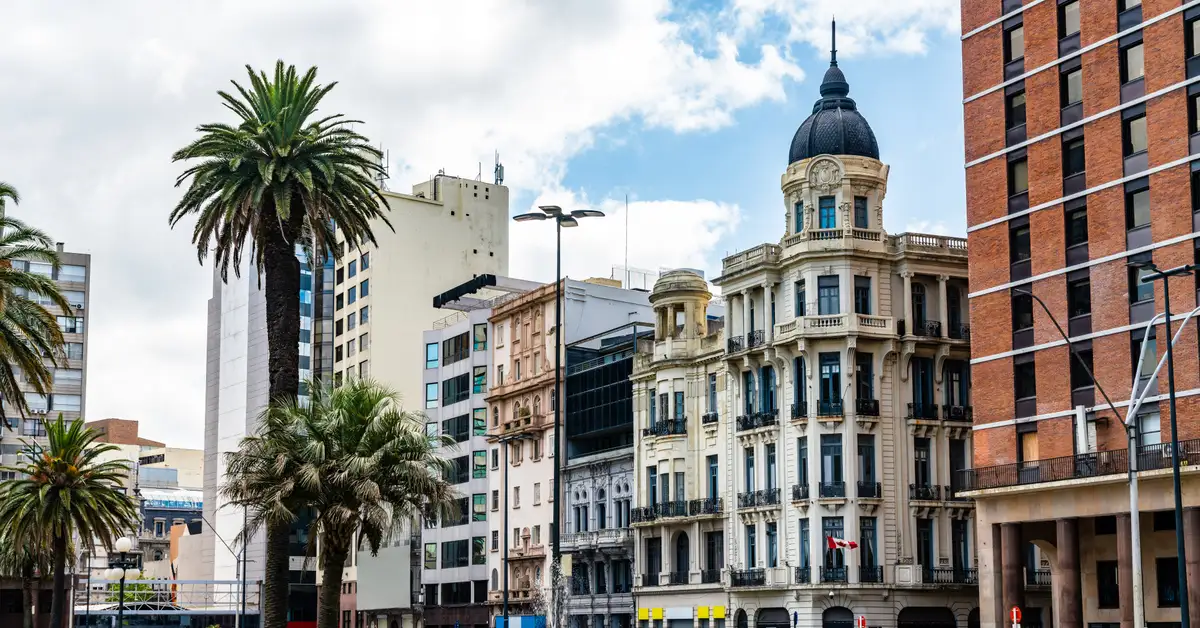
Education in Uruguay is known for a model rarely seen in the region: free, secular, and compulsory public schooling, linked to a one-laptop-per-student programme. In the capital, Montevideo, and throughout the provinces, this system shapes the social identity of a small South American nation.
Contents
Overview of the Uruguayan education system
Uruguayan education is organised around a core principle that has shaped the country for over a century: the state is responsible for guaranteeing the right to learning for all citizens, regardless of their background. The public system spans from preschool to university, serving the majority of the population in both the capital Uruguay demographics with its high concentration, and the vast rural provinces.
Three characteristics frequently highlighted when discussing this model are free tuition, compulsory attendance and secularism. These are not new slogans, but rather the legacy of reforms from the 19th and early 20th centuries, maintained quite steadily across various political eras.
Alongside the dominant public sector, Uruguay still maintains a network of private schools and universities serving a segment of families. However, unlike many nations in the region, the central role remains with the state, creating a distinct identity for the education system.
Understanding Uruguayan education helps explain why this nation is highly regarded for its human capital within the region. The education system is founded on the principles of free, secular and compulsory learning at basic levels, while also focusing on bringing technology to public schools.
Considering a residency programme? The Prosperous Living Investment team assesses your profile free of charge and advises on the pathway that fits your goals.
Tradition of free and secular public education
One of the most important foundations of Uruguayan education is the reformist legacy associated with educator José Pedro Varela in the late 19th century. His philosophy established three pillars that still influence today: education must be free so that everyone can access it, compulsory so that no child is left behind, and secular to separate it from religious influence in public schools.
Secularism is what sets Uruguay apart markedly from most of Latin America. In public schools, teaching content is kept religiously neutral, reflecting a society with an early tradition of separating church and state. This aligns with the strongly secular profile of the population.
Free tuition does not stop at secondary school but extends to public higher education. The state bearing most of the learning costs is seen as a long-term social commitment, although this also places pressure on budgets and quality that the system must continuously balance.
This tradition is closely tied to notions of equality and social cohesion in Uruguay. Public schools are not merely places for imparting knowledge, but are also viewed as shared spaces where children from different backgrounds study together and form civic awareness.
Levels of education in Uruguay
The Uruguayan education system is divided into clear levels, starting with early childhood education for small children. These early years are receiving increasing attention, with efforts to expand access to nurseries and kindergartens, especially in more disadvantaged areas.
Primary education is the foundational and highly universal stage. This is also the level where attendance is almost comprehensive, reflecting the effectiveness of compulsory education traditions. At this stage, children are equipped with basic reading, writing and numeracy skills.
Secondary education is split into a basic stage and an orientation stage, where students can choose academic or technical-vocational branches. Technical education and vocational training play an important role in connecting schools with the needs of Uruguayan economy, particularly in services and manufacturing.
The administration of these educational levels is divided among specialised bodies within the public education system, with each agency managing an area such as primary school, high school or technical education. This structure aids specialisation but also requires close coordination to ensure continuity.
Plan Ceibal and the one-laptop-per-student model
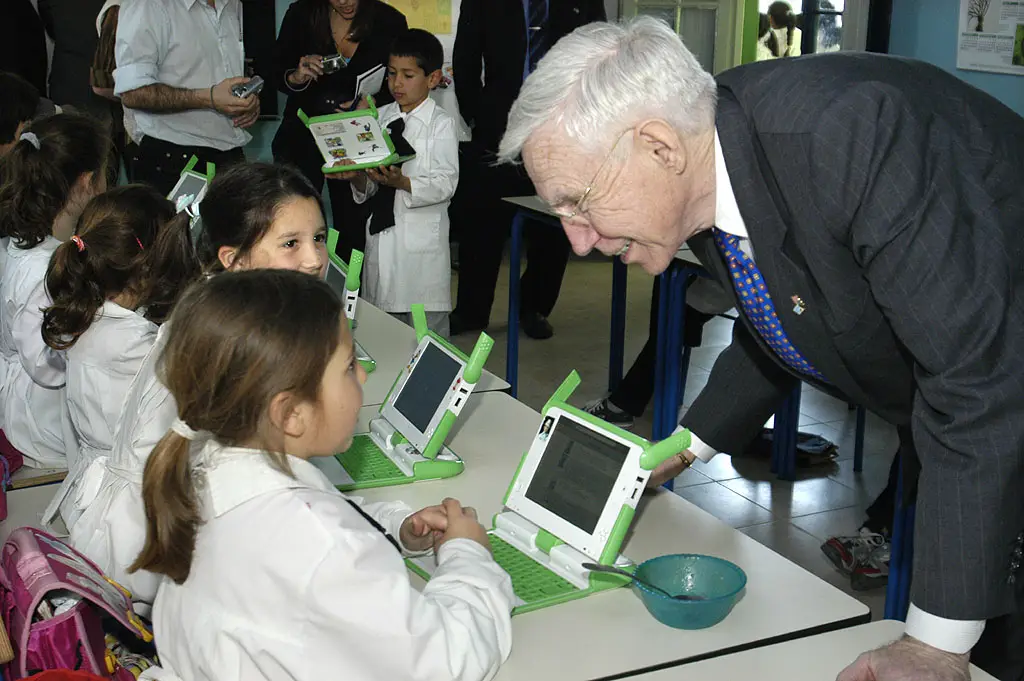
Plan Ceibal is the most famous initiative of Uruguayan education internationally. Launched in the late 2000s, the programme aims to equip every student and teacher in the public system with a laptop, accompanied by internet connectivity at school.
The core idea of Plan Ceibal is to narrow the digital divide. In a society where not every family can afford devices, the state providing computers to individual students is expected to create fair access to technology regardless of residence or family income.
Over time, Plan Ceibal has expanded from supplying devices to building digital learning platforms, electronic libraries, online mathematics tools and video-conference foreign language programmes. This model transforms hardware devices into a broader digital education ecosystem.
The programme is often cited as a pioneering example of educational technology policy on a national scale. Even so, experts note that having devices does not automatically translate into better learning outcomes, as this also depends on teacher capability, teaching methods and the degree of technology integration in the classroom.
Universidad de la República and higher education
At university level, Universidad de la República (UdelaR) is the largest and oldest public educational institution, headquartered in Montevideo. It trains the majority of the country’s undergraduate students across fields ranging from medicine, law and engineering to social sciences and the humanities.
UdelaR follows an open and free public university model, meaning students meeting high school graduation requirements can study without paying high tuition fees like many other systems. The institution also maintains a tradition of autonomy and plays a major role in the academic, research and cultural life of the nation.
In recent years, the public university system has tended to expand beyond the capital through regional centres and provincial campuses. The goal is to reduce over-concentration in Montevideo and enable students in more remote areas to access higher education.
Alongside UdelaR, Uruguay has several private universities and specialised training institutions, along with its own teacher training system. This diversity complements the public sector, although the focus of higher education remains skewed towards the public model.
Literacy rates and achievements in Uruguayan education
One of the frequently cited achievements is Uruguay’s high literacy rate, ranking among the leaders in Latin America. Most of the adult population can read and write, a result of the multi-generational tradition of universal primary education.
Primary school attendance is almost comprehensive, and basic education has been widely universalised. This is the foundation helping Uruguay maintain relatively high human development indicators compared to the regional average, according to international organisations such as Organisation for Economic Co-operation and Development (OECD).
The tradition of valuing education is also reflected in cultural life and the level of citizen participation in intellectual activities, journalism and arts. A well-educated population is viewed as a vital asset for this small nation.
However, achievements in universalisation and literacy do not mean all issues are solved. The narrative surrounding quality and fairness in learning outcomes remains a topic of ongoing discussion in education policy.
Challenges of the education system
Despite a solid foundation at primary level, one of the biggest challenges in Uruguayan education is the secondary school completion rate. Not a few students leave school before finishing secondary education, particularly among groups with more difficult socio-economic backgrounds.
The issue of dropouts and lagging academic progress concerns policymakers because it directly affects job opportunities and the future competitiveness of the workforce. The gap between urban and rural areas, as well as among income groups, remains a persistent concern.
Learning quality, as reflected in international assessment cycles, is another subject of debate. Despite broad access to education, results in areas such as reading comprehension, mathematics and science still have room for improvement, requiring investment in teaching quality rather than just infrastructure.
Reform efforts typically revolve around curriculum modernisation, enhancing teacher capacity, reducing dropout rates and leveraging technology more effectively. This is a long-term process tied to political stability and social consensus in the country of Uruguay.
Education in the picture of Uruguay’s development
Education in Uruguay is not a separate entity but is deeply integrated into the country’s development model, reflecting its tradition of a welfare state and a relatively high standard of living within the region. Investment in public schools is considered a fundamental part of a long-standing social contract.
In an economy increasingly oriented towards services, information technology, and software exports, the role of education and digital skills has become paramount. Initiatives such as Plan Ceibal are expected to provide a foundation for the younger generation to adapt to a changing labour market.
At the same time, the education system contributes to strengthening democratic values and social cohesion. A society that prioritises learning, critical thinking, and civic participation is a favourable condition for the long-term stability for which Uruguay is known.
Overall, education in Uruguay is a combination of an idealistic reformist legacy and the very real challenges of the modern era. How the country balances its tradition of free, secular education with the requirements for quality improvement will continue to shape the future of generations of students.
Accompanying you on your journey in residency investment
The Prosperous Living Investment team advises on pathways, assesses profiles and manages investments transparently for every residency, citizenship and international property objective.
Free profile assessmentWhere life gets prosperous