



To speak of the economy of Uruguay is to speak of one of the most stable and transparent economies in South America, with the capital, Montevideo, serving as the centre for services and finance. This small nation relies on agricultural exports, services, software technology, and renewable energy, with reliable institutions helping to maintain sustainable growth.
Contents
Overview of the Uruguayan economy
The Uruguayan economy is often described as a high-income economy by Latin American regional standards, with a per capita income among the highest in South America. It is a small, open economy, closely tied to international trade and heavily dependent on neighbouring markets such as Argentina and Brazil, as well as larger partners in Asia and Europe.
The highlight of the country of Uruguay lies not in its scale but in its stability. Transparent institutions, low levels of corruption compared to the region, and a relatively strong rule of law help this nation receive positive evaluations from many international organisations. According to World Bank, Uruguay has maintained macroeconomic stability for many years despite facing external shocks.
The economic structure is quite balanced. The service sector accounts for the largest share of output, followed by manufacturing and agriculture. Although agriculture is not the largest sector in terms of output, it plays a key role in exports and serves as the foundation for many processing industries.
Considering a residency programme? The Prosperous Living Investment team assesses your profile free of charge and advises on the pathway that fits your goals.
Agricultural and livestock exports
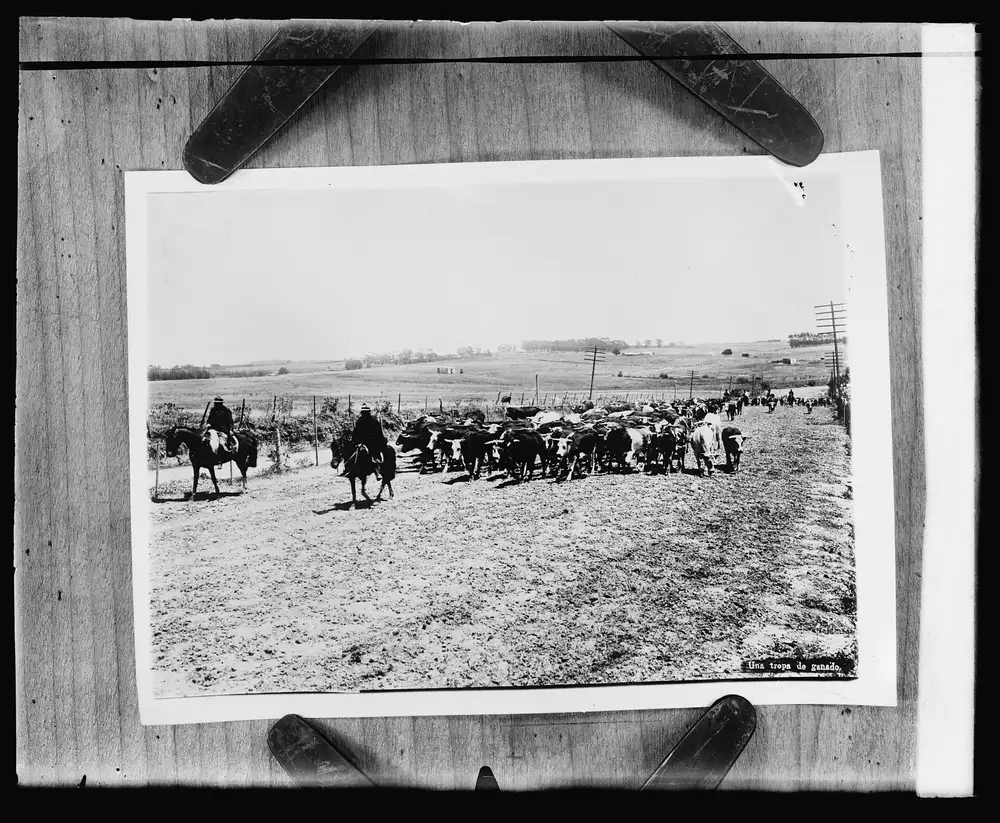
Agriculture and livestock are the traditional pillars of the Uruguayan economy and an important source of foreign currency. With Geography of Uruguay primarily grasslands and rolling plains suitable for grazing, the livestock industry has shaped the economy from the colonial era to the present day.
Beef is one of the country’s iconic exports. Uruguay is famous for its strict livestock traceability system, which allows for the tracking of every cow across the country, helping meat products access demanding markets in Europe, North America, and Asia. This is a significant competitive advantage for the country’s livestock industry.
Besides beef, soybean is a key agricultural export, largely directed towards the Asian market. The dairy industry and dairy products are also strongly developed, with many brands focused on exports. Additionally, rice, wheat, and other grains contribute significantly to agricultural export turnover.
Forestry has emerged as an important industry in the last few decades. Forest plantations provide raw materials for the pulp and paper industry, with several large-scale processing plants built thanks to foreign investment. Wood and pulp are currently among the top export items, alongside traditional agricultural products.
- Beef: linked to a national livestock traceability system, exported to many high-end markets.
- Soybean: key agricultural export, primarily to Asia.
- Dairy and dairy products: export-oriented processing industry.
- Wood and pulp: forestry and processing industry growing thanks to large investments.
Services and tourism sector
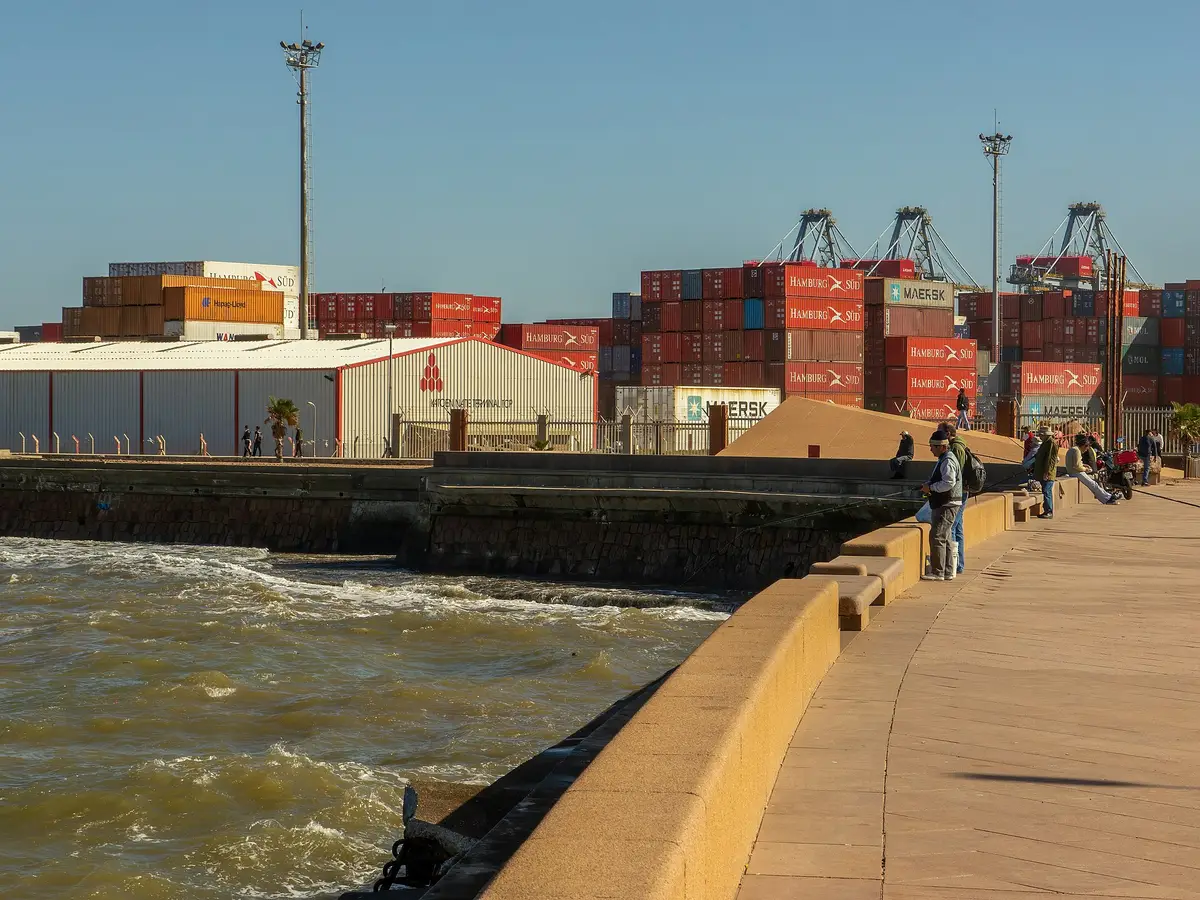
Services are the largest contributor to the output of the Uruguayan economy, including trade, finance, logistics, transport, real estate, and public services. Montevideo, with its important seaport and location along the Río de la Plata, has long been a centre for trade and cargo transhipment for the region.
The financial and banking sector is relatively developed and strictly supervised. Uruguay was once known as a financial destination in the region, although in recent years the country has strengthened transparency and international tax cooperation in accordance with global standards. The stability of the banking system is a factor that reinforces investor confidence.
Tourism plays an important role, especially during the summer in the Southern Hemisphere. Coastal destinations such as Punta del Este attract visitors from Argentina, Brazil, and further afield, generating significant foreign currency revenue. Montevideo itself is also a stop for many cruise ships and a gateway for international travellers.
Logistics and port services are a strength that Uruguay focuses on developing. Thanks to its favourable geographical location and port infrastructure, the country positions itself as a distribution and transhipment hub for the South American region, connecting with landlocked neighbouring countries or those needing a stable transhipment point.
Information technology and software services
One of the modern bright spots of the Uruguayan economy is the information technology and software services export industry. Despite its small population, the country has built a significant reputation in the field of software development and technology services for the international market.
Many Uruguayan software companies provide outsourcing services, application development, and technology solutions to clients in the United States and other developed nations. The combination of a qualified workforce, a favourable time zone relative to North America, and a stable business environment provides a competitive advantage for this sector.
The foundation for this success stems partly from a tradition of Uruguay education free education and an early focus on technology integration in schools. The training of technical personnel and the promotion of digital literacy have contributed to a labour supply that meets the needs of the technology industry.
The Uruguayan government has also implemented policies to encourage innovation and the export of technology services, including incentive schemes for information technology businesses. Specific incentives may change over time, so investors should verify current regulations.
Renewable energy
Renewable energy is a frequently cited achievement when discussing the Uruguayan economy. The country has undergone a remarkable energy transition, raising the share of electricity from renewable sources to a very high level within its power generation mix.
Wind power, hydropower, and biomass energy are the main pillars of the electricity system. Thanks to favourable natural conditions and a consistent investment strategy spanning many years, Uruguay has reduced its dependence on imported fossil fuels and stabilised its power supply.
This transition holds not only environmental significance but also economic value. Reducing fuel imports helps improve the trade balance and mitigates the risks associated with global energy price volatility. This is also a factor attracting the interest of international investors in the infrastructure and clean energy sectors.
Uruguay continues to explore new development paths such as green hydrogen, leveraging its abundant renewable energy base. Although these projects are in their early stages and actual implementation scale depends on many factors, they demonstrate the long-term direction of the economy.
Uruguayan peso and monetary policy
The official currency of the country is the Uruguayan peso, symbolised as UYU. This is the common means of payment domestically, although the US dollar is also widely used in many large transactions, particularly in real estate and high-value contracts.
Partial dollarisation is a notable feature of the economy. Many individuals and businesses hold assets or price transactions in US dollars, reflecting a sentiment of hedging against exchange rate risks and inflation formed throughout the economic history of the region.
The Central Bank of Uruguay (Banco Central del Uruguay) manages monetary policy with the goal of controlling inflation and stabilising the value of the local currency. Inflation in Uruguay is generally higher than in developed economies but is managed at a relatively stable level compared to some neighbouring countries.
The exchange rate of the Uruguayan peso against the US dollar fluctuates according to the market and is influenced by external factors as well as the prices of exported goods. Because exchange rate and inflation figures change constantly, investors and interested parties should consult updated data from official sources.
Trade, free trade zones, and investment
As a small and open economy, Uruguay relies heavily on international trade. The country is a member of the Mercosur bloc alongside Argentina, Brazil, and Paraguay, while actively seeking new markets in Asia to diversify export partners. China and several Asian economies have become important destinations for Uruguayan agricultural products.
A notable policy tool is the system of free trade zones (zonas francas). These areas offer tax and customs incentives, attracting logistics, service, and technology companies to establish headquarters or regional operation centres there. This is part of a strategy to turn Uruguay into a service and distribution hub.
Uruguay’s investment environment is generally rated positively due to political stability, the rule of law, and fair treatment policies for foreign investors. Many investment incentive mechanisms apply to both domestic and foreign investors, although specific conditions may change according to current regulations.
For those interested in long-term opportunities in this country, the channels Uruguay residency by investment are linked to the business environment and the country’s tax policy. According to International Monetary Fund, macroeconomic stability is one of Uruguay’s greatest strengths in the region.
Challenges and prospects of the economy
Despite many strengths, the Uruguayan economy also faces specific challenges. The small size of the domestic market makes the economy vulnerable to external shocks, particularly the economic situation of its two large neighbours, Argentina and Brazil.
Dependence on the export of basic commodities such as agricultural products makes the economy sensitive to global price fluctuations and weather conditions. A drought can significantly affect agricultural output and thereby impact overall growth.
Labour costs and price levels that are relatively high compared to the region are both a sign of a high standard of living and a competitive challenge for certain industries. Furthermore, an ageing population and low population growth pose long-term issues for the workforce and the social security system.
Nevertheless, the overall outlook is generally viewed positively. A solid institutional foundation, abundant clean energy, a dynamic technology sector, and a reputation for stability help Uruguay maintain its position as one of the most reliable economies in Latin America. The gradual diversification into services and technology is a path to reduce the risks of dependence on raw commodities.
Accompanying you on your journey in residency investment
The Prosperous Living Investment team advises on pathways, assesses profiles and manages investments transparently for every residency, citizenship and international property objective.
Free profile assessmentWhere life gets prosperous