


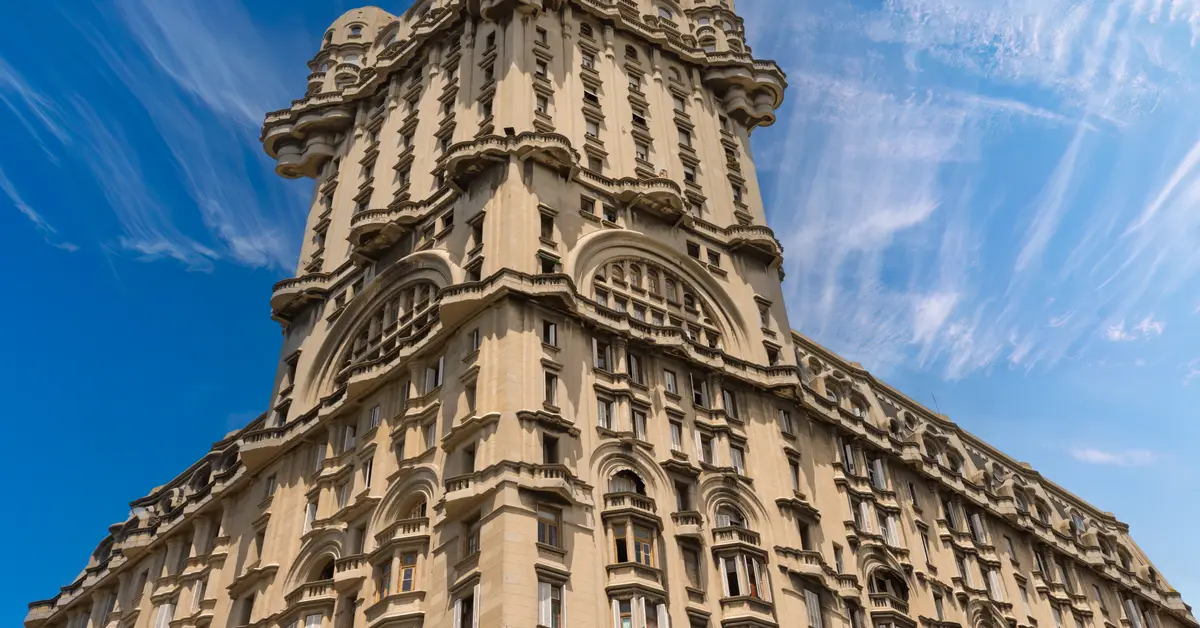
Uruguayan politics operates under a representative democratic republic model with a presidential system, with its capital in Montevideo. The state apparatus is organised on the principle of separation of powers, with a bicameral legislature, an executive branch headed by the president, and an independent judiciary, linked to a long-standing tradition of the rule of law.
Contents
Overview of the Uruguayan political system
Uruguayan politics is built on the model of a representative democratic republic with a presidential system. The country’s official name is the Oriental Republic of Uruguay (República Oriental del Uruguay), with its capital in Montevideo — the seat of central government power. The state apparatus is organised according to the principle of the separation of powers, consisting of three branches: legislative, executive, and judicial, which operate with relative independence from one another.
A characteristic of the system is the combination of an executive branch centred on the president and an elected representative body with a clear oversight role. This framework is established in the Constitution, the supreme legal document that defines how state power is organised and exercised.
In the South American region, Uruguay is often cited as an example of institutional stability. Its democratic institutions have a relatively early history of formation and have been maintained continuously for many decades, with the exception of a period of interruption in the late 20th century. To understand the context of the formation of these institutions, one can refer further to History of Uruguay.
Considering a residency programme? The Prosperous Living Investment team assesses your profile free of charge and advises on the pathway that fits your goals.
Constitution and legal foundation
The Constitution is the legal foundation governing all of Uruguayan political life. This document establishes the republican form of state, the fundamental rights of citizens, and the structure and authority of the three branches of power. Throughout its development, Uruguay has amended or enacted new constitutions several times to adjust the organisation of the apparatus to suit each period.
A notable feature of the constitutional framework is the role of direct democratic mechanisms. In addition to electing representatives, citizens can participate in the decision-making process for major issues through referendums and popular initiatives (iniciativa popular). These tools allow voters to express their opinions on certain laws or proposed constitutional amendments.
Amending the Constitution usually requires strict procedures, which may include voter approval through a ballot. This mechanism contributes to the stability of the legal framework while ensuring that fundamental changes involve public participation. Official information on institutions and state agencies is published on the portal of Government of Uruguay.
The President and the executive branch
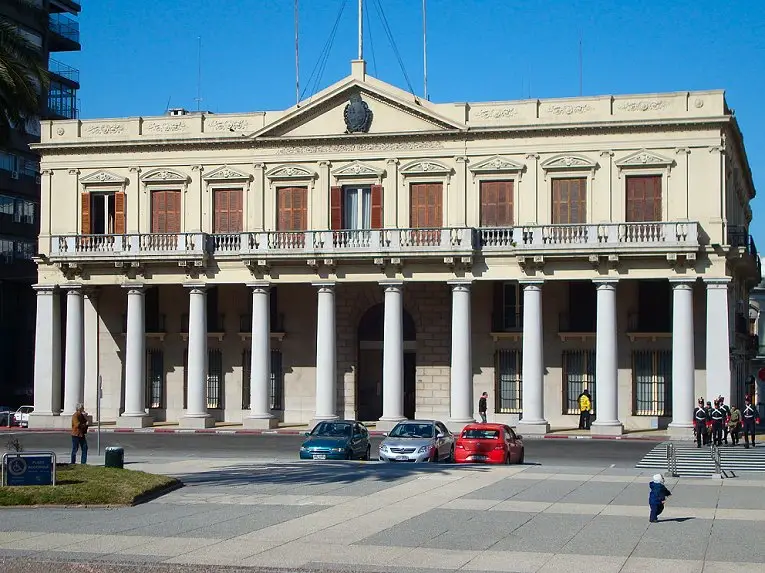
In the Uruguayan political system, the president holds the central position in the executive branch. Under the presidential system, the head of state is also the head of government, serving both as the head of state for ceremonial and foreign affairs and directly managing the country’s administrative work.
The president is elected through universal suffrage for a fixed term. Along with the president, voters also elect a vice-president, who simultaneously serves as the president of the legislature. If no candidate achieves the necessary percentage of votes in the first round, the election may be decided in a second round between the two leading candidates.
Supporting the president in administrative work is the Council of Ministers (Consejo de Ministros), which brings together the heads of the ministries. Ministers are appointed by the president and are responsible for managing specific areas of state administration, from the economy, interior, and foreign affairs to education and health.
A feature of the Uruguayan model is that the legislature can oversee the activities of ministers, including through interpellation procedures. The interaction between the executive and legislative branches forms a system of checks and balances, a factor often mentioned when describing the country’s democracy.
The General Assembly and the bicameral legislature
Legislative power in Uruguay is vested in the General Assembly (Asamblea General), a bicameral body consisting of two chambers that operate in parallel. This bicameral structure is one of the prominent features when studying Uruguayan politics, reflecting the tradition of organising the state in a decentralised manner with checks on power.
The first chamber is the Chamber of Representatives (Cámara de Representantes), which consists of representatives elected from administrative divisions across the country based on the principle of proportional representation. The number of seats for each division is allocated according to population size to ensure that all regions have a voice in the elected body.
The second chamber is the Senate (Cámara de Senadores). Senators are elected nationwide, and the incumbent vice president typically serves as the president of this chamber. When the two chambers meet together, they form the General Assembly to consider matters of national importance.
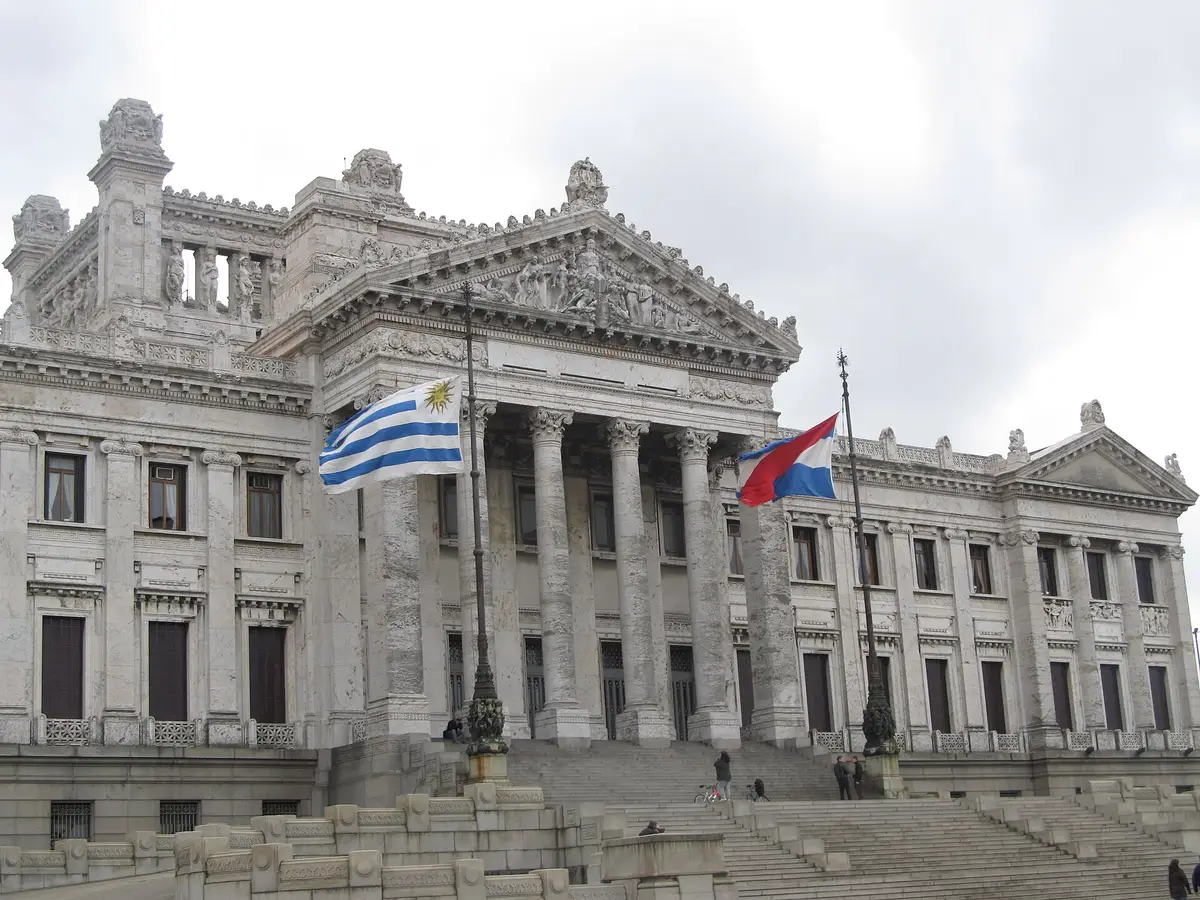
The legislative process requires a bill to be reviewed and passed by both chambers before it is presented to the executive branch. This bicameral mechanism ensures that laws are thoroughly discussed from multiple perspectives. Information regarding legislative activities and the structure of the chambers is published on the official website of the Uruguay Parliament.
- Chamber of Representatives (Cámara de Representantes): elected via proportional representation, with seats allocated according to administrative divisions.
- Senate (Cámara de Senadores): elected nationwide and presided over by the vice president.
- General Assembly (Asamblea General): the two chambers meet jointly to address national issues.
Independent judicial system
The judiciary in Uruguay is organised as an independent power, separate from the executive and legislative branches. The highest judicial body is the Supreme Court of Justice (Suprema Corte de Justicia), which ensures the uniform application of the law and reviews the constitutionality of legal texts.
Below the Supreme Court is a system of appellate and lower courts distributed throughout the country, which hear civil, criminal, labour, and administrative cases. This multi-tier structure allows for judgements to be reviewed, thereby enhancing objectivity in judicial proceedings.
In addition to the regular court system, Uruguay has specialised institutions such as the Administrative Litigation Court (Tribunal de lo Contencioso Administrativo), which reviews the legality of administrative decisions, and the Electoral Court (Corte Electoral), which is responsible for organising and supervising elections and ensuring the transparency of the electoral process.
Judicial independence is considered a pillar of the rule of law in this country. Separating judicial functions from other branches of power helps maintain confidence in the fairness of the legal system, a factor often linked to the overall stability of the political landscape.
Administrative division by departamento
Administratively, the territory of Uruguay is divided into provinces, known as departamentos in Spanish. This system creates an intermediate level of government between the central state and local communities, with Montevideo serving as both the capital and one of these administrative units.
Each departamento has its own executive branch led by a directly elected head, typically called an intendente, along with a local council that performs provincial-level legislative functions. This structure partially mirrors the decentralised model of the central government at the local level, with a separation between executive and representative functions.
Beyond the departamento level, Uruguay has developed a smaller tier of local government to bring management closer to citizens in towns and rural areas. The addition of this local tier reflects a trend towards decentralisation, granting more authority to local communities in certain areas.
Elections at the departamento level typically follow a different schedule than national elections. Consequently, voters have multiple opportunities to participate in selecting representatives at different levels, strengthening the representativeness of the government apparatus from the centre to the local level.
Elections and political participation
Elections are the central mechanism for forming power structures in Uruguay. Voters directly elect the president, members of the two chambers of the General Assembly, and leaders and representatives at the departamento level. The electoral process is organised and supervised by a specialised electoral body to ensure transparency.
A characteristic of the Uruguayan electoral system is that voting is considered a civic duty. This regulation is associated with a generally high voter turnout, reflecting the level of citizen engagement in political life. Vote counting and the announcement of results follow clearly legislated procedures.
The country’s political system allows multiple forces to participate in elections and maintain a presence in elected bodies. The allocation of seats based on proportional representation enables groups with varying levels of support to participate in the legislative process.
In addition to periodic elections, direct democratic tools such as referendums also play a role in allowing voters to voice their opinions on important issues. The combination of representative democracy and direct democracy is a feature often highlighted when describing the power model here.
Long-standing tradition of democracy and the rule of law
Uruguay is often described as one of the most stable and long-standing democracies in South America. Representative institutions and a tradition of the rule of law have shaped the political life of this country for most of its modern history, with reforms towards a welfare state and the expansion of civil rights occurring quite early.
This process was not entirely continuous. In the 1970s, the country experienced a period of military rule that lasted until the mid-1980s, when the democratic process was restored. The fact that democratic institutions were re-established and maintained stably after this period is often seen as a significant milestone in Uruguayan political history.
Since the restoration of democracy, transfers of power have generally taken place according to constitutional procedures and through elections. This institutional continuity contributes to the image of a country with a relatively predictable political environment, linked to respect for legal rules.
The stability of the state apparatus is also linked to other areas of national life. A transparent and stable institutional framework is often cited as a favourable foundation for economic activity and investment; one can learn more about Uruguayan economy to see the link between institutions and development.
The role of the state apparatus in national life
The Uruguayan state apparatus performs many functions in social life, from ensuring security and administrative management to providing public services such as education and healthcare. The welfare state tradition formed at the beginning of the 20th century has left its mark on the organisation and operation of many public institutions.
The state also plays a role in certain economic sectors through public enterprises and regulatory bodies. The division of functions between the public and private sectors is part of the overall institutional framework, governed by law and the decisions of elected bodies.
Secularism is another characteristic of the state apparatus here, with the separation of state and religion established at the beginning of the 20th century. This principle influences the organisation of many public institutions and is reflected in the country’s legal framework.
In general, the branches of power and levels of government in Uruguay operate within a consistent constitutional framework. For a broader view of this country in a regional and international context, readers can refer to the overview of the country of Uruguay.
Accompanying you on your journey in residency investment
The Prosperous Living Investment team advises on pathways, assesses profiles and manages investments transparently for every residency, citizenship and international property objective.
Free profile assessmentWhere life gets prosperous