

The country of Monaco is a small Mediterranean city-state surrounded by France on three sides, ranking among the smallest nations in the world. It is ruled by the Grimaldi dynasty and associated with Monte Carlo, yachts, finance, and a distinct tax regime that attracts the global wealthy.
Contents
Overview of the country of Monaco
The country of Monaco is a sovereign state located on the Mediterranean coast, along the stretch of coastline often called the French Riviera. It is a city-state, meaning the entire nation nearly coincides with a single urban area, with no sprawling countryside or satellite cities.
In terms of area, Monaco belongs to the group of the world’s smallest nations, larger only than the Vatican. Its territory spans just about 2 km², stretching narrowly along the coast and bordered by France on three sides, with the other side facing the sea.
Despite its small size, Monaco is an independent nation with its own government, the euro as its common currency, and a legal identity separate from France. The country follows a constitutional monarchy, headed by a Prince from the Grimaldi dynasty.
This article provides an overview of the country of Monaco across multiple dimensions: history, geography, economy, culture, population, political system, education, and the residency pathway. Each section is briefly summarised and links to a corresponding in-depth article.
Considering a residency programme? The Prosperous Living Investment team assesses your profile free of charge and advises on the pathway that fits your goals.
Key statistics about the country of Monaco
Below are some basic indicators for the country of Monaco, compiled from sources such as the World Bank, the United Nations Development Programme (UNDP), and the national statistical agency. Economic and population figures are updated periodically and may change from year to year.
- Capital: Monaco
- Area: approximately 2.08 km²
- Population: approximately 38,600
- GDP per capita: approximately US$288,000 (2024) – among the highest in the world
- Human Development Index (HDI): Monaco is not included in the UNDP HDI rankings
- Currency: euro (EURO)
The figures above are for reference at the time of compilation. For official purposes or decision-making, the latest data should be verified with the aforementioned bodies, as GDP, population, and development rankings are subject to annual adjustments.
Location and prominent geographical features
Detailed article on the Geography of Monaco
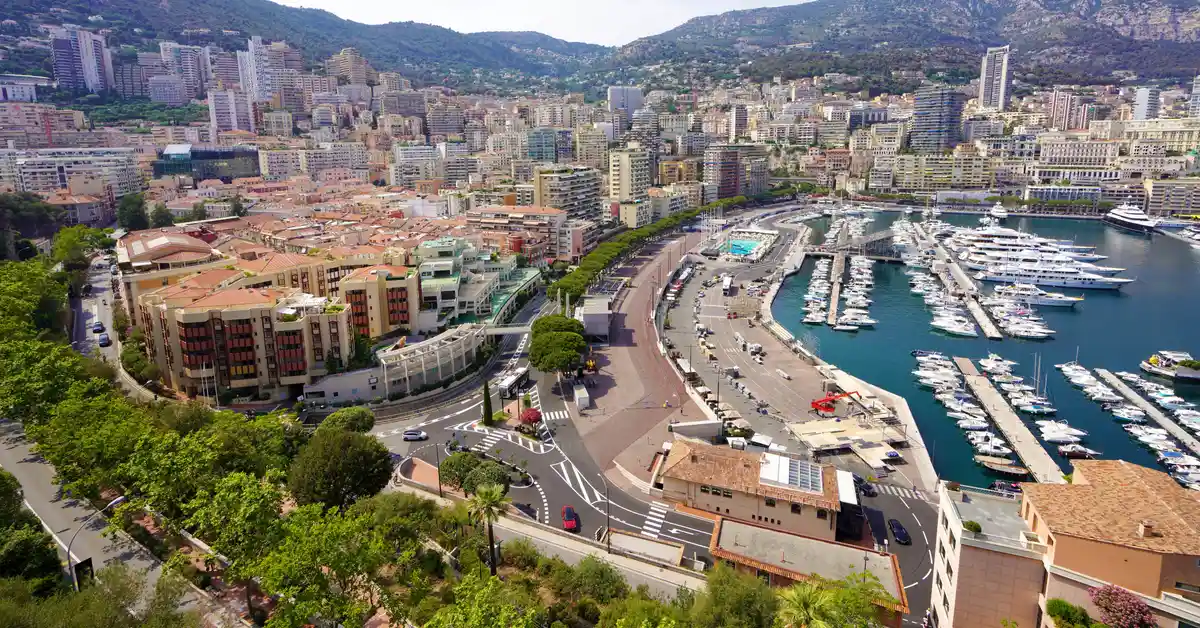
Monaco is located in southern Europe, bordering Italy and situated not far from the French city of Nice. The country is backed by slopes descending from the foothills of the Alps to the Mediterranean Sea, creating a characteristic terraced landscape.
Because natural land is very limited, Monaco has implemented many land reclamation projects to expand its usable area. The Fontvieille district is a prime example of territory expansion into the sea over the past several decades.
The territory is divided into familiar districts such as Monte Carlo, La Condamine around the port, Monaco-Ville (the old town on the rocky headland), and Fontvieille. The climate is Mediterranean, with warm, dry summers and mild winters.
Due to its extremely small area and dense population, Monaco has one of the highest population densities and levels of urbanisation in the world. To better understand the natural features, districts, and land reclamation process, you can refer to the geography of Monaco article.
Formation history and the Grimaldi dynasty
Detailed article on the History of Monaco
The land of Monaco has been inhabited since ancient times due to its favourable natural harbour on the Mediterranean. However, the decisive turning point is associated with the Grimaldi family, who gained control of the Monaco fortress at the end of the 13th century, traditionally in 1297.
Over the centuries, Monaco placed itself under various protectorate relationships with neighbouring powers such as France, Spain, and the Kingdom of Sardinia, depending on the historical period. The autonomy of the principality was consolidated and adjusted through treaties.
In the mid-19th century, Monaco lost most of its territory when the regions of Menton and Roquebrune separated. This event significantly reduced the size of the country to near its current shape. The first constitution of Monaco was established in 1911, opening up a more modern legal framework.
The 20th century saw a period of strong development thanks to tourism and the Monte Carlo Casino, along with the reign of Prince Rainier III and his famous marriage to the star Grace Kelly. Monaco joined the United Nations in 1993. The full timeline is presented in the history of Monaco article.
Economy and distinct tax environment of the country of Monaco
Detailed article on the Monaco economy
The economy of Monaco belongs to the very high-income group, relying almost entirely on services rather than manufacturing or agriculture. The main pillars include finance and private banking, high-end real estate, luxury tourism, casinos, and world-class events.
Private banking and wealth management are notable strengths, serving a population and clientele with significant assets. Furthermore, real estate in Monaco is always among the most expensive in the world due to scarce land and high demand.
A particular attraction is the tax environment. Monaco does not levy personal income tax on most residents, a feature that makes this country an attractive place of residence for the international wealthy. However, tax regulations and conditions of application may change and need to be checked against current regulations.
Due to its small population, Monaco relies heavily on a commuter workforce from France and Italy, who come to work each day and return home. A deeper analysis of the industry structure and financial characteristics is available in the economy of Monaco article.
Culture, art, and prominent events
Detailed article on the Culture of Monaco
Monacan culture is a blend of French and Italian influences, particularly from the Liguria region, harmonised with the native Monégasque identity. French is the official language, while the traditional Monégasque language is still preserved and taught.
Catholic heritage is clearly present, with the Cathedral of Monaco being an important religious site. The performing arts scene is also vibrant, highlighted by the Opéra de Monte-Carlo and the Ballets de Monte-Carlo company.
Monaco is also known for the Oceanographic Museum, a long-standing scientific and cultural landmark. Festivals and community activities take place year-round, reflecting the intersection of local traditions and international style.
Regarding sports and events, the country is associated with the Formula 1 Grand Prix Monaco street race and the Monte-Carlo Masters tennis tournament. Cultural features are explored in detail in the culture of Monaco article.
Population and demographic characteristics
Detailed article on the Demographics of Monaco
Monaco has a small population of about 38,000 people, but due to its extremely narrow area, the population density here is the highest in the world. This is one of the most recognisable characteristics of this country.
The population composition is distinctly international. Monégasques, the native citizens of Monaco, only make up a minority of the total population. Most of the remaining residents are French, Italian, and of many other nationalities.
The demographic structure has a relatively high proportion of wealthy individuals and the elderly, reflecting Monaco’s appeal as a place of residence for the affluent. The common language of communication is French.
A notable feature is that most of the workforce does not live within Monaco but resides in France or Italy and commutes to work daily. The full demographic picture is described in the demographics of Monaco article.
Political system and relations with France
Detailed article on the Monaco politics
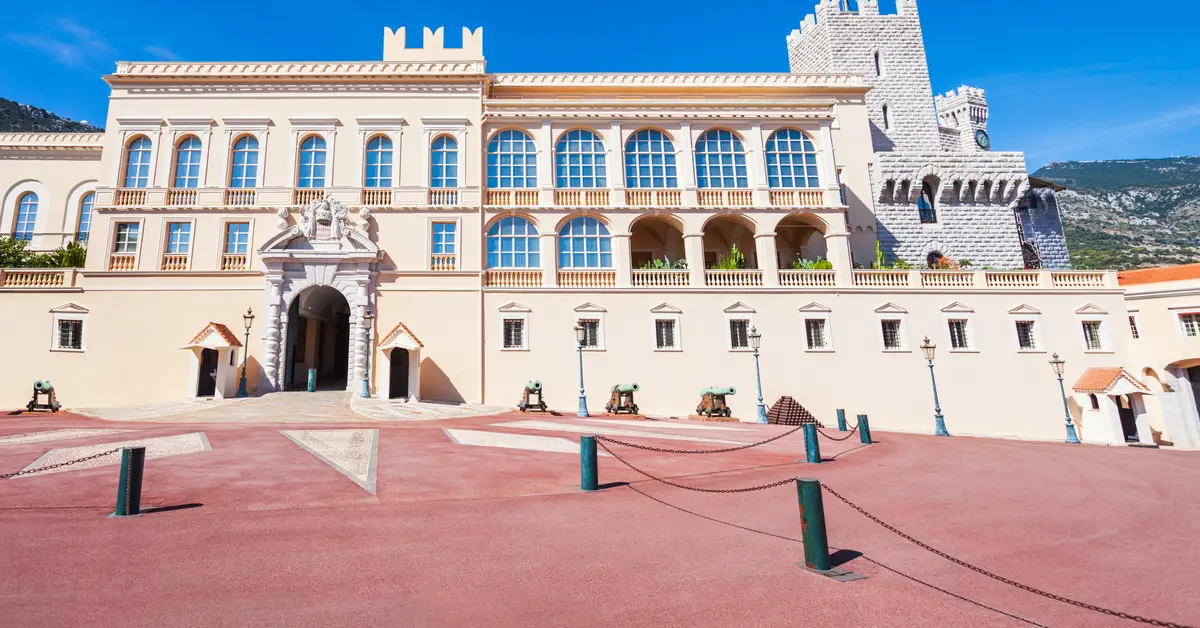
Monaco is a constitutional monarchy. The head of state is the Prince from the Grimaldi royal family, who plays a central role in political life and as a national symbol.
The current legal framework is based on the 1962 Constitution, which was amended in 2002. Executive power is exercised by the Prince along with the Minister of State (Ministre d’État) and the Government Council. The legislative body is the National Council (Conseil National), which is elected by the people.
Monaco maintains a special and close relationship with France in many aspects, from security and foreign affairs to the economy. At the same time, the country is a member of the United Nations and participates in many international organisations.
According to information from the Monaco Governmentportal, the state apparatus is organised to serve a small population with specific administrative needs. The power structure is presented in detail in the politics of Monaco article.
Education and school life
Detailed article on the Education in Monaco
The education system of Monaco is organised according to a model similar to that of France, managed by the state, alongside a number of private and religious schools. Levels of education range from preschool and primary to secondary school.
The curriculum is taught mainly in French, with instruction also provided in Monégasque and English. Students completing secondary school work towards the baccalauréat according to the familiar standard.
Due to the small size of the country, higher education within the country is quite limited, with the International University of Monaco (IUM) focusing on business. Therefore, many students choose to study abroad in France or other countries.
In return, thanks to the small population and abundant resources, the quality and conditions of study in Monaco are generally considered good. Detailed information about the levels of education and pathways is available in the education in Monaco article.
The residency pathway in Monaco
Detailed article on the Monaco residency
Monaco does not have a citizenship by investment programme. Instead, the country grants residence permits (carte de séjour) to foreigners who meet certain conditions, mainly related to financial capacity.
Typically, applicants need to prove they have sufficient financial resources to live, have a place to stay in Monaco through purchase or rent, and establish a relationship with a bank in Monaco. The process includes preparing a profile and an interview.
Financial thresholds such as bank deposit levels or property prices are often very high and can change over time, so it is necessary to check current regulations. According to data published by the Monaco Statistics Office, this is one of the most expensive housing markets.
An attractive factor is that Monaco does not levy personal income tax on most residents, although this may change and depends on the specific situation. An overview of the conditions and types of residence permits is presented in the residency in Monaco article.
Why the country of Monaco attracts global attention
Monaco’s fame comes from the rare combination of its tiny size and its major international stature. A country of only about 2 km² but a meeting point for the financial world, yachts, and top sporting events.
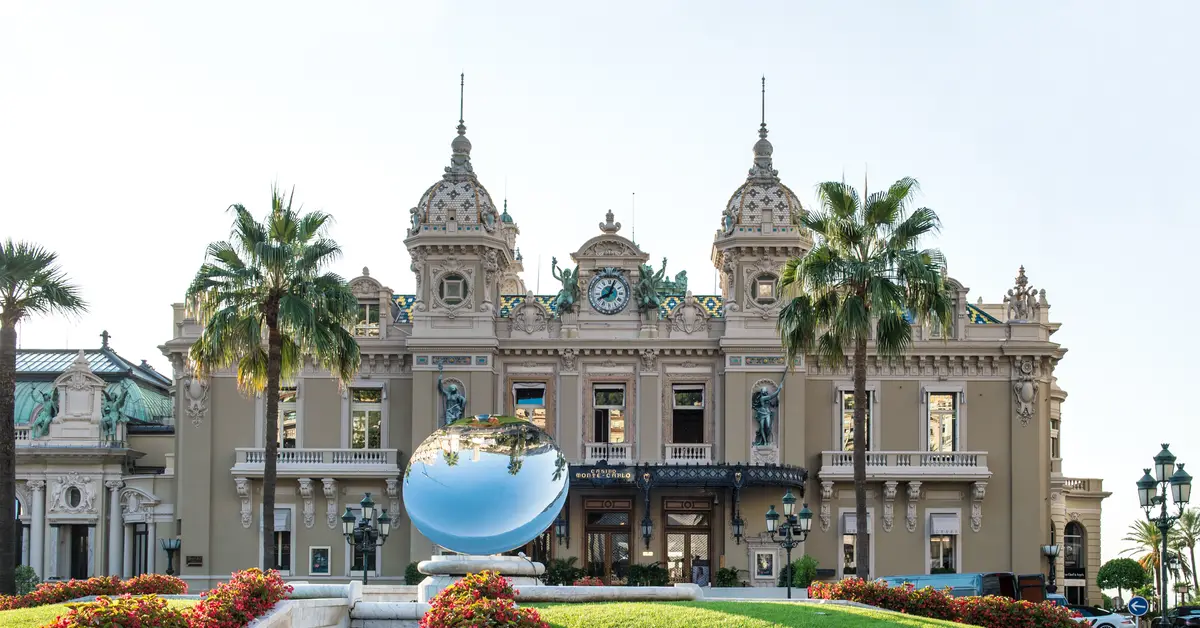
Monte Carlo, with its casino and luxurious spaces, has become a global symbol for a lavish lifestyle. The Grand Prix Monaco race on the narrow coastal streets is one of the most watched races.
Beyond its glamorous image, Monaco is a state with a stable political system, a clear legal framework, and a high level of security. These factors reinforce the nation’s position as a place of residence and a financial services hub.
The combination of geographical, historical, economic, and cultural characteristics makes Monaco a unique case on the world map. Each of the aforementioned aspects has an in-depth article for you to explore further.
- A city-state among the smallest in the world, located on the Mediterranean coast.
- The Grimaldi royal family reigns under a constitutional monarchy.
- A centre for finance, luxury tourism, and world-class events.
- No personal income tax for the majority of residents (subject to change).
- The highest population density in the world with a multinational community.
Accompanying you on your journey in residency investment
The Prosperous Living Investment team advises on pathways, assesses profiles and manages investments transparently for every residency, citizenship and international property objective.
Free profile assessmentWhere life gets prosperous