

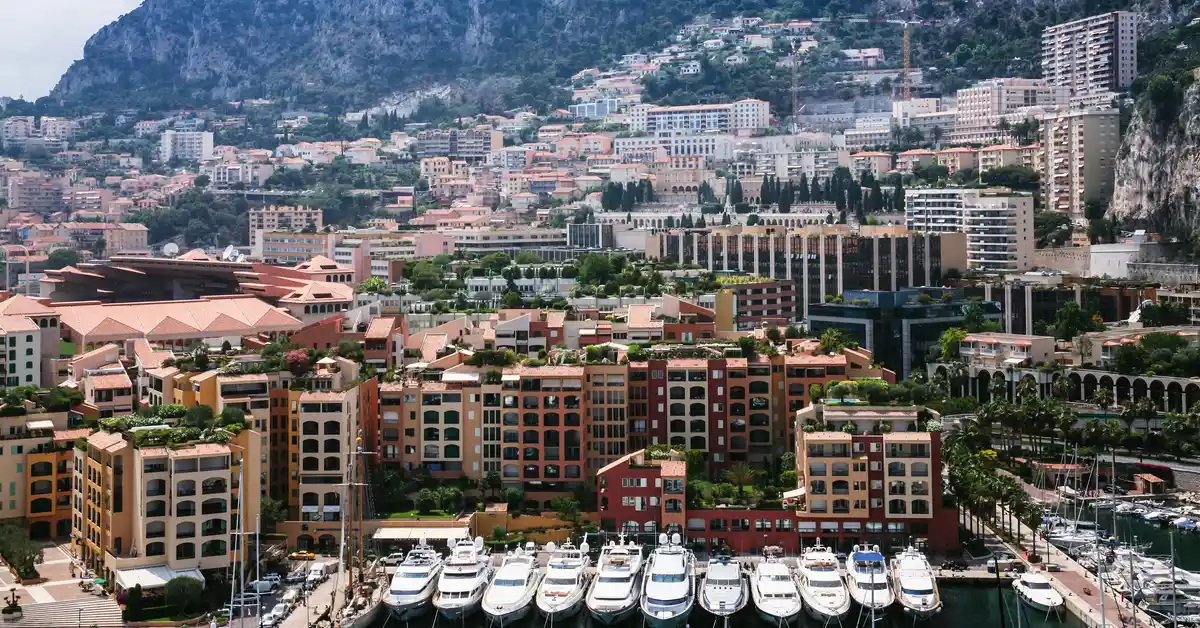
Monaco’s demographics reflect a unique city-state: a population of just over 38 thousand people in an area of barely about 2 km², yet with one of the highest population densities in the world. It is a gathering place of many nationalities, where native Monégasque citizens make up only a minority.
Contents
Monaco demographic overview
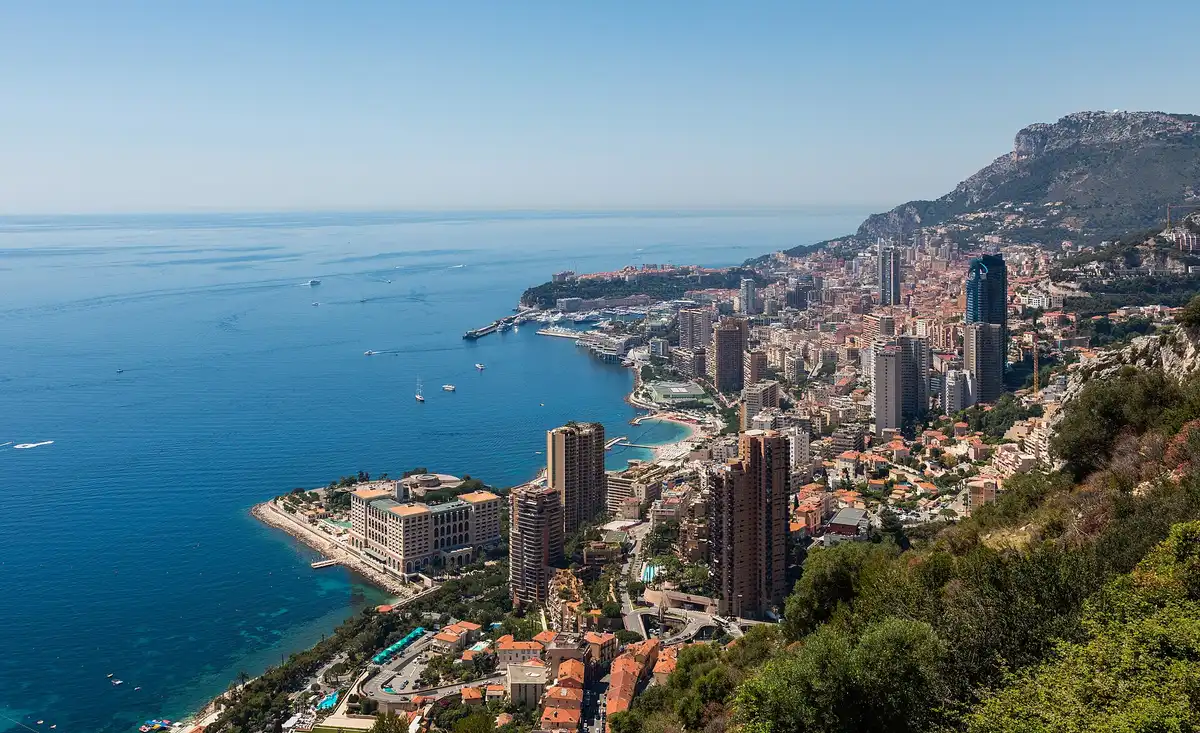
Monaco’s demographic picture is rare on the world map. The entire city-state is only about 2 km² wide, set along the Mediterranean and surrounded by France on three sides. On this tiny strip of land, the resident population is recorded at over 38 thousand people. The absolute figure is not large, but placed against the area, it creates a unique record.
Because of this, Monaco is often cited as having the highest population density in the world. Tens of thousands of residents live packed into high-rise buildings climbing steeply from the foot of the Alps down to the water’s edge. This characteristic shapes almost every aspect of life, from real estate prices to how urban space is organized in Geography of Monaco.
Another prominent feature is its multi-nationality. The residential community here gathers people from many countries, while native citizens account for a modest proportion. This mix makes Monaco a miniature international society where multiple languages and cultures coexist in an area equivalent to a large neighborhood.
Considering a residency programme? The Prosperous Living Investment team assesses your profile free of charge and advises on the pathway that fits your goals.
Population size and the highest density in the world
Monaco’s population size is very small compared to a conventional country, but it remains one of the microstates with a larger population than many other tiny nations. Exact population figures can vary across statistical periods, so the safest approach is to state that Monaco has over 38 thousand residents. Direct referencing of data from the national statistical office is always recommended.
What draws researchers’ attention is not the absolute figure, but the ratio of population to land area. Covering around 2 km², Monaco’s population density reaches tens of thousands of people per square kilometre. This is the highest in the world, far surpassing even the most crowded metropolises.
To sustain such density, Monaco has had to build upwards and expand into the sea. Land reclamation projects over several decades have created areas such as Fontvieille, increasing the supply of residential and commercial space. According to data published by the Monegasque Institute of Statistics and Economic Studies (IMSEE), the population structure is periodically updated through general censuses.
High density brings distinct consequences. Living space is costly, infrastructure must optimise every square metre, and demographic pressure is concentrated within a very confined area. However, its compact scale makes it easier for the city-state to manage public services and security compared to sprawling urban centres.
A multi-national community and a Monégasque minority
One of the core characteristics of Monaco’s demographics is its national diversity. On this narrow strip of land, residents from hundreds of countries and territories live side by side. This is the result of its status as a financial centre, a distinctive tax environment, and its appeal to the global wealthy.
Notably, Monégasques—the indigenous citizens of Monaco—make up only a minority of the total population. Most residents are long-term foreign expatriates. This creates an interesting paradox: the historical custodians of the land are not the most numerous group in their own homeland.
Monégasque citizenship is exceptionally difficult to acquire and strictly granted, so the Monégasque community enjoys numerous exclusive privileges. They receive priority for social housing, public-sector employment, and other benefits designed to preserve national identity amid the influx of international residents. This policy is tied to the institutional framework outlined in Monaco’s political system.
Alongside the native population, the two largest and longest-established foreign communities are the French and Italians. Their presence reflects the principality’s geographical location bordering France and close to Italy’s Liguria region, as well as Monaco’s close historical and economic ties with its two neighbours.
French, Italians and other nationalities
The French constitute one of the largest resident groups in Monaco. Shared language, cultural proximity, and a common border lead many French citizens to make Monaco their home. They are represented across all strata, from business leaders and financial professionals to service-sector workers.
The Italian community also plays an important role and has a long history. Italy’s Liguria region sits directly adjacent to Monaco, and cultural ties between the two have evolved over centuries. The Italian imprint is clearly visible in the city-state’s cuisine, everyday language, and rhythm of life.
Beyond France and Italy, Monaco attracts residents from across Europe and the globe: British, Belgian, German, and Swiss nationals, alongside communities from North America, the Middle East, Asia, and other regions. Many are high-net-worth individuals drawn to Monaco for its safe, stable environment and favourable tax regime.
This diversity of nationalities transforms Monaco into a truly international community. Within the same building or street, one can hear multiple languages and encounter lifestyles from diverse cultures. This presents both a distinct appeal and a challenge in preserving the city-state’s unique identity.
Language and residents’ lives
French is the official language and is widely used in administration, education, and daily life across Monaco. Most residents, regardless of nationality, can communicate in French. It serves as the common thread uniting a community of diverse origins.
Alongside French, the traditional Monégasque language is regarded as a symbol of national identity. Although no longer the main language of daily communication, Monégasque is still taught in schools and preserved through cultural activities. This teaching and learning system is aligned with Education in Monaco a model closely aligned with France.
Given its highly international character, Italian and English are also widely spoken, particularly in business, finance, and luxury tourism services. A typical Monaco resident is often multilingual, reflecting the city-state’s cosmopolitan nature.
Life for residents in Monaco is closely linked with an image of luxury and security. A low crime rate, tight security, and high service standards are key factors attracting settlers. However, the cost of living and property prices are among the highest in the world, creating a substantial barrier for middle-income earners.
Age structure and the proportion of elderly people
The age structure of Monaco’s population shows a pronounced ageing trend. The city-state attracts many wealthy, accomplished individuals, typically of middle age or older, who settle here to enjoy the living environment and favourable tax regime. Consequently, the proportion of elderly people in the population is relatively high compared to global averages.
The average life expectancy of Monaco residents is among the highest in the world. This reflects the quality of healthcare, a high standard of living, and favourable everyday conditions. The very high human development indicators are also reflected in data from United Nations Development Programme (UNDP) and other international organisations.
An ageing population poses unique challenges for the city-state, ranging from healthcare services and housing to workforce balance. The proportion of retirement-age individuals is substantial, while the younger labour force largely resides outside the territory.
This dynamic distinguishes Monaco from many countries. Rather than relying on a domestic workforce, the city-state runs on a vast daily influx of cross-border commuters from France and Italy—a model rarely seen elsewhere in the world.
Concentration of the wealthy and living standards
Monaco is renowned for having one of the world’s highest concentrations of wealth. The absence of personal income tax for most residents, coupled with political stability and security, makes the city-state an ideal destination for the global elite.
This concentration of wealth heavily shapes its demographic profile. Many residents are entrepreneurs, investors, elite athletes, or celebrities. They are drawn to Monaco not only for the financial benefits but also for a prestigious lifestyle synonymous with superyachts, luxury cars, and world-class international events.
A high standard of living generates substantial demand for premium services, from private banking and luxury real estate to restaurants and entertainment. This creates a distinct labour market catering to the affluent, while underpinning the the country of Monaco economy as a financial and luxury tourism hub.
However, this concentration of wealth also underscores the disparity with ordinary workers. Prohibitive property prices prevent many who work in Monaco from residing there, forcing them to live in neighbouring areas of France or Italy and commute daily.
Commuter labour from France and Italy
A key demographic feature of Monaco is cross-border commuting. Every day, large numbers of workers from neighbouring French border towns and Italy’s Liguria region travel into Monaco for work, returning home at the end of the day.
This workforce plays a vital role in the economy. They work across services, banking, hospitality, dining, construction, and numerous other sectors. Without them, the microstate would lack the manpower to drive its vibrant economic engine.
This trend stems directly from Monaco’s cost of living and property prices. Because most workers cannot afford to live within the city-state, they choose nearby municipalities such as Nice, Menton, or Italian border towns, where prices are far more affordable.
The daily commute puts significant pressure on transport infrastructure and raises regional connectivity challenges. At the same time, it illustrates the close interdependence between Monaco and its neighbours, forging an interconnected economic and social area that transcends administrative borders.
- The majority of the workforce does not reside in the city-state, commuting instead from France and Italy.
- Workers live in neighbouring municipalities such as Nice, Menton, or Italian border towns.
- Cross-border workers are concentrated in services, finance, hospitality, dining, and construction.
- The primary cause is Monaco’s exceptionally high cost of living and property prices.
Urbanisation and Population Distribution
Almost the entirety of Monaco is a seamless urban area, with no countryside in the traditional sense. Urbanisation is near-absolute, with high-rise buildings, commercial structures, and dense infrastructure covering every square metre of land.
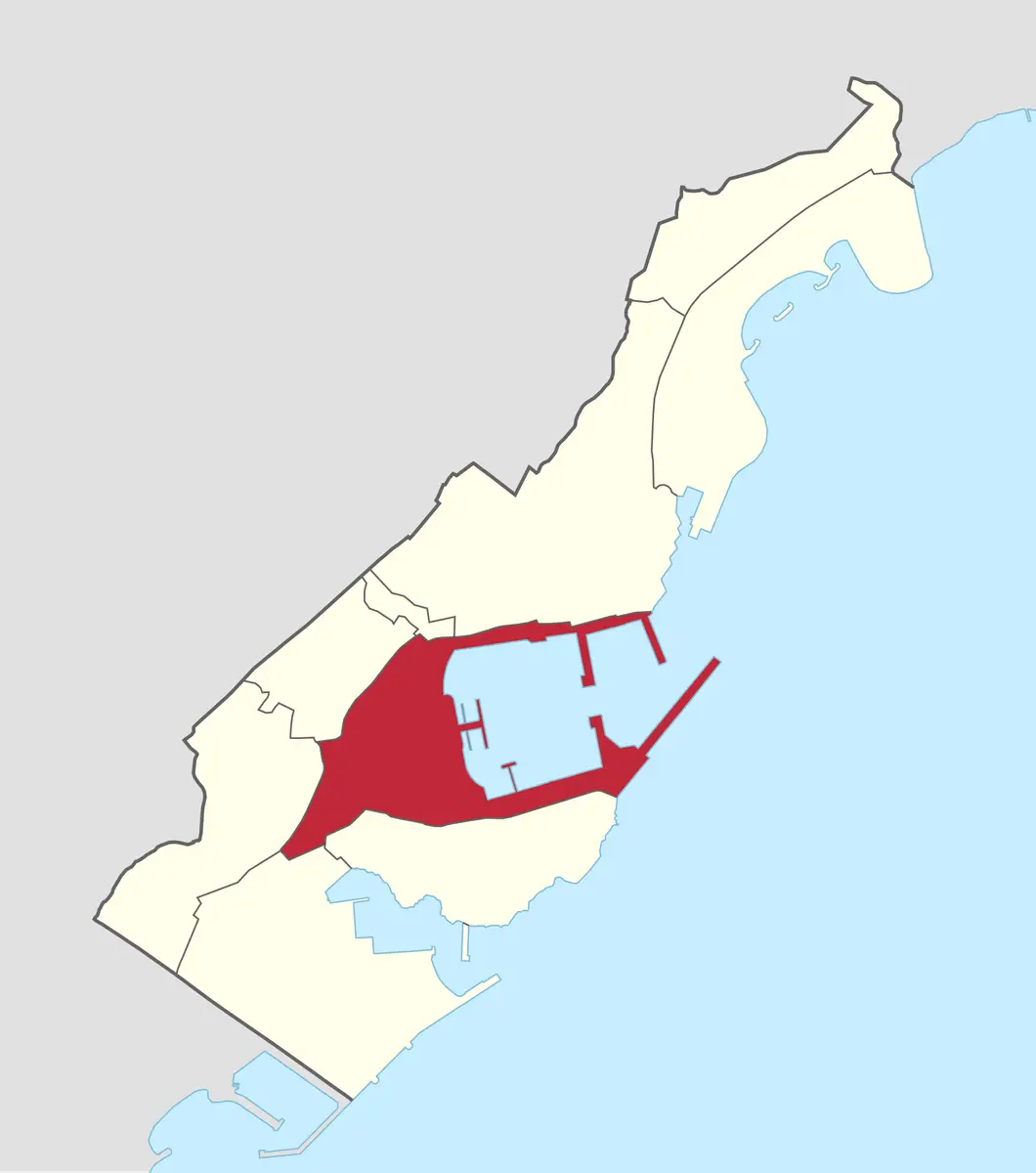
The population is distributed across the city-state’s distinct districts. Monte Carlo is associated with the casino, luxury hotels, and high-society life; La Condamine is the port and commercial area; the old town of Monaco-Ville is home to historical sites; and Fontvieille is a modern land-reclamation area featuring residential and light industrial zones.
Land expansion relies primarily on land-reclamation projects, as the mainland area has been almost fully exploited. These developments not only provide additional housing but also help alleviate population pressure in an already cramped territory.
The combination of extreme density, comprehensive urbanisation, and limited land means every planning decision in Monaco is strategic. The city-state must constantly balance housing needs, public space, and economic development within a nearly fixed geographical limit.
Demographic trends and challenges
Looking long-term, Monaco’s demographics remain driven by its appeal to the international wealthy and its finite land supply. The resident population is unlikely to grow significantly due to space constraints, so growth will primarily come from increasing density and expanding into the sea.
The greatest challenge is balancing the preservation of Monégasque identity with an increasingly international character. As native citizens remain a minority, maintaining the language, traditions, and rights for this group remains a permanent policy priority for the government.
Furthermore, an ageing population and reliance on cross-border commuters necessitate long-term planning. The city-state must ensure care services for the elderly while maintaining transport systems and housing in surrounding areas to retain essential labour.
Nevertheless, these seemingly paradoxical features are exactly what create Monaco’s unique appeal. A small, wealthy, multinational community living at the highest density in the world has created a unique demographic model that is rarely replicated elsewhere.
Accompanying you on your journey in residency investment
The Prosperous Living Investment team advises on pathways, assesses profiles and manages investments transparently for every residency, citizenship and international property objective.
Free profile assessmentWhere life gets prosperous