


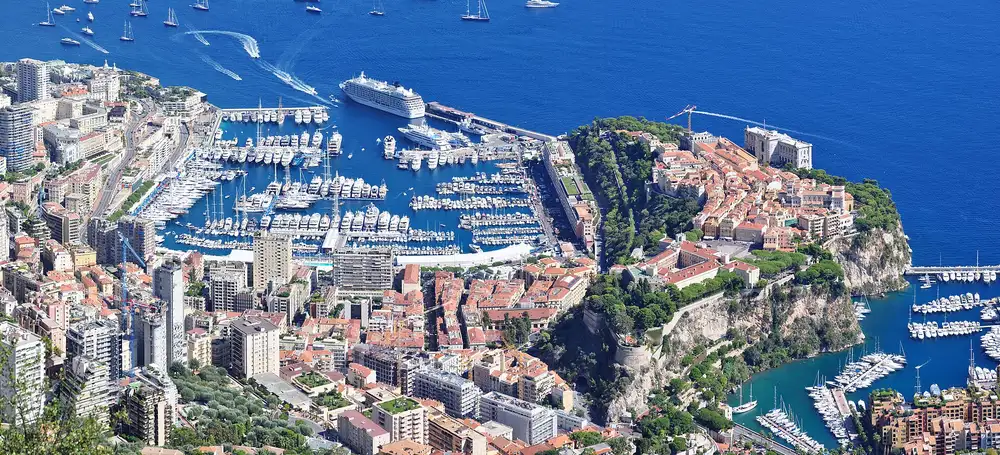
Learning about the history of Monaco is to follow the rare story of a tiny Mediterranean city-state that has survived for seven centuries under the rule of a single family. From a fortress on a rocky outcrop to a global financial and entertainment hub, Monaco has maintained its sovereignty by skilfully balancing between neighbouring powers.
Contents
Ancient land on the Mediterranean coast
Before the Grimaldi family, the Monaco rock was already an attractive location due to its natural harbour and strong defensive position overlooking the sea. This Mediterranean area lay on ancient sea and land routes connecting the Liguria region of Italy with the south of Gaul (modern-day France).
The name Monaco is often associated with the ancient Greeks and a temple to Hercules at this location, the origin of the place name “Monoikos”. This explanation is common in historical documents, yet it remains traditional and cannot be verified absolutely, so it should only be viewed as a hypothesis regarding the origin of the name.
Over many centuries, this small land was successively under the influence of successive powers in the Mediterranean. Furthermore, its strategic position made the Monaco rock a point of contention between city-states and powerful families in the Liguria region during the Middle Ages, setting the stage for the decisive event at the end of the 13th century.
Considering a residency programme? The Prosperous Living Investment team assesses your profile free of charge and advises on the pathway that fits your goals.
1297 and the beginning of the Grimaldi family
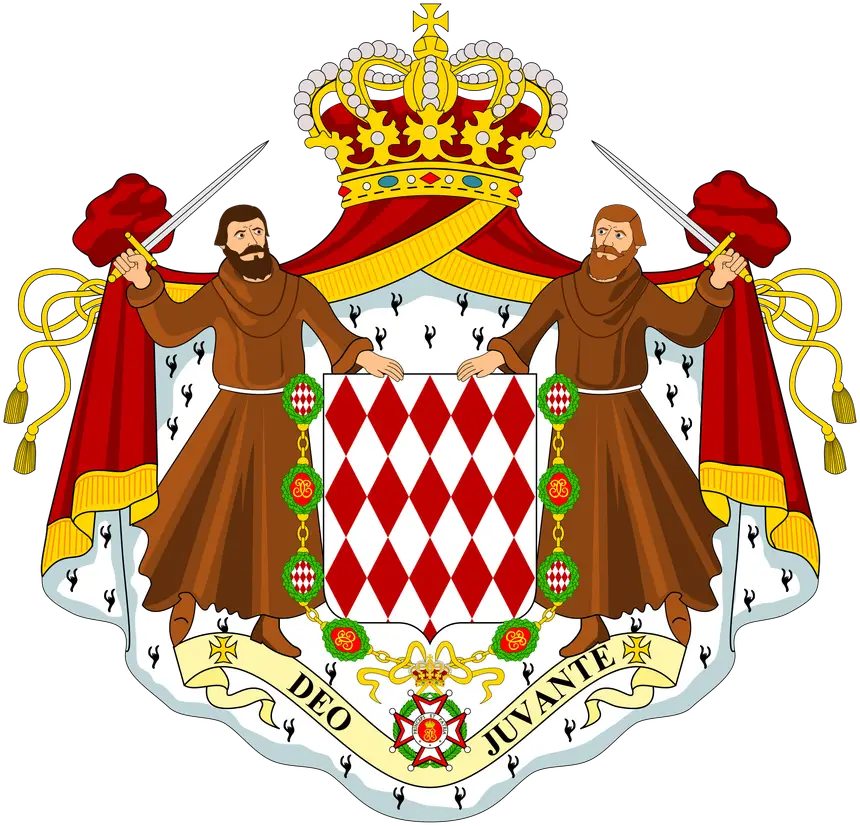
The most remembered starting point in the history of Monaco is 1297, when Francesco Grimaldi captured the fortress on the rock. According to the familiar legend, he disguised himself as a Franciscan monk to get inside and then seized the fortress, an image that later entered the Monaco coat of arms with two monks holding swords.
The Grimaldi family was originally a powerful family from Genoa, associated with the Guelph faction during the power struggles between factions in Italy during the Middle Ages. Controlling Monaco was therefore not just a matter of capturing a fortress, but lay within the context of broader factional conflicts in the Liguria region.
The family’s control in the early decades was neither continuous nor certain. However, through periods of gain and loss, by the end of the Middle Ages, the Grimaldi family gradually established their position as lords of Monaco, beginning a chain of rule that lasted for many centuries and continues to the present royal family.
This long continuity is a special feature that defines the identity of the city-state. Therefore, Monaco’s monarchs all view 1297 as the founding milestone of the dynasty, which is frequently mentioned during official anniversaries.
According to information from Monaco Government, the Grimaldi royal family is one of the oldest ruling dynasties in Europe still in existence today, tied to the fate of the city-state for over seven centuries. This continuity is a characteristic feature that shapes the identity and institutions of modern Monaco.
Under the protection of Spain and then France
As a small territory wedged between major powers, Monaco has always had to rely on the protection of a major force to survive. For many decades, the lords of Monaco placed themselves under the protection of Spain, the power that dominated many parts of Italy at that time.
By the beginning of the 17th century, under Lord Honoré II, Monaco shifted its allegiance from Spain to France. Honoré II was also the person associated with using the title of prince, raising the nominal status of the head of Monaco. This transition was marked by a treaty with France, under which Monaco was protected by France while retaining its autonomy.
Relations with France from then on became the main axis governing Monaco’s fate. Furthermore, the princes maintained both connections and assets on French soil, causing the fate of the city-state to be closely tied to the political upheavals in this large neighbouring nation.
The French Revolution and the annexation period
The French Revolution at the end of the 18th century dealt a heavy blow to Monaco. In the revolutionary wave, the city-state was annexed to France and the rule of the Grimaldi family was interrupted; the family lost power and most of their assets during this period.
The state of annexation lasted until the European order was rearranged after the Napoleonic era. Agreements between the powers at the Congress of Vienna in 1815 restored the Grimaldi family in Monaco, but this time placed the city-state under the protection of the Kingdom of Sardinia instead of France.
The period of Sardinian protection reflects how major countries used small territories like Monaco as pawns on the European geopolitical chessboard. However, this arrangement was not sustainable and would soon lead to an event that permanently changed the map of the city-state in the mid-19th century.
The loss of Menton and Roquebrune in the mid-19th century
The biggest territorial turning point in the history of Monaco took place in the mid-19th century, when the city-state lost the two towns of Menton and Roquebrune. Previously, these two towns belonged to the Monaco territory and accounted for the majority of the area ruled by the Grimaldi family.
In the context of autonomy movements and upheavals in the Riviera region, Menton and Roquebrune separated from the rule of the Prince of Monaco. The two towns were eventually incorporated into France, marking Monaco’s loss of the majority of its territory and a reduction in size to almost its current scale.
This was settled through an agreement between Monaco and France in 1861, in which the Prince of Monaco renounced claims to the two towns in exchange for recognition and compensation. In the same year, Monaco’s sovereignty was more clearly consolidated in its relations with France.
The consequence was that Monaco became one of the smallest sovereign states in the world by area. Because it lost revenue from the larger agricultural land, the city-state was forced to find a new direction for economic development, the direct premise for the birth of Monte Carlo and the casino tourism industry.
The birth of Monte Carlo and the casino tourism industry
After losing Menton and Roquebrune, the princes of Monaco sought to compensate for revenue by developing a luxury resort along with a casino. This area was named Monte Carlo to honour Prince Charles III, who was associated with the project that was vital to the city-state’s treasury.
A company was established to operate the casino and resort amenities, later associated with the brand Société des Bains de Mer. Thanks to the casino and luxury tourism, Monaco gradually escaped financial hardship and built an economic foundation based on entertainment, high-end accommodation, and services.
The success of Monte Carlo also allowed Monaco to abolish income tax for residents, a policy that contributed to shaping the image of the city-state as an attractive place of residence for the wealthy. This feature later became an important part of its economic identity and Culture of Monaco.
This transformation is closely tied to modern Monaco’s culture, from the magnificent architecture of the Monte Carlo area to the tradition of hosting world-class events. Furthermore, tourism and entertainment became new pillars, replacing the agricultural economy that was lost along with the peripheral regions.
The 1911 Constitution and the institutional transition
At the beginning of the 20th century, Monaco entered an important period of institutional reform. In 1911, under Prince Albert I, the city-state promulgated its first written constitution, marking the transition from an absolute monarchy to a constitutional form of monarchy.
The 1911 Constitution first established a legal framework for the organisation of power and the participation of a representative body. Although the Prince’s power remained significant, this was a notable step towards institutionalisation Monaco politics and a clearer definition of the roles of various institutions.
Prince Albert I was also known as a patron of science, particularly in the field of oceanography, and was associated with the founding of the Oceanographic Museum of Monaco. His legacy shows that Monaco during this period focused not only on tourism but also on building an image as a centre for culture and science.
The 1911 constitutional framework laid the foundation for subsequent amendments and replacements. However, it was not until the mid-20th century, under the next reign, that Monaco adopted a modern constitution that clearly defined the political system in operation today.
The reign of Rainier III and his marriage to Grace Kelly
One of the most widely known chapters of Monaco’s history is associated with Prince Rainier III, who reigned for most of the second half of the 20th century. Under his reign, Monaco underwent significant economic modernisation, diversified its revenue sources, and strengthened the city-state’s international standing.
In 1956, Rainier III married the American actress Grace Kelly, a famous film star at the time. The wedding attracted significant global media attention and helped spread Monaco’s glamorous image worldwide, associating the city-state with luxury and prestige.
She became Princess Grace of Monaco and remained a beloved cultural icon until her death in a car accident in 1982. Her legacy remains present in the cultural life of the city-state, from her patronage of the arts to the image of the Monegasque royal family.
Also under Rainier III, Monaco adopted a new constitution in 1962, a document that continues to shape the contemporary political system. Furthermore, land reclamation and urban development projects during this period expanded the limited land area, most notably the Fontvieille district, which was reclaimed from the sea.
Monaco joined the United Nations in 1993
A major turning point that saw Monaco integrate more deeply into the international community was its accession to the United Nations in 1993. This event affirmed the city-state’s status as a fully sovereign nation on the international stage, despite having one of the smallest land areas and populations in the world.
Becoming a member of the United Nations reflected Monaco’s process of gradually asserting itself in foreign relations, while maintaining a special and close relationship with France. The city-state also participated in many other international organisations and forums in the following decades.
During this same period, successive princes continued to refine the institutional framework, including constitutional adjustments in the early 21st century to modernise the system and rules of succession. These changes were carried out in the spirit of inheriting the long-standing traditions of the Grimaldi dynasty.
Today, Monaco is ruled by Prince Albert II, who succeeded Prince Rainier III in 2005. Following the flow of Monaco’s history, the city-state continues to maintain its unique identity: a tiny, wealthy, and deeply integrated constitutional monarchy, still governed by the Grimaldi family after more than seven centuries.
The imprint of Monaco’s history in the modern city-state
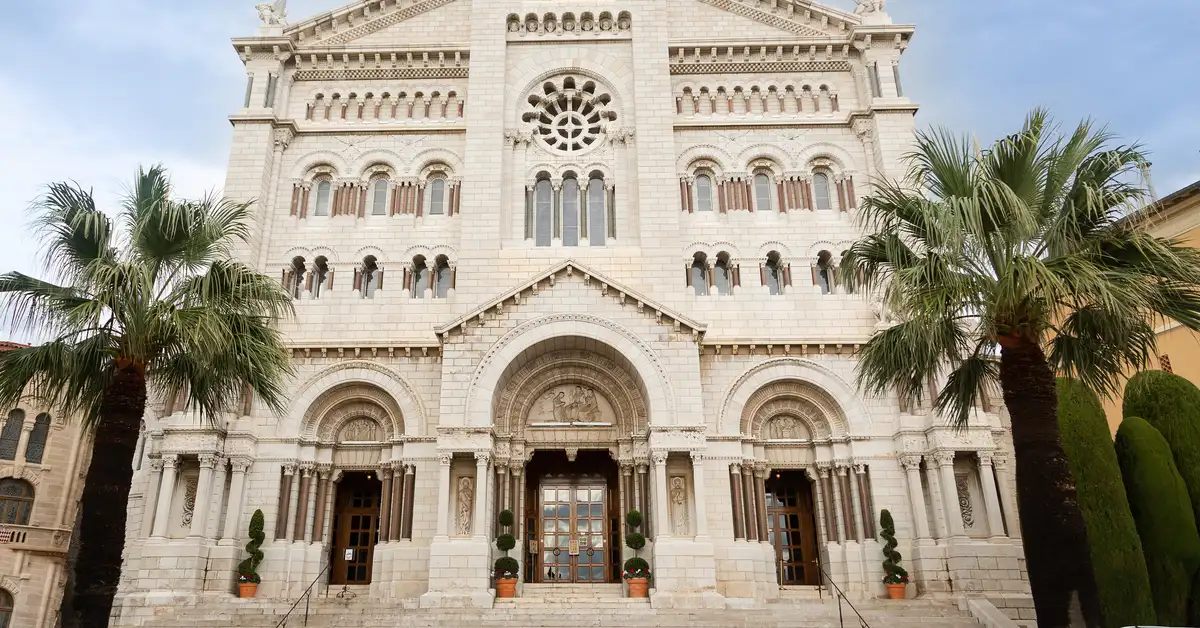
The length of history leaves a clear mark on the appearance and life of the country of Monaco today. The old town of Monaco-Ville on the rock still preserves the princes’ palace, the cathedral, and narrow streets that evoke its medieval fortress origins.
The continuity of a dynasty over seven centuries is a rare feature in the world and a central point of pride in the national identity. Therefore, anniversaries associated with the Grimaldi family, national days, and traditional festivals are deeply rooted in history.
At the same time, the process of transforming from an agricultural territory that lost most of its land into a global financial and entertainment hub demonstrates the city-state’s ability to adapt. The focus on luxury tourism, financial services, and specific tax policies all stem from specific historical choices.
Thus, the history of Monaco is not just a series of events in the past but also a frame of reference for understanding the present: a tiny nation that has maintained its sovereignty through clever diplomacy, timely economic innovation, and the incredible endurance of a single dynasty.
Accompanying you on your journey in residency investment
The Prosperous Living Investment team advises on pathways, assesses profiles and manages investments transparently for every residency, citizenship and international property objective.
Free profile assessmentWhere life gets prosperous