

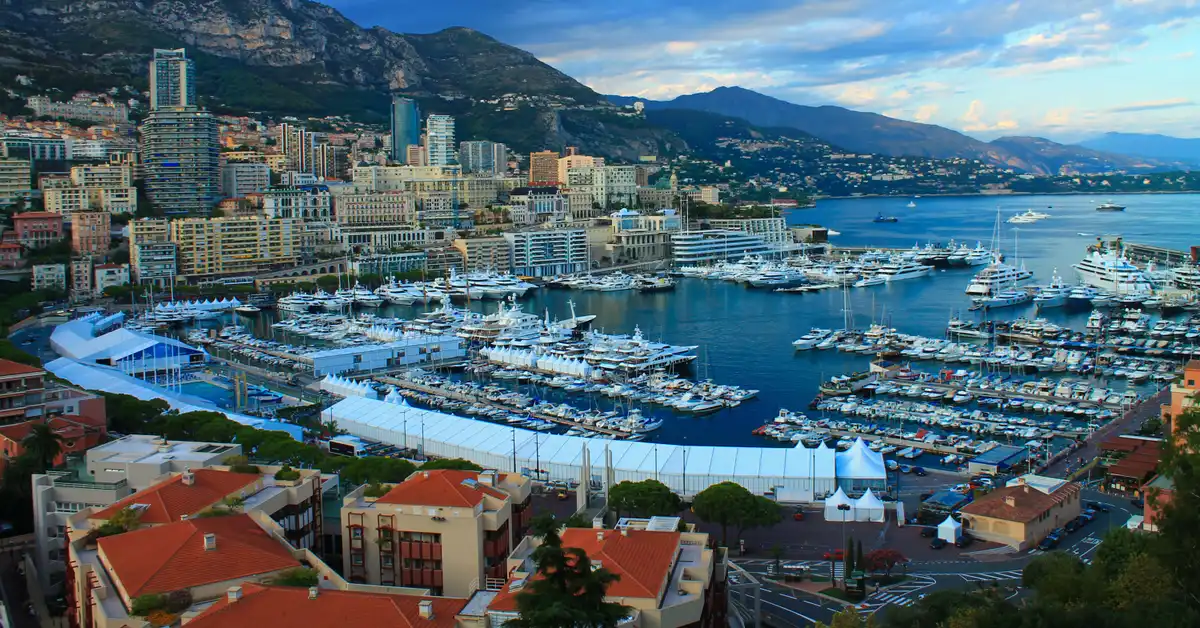
Education in Monaco is organised along a model similar to that of France, with a system of public schools alongside some private and religious schools. The curriculum is primarily in French, with instruction in traditional Monégasque and English, concluding secondary education with the baccalauréat examination.
Contents
Overview of the Monaco education system
As a tiny city-state located on the Mediterranean and surrounded by France on three sides, the country of Monaco builds an education system closely tied to the template of its large neighbour. The modest population size allows the state to focus resources on a compact but well-invested school network.
In general, education in Monaco is organised and managed by the state, operating alongside a number of private and religious schools. The structure of education levels, curricula, and qualifications closely follow French practices, helping students transition easily to the systems of France or other French-speaking countries.
Furthermore, the nature of a prosperous society with a multinational resident community makes the educational needs here quite unique. Many families want their children to be proficient in both French and English while maintaining their local identity, so the school system must meet multiple expectations simultaneously.
Learning about education in Monaco reveals a small-scale but well-funded system, closely tied to the French model. Thanks to a small population and abundant resources, schools here usually have moderate class sizes, modern facilities, and foreign language programmes that are emphasised from the early levels.
Considering a residency programme? The Prosperous Living Investment team assesses your profile free of charge and advises on the pathway that fits your goals.
Model similar to France
The most prominent feature when discussing education in Monaco is its similarity to the French model. From the division of education levels and class names to curriculum content and assessment methods, most reflect the national education system of its neighbour.
This closeness has historical and geographical roots. Monaco has long been tied to France through many agreements, uses French as its official language, and shares the cultural space of the Riviera region. Synchronising the curriculum helps ensure that the qualifications of Monaco students are widely recognised within the French-speaking bloc.
However, Monaco does not copy it entirely. The country adds content that carries its own identity, especially the teaching of local language and history, while adjusting class sizes to suit a small city-state. As a result, students can both integrate with international standards and understand the roots of the place where they live.
Public, private, and religious schools
The school system in Monaco consists of two main branches: public schools organised directly by the state and a number of private schools, including those with religious elements (religious schools). This parallel structure creates more choices for families according to the educational direction they desire.
Public schools serve as the cornerstone of the system, accommodating a large number of students and operating under a unified curriculum. The state focuses on maintaining teaching quality, facilities, and teaching staff, leveraging its small scale to keep class sizes at a reasonable level.
Meanwhile, private and religious schools offer additional options regarding pedagogical methods or spiritual values. Some institutions are linked to Monaco’s long-standing Catholic tradition, reflecting the religious heritage deeply embedded in the life of this city-state.
- Public schools: organised by the state, following a unified curriculum, and serving as the pillar of the system.
- Private schools: providing options for teaching methods and learning environments.
- Religious schools: linked to Catholic traditions, combining general education with spiritual values.
Levels of education in Monaco
Education in Monaco is divided into several sequential levels, similar to the French organisational structure. It begins with preschool for young children, where they become accustomed to a collective environment, language, and foundational life skills.
Next is primary school, the stage where students develop reading, writing, numeracy, and basic thinking skills. After primary school, students enter secondary education, which is typically divided into two stages corresponding to middle school and high school, following the familiar tiered structure of the French system.
Education is compulsory within a certain age range, ensuring that every child attends school. Thanks to its small scale and abundant resources, the levels of education are connected quite seamlessly, helping students transition smoothly from one level to the next.
In addition to the public school system, Monaco has private and religious schools, creating more choices for parents. The teaching of multiple foreign languages, especially English and Italian, reflects the highly international nature of the resident community. Graduates often continue to university in France or other countries because domestic higher education capacity is limited.
Languages of instruction: French, Monégasque, and English
Language is one of the distinctive features of education in Monaco. French serves as the primary language of instruction, used in almost all subjects and as the main medium at all levels, consistent with its status as the official language of the country.
Besides French, schools also teach Monégasque, the traditional language of the indigenous people. Including Monégasque in the curriculum demonstrates an effort to preserve the identity and linguistic heritage of the city-state, connecting the younger generation to their local cultural roots.
Furthermore, English is emphasised as an essential international language. In the context of Monaco being a financial centre and a destination for a multinational community, the ability to use English helps students prepare for global study, work, and communication. Some programmes or educational institutions also focus on a multilingual environment.
Baccalauréat and secondary assessment
At the end of high school, students in Monaco aim for the baccalauréat, the French-model diploma. This is an important milestone marking the completion of secondary education and paving the way for higher education.
The baccalauréat is not just a graduation certificate; it is also seen as a ticket to higher education. Because the curriculum closely follows French standards, the baccalauréat of Monaco students has high compatibility, facilitating their application to schools in France.
The learning process in the final stage of secondary education usually allows students to choose a track suitable for their abilities and interests, ranging from science and economics to social sciences and humanities. This streaming helps them prepare a solid foundation for the field of study they intend to pursue.
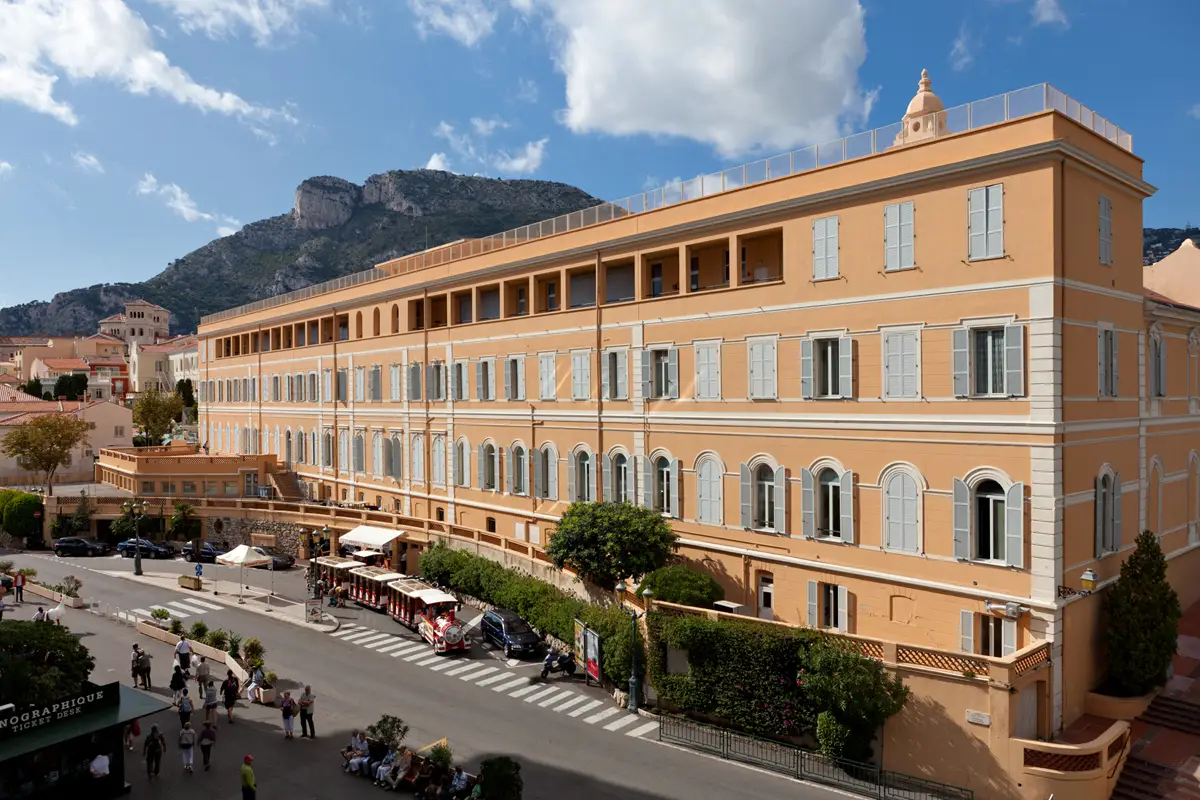
Higher education and the International University of Monaco (IUM)
Due to its small area and population, domestic higher education in Monaco is quite limited in the number of institutions. Nevertheless, the city-state still has one notable university institution: the International University of Monaco (IUM).
IUM focuses on business and management, teaching with an international orientation and often using English as the primary language in many programmes. The school attracts students from many countries, fitting Monaco’s image as a financial centre, provider of high-end services, and a multinational environment.
The presence of IUM reflects how Monaco leverages its economic strengths in education. Instead of spreading itself thin across many disciplines, the city-state chooses to develop fields associated with Monaco economy, where finance, management, and international business play a key role.
Studying in France and abroad
Because domestic university options are limited, many high school graduates in Monaco continue their education abroad. France is the most natural and popular destination, thanks to a common language, compatible curriculum, and close geographical proximity.
The French-standard baccalauréat helps Monaco students easily apply to universities, grandes écoles, or specialised training institutions in France. This is a familiar path for many generations of students in the city-state.
Besides France, many students choose to study in other countries to pursue the fields or environments they desire. This trend is consistent with the characteristics of the multinational community and the international vision deeply embedded in Monaco society, as can be seen through Demographics of Monaco.
Quality and educational resources
The small scale gives Monaco’s education a significant advantage in terms of quality and resources. With a student population that is not too large, the state is able to invest in facilities, equipment, and teaching staff at a high level.
Class sizes are usually kept at a reasonable level, creating conditions for closer teaching and learning. The state’s attention to education is placed in the context of a prosperous society, where public resources can be allocated relatively generously for welfare and public services.
International organisations such as the Organisation for Economic Co-operation and Development (according to OECD) often note the link between resources, class size, and educational outcomes. In the case of Monaco, the combination of a compact scale and stable investment is seen as the foundation for maintaining teaching quality, although each family may have its own assessments.
Education in the social landscape of Monaco
Education in Monaco is not separate from the social characteristics of the city-state. As a place that concentrates many wealthy residents and a diverse international community, the need for quality, multilingual education with a global vision is very clear.
At the same time, a large part of Monaco’s workforce lives in France or Italy and commutes to work daily. This reality makes the region’s educational ecosystem extend beyond the borders of the city-state, with close ties between schools in Monaco and institutions in the surrounding area.
Official information about educational organisations, programmes, and institutions of the city-state is usually published through the government portal, such as Monaco Government. Consulting official sources helps to get an updated and accurate view, as details about the number of schools, class sizes, or the structure of disciplines can change over time.
Accompanying you on your journey in residency investment
The Prosperous Living Investment team advises on pathways, assesses profiles and manages investments transparently for every residency, citizenship and international property objective.
Free profile assessmentWhere life gets prosperous