

Opening a Turkish bank account: Requirements and banks for CBI investors

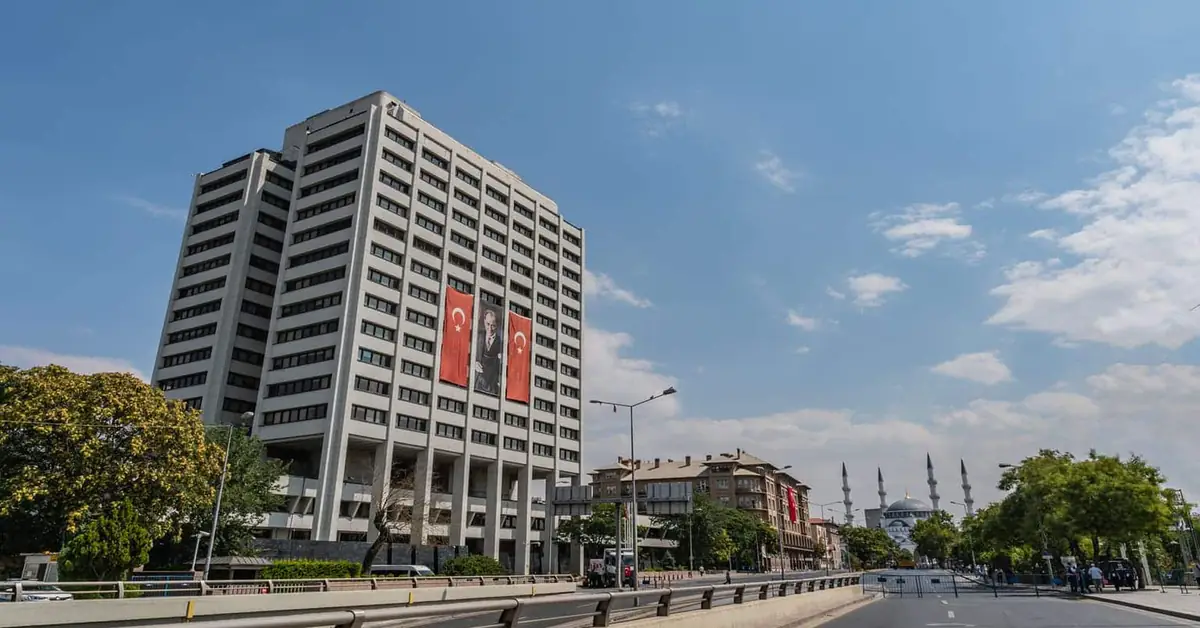
Opening a Turkish bank account is one of the indispensable foundational steps for investors participating in the Turkish citizenship by investment. The entire US$400,000 investment capital must pass through the licensed banking system in Türkiye, be exchanged into lira at the Central Bank, and be certified by a specialized certificate to prove the legality of the transaction.
This article analyses the structure of the Turkish banking system, requirements and documentation for foreigners, the account opening process in 2026, priority account types for CBI applications, and specific considerations for Vietnamese investors.
Message
Overview of the Turkish banking system
The Turkish banking system is one of the most strictly regulated financial systems in the Middle East and Eastern Europe. It is supervised simultaneously by two authorities: the Banking Regulation and Supervision Agency of Türkiye (Bankacılık Düzenleme ve Denetleme Kurumu, BDDK) and Central Bank of the Republic of Türkiye (Türkiye Cumhuriyet Merkez Bankası, TCMB). According to the BDDK, commercial banks in Türkiye must comply with Basel III capital standards and fully implement international-standard KYC/AML procedures.
This system is divided into three main groups based on ownership structure and operational objectives.
State-owned banks
This group comprises banks majority-owned by the Turkish government, featuring an extensive branch network nationwide and receiving direct backing from the national budget. Advantages include high safety guaranteed by the state, branch coverage extending even to small towns, and generally more open policies towards foreign individuals joining the CBI programme.
Some of the largest state-owned banks include Ziraat Bankası, Halkbank and Vakıfbank. Ziraat Bankası in particular has an international branch network in Germany, the Netherlands, the UK, Greece and several other countries, which is convenient for investors requiring cross-border transactions.
Large private banks
This group consists of large-scale private commercial banks with modern technological infrastructure, multilingual mobile applications and developed digital banking services. This is a popular choice for younger investors and those with experience in international transactions.
Typical representatives include Garanti BBVA (majority-owned by the Spanish BBVA Group), Akbank, Yapı Kredi and Türkiye İş Bankası. These banks typically feature English-language app interfaces, support multi-currency accounts and provide international hotlines.
International banks in Türkiye
These are branches or subsidiaries of international banks operating in Türkiye. Some names include HSBC Türkiye, Deutsche Bank and Citibank Türkiye. This group is suitable for investors who already have banking relationships with the parent group in their home country, as they can leverage integrated services between international branches.
Participation banks (Katılım Bankası)
This is a group of banks that operate according to Islamic finance principles, where interest is not charged but profits are shared. This group is suitable for investors from Islamic countries or those who wish to avoid interest-bearing transactions for religious reasons. Albaraka Türk is one of the participation banks with a relatively fast process for supporting CBI clients.
Considering a residency programme? The Prosperous Living Investment team assesses your profile free of charge and advises on the pathway that fits your goals.
Requirements for foreigners opening a Turkish bank account
In 2026, Turkish banks are applying stricter KYC and AML procedures than before. Specific conditions may vary between banks, and even between branches of the same bank, but the core requirements are relatively uniform.
Individual requirements
Investors must be 18 years of age or older and have full civil capacity. There is no requirement to hold a residence permit or work permit, so investors can open an account even while entering Türkiye on a tourist visa. However, some banks still prefer to approve applications from investors with residence permits due to long-term stability.
Investors from countries subject to international sanctions or on the FATF special monitoring list may be refused or required to undergo additional due diligence. Vietnam is not in this group, so Vietnamese investors do not face any particular barriers.
Financial requirements
Some banks require investors without a residence permit to deposit an initial security amount, ranging from US$2,000 to US$5,000. This amount may be frozen for 1 to 3 months to verify transaction activity, after which it is released if the profile shows no irregularities.
For the purpose of real estate investment or submitting a CBI application, banks are generally more flexible and may waive this security deposit requirement if the investor can provide a real estate deposit contract or a letter of commitment from a CBI consultancy firm.
Required documentation
The account opening profile for foreigners is relatively simple but needs to be prepared thoroughly to avoid delays. According to guidance from Turkish Revenue Administration and the KYC regulations of the BDDK, the mandatory documents include:
- Original passport valid for at least 6 months with a photocopy of the information page
- Turkish Tax Identification Number (Vergi Kimlik Numarası) registered according to the process in the article Turkish Defter: Personal tax number
- Turkish mobile phone number (purchase a prepaid SIM at the airport or a telecommunications store)
- Proof of address in Türkiye: a notarised rental contract, utility bill, or long-term hotel confirmation letter
- Notarised Turkish translation of the passport (required by some banks)
- Proof of source of funds (foreign bank statements for the last 3 to 6 months, employment contract, income certificate)
For CBI investors, the profile needs to be supplemented with a confirmation letter from the consultancy firm regarding the investment purpose, a real estate deposit contract (if a project has been selected), or a letter of introduction from a legal representative in Türkiye.
Turkish bank account opening process in 2026
The process for opening a Turkish bank account in 2026 requires the investor to be present in person at the bank branch. Most banks do not allow accounts to be opened entirely online for foreigners who do not yet have a residence permit. The process consists of five basic steps.
Step 1: Selecting the bank and branch
Investors need to choose a suitable bank based on criteria: experience in serving CBI clients, support language (English preferred), branch location near where the real estate transaction will take place, service fees and deposit interest rates. Branches in Istanbul (especially in the Levent, Maslak and Şişli districts) and Antalya often have staff with extensive experience in handling foreign profiles.
Step 2: Scheduling an appointment and preparing documents
Some branches require an appointment to be made in advance via their website or call centre. Investors should confirm the document list with the specific branch as requirements may vary. Preparing notarised translations of Vietnamese documents (if requested) should be done before arriving at the branch to save time.
Step 3: KYC interview and document submission
At the branch, the investor undergoes an interview with the compliance officer to answer questions about the purpose of opening the account, source of funds, business activities and planned transaction schedule. This is the most important step and also the point where an application may be rejected if answers are inconsistent.
Bank staff will take a photo of the investor, collect biometric fingerprints (for some banks) and scan all documents into the system.
Step 4: Signing the service agreement
Once the profile is preliminarily approved, the investor signs the account service agreement, digital banking service agreement and registers for accompanying services (ATM card, mobile banking, SMS notifications). The agreement is drawn up in Turkish, with some banks providing an English translation for reference.
Step 5: Activation and card issuance
The account is opened right at the branch and the investor can perform deposit/withdrawal transactions within a few hours. Debit cards are typically issued at the counter or sent by post within 5 to 7 working days to the registered address. Digital banking login information is sent via SMS to the Turkish phone number.
The total time spent at the counter is usually about 30 minutes to 2 hours depending on the complexity of the profile and the size of the branch.
Priority account types for CBI investors
For profiles investing in US$400,000 Turkish CBI real estate, investors need to open multiple types of accounts simultaneously to process valid cash flows.
Foreign currency account
This is an account for receiving foreign currency transfers from overseas accounts to Türkiye. The most common accounts are USD and EUR, with some investors also opening GBP accounts. The balance in the foreign currency account remains in the original currency until the investor requests a conversion to lira or a withdrawal back to their home country.
Turkish lira account
This is an account for receiving funds after they have been converted from foreign currency to lira by the Central Bank. For CBI profiles, this is a mandatory intermediary step before transferring funds to the real estate seller. The lira account is also used to pay for domestic expenses such as Tapu tax, service fees and utility bills.
Foreign Exchange Purchase Certificate (DAB)
This is not an account type but a special legal document. When an investor requests the bank to convert foreign currency to lira for the purpose of purchasing real estate under the CBI programme, the bank must sell that foreign currency to the TCMB and receive the Döviz Alım Belgesi (DAB) document in return. The DAB is the only document accepted by the assessment authority as proof that the foreign capital flow has been transferred through the correct channel.
The DAB must clearly state the investor’s name as it appears on their passport, the corresponding foreign currency and lira amounts, the transaction date, and the reason for the conversion as “purchase of real estate for citizenship application”. A small error in the content of the DAB can cause the entire CBI application to be returned.
Special considerations when opening a Turkish bank account for Vietnamese citizens
Vietnamese investors opening a Turkish bank account should note some specific points to avoid complications.
First, Turkish banks typically require bank statements from Vietnam for at least the last three months, with a total balance sufficient to demonstrate financial capacity. Statements must be translated into English or Turkish and notarised. Some banks accept electronic statements with a digital signature from the Vietnamese bank, while others require paper copies with a red stamp.
Second, employment contracts or income certificates must be translated and notarised. Before 11 September 2026, these documents must be consularly legalised following the traditional three-step process. After the Apostille Convention comes into effect for Vietnam, the process will be simplified to applying an Apostille stamp at the Ministry of Foreign Affairs of Vietnam.
Third, Turkish banks do not accept Vietnamese phone numbers for receiving OTP codes. Investors must purchase a Turkish SIM card immediately upon arrival and maintain its activity throughout the application processing period. Losing access to the Turkish phone number may result in the account being temporarily locked.
Fourth, some banks require proof of address in Türkiye. If an investor does not yet have a long-term rental contract, they may use a confirmation letter from a five-star hotel regarding the expected duration of stay (minimum 30 days), or request that their consultancy firm provide a representative office address.
Summary
Opening a Turkish bank account is the bridge between investment capital from Vietnam and a citizenship application in Türkiye. The entire value of US$400,000 must pass through the licensed banking system, be exchanged via the TCMB, and be certified by a DAB. Choosing the right bank, preparing a complete file, and understanding the types of accounts required helps investors shorten processing times and reduce the risk of application rejection.
For Vietnamese investors, key factors to note include: registering for a Turkish tax identification number before visiting the bank branch, purchasing a Turkish SIM card immediately upon arrival, preparing notarised/legalised financial statements and income documents, and identifying a bank with experience in serving CBI clients to shorten the due diligence period.
The next step in the investment roadmap is to learn about 6-step Turkish CBI process to grasp the entire sequence from preparation to receiving the passport, or refer to the article Turkish Tapu to understand how to transfer real estate after completing the banking step.
Accompanying you on your journey in residency investment
The Prosperous Living Investment team advises on pathways, assesses profiles and manages investments transparently for every residency, citizenship and international property objective.
Free profile assessmentWhere life gets prosperous