


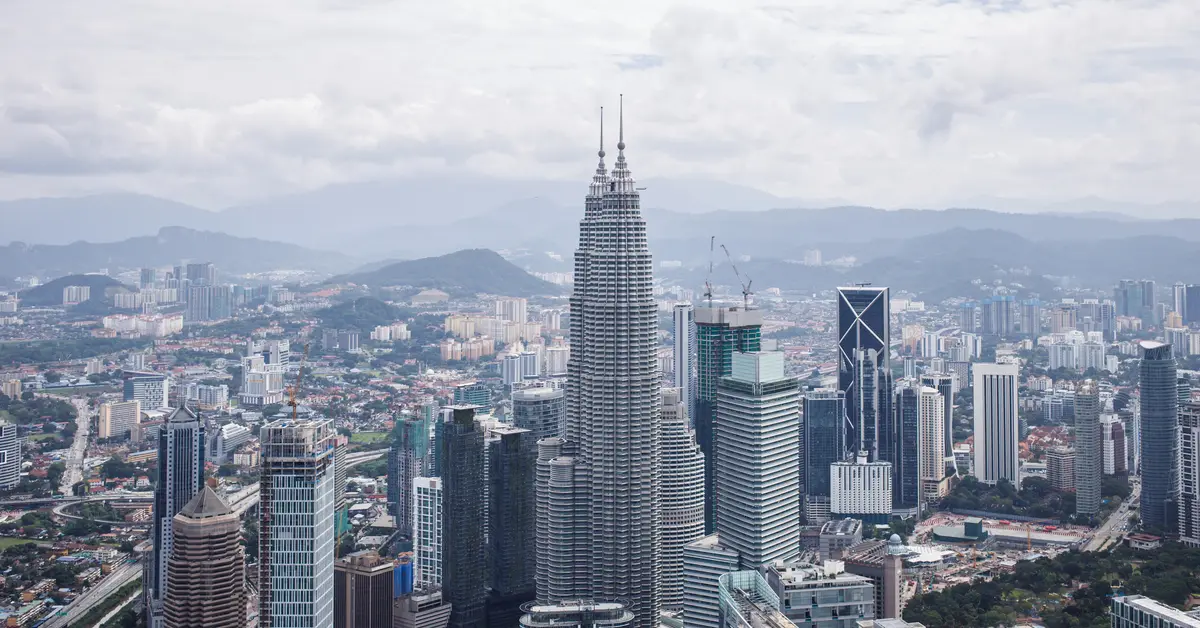
Malaysia is a Southeast Asian nation spanning two regions: Peninsular Malaysia and northern Borneo. With its capital Kuala Lumpur, multi-ethnic society, and dynamic economy, it is one of the region’s prominent upper-middle-income economies.
Contents
Malaysia overview
Malaysia is situated at the heart of South-East Asia, just off the equator. The nation features a unique territorial layout, comprising two regions separated by the South China Sea: West Malaysia on the Malay Peninsula, and East Malaysia made up of the states of Sabah and Sarawak on Borneo.
Malaysia operates as a federal constitutional monarchy, with a Head of State (the King) rotated among the rulers of the states. The capital is Kuala Lumpur, whilst many federal administrative bodies are based in Putrajaya, a purpose-built administrative city south of the capital.
It is a distinctly multicultural society where Malay, Chinese, and Indian communities live alongside various indigenous peoples. This blend creates a unique identity, reflected in the language, cuisine, festivals, and architecture across the country.
This overview outlines the key aspects of Malaysia, from geography, history, and demographics to the economy, culture, politics, and education, whilst linking to in-depth articles on each topic.
Considering a residency programme? The Prosperous Living Investment team assesses your profile free of charge and advises on the pathway that fits your goals.
Key facts about Malaysia
Below are key indicators for Malaysia, compiled from sources including the World Bank, the United Nations Development Programme (UNDP), and the national statistics agency. Economic and population figures are updated periodically and may vary from year to year.
- Capital: Kuala Lumpur (administrative centre Putrajaya)
- Area: approximately 330,800 km²
- Population: approximately 34.1 million (2024)
- GDP per capita: approximately US$11,870 (2024)
- Human Development Index (HDI): approximately 0.81 (very high group)
- Currency: Ringgit (MYR)
The figures above are for reference at the time of compilation. For official purposes or decision-making, the latest data should be verified with the aforementioned bodies, as GDP, population, and development rankings are subject to annual adjustments.
Location and geography of Malaysia
Detailed article on the Malaysia geography
Geographically, Malaysia borders Thailand to the north of the Malay Peninsula, connects to Singapore via a narrow strait to the south, and borders Indonesia and Brunei on Borneo. This position places Malaysia directly along one of the busiest maritime lanes in the world.
The Strait of Malacca, stretching along the west coast of the Malay Peninsula, is a vital sea route connecting the Indian Ocean to the South China Sea and the Pacific Ocean. This strategic location has shaped the region’s trade history and prosperity for centuries.
Malaysia features a tropical monsoon climate, warm and humid year-round with abundant rainfall. Its rainforests are among the oldest and most biodiverse on the planet, serving as home to many rare plant and animal species.
The topography is diverse, featuring mountain ranges, coastal plains, and extensive shorelines. On Borneo, Mount Kinabalu in Sabah is one of the most prominent peaks and a favoured trekking destination for international visitors.
History of Malaysia
Detailed article on the Malaysia history
The course of Malaysian history originates from ancient Malay kingdoms and bustling coastal trading ports along the strait. The Malacca Sultanate, founded in the 15th century, became a major regional commercial centre and hub for the spread of Islam.
Its prime commercial position drew successive European colonial powers, from Portugal and the Netherlands to Britain. The British established the Straits Settlements and developed a thriving economy based on rubber plantations and tin mining.
During World War II, the territory was occupied by Japan. Following the war, the independence movement grew, and the Federation of Malaya declared independence in 1957 under the leadership of Tunku Abdul Rahman, its first Prime Minister.
The Federation of Malaysia was formally established in 1963 with the inclusion of Sabah and Sarawak. Singapore was briefly part of the federation before separating to become an independent nation in 1965. Since then, Malaysia has entered a period of rapid development and modernisation.
Population and demographics
Detailed article on the Malaysia demographics
The demographic landscape of Malaysia reflects a multi-ethnic nation with a population exceeding 30 million. The Malay and indigenous peoples, collectively known as Bumiputera, form the majority, alongside Chinese and Indian communities that hold significant socio-economic roles.
Urbanisation has progressed rapidly, particularly around the capital Kuala Lumpur and the adjacent Klang Valley. This area represents the country’s most vibrant hub of population, economic activity, and services.
Linguistic diversity is a prominent defining feature. Malay is the national language, while English is widely used in business and education; many communities also speak Chinese dialects and Tamil in daily life.
Malaysia’s demographic profile is relatively young compared to many developed countries, providing an abundant workforce. This characteristic helps support economic growth and the nation’s ongoing structural transformation.
Economy of Malaysia
Detailed article on the the Malaysian economy
Malaysia’s economy is classified as upper-middle income, export-oriented, and highly diversified. According to World Bank, the nation has transformed from an agrarian and mining-based economy into modern industrial manufacturing and services.
The electronics and semiconductor sectors play a key role in the export structure, alongside palm oil, oil, and gas. State energy company Petronas is one of the landmark enterprises, inextricably linked to the capital’s famous twin towers.
Tourism and financial services also serve as growth pillars. Its advantageous position along the Malacca Strait trade route continues to benefit the nation’s commercial and logistics activities.
Malaysia aims to transition into a high-income nation by upgrading technology capabilities, attracting investment, and developing human capital. Specific economic figures may vary over time and should be checked against the latest data.
Multi-ethnic culture
Detailed article on the Malaysia culture
The hallmark of Malaysian culture lies in the coexistence of multiple communities. Malays, Chinese, Indians, indigenous groups such as the Orang Asli, and various ethnic groups in Sabah and Sarawak together form a multi-layered cultural tapestry.
Islam is the official religion of the federation, though Buddhism, Hinduism, and Christianity are also widely practiced. This religious diversity is evident in the temples, churches, and mosques spanning cities across the country.
Cuisine is one of the key highlights, featuring popular dishes such as nasi lemak, satay, and laksa. Each dish often reflects centuries of culinary cross-pollination between indigenous and immigrant cultures.
A rich calendar of festivals reflects the pluralistic nature of society: Muslim Hari Raya, Chinese New Year, and Indian Deepavali are all widely celebrated. These occasions offer opportunities for communities to connect and share traditions.

Political system and government structure
Detailed article on the Malaysian politics
Malaysia’s political system operates as a federal constitutional monarchy combined with a parliamentary democracy. The Head of State is the King, titled the Yang di-Pertuan Agong, who is rotated among the rulers of the states.
The Head of Government is the Prime Minister, who leads the executive branch and is accountable to Parliament. This structure separates the monarch’s symbolic role from the executive power of the government.
The Parliament of Malaysia has a bicameral structure, comprising the House of Representatives (Dewan Rakyat) and the Senate (Dewan Negara). According to the Malaysian Government Portal, the federation is organised into 13 states alongside federal territories.
Alongside the legislative and executive branches, the judiciary remains independent in interpreting and applying the law. The federal structure divides authority between the central and state governments.
Education and human resources
Detailed article on the Malaysian education
Malaysia’s education system is overseen by the Ministry of Education, extending from pre-school through primary and secondary education. Alongside national schools, there are vernacular schools such as Chinese and Tamil medium schools, reflecting the multicultural fabric of society.
Students undergo national examinations, with the SPM examination at the end of secondary school playing a key role in guiding further education. This represents an important milestone for many families.
At the university level, Malaysia is home to major public institutions such as Universiti Malaya, Universiti Kebangsaan Malaysia, and Universiti Sains Malaysia. The private university system and international branch campuses are also well-developed.
Thanks to the prevalence of English in higher education and competitive costs, Malaysia has become a notable study-abroad destination in the region. Investment in education is linked to the national goal of improving the quality of human resources.
Tourism and key destinations
Tourism is an essential part of Malaysia. The capital, Kuala Lumpur, attracts visitors with the Petronas Twin Towers, a world-famous symbol of modern architecture, alongside vibrant shopping and culinary districts.
Beyond the urban centres, the country possesses many tropical islands and beautiful beaches suitable for relaxation and water activities. Rainforests and national parks offer opportunities to explore pristine nature.
On the island of Borneo, Sabah and Sarawak appeal to nature lovers with Mount Kinabalu, wildlife sanctuaries, and the cultures of indigenous ethnic groups. This is a region rich in ecological and cultural experiences.
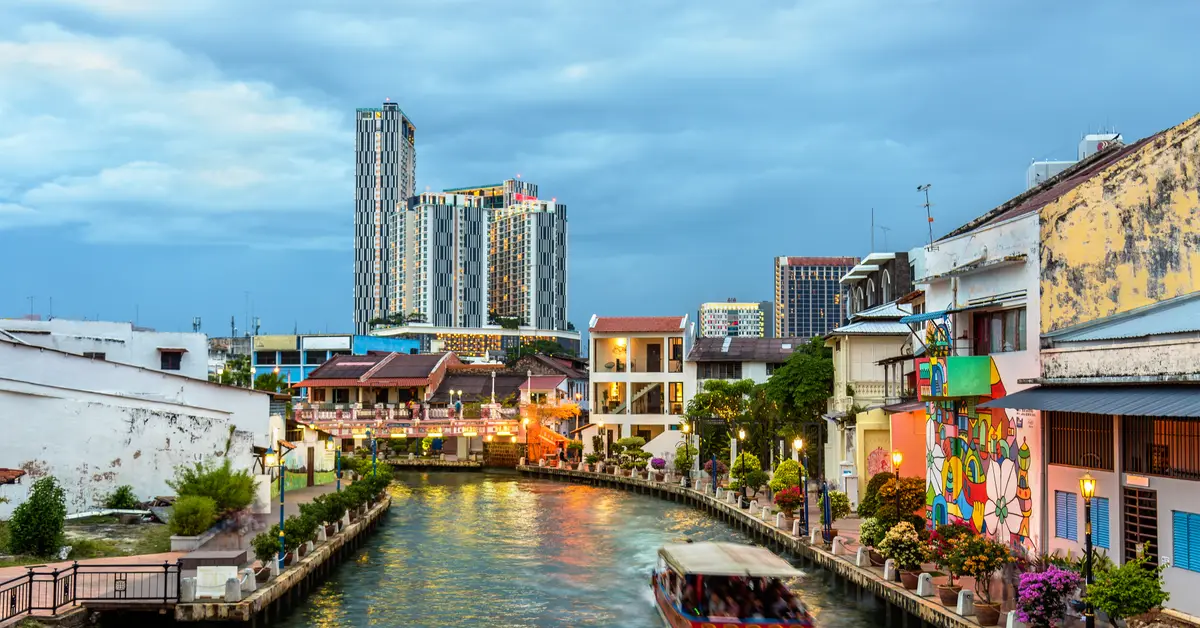
Historic cities such as Malacca and George Town preserve the legacy of the trading port and colonial eras, with classic architecture and distinctive old-town spaces. The blend of modern and traditional elements creates the unique appeal of Malaysian tourism.
Long-term residency and the MM2H programme
Detailed article on the Malaysia MM2H programme
For foreigners interested in long-term residency, Malaysia offers a widely known long-term residence visa programme. The Malaysia MM2H programme allows eligible foreigners to reside in the country for many years through a renewable residence card.
The programme is generally divided into various categories, linked to financial requirements such as fixed deposits, income, and assets. Some regions, such as Sabah or Sarawak, may apply their own variations regarding eligibility conditions.
The immigration authority is the official point of contact for residency procedures for foreigners. The specific conditions of the programme have been adjusted many times over the years; therefore, they are subject to change, and it is necessary to check current regulations before submitting an application.
For many, the appeal of Malaysia stems from its reasonable cost of living, developed infrastructure, multicultural environment, and favourable location in Southeast Asia.
Accompanying you on your journey in residency investment
The Prosperous Living Investment team advises on pathways, assesses profiles and manages investments transparently for every residency, citizenship and international property objective.
Free profile assessmentWhere life gets prosperous