


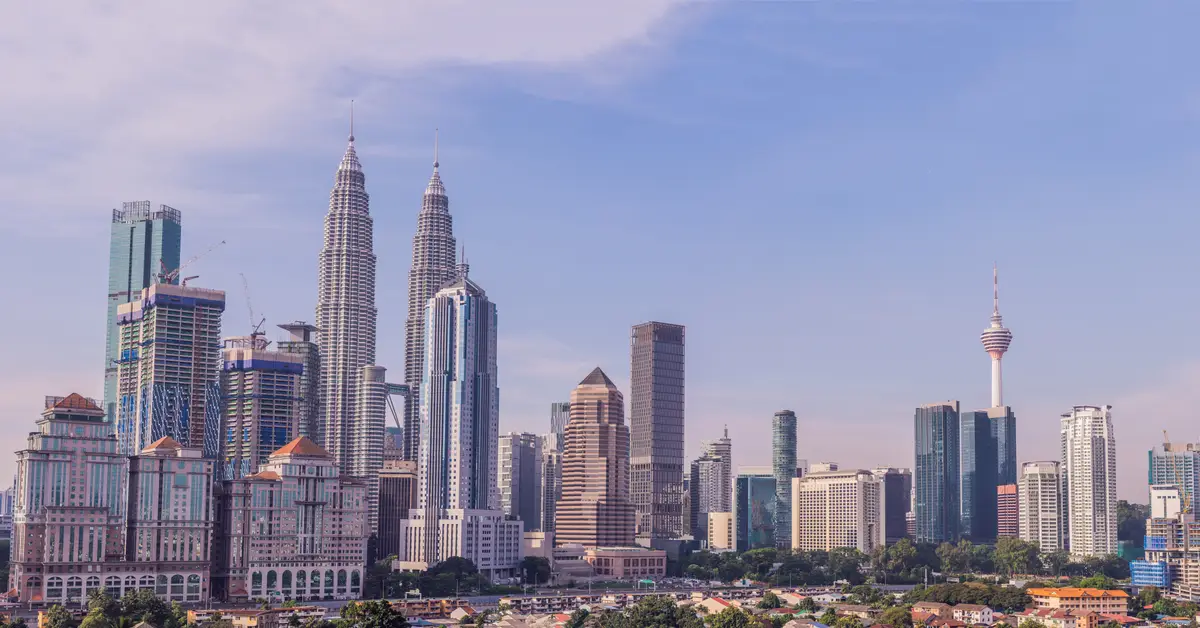
Education in Malaysia is organised into a continuous sequence of levels from preschool, primary and secondary school to university, featuring a diverse public school system, familiar national examinations and many public universities with a strong reputation across Southeast Asia. It is also a study destination that is attracting significant interest.
Contents
Overview of the Malaysian education system
The Malaysian education system is built on a model of sequential levels, from preschool, primary and secondary education to college and university. Most management, policy planning and quality oversight at the primary and secondary levels are handled by the Ministry of Education Malaysia while the university level has its own dedicated regulatory body.
A prominent feature is the diversity of school types and languages of instruction, reflecting the multi-ethnic society of the nation. Alongside the national school system using Bahasa Malaysia as the primary language, there are vernacular schools serving the Chinese and Indian communities. This diversity is deeply rooted in the country’s multicultural social fabric.
Bahasa Malaysia is the primary language of instruction in public schools, yet English plays an important role and is increasingly common, particularly at the university level. This combination of a widespread general education foundation and a university system that makes extensive use of English has helped make Malaysia one of the region’s attractions for international students.
Considering a residency programme? The Prosperous Living Investment team assesses your profile free of charge and advises on the pathway that fits your goals.
The role of the Ministry of Education and the national regulatory framework
Education is a sector invested in and coordinated by the Malaysian state at a national level. The Ministry of Education is responsible for the framework curriculum, textbooks, examination systems, and the licensing and supervision of primary and secondary educational institutions across the country. This centralised organisation helps maintain a relatively uniform curriculum across states and federal territories.
Higher education has a dedicated regulatory body responsible for licensing, quality accreditation and strategic development planning for public universities, private universities and foreign branch campuses. Separating primary/secondary management from higher education allows each level to have policies tailored to its specific characteristics.
The Malaysian state has repeatedly issued long-term plans and strategies to reform educational quality, improve foreign language proficiency, digital skills and the competitiveness of the workforce. International organisations such as the Organisation for Economic Co-operation and Development (OECD) are often referenced when comparing learning outcomes and education policies between countries.
Furthermore, the government is focused on expanding access to education for rural areas, remote regions and various population groups. The general goal is to ensure universal coverage while gradually improving quality to meet the needs of an economy aiming for high-income status.
Preschool and primary education
Before entering primary school, Malaysian children may attend preschools operated by the state, community organisations or private entities. This stage focuses on language familiarisation, basic social skills and preparing a foundation for formal schooling. Preschool enrolment has expanded significantly in recent years.
Primary school is a multi-year foundational stage that equips students with reading, writing, numeracy and basic knowledge of science and social studies. This is a widely accessible level of education with a high enrolment rate. Students study core subjects along with moral or religious education, depending on their family background.
At the primary level, Malaysia’s public school system is divided into two main branches based on the language of instruction. The first is the national school (sekolah kebangsaan) using Bahasa Malaysia as the primary language; the second is the vernacular school, comprising Chinese-medium and Tamil-medium schools, serving the Chinese and Indian communities. Bahasa Malaysia and English are still taught as compulsory subjects in both branches.
Public schools and vernacular schools
One of the most distinctive features of Malaysian education is the parallel existence of public schools using Bahasa Malaysia and schools taught in vernacular languages. This model stems from the country’s multi-ethnic history, where the Malay, Chinese and Indian communities live together and wish to preserve their languages and cultures through education.
National schools are the pillars of the system, using Bahasa Malaysia as the main language of instruction and serving as the choice for the majority of students. Meanwhile, Chinese and Tamil schools maintain the teaching of most subjects in their community languages while still ensuring the teaching of Bahasa Malaysia and English. Consequently, students can retain their mother tongue while still integrating into the general system.
This linguistic diversity also creates a multilingual learning environment from an early age. Many Malaysian students grow up able to use Bahasa Malaysia, English and their community language to varying degrees. This characteristic is tied to the country’s Malaysia demographics multi-ethnic and multi-linguistic landscape.
The vernacular school model is sometimes a subject of discussion regarding education policy and national identity. However, in practice, it remains a long-standing part of the system and reflects how Malaysia balances national unity with cultural diversity.
Secondary education and the SPM examination
After primary school, students move on to secondary school, where the curriculum expands to include more specialised subjects in natural sciences, social studies, languages and technical subjects. Most public secondary schools use Bahasa Malaysia as the language of instruction, while English continues to be emphasised as an important subject.
The most prominent milestone of secondary education is the national certificate examination commonly known as the SPM (Sijil Pelajaran Malaysia). This is a critical examination marking the completion of secondary school, serving a role similar to a graduation exam and acting as the basis for admission to subsequent study paths. SPM results have a significant impact on a student’s educational opportunities.
After receiving SPM results, Malaysian students have various paths. Some continue with pre-university programmes or transition classes; some follow qualification programmes such as A-Level, International Baccalaureate or foundation programmes organised by universities; others choose vocational and technical education paths.
The diversity of post-SPM paths allows students to choose a route suited to their abilities and career orientation. This is also the connection point between general education and university, where students begin to define their specialisation and accumulate the requirements to enter public or private universities.
- Public secondary schools primarily teach in Bahasa Malaysia, with an additional focus on English.
- SPM is the national examination marking the end of secondary school and serving as the basis for admission.
- After SPM, there are many options: pre-university, A-Level, foundation programmes or vocational education.
Vocational education and technical training
Alongside the academic path leading to university, Malaysia has also developed a system of vocational education and technical training. These institutions provide programmes in engineering, technology, services and many applied trades, aiming to train a skilled workforce for the industrial and service economy.
Vocational paths are receiving increasing attention in the context of Malaysia’s desire to improve labour productivity and reduce reliance on low-skilled labour. These programmes are often linked to the practical needs of businesses, combining theory and practice while opening up employment opportunities for students after graduation.
The diversification of post-secondary options, both academic and vocational, reflects the close link between education and the Malaysian economyeconomic development. A training system balanced between academic knowledge and vocational skills is seen as the foundation for this nation to move closer to its high-income goal.

Public university system
University education is where Malaysia’s ambition to improve the quality and academic reputation of its education system is most clearly demonstrated. The public university system comprises many institutions with long histories and large scales, offering a wide range of disciplines from natural sciences, engineering, and medicine to social sciences, economics, and the humanities.
Among public institutions, Universiti Malaya in Kuala Lumpur is often cited as one of the oldest and most prestigious universities in the country. Additionally, Universiti Kebangsaan Malaysia and Universiti Sains Malaysia (USM) are also key higher education institutions, playing a major role in research and training.
A group of Malaysian public universities is identified as research-oriented, with a focus on scientific research, academic publishing, and postgraduate training. These institutions frequently appear in regional and international university rankings, although their specific positions may change from year to year and across different rankings.
English is widely used at the university level, particularly in science, engineering, and postgraduate programmes, as well as in research and international publishing. This helps Malaysian students access global academic materials and facilitates the attraction of international students.
Private universities and international university branch campuses
Alongside the public system, Malaysia has a thriving private higher education sector, consisting of many universities, colleges, and institutes. The private sector offers a diverse range of subjects and programmes, from business and information technology to communications, design, and healthcare, meeting the growing needs of the market.
A notable point is the presence of branch campuses of foreign universities, primarily from English-speaking countries. These branch campuses allow students to follow international programmes and receive equivalent degrees right in Malaysia, with costs and living environments often considered more accessible than studying abroad in the home country.
Furthermore, many private institutions implement joint programmes, credit transfers, or dual degrees with foreign partners. This model creates flexibility for learners while contributing to making Malaysia an international education hub in Southeast Asia.
Malaysia as a regional study destination
In recent years, Malaysia has become increasingly known as a regional study destination, attracting students from many countries in Asia, the Middle East, and Africa. This appeal stems from a combination of factors: the prevalence of English-taught curricula, relatively affordable study and living costs, and a friendly, multicultural environment.
The presence of international university branch campuses and joint programmes allows international students to pursue degrees with an international element without necessarily having to travel to Western countries. For many families in the region, this is a balanced choice between quality and cost, especially when considering the short geographical distance and cultural similarities.
The capital, Kuala Lumpur, with its university system, urban infrastructure, and high level of internationalisation, is one of the key hubs attracting international students. Learning about the education system is also a way to better understand Malaysia the country in general, from its people and culture to its development orientation.
It should be noted that figures regarding the number of international students, tuition fees, or university rankings can change over time and vary between sources. Therefore, interested parties should check updated information from education authorities and specific institutions before making a decision.
Language in education and future trends
Language is a central theme in Malaysia’s education policy. Malay serves as the national language and the primary medium of instruction in public schools, while English is considered a key skill for international integration and enhancing the competitiveness of the workforce. Schools teaching in mother-tongue languages add further depth to the multilingual landscape.
In the context of globalisation, Malaysia continues to consider how to balance the strengthening of Malay as the national language with the enhancement of English proficiency, especially in science and technology subjects. This is a long-term policy challenge, linked to the goal of developing high-quality human resources.
Looking to the future, frequently mentioned priorities include improving teaching quality, promoting digital skills, increasing the practical relevance of curricula, and expanding equitable learning opportunities. These directions show that education continues to be seen as a key pillar for the nation’s sustainable development.
Overall, Malaysian education is a nuanced system, both widely accessible at the primary and secondary levels and featuring highlights in university and international education. The diversity of school types and languages is a characteristic that reflects the country’s multicultural identity.
Accompanying you on your journey in residency investment
The Prosperous Living Investment team advises on pathways, assesses profiles and manages investments transparently for every residency, citizenship and international property objective.
Free profile assessmentWhere life gets prosperous