


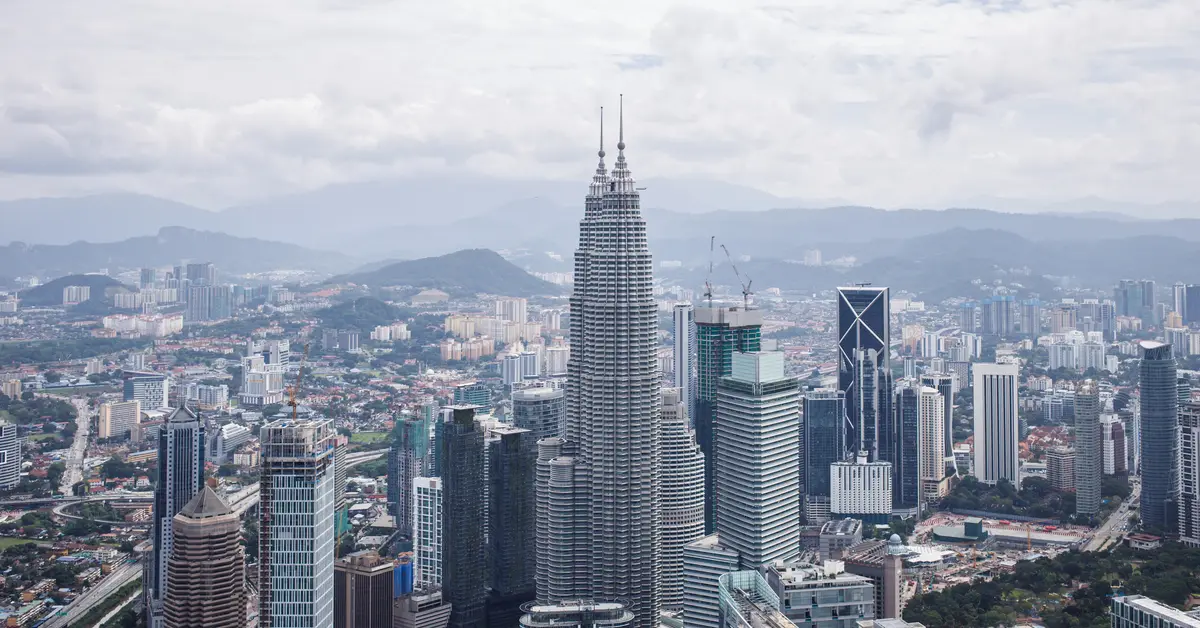
The Malaysian economy is one of the most dynamic in Southeast Asia, classified as an upper-middle-income and export-oriented economy. With the capital Kuala Lumpur as its financial centre, the nation combines electronics manufacturing, palm oil and oil and gas resources, alongside a rapidly expanding service sector.
Contents
Overview of the Malaysian economy
The Malaysian economy is classified as an upper-middle-income economy, according to the classification of World Bank. This is a mixed economy where the private sector plays the leading role, though the state remains involved through large corporations and government-linked companies. This structure has been shaped by decades of transition from agriculture to industry and services.
A defining feature of the economy is its high level of trade openness. Malaysia relies heavily on exporting manufactured goods and raw materials, while importing components and machinery. Consequently, domestic growth is closely tied to global trade cycles, particularly the demand for electronics and semiconductors.
Furthermore, its geographical location provides a distinct advantage for economic activity. Situated along the shipping lanes of the Strait of Malacca, one of the busiest maritime corridors in the world, the country has seen strong development in trade and logistics services.
Considering a residency programme? The Prosperous Living Investment team assesses your profile free of charge and advises on the pathway that fits your goals.
Sectoral structure of the Malaysian economy
The economy is supported by three major pillars: services, manufacturing, and the resource sector. In recent years, services have been the largest contributor to gross domestic product, reflecting the transition towards a more modern economy. Manufacturing remains the backbone of exports.
The resource sector, comprising oil and gas, palm oil, and minerals, was the primary driver of growth in the early stages. Today, the share of agriculture and mining in total output has declined relative to services, yet remains vital for state revenue and employment in many regions.
This industrial diversification makes the Malaysian economy more resilient to isolated shocks. When oil prices fluctuate, the manufacturing and service sectors can partially offset the impact; conversely, when electronics exports slow down, revenue from primary commodities serves as a buffer.
- Services: trade, finance, tourism, logistics, and information technology.
- Manufacturing: electronics, semiconductors, electrical equipment, chemicals, and processing.
- Resources: oil and gas, palm oil, rubber, timber, and minerals.
Electronics and semiconductors — export pillars
Electronics and semiconductors represent the country’s most critical export sector. Since the 1970s, Malaysia has attracted major chip assembly, testing, and packaging facilities from multinational corporations, establishing itself as a key link in the global semiconductor supply chain. Penang state is frequently cited as the primary hub of this industry.
Historically, activities have been concentrated in back-end processes such as packaging and testing, which are highly dependent on technical labour. In recent years, the country has sought to move up the value chain into design and advanced manufacturing, although this remains a long-term transition with significant challenges.
Because electronics account for a substantial share of export revenue, fluctuations in global technology demand directly impact economic growth. This serves as an advantage during technology upturns, but presents a risk when global markets weaken.
Palm oil, agriculture, and resources
Malaysia is one of the world’s leading producers and exporters of palm oil. The sector provides employment for a large rural workforce and contributes significantly to agricultural export earnings. Palm oil derivatives are widely used in food, cosmetics, and biofuels.
However, the industry faces mounting environmental and sustainability pressures, particularly regarding deforestation and emissions. Sustainability certification standards and requirements from import markets, notably Europe, are forcing the sector to adapt its farming practices.
In addition to palm oil, the country has a long-standing tradition of rubber production and logging, particularly in East Malaysia on the island of Borneo. The uneven distribution of resources across regions is also a defining characteristic of Malaysia geography, where Sabah and Sarawak are rich in natural resources.
Oil and gas and the role of Petronas
Oil and gas are strategic resources for the economy. The national oil and gas corporation, Petronas (Petroliam Nasional Berhad), manages the country’s hydrocarbon resources and is one of the largest enterprises in Southeast Asia. Profits and dividends from Petronas contribute a significant portion of the federal budget.
Liquefied natural gas is one of the sector’s primary exports. Extraction activities are heavily concentrated offshore, including off the coast of East Malaysia. Petronas has also expanded its investments internationally and is active in downstream petrochemical sectors.
This reliance on oil and gas revenues leaves the state budget sensitive to global energy prices. Consequently, diversifying revenue streams and reducing dependence on primary commodities are frequently highlighted policy objectives.
Tourism and the service sector
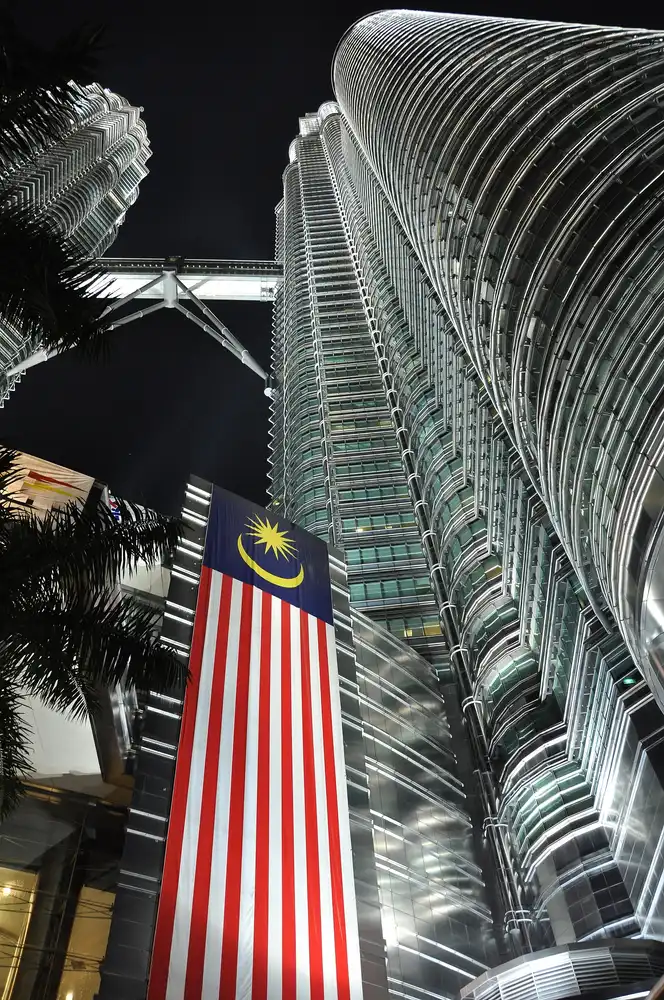
Tourism is a vital source of foreign exchange and a key driver of employment. The country attracts visitors through its cultural diversity, rich culinary scene, modern cities such as Kuala Lumpur with the Petronas Twin Towers, alongside its beaches and rainforests. The travel sector has recovered strongly following the disruptions of the pandemic.
The broader service sector also encompasses retail trade, logistics, telecommunications, and information technology. The digitisation of the economy and the growth of e-commerce are opening up new avenues of growth for the service sector in the coming years.
Furthermore, Malaysia has positioned itself as a regional hub for healthcare and education. Medical tourism and international education attract clients from neighbouring countries, generating additional revenue and reinforcing the country’s profile as a maturing service economy.
The appeal of the living environment and the reasonable cost of living also contribute to the economy through the influx of long-term foreign residents. Residence visas such as Malaysia MM2H programme attracting foreigners to live and spend, thereby supporting the local real estate and services markets.
Financial services and Islamic finance
Kuala Lumpur is the nation’s financial centre, home to banks, the stock exchange, and many major financial institutions. The banking system is relatively well-developed and strictly regulated, acting as a capital intermediary for both businesses and households.
A distinctive feature is Malaysia’s position in Islamic finance. The country is considered one of the world’s leading centres for Islamic banking and Sharia-compliant bonds (sukuk), attracting capital flows from many regions and creating a unique competitive advantage.
The financial sector also directly supports trade and investment. As international capital seeks opportunities in Southeast Asia, a developed financial system helps the country absorb and allocate resources more effectively.

The ringgit and monetary policy
The national currency is the ringgit, with the international code MYR. The ringgit exchange rate fluctuates according to market supply and demand and is influenced by commodity prices, international capital flows, and interest rate differentials with major economies. The central bank manages monetary policy to maintain price stability and support growth.
As an open economy that exports many primary commodities, Malaysia is particularly sensitive to exchange rate fluctuations and imported inflation. When global energy or food prices change, domestic price pressures can shift accordingly, requiring flexible regulation.
Because monetary and exchange rate indicators change constantly, specific figures can quickly become outdated. For updated data, readers should consult official sources such as reports from the International Monetary Fund or the central bank.
International trade and the Strait of Malacca
Trade is the lifeblood of the economy. Malaysia is deeply integrated into regional and global supply chains, with major trading partners across Asia, North America, and Europe. Total import and export turnover is often larger than the size of the gross domestic product, indicating a very high level of integration.
Its location along the Strait of Malacca provides a natural advantage for shipping and port services. The country’s major ports serve a massive volume of transshipment cargo, making logistics and warehousing a valuable service industry. This is also a factor that closely links the economy with Malaysia’s geography.
The country is also a member of many regional economic cooperation frameworks, including ASEAN and multilateral free trade agreements. This participation expands markets, attracts foreign investment, and reinforces Malaysia’s role as a regional production hub.
Labour, education, and productivity
The quality of human resources is a key factor in the ambition to upgrade the economy. Investment in Malaysian education and skills training are considered conditions for transitioning from labour-intensive stages to activities requiring higher knowledge and technology.
The national labour market attracts many immigrant workers in industries such as construction, agriculture, and manufacturing. At the same time, the brain drain phenomenon, where high-skilled personnel seek opportunities abroad, is a challenge of concern to policymakers.
Improving productivity and innovation is the key to overcoming the so-called middle-income trap. Linking the training system with the needs of technology businesses is emphasised as a necessary direction.
Challenges and outlook for the Malaysian economy
One of the long-term goals frequently mentioned is for the country to join the group of high-income economies. To achieve this, the Malaysian economy needs to continue diversifying, increasing value-added, and reducing dependence on certain industries or commodities.
Significant challenges still lie ahead. Its openness makes the economy vulnerable to external shocks; sustainability pressures weigh heavily on the resource sector; while the requirements for technology and productivity upgrades demand deep reforms in education and institutions.
Even so, the medium- and long-term outlook is generally assessed positively thanks to a diverse foundation, strategic location, and deep integration. International organisations often emphasise that results depend on the pace of reform and the ability to adapt. Because economic data changes year by year and may differ between sources, readers should cross-reference with updated reports before use.
Finally, the economy is closely tied to the internal factors of Malaysia, from demographic structure to regional development policy. Understanding the overall context helps to accurately assess the potential and limitations of this economy.
Accompanying you on your journey in residency investment
The Prosperous Living Investment team advises on pathways, assesses profiles and manages investments transparently for every residency, citizenship and international property objective.
Free profile assessmentWhere life gets prosperous