


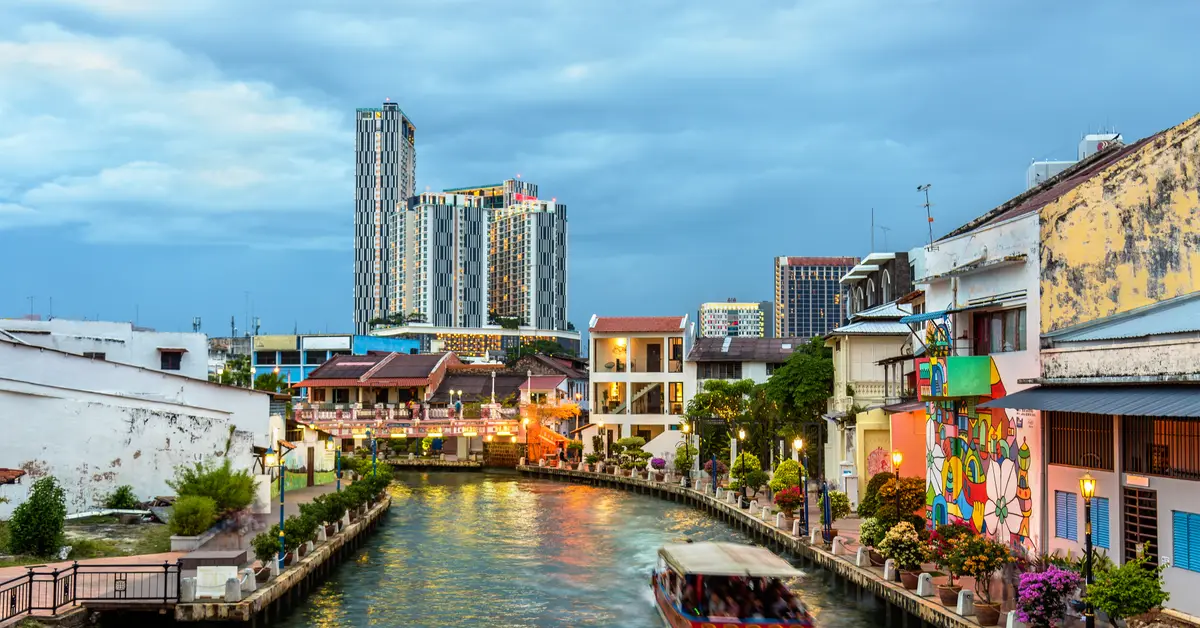
Learning about the history of Malaysia means tracing a long journey from ancient Malay kingdoms and coastal trading ports, through the Malacca Sultanate, the colonial centuries, the Japanese occupation, to independence in 1957 and the birth of the Federation of Malaysia in 1963. Today’s capital, Kuala Lumpur, is the culmination of that process.
Contents
Early days: ancient Malay kingdoms and coastal trading ports
Before there was a unified nation called Malaysia, this land was a collection of many communities and small states located along the Malay Peninsula and the northern part of Borneo. Its position between the Indian Ocean and the South China Sea made it a natural transit point for merchants travelling between East Asia, South Asia, and the Arab world. Consequently, coastal trading ports soon became the nuclei of political and economic life.
From the early centuries of the Common Era, Indian cultural influence reached the region, leaving marks on beliefs, writing, and models of kingship. Many political entities with Hindu and Buddhist characteristics existed, linked to a vast maritime trade network spanning island Southeast Asia.
Ancient documents regarding this period are limited, so historians often describe it qualitatively rather than confirming precise milestones. What can be said with certainty is that maritime trade, rather than domestic agriculture, played a role in shaping the regional identity from the very beginning.
On the Borneo side, there were also riverine and coastal communities with their own forms of social organisation. The difference between the peninsula and the island regions later became a characteristic of the federal nation, as the two regions, separated by the South China Sea, coexisted within one state.
Considering a residency programme? The Prosperous Living Investment team assesses your profile free of charge and advises on the pathway that fits your goals.
The Malacca Sultanate in the 15th century
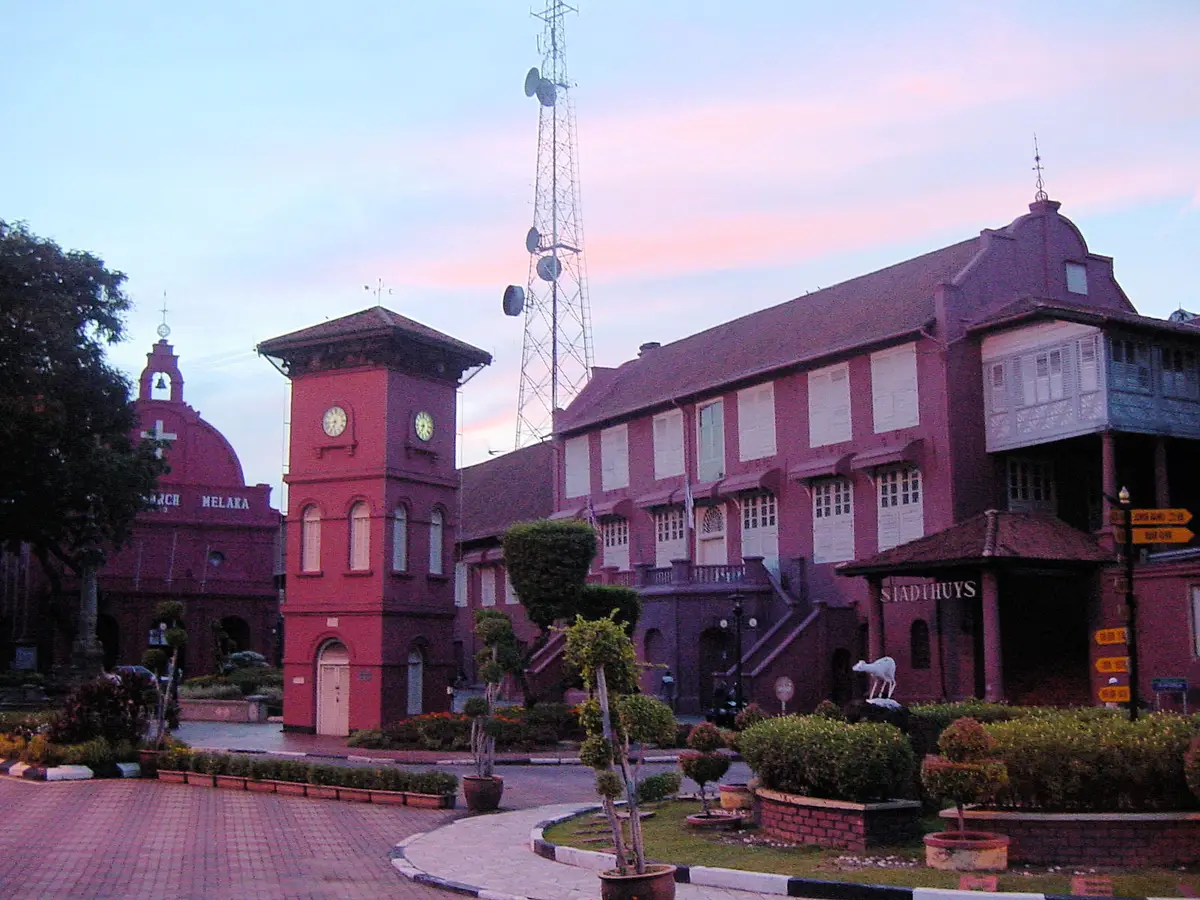
The first major turning point in Malaysian history is linked to the rise of the Malacca (Melaka) Sultanate around the 15th century. Founded by a Malay leader, Malacca quickly developed from a fishing village into one of the busiest trading ports in Southeast Asia at the time.
Malacca’s location on the strait of the same name allowed the kingdom to control the flow of ships between the two oceans. Merchants from China, India, the Arab world, and neighbouring islands gathered here, bringing goods, languages, and beliefs. It was in this trading environment that Islam spread and gradually became the dominant religion of the Malay ruling class.
Malacca also contributed to shaping the Malay language as a common regional trade language. The legacy of the kingdom’s institutions, laws, and court culture was later inherited by many Malay states, creating a continuous thread in Malay identity.
The prosperity of Malacca was also the reason it became a target for outside powers. When Europeans began seeking routes to the East, this wealthy trading port lay directly on the route they were eager to control.
The Malacca period is often referred to as a golden age in the historical memory of the Malay people. The image of a powerful maritime kingdom, open to trade and diverse in its population, became an important reference point for understanding the origins of the nation. Many modern Malaysian cultural values can be traced back to this period.
Colonial period: Portugal, the Netherlands, and the Straits Settlements
In the early 16th century, the Portuguese occupied Malacca, beginning a long period of successive European power presence in the region. The fall of Malacca to foreign hands marked the decline of the once-powerful Malay kingdom and opened an era of colonial competition.
In the 17th century, the Dutch replaced the Portuguese in controlling Malacca, primarily to protect their commercial interests in the island region. The transfer of power between European forces reflected the enduring strategic value of the Strait of Malacca for maritime trade.
By the late 18th and early 19th centuries, the British gradually established influence on the Malay Peninsula. They established the Straits Settlements, including important ports such as Penang, Malacca, and Singapore. These were commercial and administrative bridgeheads that helped the British expand their power into the interior.
Throughout this period, the political structure of the land was quite fragmented: many Malay states maintained their local sultans, yet they gradually fell under the influence and protection of the colonialists. The interweaving of local and foreign power was a prominent feature of the transition period.
British rule and the rubber and tin plantation economy
During the British colonial period, the economy of the Malay Peninsula transformed significantly to serve the global market. Two prominent pillars were tin mining and rubber cultivation, both of which were in high demand during the global industrialisation phase.
To meet the labour demand for mines and plantations, the colonial government encouraged large-scale migration. The Chinese came to work extensively in the tin mines, while Indians were brought over to serve on the rubber plantations. This wave of migration laid the foundation for the characteristic multi-ethnic social structure that still influences life Malaysia today.
The division of labour by ethnicity, though not absolute, created distinct communities with different economic roles. The Malays were largely tied to agriculture and the local administrative apparatus, while trade and mining attracted large numbers of immigrants.
Politically, the British gradually consolidated the small states into larger administrative groups for easier management. This governance model, combining indirect rule through the sultans with the colonial civil service system, shaped the institutional framework that Malaysian politics modern, largely inheriting many elements.
Japanese occupation during the Second World War
During the Second World War, the Japanese military entered and occupied the Malay Peninsula and its surrounding areas. The rapid collapse of the British colonial administration under the Japanese onslaught was a major shock, shaking the image of invincibility of the Western powers.
The occupation period left many hardships for the population, from food shortages to social tensions. However, this upheaval also strongly awakened political consciousness and nationalism within local communities.
When the war ended and the Japanese withdrew, the British returned, but the landscape had fundamentally changed. The desire for self-governance and independence became clearer than ever, paving the way for political movements demanding self-determination in the following years.
The immediate post-war period was also a time of great instability on the peninsula, as various political and armed forces competed for influence. In this complex context, the need for a new political order determined by the local people themselves became increasingly urgent, driving the negotiation process for the future of the land.
The road to Malaya’s independence in 1957
The post-war period witnessed efforts to politically reorganise the Malay Peninsula. The British proposed several plans to unify the territories, but met with resistance from local communities, particularly regarding the rights of the indigenous Malays and the status of the rulers.
From these debates, political organisations representing different ethnic groups gradually formed and aligned. The negotiation process between local leaders and the British administration took place step by step, aiming for a peaceful transfer of power.
In 1957, the Federation of Malaya officially gained independence, ending the long period of colonial rule on the peninsula. Tunku Abdul Rahman became the first prime minister, widely recognised as one of the central figures in the independence process.
The 1957 event was a foundational milestone in Malaysia’s history, establishing the basis for a federal constitutional monarchy with a rotating monarchy. This political framework was later expanded when other territories joined.
Establishment of the Federation of Malaysia in 1963
Following Malaya’s independence, the idea of a wider federation was discussed, aiming to connect the peninsula with territories in northern Borneo. The goal was to create a more stable political entity amid a volatile regional context.
In 1963, the Federation of Malaysia was officially established, expanding from Malaya by incorporating additional territories, including Sabah and Sarawak on the island of Borneo. This event marked the first time the name Malaysia was used for a unified nation comprising both the peninsula and the Borneo territories.
The unification of the two regions separated by the South China Sea created a federal state diverse in both geography and ethnicity. The newly joined territories were granted specific agreements and autonomy to safeguard their unique interests.
The formation of Malaysia was not entirely smooth, facing opposition from some neighbouring countries and internal debates over the power structure. Nevertheless, 1963 is still regarded as the birth of the modern state of Malaysia.
The federal model requires a balance between the powers of the central government and the autonomy of the states. This characteristic, shaped from the very beginning of the nation, remains an important feature of the state structure, especially for the two large states on Borneo, which have their own distinct status and history.
Singapore separates from Malaysia in 1965
When the Federation of Malaysia was established, Singapore was initially part of it. However, differences in politics, economics, and visions for society between Singapore and the federal government soon escalated into tensions.
In 1965, Singapore separated from Malaysia to become an independent, sovereign nation. This was a rare event, with a territory leaving a federation shortly after joining.
This separation reshaped the regional political map and left a lasting mark on relations between the two countries. Since then, Malaysia and Singapore have developed along separate paths, while maintaining close economic and social ties.
The 1965 event also highlighted the internal challenges of a newly formed, diverse federal state. Reconciling different interests within a common framework was no simple task, and this was one of the experiences that shaped how Malaysia managed relations between its territories in the future.
Modern development and Malaysia’s historical heritage
Following the upheavals of the 1960s, Malaysia entered a phase of focused nation-building and economic development. The country gradually transitioned from an economy heavily reliant on agricultural products and minerals to industry and services, with major urban centres emerging around Kuala Lumpur and its surrounding areas.
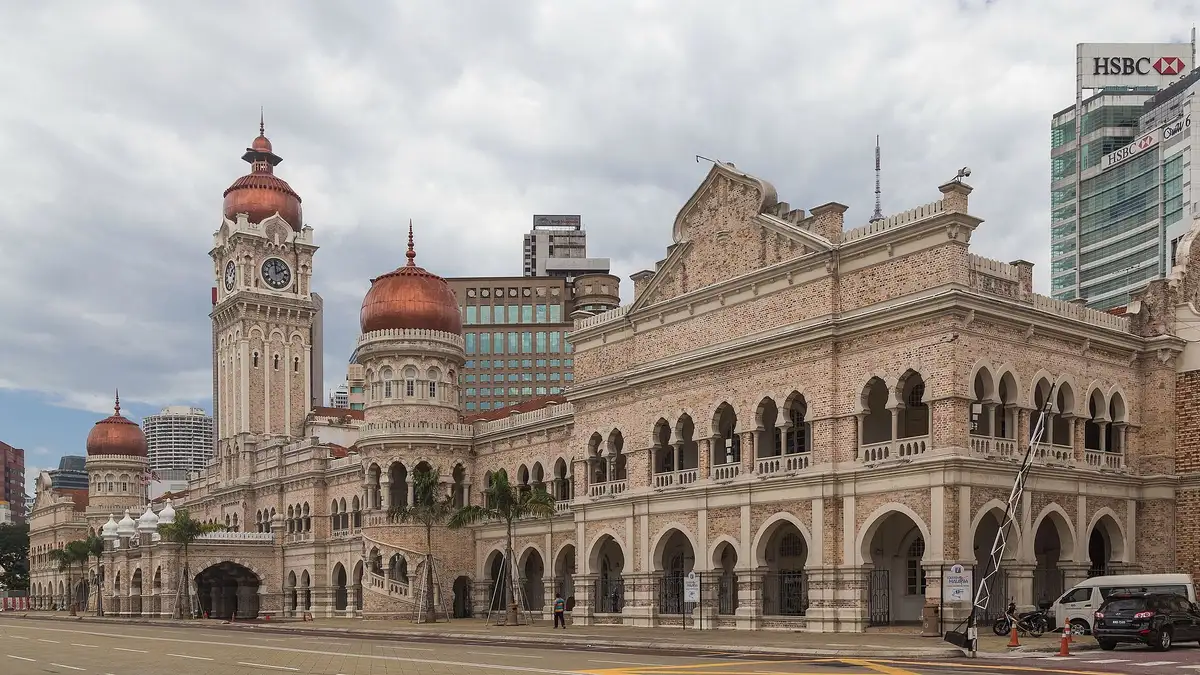
The capital, Kuala Lumpur, became a symbol of modernisation, bringing together prominent architectural landmarks and the nation’s financial and commercial activities. This development reflects a long-term effort to propel Malaysia into the high-income bracket.
Malaysia’s historical heritage is clearly visible in its multi-ethnic, multi-religious social structure and its Malaysia culture rich blend of Malay, Chinese, Indian, and indigenous traditions. Vestiges from the Malacca and colonial eras are still preserved, with several historic districts recognised by the United Nations Educational, Scientific and Cultural Organization (UNESCO) as heritage of outstanding value.
Alongside economic growth, harmoniously managing relations between ethnic and religious communities has always been a major theme in national life. Policies aimed at balancing interests and fostering social cohesion reflect lessons learned from past historical upheavals.
Looking back at the entire journey, Malaysia’s history is a story of strategic geographical location, maritime trade, and the meeting of diverse peoples and cultures. It is these historical layers that have shaped the diverse and dynamic federal nation of today.
The major milestones of this process can be summarised as follows:
- 15th century: The Malacca Sultanate rises as a major trading port, spreading Islam and the Malay language.
- Early 16th to 19th century: The colonial period, marked by the successive presence of the Portuguese, Dutch, and British.
- Second World War: The Japanese military occupies the Malay Peninsula, shaking the colonial order.
- 1957: The Federation of Malaya gains independence, with Tunku Abdul Rahman as the first prime minister.
- 1963: The Federation of Malaysia is established with the accession of Sabah and Sarawak on the island of Borneo.
- 1965: Singapore separates from Malaysia, becoming an independent nation.
Accompanying you on your journey in residency investment
The Prosperous Living Investment team advises on pathways, assesses profiles and manages investments transparently for every residency, citizenship and international property objective.
Free profile assessmentWhere life gets prosperous