

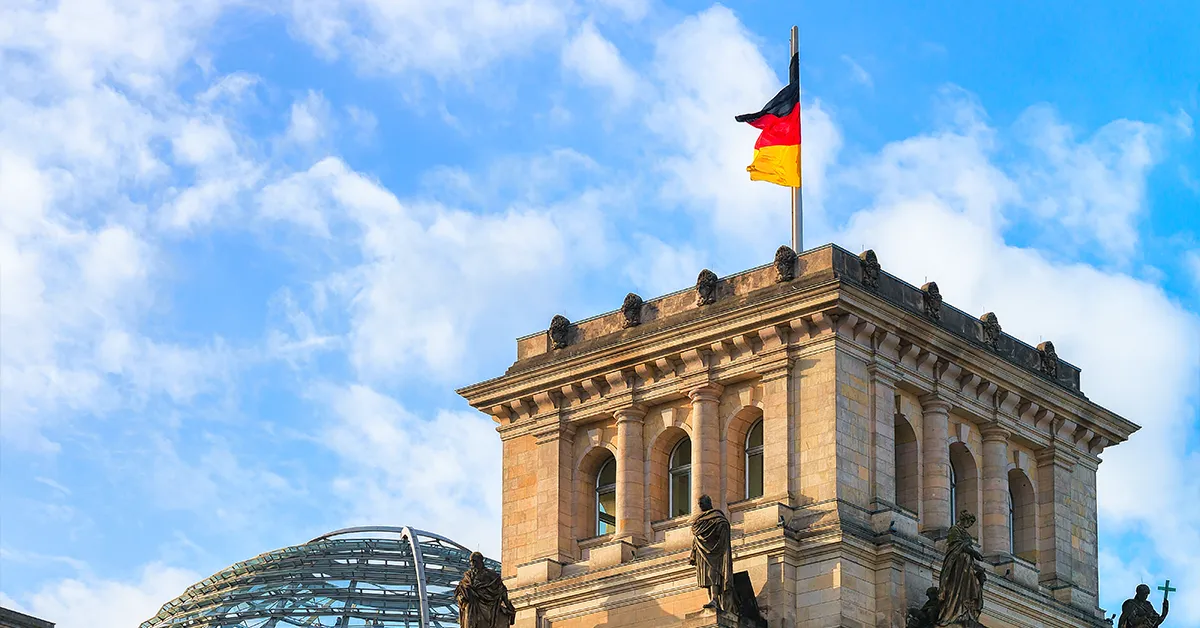
Germany (full name: the Federal Republic of Germany, in German Bundesrepublik Deutschland) is a country in the centre of Europe, with a central role in the European Union (EU) and the region’s largest economy. With an area of 357,022 km², a population of around 83.6 million (mid-2026) and Gross Domestic Product (GDP) of EUR 4,305 billion in 2024, Germany is the most populous country in the EU and the world’s third largest economy after the United States and China.
The country’s capital is Berlin, its federal political system comprises 16 states (Bundesland), and it plays a key role in international organisations such as the United Nations, NATO, the G7, the G20 and the OECD. Germany is also a leading destination for migrants, international students and skilled workers worldwide, second only to the United States in the number of immigrants received each year.
Message
History
Detailed article:The history of Germany
German history is one of the longest and most complex in Europe, stretching over more than two thousand years. The land regarded today as Germany was once home to the Germanic tribes of antiquity, later forming the Holy Roman Empire which lasted from 962 to 1806. This was the foundational period for the region’s cultural and religious identity, particularly the Protestant Reformation begun by Martin Luther in 1517.
By the 19th century, the German states were unified under the leadership of Otto von Bismarck, forming the German Empire in 1871. This young country quickly became a leading industrial power, but also took part in two World Wars causing catastrophic consequences in the first half of the 20th century.
After the Second World War, Germany was divided into two separate states in 1949: the Federal Republic of Germany (West Germany) and the German Democratic Republic (East Germany). The Berlin Wall, built in 1961, became the emblem of the Cold War. The fall of the Berlin Wall on 09/11/1989 and German reunification on 03/10/1990 opened a new chapter for Europe as a whole.
From the 1990s to the present, Germany has reasserted its position as Europe’s economic and political driving force. The country has played a central role in enlarging and consolidating the European Union, and in handling major challenges such as the eurozone sovereign debt crisis, the refugee wave of 2015 and the Russia-Ukraine conflict from 2022.
Considering a residency programme? The Prosperous Living Investment team assesses your profile free of charge and advises on the pathway that fits your goals.
Geography
Detailed article:The geography of Germany
Germany lies in Central Europe, bordering nine countries: Denmark to the north; Poland and the Czech Republic to the east; Austria and Switzerland to the south; and France, Luxembourg, Belgium and the Netherlands to the west. German territory meets the Baltic and the North Sea, creating important maritime trade gateways.
German terrain is varied, dividing into three main areas: the northern plain with its low, flat landscape; the central uplands with mid-range mountains such as the Harz and the Black Forest; and the Alps in the south bordering Austria. The highest peak is the Zugspitze at 2,962 metres.
Germany’s river system comprises major rivers such as the Rhine, Elbe, Danube and Main, playing an important role in water transport, industry and tourism. Lake Constance (Bodensee) on the southern border is the third largest lake in Central Europe.
The climate is temperate maritime in the west and temperate continental in the east, with four distinct seasons. Average winter temperatures range from -1°C to 4°C and summer from 17°C to 22°C. Around a third of the territory is covered by forest, making Germany one of the most forested countries in Western Europe.
Politics
Detailed article:The German political system
Germany is a federal, parliamentary democratic state governed by the rule of law under the Basic Law (Grundgesetz) promulgated in 1949. The political system is organised on the principle of separated powers between the federal level and the 16 states, balancing central power with local self-government.
The power structure comprises four main bodies:
- The Federal Chancellor (Bundeskanzler): the head of government, elected by the Bundestag, currently Friedrich Merz since 06/05/2025.
- The Federal President (Bundespräsident): the head of state, with a mainly ceremonial and representative role.
- The Federal Parliament (Bundestag): the main legislative body, directly elected by voters, with 736 seats in the current term.
- The Federal Council (Bundesrat): representing the 16 states in the legislative process.
The Federal Constitutional Court (Bundesverfassungsgericht) in Karlsruhe is the highest judicial body, with the power to review the constitutionality of legislation and political decisions. The four largest political parties today comprise the CDU/CSU (conservative), the SPD (social democratic), the Greens (Bündnis 90/Die Grünen) and the AfD (right-wing).
2026 marks a politically challenging period for the German government. Five state elections will be held in Baden-Württemberg, Rhineland-Palatinate, Saxony-Anhalt, Mecklenburg-Vorpommern and Berlin, seen by analysts as an important test for the governing coalition between the CDU and SPD.
The economy
Detailed article:The German economy
Germany is the largest economy in the European Union and the third largest in the world by nominal GDP. According to theGerman Federal Statistical Office (Destatis), GDP in 2024 reached EUR 4,305 billion, contributing around 23.7% of the eurozone economy and approximately 25% of total EU GDP.
The structure of the German economy centres on three sectors:
- Services: around 70% of GDP, comprising finance, insurance, transport, information technology and tourism.
- Industry: around 29%, the traditional pillar with the motor, machinery, chemicals and pharmaceutical sectors.
- Agriculture: less than 1% of GDP but highly productive.
Germany is known as the “workshop of Europe” with global industrial brands such as Volkswagen, BMW, Mercedes-Benz, Siemens, Bosch, BASF and SAP. The country is also the world’s third largest exporter, behind only China and the United States, with exports accounting for more than 46% of GDP. The main export markets comprise the United States, France, China, the Netherlands and Poland.
After two consecutive years of recession, the economy has entered a slow recovery. On European Commission forecasts, German GDP grew 0.2% in 2025 and is expected to reach 1.2% in 2026 and 2027. The Merz government passed a major fiscal reform in March 2025, exempting defence spending above 1% of GDP from the debt rules and establishing a special EUR 500 billion fund for infrastructure and climate investment.
Germany’s research and development (R&D) budget reached EUR 137.1 billion in 2024, equivalent to 3.17% of GDP, above the 3% target of the “Europe 2020” strategy. Germany ranks third in the world for R&D spending relative to GDP, behind only South Korea and Israel.
Demographics
Detailed article:The demographics of Germany
The population in 2026 is estimated at around 83.6 million, the largest in the EU and 19th in the world. Population density is 240 per km², with 77% living in urban areas. Berlin is the largest city at around 3.8 million, followed by Hamburg, Munich, Cologne and Frankfurt am Main.
Germany faces two opposing demographic trends. On one hand, the birth rate has been low for decades, ranging from around 1.38 to 1.5 children per woman, far below the 2.1 needed to sustain the population naturally. On the other, Germany is the world’s second largest recipient of immigrants, which keeps the total population rising slightly each year.
On Destatis projections published on 11/12/2025, by 2035 one in every 4 Germans will be aged 67 or over. The number of people of retirement age will rise from 16.7 million today to 20.5–21.3 million by 2038, putting great pressure on the social security system and the labour market.
In 2025, around 31.1% of the German population had an immigrant background (comprising foreign nationals, naturalised citizens and their children). The largest immigrant communities come from Turkey, Poland, Syria, Italy and Romania. On religion, Christianity remains the main faith (Roman Catholic 29.9% and Protestant 29.8%), while those of no religion make up 34% and Muslims around 6.1%.
Education
Detailed article:The German education system
The German education system is rated among the best in the world, with a long academic tradition and a policy of tuition-free higher education for both domestic and international students in most states. Education is administered by the 16 states, so the system varies somewhat between regions while still meeting common national standards.
The structure of German education comprises the following stages:
- Nursery (Kindergarten): voluntary, for children from 3 to 6.
- Primary school (Grundschule): compulsory, lasting 4 years (ages 6-10).
- Secondary school: branching into the Hauptschule, Realschule, Gymnasium and Gesamtschule, lasting 5-9 years.
- University and postgraduate: comprising the Universität (research university) and the Fachhochschule (university of applied sciences).
Germany has many prestigious universities ranked highly worldwide such as the Technical University of Munich (TUM), Ludwig Maximilian University of Munich (LMU), Heidelberg University and Humboldt University Berlin. The dual vocational training system (Duale Ausbildung) — combining theory at a vocational school with practice at a company — is a model many countries have studied.
Germany currently has around 460,000 international students, fourth in the world for the number of international students received, after the United States, the United Kingdom and Australia. The policy of free tuition at public universities, a cost of living reasonable by other Western European standards, and the chance to stay and work after graduation make Germany an attractive destination for Vietnamese and other Asian students.
Culture
Detailed article:German culture
German culture is a blend of a rich intellectual heritage and deep regional variety. Germany is known as “the land of poets and thinkers” (Land der Dichter und Denker) for its immense contributions to humanity’s philosophy, literature, music and science.
In music, Germany is the cradle of such masters as Johann Sebastian Bach, Ludwig van Beethoven, Johannes Brahms, Felix Mendelssohn and Richard Wagner. German literature is marked by Goethe, Schiller, Thomas Mann, Hermann Hesse and Günter Grass. German philosophy from Kant, Hegel, Marx and Nietzsche to Heidegger and Habermas has shaped Western thought for more than three centuries.
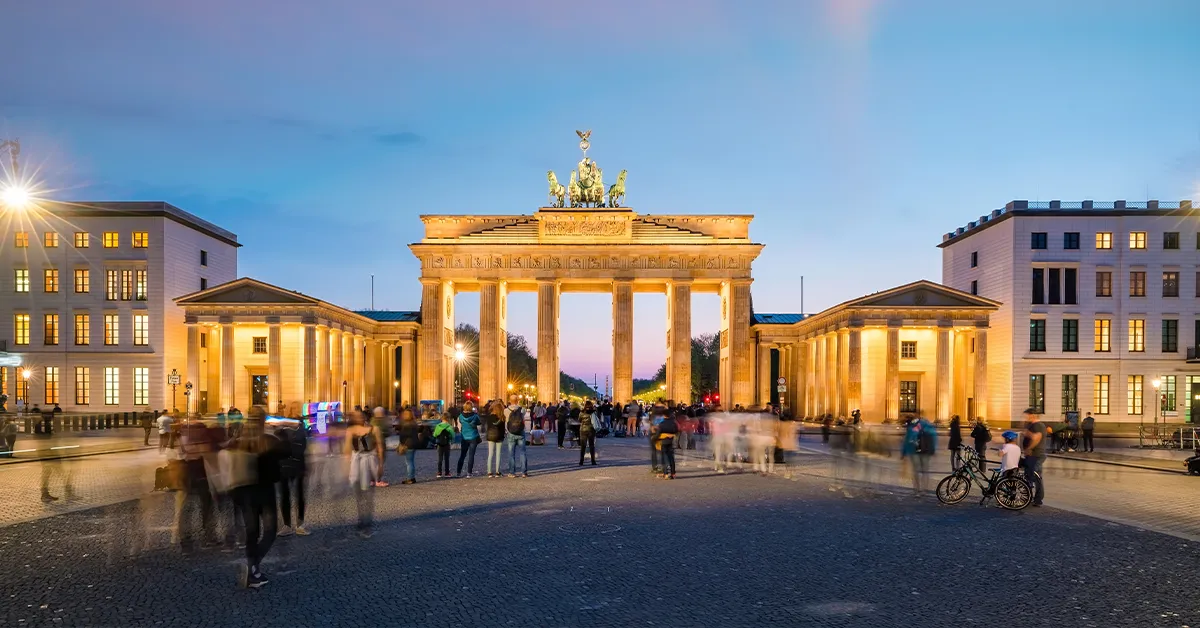
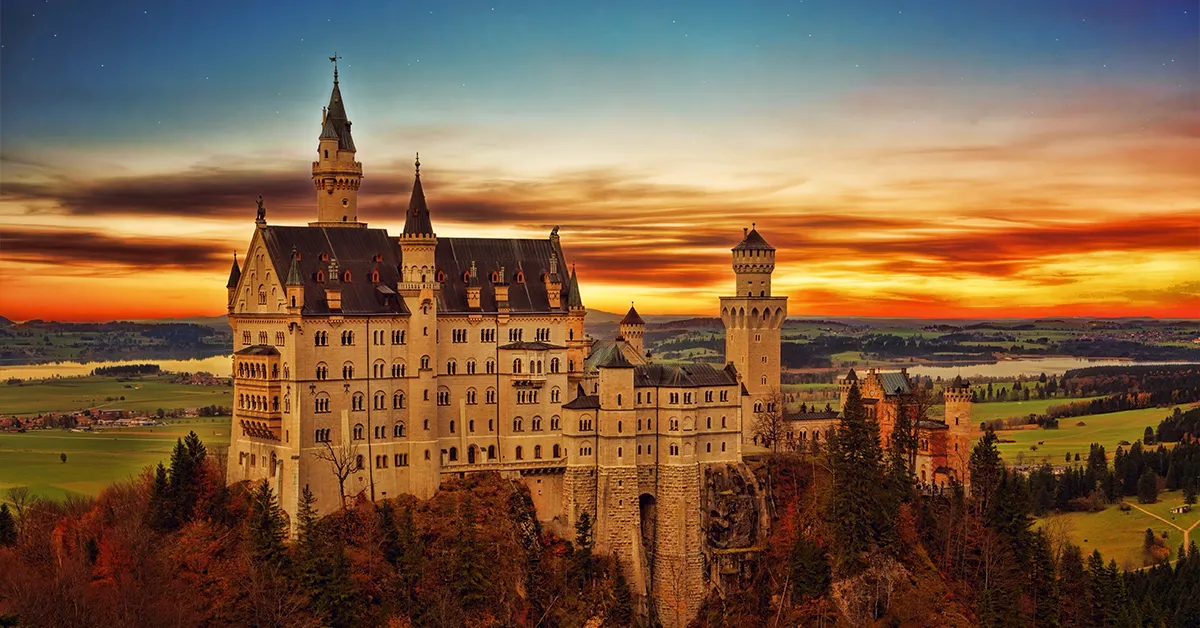
The country has 54 UNESCO World Heritage Sites as at 2025, third in the world after Italy and China. The famous destinations comprise Neuschwanstein Castle, the Brandenburg Gate, Cologne Cathedral, the old town of Bamberg and the Oktoberfest in Munich. Germany is also home to the world’s leading brands of luxury cars, watches, cameras, cutlery and optical glass.
The cuisine varies by region, notable for sausages (Wurst) in more than 1,500 varieties, beer (with more than 5,000 brands), bread (more than 3,000 kinds) and traditional dishes such as Schnitzel, Sauerkraut and Bretzel. The annual Oktoberfest in Munich is the largest cultural and tourism event in the world.
International relations
Detailed article:Germany’s international relations
Germany is one of the most influential diplomatic powers in Europe, playing a pillar role in almost every multilateral international organisation. With a foreign policy based on democratic values, human rights and multilateralism, Germany takes an active part in shaping a rules-based international order.
Germany is a founding member of the European Economic Community (the forerunner of the EU) in 1957, a NATO member since 1955, a United Nations member since 1973, and a member of the G7, G20 and OECD. It is also the second largest contributor to the EU budget and the third largest to the United Nations regular budget.
The Franco-German axis is regarded as the twin engine of European integration. The Élysée Treaty of 1963 and the Aachen Treaty of 2019 institutionalised this special bilateral relationship. The Weimar Triangle (Germany, France and Poland) is also an important mechanism for cooperation on European security and foreign affairs.
Since the Russia-Ukraine conflict began in February 2022, Germany has made a historic turning point (Zeitenwende) in security and defence policy. The Merz government has committed to raising defence spending above 2% of GDP, modernising the Bundeswehr and aiming to become “the strongest land force in Europe”. The 2026 budget allocates EUR 11.5 billion in support for Ukraine.
German-Vietnamese relations were established in 1975 and upgraded to a Strategic Partnership in 2011. Germany is Vietnam’s largest trading partner in the EU and a leading destination for Vietnamese students and skilled workers in Europe.The EU Entry/Exit System (EES)applied in Germany since 2025 has changed the entry process for holders of aVietnamese passport.
Sport
Sport has an important place in German life, with more than 27 million people (equivalent to 30% of the population) belonging to sports clubs. Football is the national sport, with the national team winning the FIFA World Cup four times (1954, 1974, 1990, 2014) and the UEFA European Championship three times. The Bundesliga is one of the top five leagues in Europe.
Germany is also an Olympic power with more than 200 gold medals across the history of the summer and winter Games. The other strong sports comprise Formula 1 motor racing (with the legendary Michael Schumacher, a 7-time world champion), athletics, swimming, cycling and tennis. Munich hosted the 1972 Summer Olympics and Germany hosted the FIFA World Cup in 1974 and 2006 and the UEFA European Championship in 1988 and 2024.
Transport
The transport system is among the most developed in the world and is the backbone of the export economy. The motorway network (Autobahn) runs more than 13,000 km, famous for the many stretches without a speed limit. The total road network exceeds 230,000 km, connecting the cities and the EU borders comprehensively.
The rail network run by Deutsche Bahn runs more than 33,000 km, with ICE high-speed trains reaching a top speed of 320 km/h. Frankfurt Airport is the fourth busiest in Europe by passenger numbers and the largest air cargo hub in the EU. The Port of Hamburg is the third largest container port in Europe after Rotterdam and Antwerp, serving as the continent’s “northern gateway”.
Defence
The German armed forces (Bundeswehr) comprise the Army (Heer), the Air Force (Luftwaffe), the Navy (Deutsche Marine), the Medical Service and the Cyber and Information Domain Service. As at 2025, the Bundeswehr has around 181,000 professional personnel, fifth in Europe by strength.
Germany has been a NATO member since 1955 and is a key country in the alliance’s collective defence structure. Since the Zeitenwende turning point of 2022, Germany has committed to raising defence spending above 2% of GDP and allocated a special EUR 100 billion fund for modernising the armed forces. The Merz government has proposed a new military service law and aims for the Bundeswehr to become “the strongest land force in Europe” within the next decade.
Health and the environment
The health system is among the best in the world, with a compulsory multi-source health insurance model (gesetzliche Krankenversicherung and private Krankenversicherung) covering the whole population since 1883. Health spending accounts for around 12.7% of GDP, the highest in the EU. Germany has more than 1,900 hospitals and leads Europe in hospital beds per head.
On the environment, Germany is one of the world’s leaders in renewable energy policy (the Energiewende). In 2025, renewables supplied around 60% of total electricity generation. Germany aims for carbon neutrality by 2045, five years ahead of the common EU commitment. However, the decision to phase out nuclear power from 2023 has posed a major energy security challenge, particularly after gas supplies from Russia were cut in 2022.
Summary
Germany holds a distinctive position on the world map: the economic engine of Europe, a cultural and scientific power, and an ideal destination for migrants, international students and international investors. With a population of more than 84 million, GDP of more than EUR 4,300 billion and a central role in the EU, NATO and many other international bodies, Germany continues to shape the future not only of Europe but of the multilateral world order.
For Vietnamese people interested in studying, working, investing or exploring settlement opportunities in Europe, Germany is an option worth weighing thanks to its open education policy, a labour market short of skilled workers and a high quality of life. In-depth articles on history, the economy, the education system and related topics will be covered in detail in what follows.
Accompanying you on your journey in residency investment
The Prosperous Living Investment team advises on pathways, assesses profiles and manages investments transparently for every residency, citizenship and international property objective.
Free profile assessmentWhere life gets prosperous