


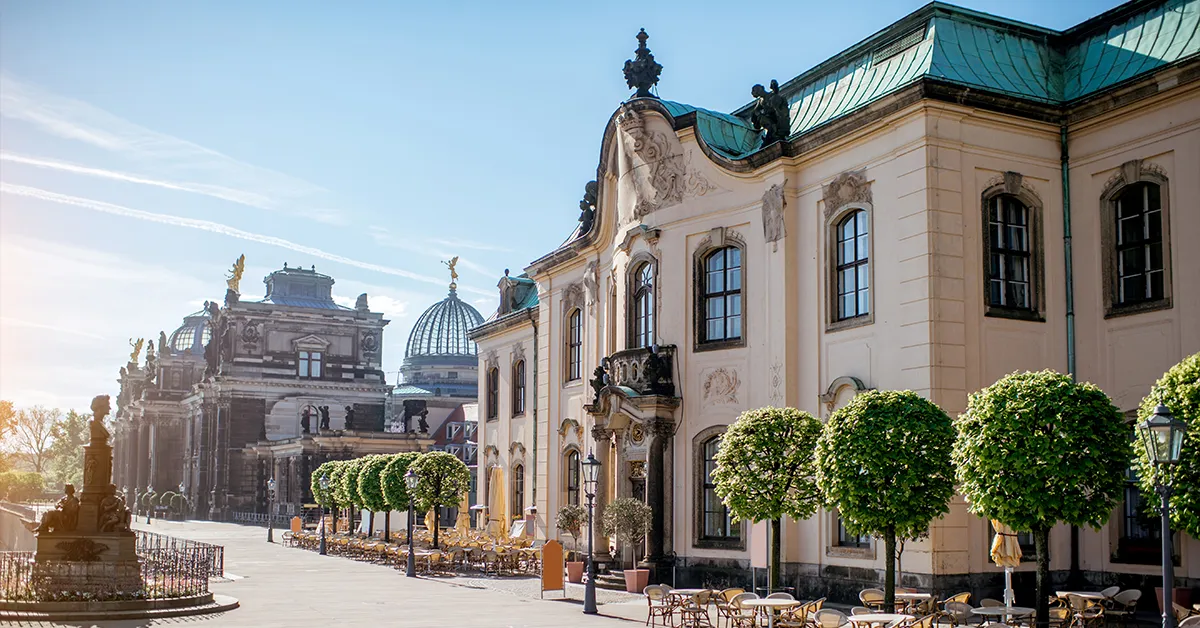
Education in Germany is regarded as among the best in the world, renowned for its long academic tradition, rigorous teaching standards and, in particular, its policy of tuition-free public universities for both domestic and international students since 2014. This education model is built on the philosophy that education is a fundamental right and a public investment, not a commercial commodity.
Responsibility for education lies with the 16 states under the federal principle, so the system differs somewhat between regions but still maintains common national standards through the Standing Conference of the Ministers of Education and Cultural Affairs (Kultusministerkonferenz, KMK). For Vietnamese people interested in studying inGermany, this article analyses in detail the structure of the system, from early childhood education to postgraduate study, and the practical opportunities for studying there.
Detailed article onGermany.
Message
Overview of education in Germany
Education in Germany is organised on a federal structure with a clear division between the federal and state levels. Under the Basic Law (Grundgesetz), education falls under the exclusive competence of the 16 states (Kulturhoheit der Länder), so each state has its own Ministry of Education, its own curriculum and its own rules on qualifications. The KMK is the federal coordinating body that ensures qualifications are recognised between states.
Key features of the system include:
- Compulsory education lasting 9-10 years, for all children from age 6.
- Tuition-free public universities for German, EU and most non-EU students.
- A unique dual vocational training system (Duale Ausbildung), a model many countries have learned from.
- A strong research tradition, with more than 30 Nobel laureates from the Max Planck institutes.
- Support policies for international students through the DAAD and government scholarships.
According to the Federal Statistical Office (Destatis), Germany has about 11 million school pupils, 1.22 million people in dual vocational training and nearly 3 million university students (academic year 2024-2025). International students number about 460,000, making Germany the fourth-largest host of international students in the world, after the United States, the United Kingdom and Australia.
Considering a residency programme? The Prosperous Living Investment team assesses your profile free of charge and advises on the pathway that fits your goals.
Early childhood and primary education (Kindergarten, Grundschule)
Early childhood education in Germany is called Kindergarten — a German term that has entered international vocabulary. Since 2013, children aged 3 to 6 have had a legal right to a kindergarten place. Although it is not compulsory, more than 95% of German children attend Kindergarten before starting primary school. German kindergartens focus on social development, motor skills and creativity through play, with less emphasis on early literacy than in Asian countries.
Kindergarten fees vary between states: some states such as Berlin and Hamburg offer free Kindergarten, while others charge 100 to 350 EURO a month depending on family income. Children from low-income families receive fee support from local authorities.
Primary school (Grundschule) is compulsory and lasts 4 years in most states (ages 6-10), but 6 years in Berlin and Brandenburg. The aim of the Grundschule is to provide basic skills in reading, writing and arithmetic and an introduction to the natural and social sciences. Pupils are assessed through end-of-term exams and classroom observation.
At the end of primary school, teachers make a recommendation on the appropriate type of secondary school based on the pupil’s performance and abilities. This is the most important branching point in the German education system — a decision at age 10 (or 12 in Berlin/Brandenburg) that has a major influence on future career paths. However, the system is flexible enough for pupils to switch between school types if needed.
Secondary education: Hauptschule, Realschule, Gymnasium and Gesamtschule
Germany’s traditional secondary system is divided into three main tracks according to career orientation:
- Hauptschule: 5 years (grades 5-9), for pupils oriented towards practical vocational training. The Hauptschulabschluss certificate gives access to dual vocational training or simple practical programmes. This type of school is gradually disappearing in many states.
- Realschule: 6 years (grades 5-10), an intermediate track between vocational training and university. The Mittlere Reife (Realschulabschluss) gives access to higher vocational schools, technical colleges or some advanced Gymnasium programmes.
- Gymnasium: 8-9 years (grades 5-12 or 5-13), the traditional route to university. Pupils graduate with the Abitur — the most important qualification in German education and the basic requirement for entering a public university.
Alongside the three traditional tracks, many states have established the Gesamtschule (comprehensive school) — a model combining all three tracks in one school, making it easier for pupils to change direction. Some states, such as Berlin, Brandenburg and Hamburg, have reduced the system to just two types of school: the Gymnasium and one other type of comprehensive school.
The Abitur is considered one of the most demanding secondary school leaving qualifications in the world. Pupils must take final exams in 5 subjects (4 written and 1 oral), 3 of which are compulsory: German, mathematics and a foreign language. The Abitur grade (on a scale of 1.0 to 4.0, with 1.0 the highest) determines access to competitive subjects such as medicine, law and psychology through the Numerus Clausus system.
According to OECD research and PISA reports, German pupils achieve consistently above-average results in international assessments. However, early tracking has also been criticised for potentially reinforcing social inequality — pupils from immigrant or low-income families are less likely to attend a Gymnasium than those from educated native German families.
Dual vocational training (Duale Ausbildung) — the signature model
Dual vocational training is the most distinctive highlight of German education, studied and adopted by many countries around the world. The model was codified in the Vocational Training Act (Berufsbildungsgesetz – BBiG) of 1969, with an important reform in 2005. About half of secondary school graduates choose this route instead of university.
The core features of the model:
- Two parallel learning venues: 70% of the time in practical training at a company and 30% in theory at a vocational school (Berufsschule). Trainees usually work 3-4 days at the company and attend school 1-2 days a week.
- Duration: 2 to 3.5 years depending on the occupation.
- There are 327-328 state-recognised occupations as of 2025, from car mechanics, chefs and nurses to bank clerks and programmers.
- Trainees (Auszubildende, or Azubi for short) sign an employment contract with the company and are paid throughout their training, typically 400-1,200 EURO a month depending on the occupation and year of training.
- About 1.22 million people are in dual vocational training in Germany in 2025.
At the end of the programme, trainees take final exams organised nationwide by the Chamber of Industry and Commerce (IHK) or the Chamber of Crafts (HWK). The final qualification is recognised throughout Germany and most of the EU. About two-thirds of companies that train Azubis go on to offer them a permanent employment contract after they qualify.
About 400,000 German companies take part in dual vocational training. The government invests heavily in the system through the Federal Institute for Vocational Education and Training (BIBB) and a network of public vocational schools. Chambers of commerce and trade unions play an important coordinating role between the state, businesses and workers.
Dual vocational training is also a legal immigration route for non-EU nationals. Vietnamese people can come to Germany for vocational training (visa under §16a or §16g of the Residence Act), provided they are selected by a German company and have at least B1-level German. Occupations with severe shortages currently include nursing, hospitality, mechanics, electrical work, construction and automotive engineering.
Universities and universities of applied sciences (Universität and Fachhochschule)
German higher education has two main types of institution, each with a different educational philosophy and target group:
- Universität (research university): focuses on academic research, offering degrees from Bachelor to PhD. There are about 110 public universities, teaching traditional subjects such as the humanities, natural sciences, law, medicine and some engineering. Entry requirements are strict.
- Fachhochschule (university of applied sciences): focuses on practical application and links with industry. There are about 215 such institutions, suited to engineering, economics, applied social sciences and design. Their degrees are equivalent to Bachelor’s and Master’s degrees but have a clearer career orientation.
There are about 313 public universities in Germany out of a total of 428 higher education institutions. Degrees follow the European Bologna system: Bachelor (3-4 years), Master (1-2 years) and PhD (3-5 years). The academic year begins in October for the winter semester (Wintersemester) or April for the summer semester (Sommersemester).
Besides the two traditional types of institution, there are also:
- Kunsthochschule and Musikhochschule: universities of art and music, with admission by aptitude test.
- Pädagogische Hochschule: universities of education specialising in teacher training, now found only in Baden-Württemberg.
- Duale Hochschule: dual universities combining university study with company training — a well-known model in Baden-Württemberg.
- Private universities: about 115 institutions, with fees of 5,000-7,000 EURO per semester, often known for business, international law and medicine.
Germany’s top universities
Germany has many universities ranked highly in international rankings such as the QS World University Rankings, Times Higher Education and the Academic Ranking of World Universities (ARWU). Leading universities include:
- Technische Universität München (TUM): Germany’s leading technical university, often ranked in the world’s top 50-60. Strong in engineering, information technology, medicine and business administration. Since 2024, TUM has charged non-EU students fees of 4,000-6,000 EURO a year for Bachelor’s programmes and 8,000-12,000 EURO a year for Master’s programmes.
- Ludwig-Maximilians-Universität München (LMU): founded in 1472, one of Germany’s oldest universities. Renowned for medicine, physics, computer science and the humanities. It remains tuition-free for all students, including those from outside the EU.
- Universität Heidelberg: Germany’s oldest university (1386), strong in medicine, law, philosophy and the natural sciences.
- Humboldt-Universität zu Berlin: a university with a great academic tradition and the cradle of many Nobel Prizes.
- Freie Universität Berlin: one of the leading research universities, excelling in political science, history and biology.
- RWTH Aachen University: an outstanding technical university, particularly strong in mechanical engineering, electrical engineering and automotive technology.
- Technische Universität Berlin: strong in engineering, architecture and industrial design.
- Universität Stuttgart: a leading engineering school closely linked to the car industry (Mercedes-Benz, Porsche).
- Karlsruher Institut für Technologie (KIT): a pioneer in AI, energy and particle physics.
Besides universities, Germany has world-leading non-university research institutes such as Max Planck, Fraunhofer, Helmholtz and Leibniz, creating a multi-layered scientific ecosystem.
The tuition-free policy and international students
Tuition-free public universities are the biggest attraction of German education for international students. After a long wave of protests, tuition fees at public universities were abolished in 2014 for domestic, EU and most non-EU students. More than 70% of English-taught programmes in Germany are offered by tuition-free public universities.
However, students still pay a semester contribution (Semesterbeitrag) of about 100-400 EURO per semester, which covers:
- Administrative and student services fees (Studierendenwerk).
- Student union fees (AStA).
- A regional public transport pass (Semesterticket) — usually worth much more than the semester contribution.
Two exceptions on tuition fees at public universities:
- Baden-Württemberg: charges non-EU/EEA students 1,500 EURO per semester (3,000 EURO a year) at all public universities in the state since 2017.
- Bavaria: has allowed universities to charge tuition fees since 2024. However, only TU München actually charges them — 4,000-6,000 EURO a year for Bachelor’s and 8,000-12,000 EURO a year for Master’s programmes for non-EU students.
Non-EU international students must show proof of financial means to obtain a student visa, usually through a blocked account (Sperrkonto) with a minimum of 11,904 EURO a year (2025 figure). Average student living costs range from 850 to 1,200 EURO a month depending on the city. Munich, Hamburg and Frankfurt are the most expensive, while Leipzig, Dresden and other eastern cities are more affordable.
International students in Germany numbered about 460,000 in the 2024-2025 academic year, fourth in the world after the United States, the United Kingdom and Australia. The largest groups of international students come from India, China, Syria, Austria and Turkey. Vietnamese students in Germany are estimated at about 8,000-10,000.
DAAD scholarships and opportunities for Vietnamese students
DAAD (Deutscher Akademischer Austauschdienst)— the German Academic Exchange Service is Germany’s largest government-level scholarship organisation and one of the largest international education funders in the world. The DAAD runs more than 200 scholarship programmes for international students at every level, from short-term exchanges to doctoral and postdoctoral study.
Common scholarships for Vietnamese students:
- DAAD Master’s scholarship: for students who already hold a Bachelor’s degree, providing 992 EURO a month plus insurance and travel costs for 12-24 months.
- DAAD PhD scholarship: for doctoral candidates, providing 1,300-1,500 EURO a month for 3-4 years.
- Short-term research grants (1-6 months): for academics and researchers.
- EPOS scholarships: for students from developing countries in fields related to sustainable development.
- Helmut-Schmidt scholarships: for young leaders in the public sector, for Master’s programmes in public policy.
Besides the DAAD, Vietnamese students can also access other scholarship foundations such as the Konrad-Adenauer-Stiftung, Friedrich-Ebert-Stiftung and Heinrich-Böll-Stiftung, as well as scholarships offered by individual universities.
The opportunity to stay and work in Germany after graduation is another strength of the system. International students who graduate from German public universities are granted an 18-month job-seeker permit (Job-Seeker Visa or an extension of their student visa), the longest in the EU. After finding a suitable job, they can switch to an EU Blue Card (minimum salary of 48,300 EURO a year for shortage occupations in 2025) or a standard residence permit.
Germany passed the Skilled Immigration Act (Fachkräfteeinwanderungsgesetz) in 2020 and introduced the Chancenkarte (Opportunity Card) in 2024 — a Canadian-style points system to attract non-EU workers. A German education earns significant points in this system.
Summary
Education in Germany is one of the most advanced models in the world, combining high academic quality, reasonable costs and an open policy towards international students. The combination of tuition-free public universities, practical dual vocational training, a network of leading research institutes and the opportunity to stay and work after graduation has made Germany one of the most attractive study destinations in Europe.
For Vietnamese people, studying in Germany is not only a chance to access world-class education at low cost but also a solid stepping stone to long-term settlement in Europe through legal channels such as the EU Blue Card and the Chancenkarte. Preparing early in German (B1-B2 level for university, B2-C1 for medicine and law), researching English-taught programmes if not yet fluent in German, and making use of DAAD scholarship channels will maximise the chances of success when studying in Germany.
Accompanying you on your journey in residency investment
The Prosperous Living Investment team advises on pathways, assesses profiles and manages investments transparently for every residency, citizenship and international property objective.
Free profile assessmentWhere life gets prosperous