


German culture is one of the richest and most influential heritages in Europe, shaped over more than two thousand years of history and making enormous contributions to human civilisation. Germany is known as “the land of poets and thinkers” (Das Land der Dichter und Denker) — a nickname reflecting the country’s special standing in philosophy, literature, classical music and science.
The cultural identity ofGermanyis a blend of great intellectual heritage and deep regional diversity — from conservative Catholic Bavaria in the south to the Protestant Hanseatic port cities of the north, and from the industrial Ruhr to ancient university towns. This article analyses the main pillars of German culture, from philosophy, music and UNESCO heritage to cuisine, festivals and customs of daily life.
Detailed article onGermany.
Message
Philosophy and science — a global contribution
German philosophy is one of the most influential schools of thought in the history of Western ideas. For nearly three consecutive centuries, German philosophers shaped the greatest intellectual debates on epistemology, ethics, aesthetics, politics and religion.
The most prominent German philosophers include:
- Immanuel Kant (1724-1804): the father of modern philosophy, with the “Critique of Pure Reason” and the ethics of the categorical imperative.
- Georg Wilhelm Friedrich Hegel (1770-1831): a dialectical system and philosophy of history that decisively influenced the whole of the 19th and 20th centuries.
- Karl Marx (1818-1883): the theory of political economy and historical materialism, shaping socialist movements worldwide.
- Friedrich Nietzsche (1844-1900): the concept of the “Übermensch” and a critique of traditional philosophy, with a profound influence on postmodern philosophy.
- Martin Heidegger (1889-1976): existentialist philosophy and ontology, with his work “Being and Time”.
- Jürgen Habermas (born 1929): the theory of communicative action and the public sphere, today’s most influential living philosopher.
In the natural sciences, Germany contributed some of the most important breakthroughs of the modern world. Albert Einstein developed the theory of relativity in Berlin and Zürich. Max Planck laid the foundations of quantum mechanics in 1900. Werner Heisenberg, Max Born and Erwin Schrödinger were architects of 20th-century quantum physics. Robert Koch and Paul Ehrlich were pioneers in microbiology and immunology. In total, more than 110 scientists of German nationality have won the Nobel Prize — second only to the United States and the United Kingdom.
Germany’s scientific research tradition continues through world-leading research institutes such as Max Planck, Fraunhofer, Helmholtz and Leibniz. BioNTech (Mainz) developed the first mRNA vaccine against COVID-19 together with Pfizer in 2020 — a historic scientific achievement in modern medicine.
Considering a residency programme? The Prosperous Living Investment team assesses your profile free of charge and advises on the pathway that fits your goals.
Classical music — Bach, Beethoven and a great tradition
Classical music is one of Germany’s most outstanding cultural contributions, shaping the entire Western musical tradition for nearly three centuries. From the Baroque to the Romantic era, German composers created timeless masterpieces of world music history.
The most prominent German masters of music:
- Johann Sebastian Bach (1685-1750): the pinnacle of Baroque music, regarded as the greatest composer of all time, with works such as the Mass in B minor, The Well-Tempered Clavier and the Brandenburg Concertos.
- Ludwig van Beethoven (1770-1827): the bridge between the Classical and Romantic eras, composer of 9 legendary symphonies, of which the “Ode to Joy” from the Ninth Symphony became the official anthem of the European Union.
- Wolfgang Amadeus Mozart (1756-1791): although born in Salzburg (Austria), Mozart worked mainly in the German-speaking world and is the icon of the Classical period.
- Johannes Brahms (1833-1897): an outstanding representative of Romanticism with his symphonies and chamber works.
- Felix Mendelssohn-Bartholdy (1809-1847): an early Romantic composer with works such as “A Midsummer Night’s Dream”.
- Richard Wagner (1813-1883): revolutionised opera with the concept of the “Gesamtkunstwerk” (total work of art), exemplified by the opera cycle “Der Ring des Nibelungen”.
- Richard Strauss (1864-1949): a master of the late Romantic tone poem.
German cities are global centres of classical music. The Berliner Philharmoniker — the Berlin Philharmonic Orchestra — is considered one of the three finest orchestras in the world. The Bayreuther Festspiele in Bayreuth — the Wagner opera festival — is the most prestigious classical music event in the world, held every summer. The Beethovenfest Bonn, the Bachfest Leipzig and the Brahms Festival Hamburg also attract international audiences.
Besides classical music, Germany has contributed to modern genres. Kraftwerk is regarded as the father of electronic music worldwide. Berlin became the global capital of techno after the fall of the Berlin Wall in 1989. The Berghain club in Berlin is an icon of contemporary techno culture.
German literature and art
German literature is an intellectual heritage spanning more than a thousand years, with major contributions to every genre from lyric poetry to the modern novel and drama.
Notable writers:
- Johann Wolfgang von Goethe (1749-1832): the greatest poet and writer of the German language, author of “Faust” and “The Sorrows of Young Werther”.
- Friedrich Schiller (1759-1805): Romantic poet and playwright, author of “Wilhelm Tell” and “Ode an die Freude” (later the text for Beethoven’s Ninth Symphony).
- The Brothers Grimm (Jacob 1785-1863, Wilhelm 1786-1859): collected and edited world-famous fairy tales such as “Cinderella”, “Snow White” and “Hansel and Gretel”.
- Heinrich Heine (1797-1856): lyric poet and social critic.
- Thomas Mann (1875-1955): author of “Buddenbrooks” and “The Magic Mountain”, winner of the Nobel Prize in Literature in 1929.
- Hermann Hesse (1877-1962): author of “Steppenwolf” and “Siddhartha”, winner of the Nobel Prize in Literature in 1946.
- Bertolt Brecht (1898-1956): revolutionary playwright, author of “The Threepenny Opera” and “Mother Courage”.
- Günter Grass (1927-2015): author of “The Tin Drum”, winner of the Nobel Prize in Literature in 1999.
- Herta Müller (born 1953): Romanian-born German writer, winner of the Nobel Prize in Literature in 2009.
As of 2025, German-language writers have won 14 Nobel Prizes in Literature — third in the world after France and Britain.
In the visual arts, Germany is known for major schools and names: Northern Renaissance painting with Albrecht Dürer and Hans Holbein the Younger; Romanticism with Caspar David Friedrich; the Bauhaus school founded by Walter Gropius in 1919, which shaped modern architecture and graphic design worldwide; Expressionism with painters such as Ernst Ludwig Kirchner and Emil Nolde; and contemporary art with Joseph Beuys, Anselm Kiefer and Gerhard Richter — the living contemporary painter whose works fetch the highest prices in the world.
55 UNESCO World Heritage Sites in Germany
According to UNESCO World Heritage Centre, Germany has 55 inscribed sites as of 2025, third in the world after Italy (61) and China (60). Of these, 52 are cultural sites and 3 are natural sites. Germany ranks second in the world for the number of inscribed cultural sites, reflecting the historical depth of its culture.
The most notable German UNESCO sites:
- Neuschwanstein Castle with Linderhof, Schachen and Herrenchiemsee (inscribed 7/2025): the fairy-tale palaces of King Ludwig II of Bavaria, built 1864-1886. Neuschwanstein inspired Disney’s Cinderella Castle and is Germany’s most famous tourist attraction, with more than 1.5 million visitors a year.
- Cologne Cathedral (Kölner Dom): a masterpiece of Gothic architecture that took 632 years to complete (1248-1880), the largest religious building in Northern Europe.
- The Brandenburg Gate and Museum Island in Berlin (Museumsinsel): the cultural heart of the capital with 5 major museums (Altes Museum, Neues Museum, Alte Nationalgalerie, Bode-Museum and Pergamonmuseum).
- Old Town of Bamberg: a Bavarian city almost untouched by destruction in the Second World War, preserving its medieval architecture.
- Old Town of Regensburg: a Roman and medieval heritage site with the 12th-century stone bridge, the Steinerne Brücke.
- The Palaces and Parks of Sanssouci in Potsdam: the “Versailles of Prussia”, built by King Frederick II.
- Wartburg Castle: where Martin Luther translated the New Testament into German in 1521-1522.
- Zollverein Coal Mine in Essen: an industrial heritage site representing the Industrial Revolution.
- The Bayreuth Festspielhaus (not a separate UNESCO site, but the city is also home to the Margravial Opera House Bayreuth — UNESCO 2012).
Bavaria is the state with the most UNESCO sites, with 11. Some cities have several sites at once, such as Berlin, Potsdam and Quedlinburg. Old northern German towns such as Lübeck, Stralsund and Wismar — the heritage of the Hanseatic League — are also inscribed for their historical value in maritime trade.
In 2009, the Dresden Elbe Valley was removed from the UNESCO list after the local authorities built the Waldschlößchen Bridge across the protected landscape — the only case of Germany losing UNESCO World Heritage status.
German cuisine: beer, sausages and bread
German cuisine varies by region and is an essential part of national identity. The three internationally recognised “pillars” of German cuisine are beer, sausages and bread — each with thousands of regional variations.
German beer is the most important cultural symbol of the national cuisine. Germany has more than 1,500 breweries producing more than 5,000 different brands. The Beer Purity Law (Reinheitsgebot) of 1516 — the oldest food law still in force in the world — stipulates that beer may be made from only four ingredients: barley, hops, water and yeast. Each region has its signature beer: Pilsner (the north), Weizenbier (Bavaria), Kölsch (Cologne), Altbier (Düsseldorf) and Berliner Weisse (Berlin).
German sausages (Wurst) come in more than 1,500 recognised varieties, each region with its own recipes and methods. Internationally famous varieties include:
- Bratwurst: grilled pork sausage, especially famous from Nuremberg and Thuringia.
- Currywurst: sliced sausage topped with spicy tomato sauce – Berlin.
- Weißwurst: white veal sausage – Bavaria, eaten with pretzels and sweet mustard.
- Frankfurter Würstchen: the long pork sausage typical of Frankfurt.
- Blutwurst (blood sausage) and Leberwurst (liver sausage): popular nationwide.
German bread comes in more than 3,000 varieties recognised by the German Bakers’ Association, the most diverse in the world. Black bread (Schwarzbrot, Pumpernickel), rye bread (Roggenbrot), Brezel (pretzels), Brötchen (breakfast rolls) and Berliner Pfannkuchen (jam doughnuts) are typical examples. German bread culture was recognised as intangible cultural heritage by the German UNESCO Commission in 2014.
Other signature dishes:
- Schnitzel: breaded and fried pork or veal, Wiener Schnitzel style or Schnitzel “Holstein”.
- Sauerkraut: fermented cabbage, served with most meat dishes.
- Schweinshaxe: roast pork knuckle – Bavaria.
- Kartoffelsalat: potato salad – in two styles, northern (vinegar and oil) and southern (mayonnaise).
- Spätzle: southern egg noodles, served with cheese (Käsespätzle) or roast meat.
- Black Forest Cake (Schwarzwälder Kirschtorte): chocolate cherry cream cake – Black Forest.
Germany had 11 restaurants awarded 3 Michelin stars in 2025 and 53 with 2 stars, fourth in the world for the number of fine-dining restaurants.
Oktoberfest and traditional festivals
Oktoberfest in Munich is the world’s largest cultural and tourism event, attracting an average of 6 million visitors over 16-18 days from late September to early October. The festival originated with the wedding of Crown Prince Ludwig (later King Ludwig I) and Princess Therese on 12/10/1810. The tradition has been held every year since then (except during wars and pandemics). Visitors consume about 7 million litres of beer, 500,000 roast chickens and more than 100,000 pairs of sausages each festival season.
Other major festivals:
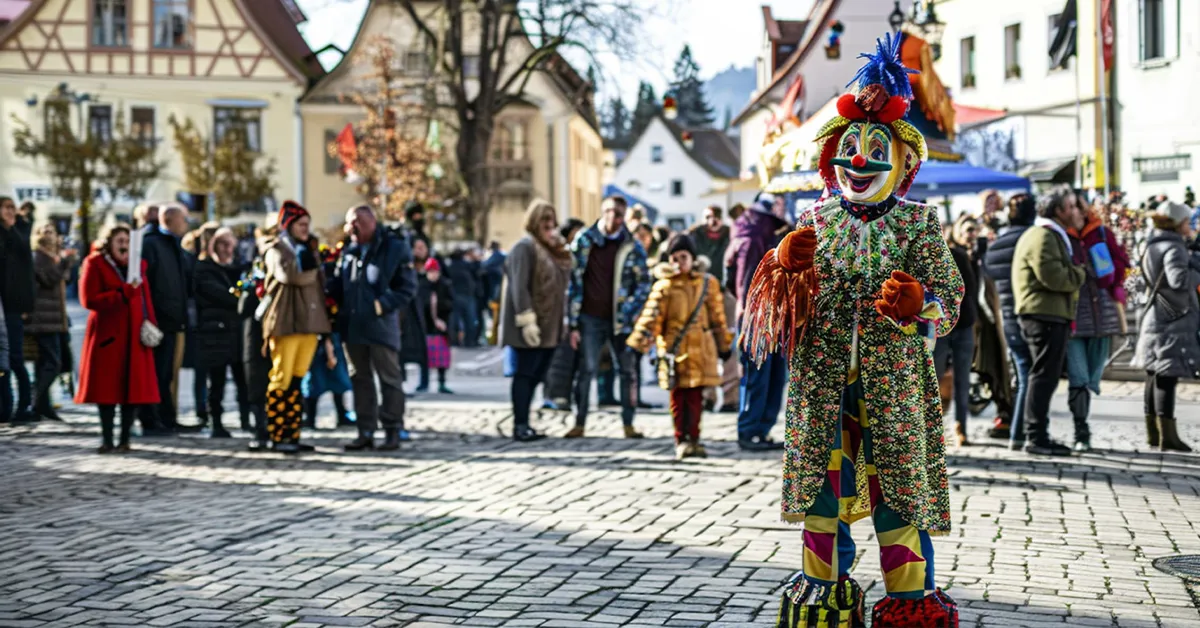
- Carnival (Karneval, Fasching, Fastnacht): the costume season before Lent, especially lively in Cologne, Düsseldorf, Mainz and Bavaria. “Rosenmontag” (Rose Monday) is the climax, with large parades.
- Christmas markets (Weihnachtsmärkte): open from late November to 24/12; Dresden’s Striezelmarkt, dating from 1434, is Germany’s oldest Christmas market. Nuremberg’s Christkindlesmarkt is also world-famous.
- Walpurgisnacht (night of 30/4): a traditional witches’ festival, especially lively on the Brocken summit in the Harz mountains.
- Tag der Deutschen Einheit (3/10): German Unity Day, the national day.
- Major music festivals: Wacken Open Air (heavy metal), Rock am Ring, Hurricane Festival and the Berlin Festival of Lights.
Each region also has its own traditional festivals reflecting local identity. The Cannstatter Volksfest in Stuttgart is the second-largest beer festival after Oktoberfest. The Cherry Blossom Festival in Bonn in April draws international visitors to admire the cherry blossom avenue of “Heerstraße”.
Customs, etiquette and regional characteristics
German culture is known for certain customs and lifestyle traits that foreigners see both positively and negatively:
- Punctuality (Pünktlichkeit): seen as a sign of respect and professionalism. Arriving 5 minutes late for an appointment is considered seriously impolite.
- Directness (Direktheit): Germans get straight to the point with little beating around the bush, which is sometimes misread as rudeness by people from East Asia.
- Respect for rules (Ordnung): “Ordnung muss sein” (There must be order) is a common saying. Following the rules — including not crossing on a red light even when there are no cars — is taken for granted.
- Separation of work and private life (Trennung von Beruflich und Privat): no work calls outside working hours, and colleagues are not addressed by first name (only by surname with “Herr/Frau”) unless invited to do so.
- Love of nature (Naturliebe): hiking, mountain climbing and walks in the forest (Waldspaziergang) are national pastimes.
- Sunday rest (Sonntagsruhe): Sunday is a day of complete rest; shops are closed and noise is not allowed (laundry, mowing the lawn, drilling walls).
Regional diversity is also very marked. Bavaria has a conservative Catholic tradition, Lederhosen and Dirndl costumes, and a local dialect hard for northern Germans to understand. Hamburg and the Protestant Hanseatic cities of the north are formal, reserved and sea-oriented. The Saxon region in the east has a distinctive, easily recognisable German accent. Berlin, after reunification, has become Germany’s most cosmopolitan, liberal and creative city.
Religion holds an important traditional place but is in decline. Christians make up about 60% of the population (29.9% Roman Catholic in the south and west, 29.8% Protestant mainly in the north and east), 34% have no religion (especially high in the former eastern states), and Muslims make up about 6.1% (mainly Turkish and Middle Eastern communities).
Work culture and daily life
German work culture has had a far-reaching influence on public and private management models worldwide. Germans worked an average of 1,343 hours a year in 2024 — significantly below the OECD average (1,752 hours) and much lower than South Korea (1,872 hours) or the United States (1,799 hours). However, German labour productivity is among the highest in the world, measured as GDP per hour worked.
Features of German work culture:
- Work-life balance: highly valued, with a statutory minimum of 20 working days of annual leave, though most companies give 25-30 days.
- Holidays are sacrosanct: when on leave, employees do not need to (and are not expected to) answer work emails. The “out-of-office” is sacred.
- Works councils (Betriebsrat): present in almost all large companies, taking part in management decisions under the principle of Mitbestimmung (co-determination).
- Lifelong learning: dual vocational training and Continuing Vocational Education and Training (CVET) allow middle-aged workers to retrain in new occupations.
In daily life, Germans enjoy simple pleasures: walking in the forest, gardening (Schrebergärten — small allotment gardens rented in cities), reading and going to the beer garden (Biergarten) on Friday evenings. Afternoon coffee and cake (Kaffee und Kuchen) is an important social tradition at weekends and family gatherings.
Summary
German culture is a multi-layered heritage of great contributions to humanity’s philosophy, music, literature and science, as well as a rich collection of distinctive regional customs, cuisine and festivals. The combination of classical academic tradition and contemporary creativity, of orderly discipline and artistic freedom, and of traditional provincial values and international urban life has created a unique culture with global appeal.
For Vietnamese people living, studying or working in Germany, understanding German culture is key to integrating successfully. From respecting punctuality and rules and learning the local language and customs to taking part in community festivals, Vietnamese people have the chance to engage with a rich and profound culture that opens up a rewarding life experience. Germany is also one of the European countries with the most supportive policies for preserving the cultures of immigrant communities, allowing cultural diversity to flourish alongside German traditions.
Accompanying you on your journey in residency investment
The Prosperous Living Investment team advises on pathways, assesses profiles and manages investments transparently for every residency, citizenship and international property objective.
Free profile assessmentWhere life gets prosperous