

The German economy is the largest in the European Union (EU) and the third-largest in the world by nominal GDP, behind only the United States and China. According to theFederal Statistical Office of Germany (Destatis), Germany’s GDP in 2024 reached 4,305.3 billion EURO, accounting for about 23.7% of the eurozone economy and roughly 25% of EU GDP.
It is a distinctive social market economy (Soziale Marktwirtschaft), combining a free market economy with a strong social security system. This model was created after the Second World War by Economics Minister Ludwig Erhard and has shaped the economic success ofGermanyfor nearly 80 years. This article analyses the structure, leading sectors and outlook of the German economy for 2026-2027.
Detailed article onGermany.
Message
Overview of the German economy and its global position
Germany has held a stable place among the world’s four largest economies since 1960. According to the IMF World Economic Outlook (10/2025), Germany’s nominal GDP in 2025 is estimated at about USD 5,014 billion, up USD 328 billion from 2024. At purchasing power parity (PPP), Germany’s GDP in 2025 is 6,154 billion international dollars, sixth in the world.
Germany contributes about 4.28% of global GDP and 16.9% of Europe’s nominal GDP. With a population of about 84 million, Germany is also the EU’s largest consumer market. It was a founding member of the EU in 1957 and of the eurozone in 1999, is a member of the G7, G20 and OECD, and is the second-largest contributor to the EU budget.
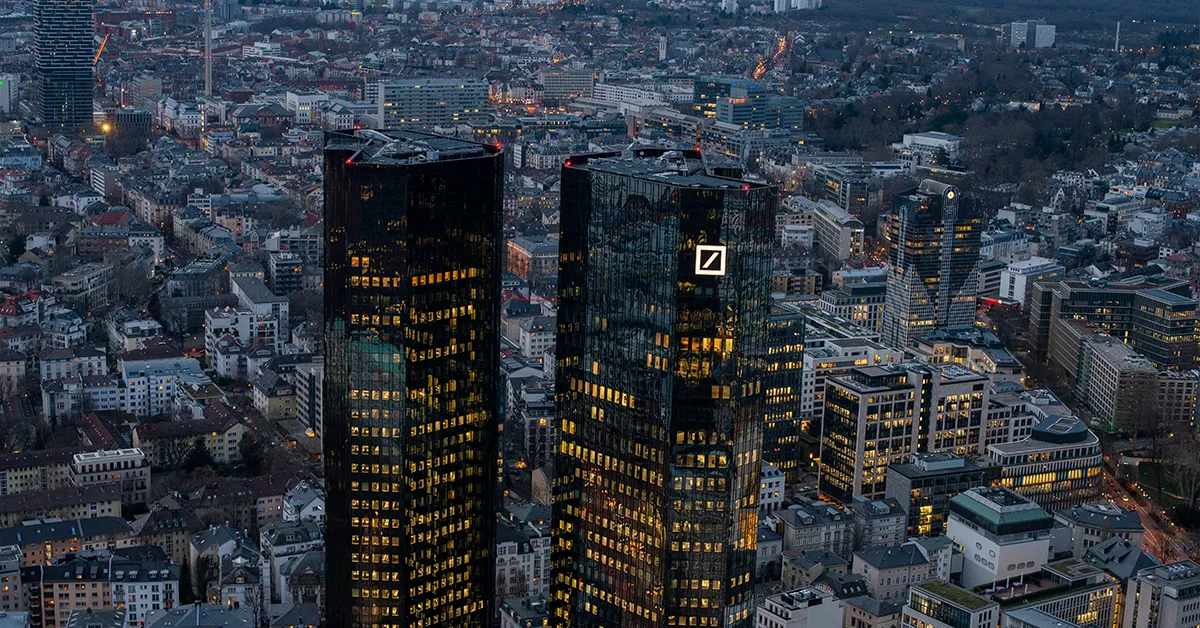
Germany’s financial system is overseen by the Deutsche Bundesbank (German Federal Bank) in Frankfurt am Main. After the introduction of the euro, the Bundesbank became part of the European System of Central Banks but retains an important role in supervising the domestic financial system. Frankfurt am Main is Europe’s second-largest financial centre after London and home to the European Central Bank (ECB).
After two consecutive years of recession (2023 and 2024), the German economy emerged from recession in 2025 with slight GDP growth of 0.2%. This was the weakest result among the major EU economies, level with Finland. According to the European Commission’s Autumn 2025 forecast, Germany’s GDP will grow 1.2% in both 2026 and 2027.
Considering a residency programme? The Prosperous Living Investment team assesses your profile free of charge and advises on the pathway that fits your goals.
Economic structure: services, industry, agriculture
Germany’s economic structure is divided into three main sectors by share of GDP:
- Services (tertiary sector): about 64-70% of GDP, including finance, insurance, transport, tourism, information technology, retail and business services. Germany and Ireland lead the EU in services exports outside the bloc.
- Industry (secondary sector): about 25-29% of GDP, a significantly higher share than in most other developed economies. It is the traditional pillar behind the “Made in Germany” brand.
- Agriculture (primary sector): less than 1% of GDP but highly productive. Germany produces 90% of its domestic food needs and is the EU’s third-largest agricultural producer after France and Italy.
Unlike most developed economies — where industry is gradually declining and services dominate — Germany has maintained a strong industrial base. Manufacturing contributes about a third of all European industrial output. In 2024, manufacturing sector revenue reached 2,900 billion EURO, with exports accounting for 48.9% of total revenue.
Germany’s social market economy guarantees fundamental rights such as property ownership, freedom of occupation and legal equality, while regulating the market through competition rules, a social security system covering the entire population, and worker representation on company boards (Mitbestimmung). Works councils (Betriebsrat) are present in almost all large companies, creating a balance of power between employers and employees.
The automotive industry — a symbol of Germany
The automotive industry is the international symbol of the German economy and its most valuable manufacturing sector, with revenue of 476 billion EURO in 2024. Germany is home to global premium brands such as Volkswagen, Mercedes-Benz, BMW, Audi, Porsche and Opel. Beyond the carmakers (OEMs), the sector has a world-leading ecosystem of component suppliers such as Bosch (the world’s largest), Continental, ZF Friedrichshafen and Schaeffler.
In 2024, Germany produced about 4.1 million passenger cars, still 12% below the pre-pandemic level of 2019. The sector employs about 773,000 people but has cut more than 51,000 jobs over the past year. Exports account for about 80% of output — evidence of the “export workshop” model typical of the German car industry.
However, the German car industry is facing its most serious structural crisis in decades. In August 2025, German industrial output fell 4.3% month on month, with car production plunging 18.5%. In the first half of 2025, major insolvencies rose 21% year on year, with automotive suppliers leading with 18 major bankruptcies.
The three biggest structural challenges for the German car industry:
- Competition from Chinese and American electric vehicles: BYD, Tesla and Chinese brands are leading the EV market with lower costs and superior software. While BMW and Volkswagen expect growth of only 2-3%, BYD and Tesla are forecast to grow by double digits.
- Lagging in software and autonomous driving: German carmakers have been slow to develop software-defined vehicles and ADAS systems compared with their American and Chinese rivals.
- Dependence on imported battery materials: making the sector vulnerable to geopolitical and price volatility.
Bosch announced 7,000 job cuts in November 2025 alone. Volkswagen and other manufacturers are also restructuring heavily. It is a tense period of transition but also an opportunity for the German car industry to reinvent itself in the electric vehicle era.
Mechanical engineering, chemicals and other major industries
Besides cars, three other major industries form the backbone of German industry:
- Mechanical and plant engineering: the largest employer, with 1.3 million workers, mostly in Mittelstand companies. Germany is the world’s leading exporter of machinery, with a large share of industrial niche markets. Leading companies include Siemens (the world’s largest in industrial machinery), Trumpf, Krones and Voith.
- Chemicals and pharmaceuticals: Germany is the EU’s largest chemicals producer. BASF, headquartered in Ludwigshafen, is the world’s largest chemical company, with about 118,000 employees. Bayer, Boehringer Ingelheim, Merck KGaA and BioNTech (Pfizer’s partner in developing the COVID-19 vaccine) are all headquartered in Germany.
- Electrical and electronics: about a tenth of Germany’s total industrial output. The sector is an important supplier of components and systems for automation, power distribution and digital infrastructure. Siemens also leads this sector.
Energy-intensive industry has come under the greatest pressure since Germany stopped importing Russian gas in 2022 and closed its last three nuclear power plants on 15/04/2023. Energy-intensive sectors such as basic chemicals, metals, paper and building materials have seen output fall by several percent year on year, and some have moved production abroad.
Mittelstand — the backbone of the economy
Mittelstand is a distinctively German concept referring to small and medium-sized, often family-owned businesses with a long-term business philosophy, conservative finances and deep technical expertise. More than 99% of German companies belong to the Mittelstand. They are key players in global industrial niche markets — an estimated 1,500 German companies are currently in the world’s top 3 in their specialised product areas.
The Mittelstand is defined not only by size but also by its management model:
- A long-term vision rather than optimising quarterly profits.
- Conservative finances with high equity ratios and little debt.
- Heavy investment in research, development and workforce training.
- A focus on exporting specialised products with high added value.
- Commitment to their home region — most Mittelstand companies do not relocate factories abroad even when domestic labour costs rise.
The term “Hidden Champion”, coined by Hermann Simon, refers to Mittelstand companies that lead the world in narrow fields but are little known to the public. Germany has the largest number of Hidden Champions in the world — about 1,300 to 1,500 companies. They create most of the jobs in Germany’s rural and semi-rural areas and underpin a geographically balanced economic structure.
However, the Mittelstand also faces major challenges: shortages of skilled workers, generational succession in family businesses, pressure to digitalise and high energy costs. Many Mittelstand automotive suppliers filed for insolvency in 2024-2025, sounding the alarm about the structural pressure on this traditional model.
Exports and international trade markets
Exports are the traditional engine of growth for the German economy. In 2024, Germany exported USD 1,660 billion of goods and services, third in the world after China and the United States. Its trade surplus reached USD 255 billion in 2024, second in the world. Exports amount to 50.3% of GDP — among the highest of the major economies.
The main exports include motor vehicles, machinery, chemicals, electronics, electrical equipment, pharmaceuticals, transport equipment, basic metals, food products, rubber and plastics. Germany’s export mix is particularly strong in high value-added and technologically complex goods — which helps Germany withstand low-cost competition from emerging economies better.
2024 marked a major structural change: the United States overtook China to become Germany’s largest single trading partner, accounting for more than 10% of exports and generating a record trade surplus of about 70 billion EURO. Germany’s other major export markets include France, the Netherlands, Poland, Italy and the United Kingdom.
However, the international trade environment is becoming increasingly unfavourable to Germany’s export model:
- The trade war launched by the Trump administration, with a series of new tariffs directly affecting German goods exported to the United States.
- China’s structural slowdown and push for competitive exports, eroding the position of Europe’s traditional exporters.
- The fragmentation of global trade and the trend towards “friend-shoring” are reshaping international supply chains.
Germany and Ireland lead the EU in services exports outside the bloc, a little-known but important fact. With tariffs on goods rising, Germany’s services exports (logistics, engineering, information technology, financial services) may prove a more sustainable source of growth in the future.
R&D investment and innovation
Germany is one of the world’s biggest investors in research and development (R&D). In 2024, R&D spending reached 137.1 billion EURO, or 3.17% of GDP — the highest since records began in 1995. Germany ranks third in the world for R&D spending as a share of GDP, after South Korea and Israel. More than two-thirds of R&D spending comes from private companies, especially in the automotive, machinery, chemicals and electronics sectors.
Germany’s innovation ecosystem is supported by a network of world-leading research institutes:
- Fraunhofer Society: 76 institutes and research units focused on applied research and co-developing technology with businesses.
- Max Planck Society: 86 institutes for basic research in physics, chemistry, biology, medicine and the social sciences. It has produced more than 30 Nobel laureates.
- Helmholtz Association: 18 of Germany’s largest research centres in energy, health, space and the environment.
- Leibniz Association: 96 research institutes across many disciplines.
The Merz government has announced a High-Tech Agenda focusing on six key areas: artificial intelligence, quantum technology, microelectronics, biotechnology, fusion energy and carbon-neutral mobility. However, the target of raising R&D spending to 3.5% of GDP by 2025 was not met, and Germany is lagging behind the United States and China in some key areas such as artificial intelligence and software.
The 2025 Merz fiscal reform and the 500 billion EURO fund
In March 2025, the German Parliament (Bundestag) passed a historic fiscal reform driven by Chancellor Friedrich Merz. It is the biggest change in German fiscal policy since the “debt brake” (Schuldenbremse) was written into the Basic Law in 2009.
The three main changes of the reform:
- Exempting defence spending above 1% of GDP from the national debt brake, allowing Germany to increase military spending significantly without breaching the constitution.
- Establishing a special 500 billion EURO fund for infrastructure and climate investment, allocated over 12 years.
- Loosening spending rules for the states (Länder), allowing them to borrow more to invest in development.
According to European Commission forecasts, the 2025 and 2026 budgets reflect this new fiscal space. The general government deficit is expected to rise from 2.7% of GDP in 2024 to 3.1% in 2025 and 4.0% in 2026. Public debt is expected to rise from 62.2% of GDP in 2024 to 65.2% in 2026 and 67.0% in 2027 — still much lower than in France, Italy or the United States.
Merz’s strategic goal is to restore Germany’s role as “Europe’s economic engine” and to turn the Bundeswehr into “the strongest conventional army in Europe”. Analysts see the programme as a big gamble: if it succeeds, Germany could break out of a long cycle of stagnation; if it fails, the risk of a public debt crisis and political instability will grow.
Germany’s economic outlook for 2026-2027 and opportunities for Vietnamese people
Germany’s economic outlook for 2026-2027 depends on many conflicting factors. According to the Bundesbank, industry and exports are expected to recover in 2026 thanks to improving demand and rising public spending. However, the labour market remains tight, with unemployment at 6.3% at the end of 2025 and a shortage of 2.89 million workers.
Four notable trends for 2026:
- GDP growth is forecast at 0.6-1.2% by leading economic research institutes, down from the 1.3% forecast published in mid-2025 due to the impact of the Middle East conflict and rising energy prices.
- Public investment is rising sharply thanks to the 500 billion EURO fund, especially in transport infrastructure, renewable energy and digitalisation.
- The corporate tax reform announced by Merz to restore competitiveness — Germany currently has the second-highest tax burden on labour in the OECD (47.9% for a single person without children).
- The green and digital transitions are accelerating, opening new opportunities in renewable energy, hydrogen, AI and clean technology.
For Vietnamese people, the German economy offers many practical opportunities. The shortage of skilled workers is a structural problem, especially in engineering, information technology, healthcare, nursing and hospitality. Germany passed the Skilled Immigration Act (Fachkräfteeinwanderungsgesetz) in 2020 and introduced the Chancenkarte (Opportunity Card) in 2024 to attract non-EU workers. Vietnamese people can access the German labour market through official channels including the EU Blue Card, the skilled worker visa and the dual vocational training programme.
Germany is also a stable destination for foreign direct investment (FDI) thanks to a transparent legal system, a predictable business environment and firmly protected property rights. However, the burden of regulation and high taxes are barriers the Merz government needs to address during its 2026-2029 reform period.
Summary
The German economy is in its most important transition in decades. The traditional model of success — based on export-oriented industrial manufacturing, cheap Russian energy and deep integration with Chinese supply chains — faces serious challenges from the energy transition, digitalisation, competition from China, US tariff pressure and an ageing population. However, its fundamental strengths remain intact: the Mittelstand ecosystem, world-leading R&D investment, a highly skilled workforce and stable institutions.
The 2025 Merz fiscal reform and the 500 billion EURO fund are a real opportunity for Germany to reinvent its economy, invest in future infrastructure and restore competitiveness. For Vietnamese people interested in studying, working, investing or starting a business, Germany remains one of the most attractive destinations in Europe — especially in engineering, technology, healthcare and highly skilled professional services.
Accompanying you on your journey in residency investment
The Prosperous Living Investment team advises on pathways, assesses profiles and manages investments transparently for every residency, citizenship and international property objective.
Free profile assessmentWhere life gets prosperous