


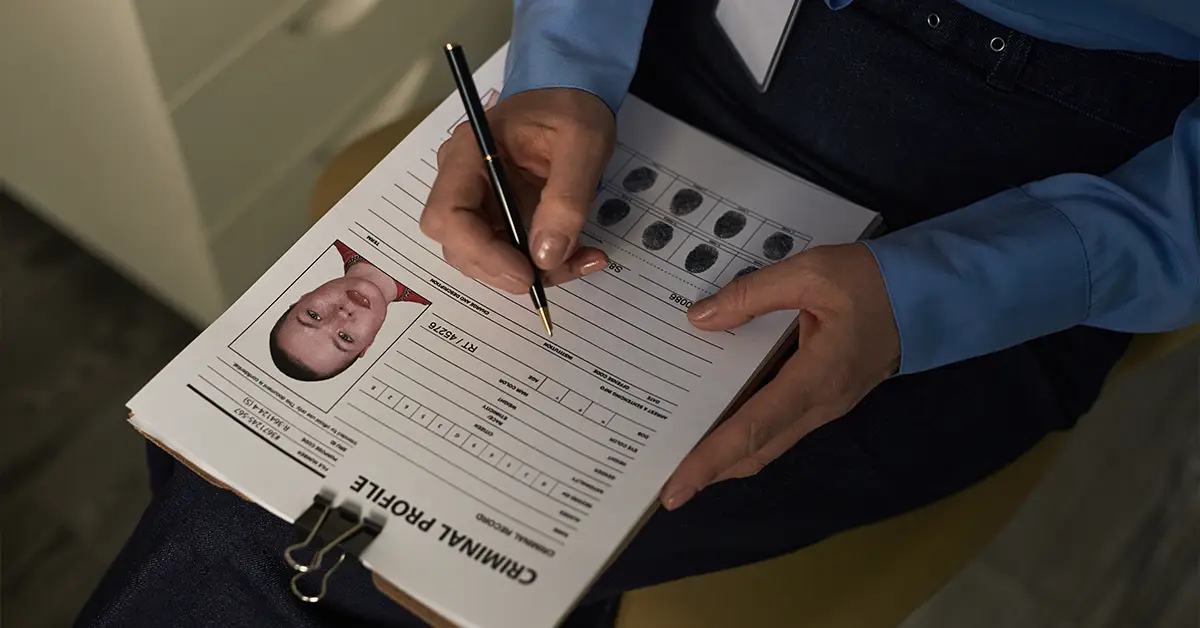
The United States government carries out background checks on all applicants for agreen cardin the family and marriage categories. This guide has 2 parts: (1) how to obtain court, police and prison records — required where the applicant has a criminal record; and (2) how to obtain a police clearance certificate — required for applicants applying for a family- or marriage-based green card from abroad, whether or not they have a criminal record.
Message
How to obtain court records and police reports
Where the applicant is the family member applying for a green card, they will need to provide detailed records of every interaction they have ever had with law enforcement, both in their home country and in the United States. (The only exception is minor traffic offences.)
Note that a police record is not the same as a police clearance certificate, which is covered in Part 2.
Requirements
Who must submit records?
Although background checks are carried out on both family members, only the family member applying for the green card has to submit court, police or prison records — even for arrests or charges occurring when they were a minor and sometimes even those subsequently expunged. The specifics depend on whether the relative applying for the green card is applying from abroad or from within the United States.
Which records do I need to submit and what information must they include?
Where the applicant is applying from abroad, they must submit to theNational Visa Center (NVC)certified court and prison records for each conviction — even where the applicant has since been pardoned or granted an amnesty or some other act of clemency. (Applicants are not required to provide records for an arrest that did not lead to a conviction.)
The records must reflect the following:
- The full and complete circumstances of the offence of which the applicant was convicted
- The final outcome of the case, including the sentence or other penalty/fine
Where the applicant is applying from within the United States, they must submit toUnited States Citizenship and Immigration Services (USCIS)certified police and court records and any additional documents needed for each arrest or charge — even where it occurred when the applicant was a minor and even where it was subsequently expunged. (See the following table for guidance.)
Applicants are not usually required to report or document minor traffic offences that did not lead to criminal charges or did not involve alcohol, drugs, personal injury or damage to property.
| Where the applicant has ever… | They must submit… |
|---|---|
| Been arrested or detained, but no criminal charges were brought | 1) The original or a certified copy of the arrest report; 2) An official statement from the arresting or detaining authority or the prosecutor’s office OR a court order stating the outcome of the arrest/detention |
| Been charged, but not convicted | 1) The original or a certified copy of the arrest report; 2) Certified copies of: the indictment, information or charge AND the outcome of each charge |
| Been convicted or given an alternative sentence or rehabilitation programme OR had the arrest or conviction vacated, set aside, sealed, expunged or otherwise removed | 1) The original or a certified copy of the arrest report; 2) Certified copies of: the indictment, information or charge; any plea agreement; and the outcome of each case; 3) The original or a certified copy of: probation or parole records showing that the applicant completed the sentence, the conditions for a deferred adjudication or rehabilitation programme (where applicable) OR documents showing that the applicant completed an alternative sentence or rehabilitation programme (where applicable) |
What if my records are not in English?
Applicants must submit a certified English translation with any records written in a language other than English.
Where to obtain records
Where the applicant is applying from abroad, the name of the issuing authority in their home country, the current fee and the process for obtaining a certified copy of the records can all be found on the United States Department of State website. On the left of the website, applicants will need to select the first letter of the country’s name, then select the country. The information needed will be listed under the “Police, Court, Prison Records” tab.
Where the applicant is applying from within the United States, court records can usually be obtained directly from the court where the case was heard, while police records are usually available through the local police department that made the arrest or detention.
Applicants may also try the following:
- County-level agencies:
- The county court
- The Sheriff’s Office
- State-level agencies:
- The Department of Public Safety
- The Police Department
- The Bureau of Investigation
Substitute documents
Where the applicant is applying from abroad and cannot obtain certified copies of court and prison records, they must provide a notarised personal affidavit (written statement) fully explaining why the documents are unavailable. Only where the guidance for a particular country states that such records are “unavailable” is the applicant excused from submitting those documents to the NVC.
Where the applicant is applying from within the United States and cannot obtain certified copies of court and police records, they must submit:
- A notarised personal affidavit (written statement) fully explaining why the documents are unavailable
- A certificate from the official source of the document explaining why the document is unavailable (where possible)
- Any other evidence describing the details of the incident and the outcome of the case (where possible)
Where other evidence is also unavailable, applicants must submit at least 2 additional notarised personal affidavits from one or more other people with personal knowledge of the incident and its outcome.
Considering a residency programme? The Prosperous Living Investment team assesses your profile free of charge and advises on the pathway that fits your goals.
How to obtain a Police Clearance Certificate
What is a police clearance certificate?
A police clearance certificate is a document detailing any arrests of an individual — as well as the reasons for and outcomes of those arrests — while that person lived in a particular area. Where the applicant is applying for a family- or marriage-based green card from abroad, they must submit police clearance certificates — issued by the police authorities — from the countries where the applicant has lived in the past, even where they have no criminal record in any of them.
Where an applicant has a criminal record, they may still be eligible for a green card, but it is important to understand the rules for applicants with a criminal record.
Requirements
Who must submit a police clearance certificate?
Only the family member applying for a green card from abroad has to submit copies of police clearance certificates to the NVC and bring the originals or certified copies to the green card interview. (Family members applying for a green card from within the United States must instead submit police records, not police clearance certificates.)
Where the applicant is at least 16 years old, they must submit a police clearance certificate from each of the following countries (other than the United States), whether or not they have ever been arrested there:
- The country of nationality where the applicant has lived there for at least 6 months at any point in their life
- The country of residence where it differs from the country of nationality and where the applicant has lived there for at least 6 months
- Any country where the applicant has lived there for at least 12 months and was at least 16 at the time
Applicants must also submit a police clearance certificate from anywhere in the world (other than the United States) where they were arrested for any reason, at any age and regardless of how long they lived there.
How recent must each police clearance certificate be?
Each police clearance certificate must be less than 2 years old. Where all the following are true at the time of the green card interview, the applicant must obtain a new police clearance certificate:
- The police clearance certificate is more than 2 years old.
- The applicant still lives in, or has returned to, the country where the certificate was issued.
- The applicant is over 16.
What if my police clearance certificate is not in English?
A police clearance certificate written in a language other than English must be submitted with a certified English translation.
Where to obtain a police clearance certificate
Applicants may obtain a police clearance certificate from the issuing authority in each country, listed on the United States Department of State website. On the left of the website, applicants will need to select the first letter of the country’s name, select the country, and click the “Police, Court, Prison Records” tab to see the important details.
For each country, the Department of State lists the name of the issuing authority, the current fee and the process for obtaining the certificate.
What if I cannot obtain a police clearance certificate?
Unless the “Police, Court, Prison Records” guidance for a particular country states that such records are “unavailable”, applicants must submit a notarised personal affidavit (written statement) explaining in detail why they cannot obtain a police clearance certificate.
Find out aboutApplying for a police certificate in Vietnam.
Frequently asked questions about police clearance certificates
Whether a police clearance certificate is needed depends on the type of United States visa the applicant is applying for. As mentioned above, they are required in the family-based green card or immigrant visa process. However, for certain temporary, non-immigrant visa types, a police clearance certificate may not be required.
A police clearance certificate is usually valid for 2 years.
Where the police clearance certificate is more than 2 years old at the time of the visa interview, the applicant will be required to obtain an updated version before the case can proceed.
Accompanying you on your journey in residency investment
The Prosperous Living Investment team advises on pathways, assesses profiles and manages investments transparently for every residency, citizenship and international property objective.
Free profile assessmentWhere life gets prosperous