

Consular Processing — United States consular processing

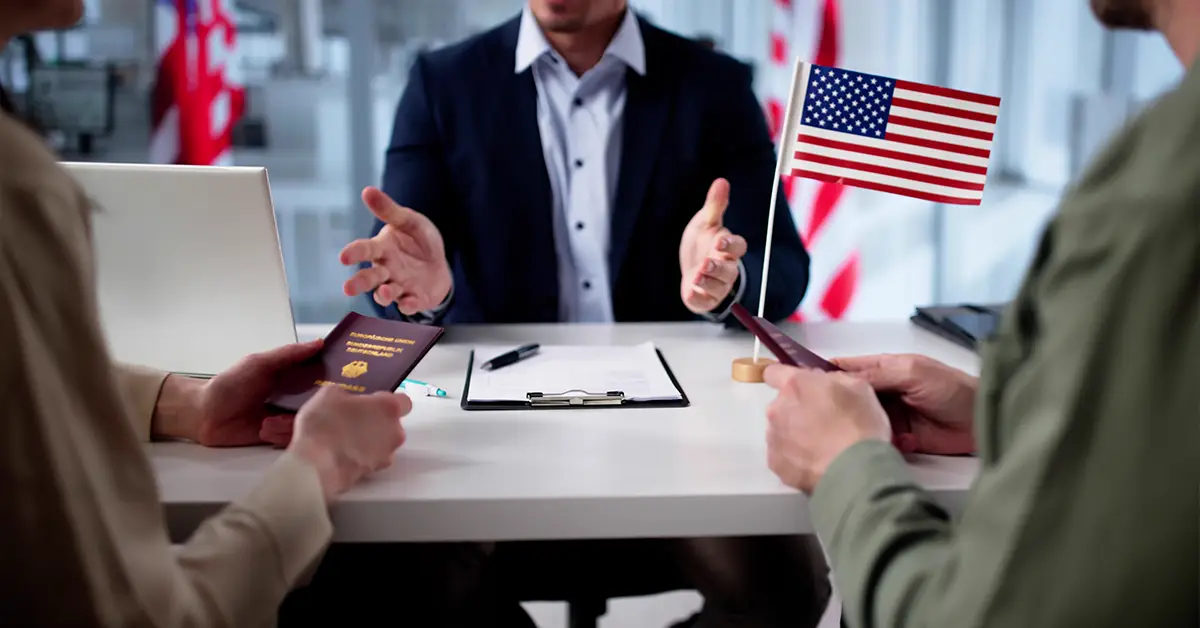
Consular processing is the process of applying for agreen cardof the United States when applying from outside the United States.
The green card application process differs depending on whether the applicant is already in the United States or still in their home country. Where the applicant applies from their home country, the case will be handled through consular processing, meaning the case will be processed by the applicant’s local United States embassy or consulate.
Consular processing differs fromAdjustment of status (AOS), which is used when applying for a green card from inside the United States. With consular processing, the applicant will have to wait in their home country until the United States green card is approved.
Both consular processing and AOS have their own timelines, forms, supporting documents and costs, but the overall green card eligibility requirements are identical. Applicants should check which process suits their personal situation.
This guide explains how to apply for an immigrant visa from outside the United States through consular processing.
Message
Who should apply through consular processing?
Applicants living outside the United States must usually use consular processing to apply for a green card.
Consular processing is the immigration process for the following visa types:
- CR1/IR1 spouse; CR2/IR2 child where the sponsor is a United States citizen
- The F2A category (F21 spouse; F22 child) where the sponsor is a lawful permanent resident (also known as a green card holder)
Applying through consular processing means the applicant will wait in their home country while the green card case is processed.
Only those already in the United States may use AOS instead of consular processing. Some green card applicants come to the United States to file an AOS application instead of using consular processing, but there is no formal process for doing so, and very few United States visa types allow entry for the purpose of adjusting status.
Only those who are already eligible for a green card — through marriage, employment or another route — and have filed the relevant petition (such as Form I-130 for a marriage-based green card) should apply through consular processing. Once the petition is approved and aspousal visais available, the applicant may begin consular processing. Unless the applicant is married to a United States citizen, they may face a long wait for a visa number, so check the priority date to know when an application may be filed.
Considering a residency programme? The Prosperous Living Investment team assesses your profile free of charge and advises on the pathway that fits your goals.
Two options for a marriage-based green card through consular processing: CR-1 and IR-1
When applying for a marriage-based green card through consular processing, the applicant will receive either a CR-1 visa or an IR-1 visa, depending on how long they have been married when the green card is approved.
How to obtain a spousal visa through consular processing
Consular processing is a multi-step process, and understanding the journey ahead is very important. Here is what to bear in mind:
- Check whether the applicant is eligible for this type of visa.
- Have the sponsor file the petition appropriate to the green card category, such as Form I-130, withUnited States Citizenship and Immigration Services (USCIS).
- Wait for USCIS to approve the petition. Processing times vary, and may take from a few months to several years, depending on the government’s current backlog and the applicant’s particular case.
- After the petition is approved, make sure a green card is available for the applicant. Where the applicant is married to a United States citizen, a visa will be available immediately, but other green card applicants may face a long wait. Check the visa bulletin for further information.
- When a visa is available, USCIS will transfer the petition to thethe National Visa Center (NVC)for processing. The NVC is part of the Department of State and handles green card cases for those living outside the United States.
- The NVC will notify the applicant when fees must be paid and documents provided for the case. The applicant will complete and file Form DS-260 to provide all the relevant information.
- The NVC will transfer the applicant’s case and documents to the nearest United States embassy or consulate, which will contact the applicant to arrange an in-person interview.
- Before the interview, the applicant will need to see a USCIS-approved doctor for animmigration medical examination. Details can be found on the website of the United States consulate or embassy. Applicants may only use an approved doctor, and fees vary by location.
- For the interview, the applicant will need to bring their passport and original documents. On arrival, the consular officer will place the applicant under oath and ask questions about the case. They may take the passport, but the applicant will get it back later.
- The consular officer will decide whether to approve the case. The applicant may be told immediately or later. Decisions are usually made within a week, unless further checks are needed.
- Where the case is approved, the applicant will receive a visa allowing entry to the United States, together with a sealed envelope containing the case file. Do not open this envelope — it may only be opened by a United States officer at an official port of entry.
- The entry visa will be valid for 6 months from the date of the medical examination. On entering the United States, the applicant will be processed by a United States border officer, who will open the sealed envelope and formally admit them.
- The visa will be valid for travel into and out of the United States for up to 12 months. During that time, USCIS will send the green card to the applicant’s United States address.
What is the consular processing timeline?
The time needed for consular processing varies from case to case and depending on whether the sponsor is a United States citizen or a green card holder, but applicants may expect to complete the process in 14.5 months where they are the spouse of a United States citizen and 35 months where they are the spouse of a lawful permanent resident.
What are the consular processing costs?
Consular processing fees vary depending on the type of green card the applicant is seeking. For family-based and marriage-based green cards, the fees are:
- Form I-130: $675 USD
- Form I-864: $120 USD
- Form DS-260: $325 USD
- The USCIS immigrant fee: USD 235
- Total cost: USD 1,340
Other green card applicants may have slightly higher or lower total fees.
The applicant will also have to pay for the medical examination, the cost of which varies according to the health system of their home country, and may also have to pay local authorities for police certificates.
Consular payment requirements for a green card case
The consular payment requirements are:
Department of State processing fee payment requirements:
- The Form DS-260 processing fee of USD 325 is paid after the green card petition is approved and before the visa interview at the United States embassy or consulate.
- The fee must be paid online through the Consular Electronic Application Center (CEAC) using a United States-based bank account (a current or savings account).
- Credit cards and foreign bank accounts are not accepted for these payments.
Affidavit of support fee payment requirements:
- The affidavit of support fee of USD 120 is usually paid per case, not per applicant.
- The fee must be paid online through the Consular Electronic Application Center (CEAC) using a United States-based bank account (a current or savings account).
- Credit cards and foreign bank accounts are not accepted for these payments.
USCIS immigrant fee payment requirements:
After receiving visa approval but before arriving in the United States, the applicant must pay the USCIS immigrant fee of USD 235 online through the USCIS website. Accepted forms of payment are:
- Credit cards
- Debit cards bearing the Visa or Mastercard logo
- Prepaid debit cards (only one card may be used, and it must hold enough funds for both the applicant themselves and any accompanying family members)
How to check the status of a case
Applicants may check for updates on a green card case by entering the case number on the USCIS website. This number can be found on any notice or receipt USCIS has sent.
Once the green card case has been filed at the United States embassy or consulate, applicants may check the status of the case on the Consular Electronic Application Center website. Applicants will be able to see what stage the case is at, and even when the visa is being printed.
What if my application is refused?
Consular officers must follow strict guidelines and have little room to use their own judgment to refuse a green card applicant. USCIS officers are permitted to use discretion in considering AOS cases, giving them more scope to make a refusal decision.
On the other hand, AOS applicants may appeal refusal decisions through USCIS or through the courts. Consular applicants do not have that option: there is no appeal system, so where a consular officer refuses a case, it will be very difficult to overturn their decision.
That means getting it right first time is very important when using consular processing.
What happens next?
Congratulations! The applicant is now a United States green card holder, free to work and live anywhere in the United States. This is a wonderful opportunity and a great achievement after a great deal of effort.
Where the applicant obtained the green card through marriage, but had been married for less than 2 years when they first entered the United States, they will receive a 2-year conditional green card. Where they are still married after 2 years, they may apply for an unconditional green card. This process may be started 90 days before the 2-year anniversary of entry. Do not forget, because where the application is not filed on time the green card will be terminated and the applicant may face removal proceedings.
Where all goes well, the applicant will be eligible to apply forUS citizenshipafter holding the green card for 5 years (or 3 years where they are the spouse of a United States citizen). The applicant must continue to file tax returns, avoid criminal convictions and not leave the United States for lengthy periods.
Frequently asked questions about consular processing
What are the benefits of consular processing?
The main benefit of consular processing is that it usually allows a faster, safer way of entering the United States. Consular processing also removes the need to travel to the United States, which may be costly and time-consuming.
Is consular processing faster for obtaining a green card?
Consular processing may sometimes be faster than adjustment of status, but that depends on the applicant’s particular circumstances. Consular processing may be the faster route to a green card for applicants outside the United States.
Can I apply for citizenship after 2 years of marriage?
No, the applicant must wait 3 years from receiving the CR-1 visa before they may apply for United States citizenship.
Can I travel during consular processing?
Yes, applicants may generally travel during consular processing, as there is no requirement to remain in any particular country while the case is being processed. However, there are a few important points to bear in mind:
- When applying from their home country, applicants may travel abroad, but must be able to return to their home country for the visa interview at the United States embassy or consulate.
- It may be difficult to travel to the United States while the case is pending. This is true even where the applicant already holds a valid tourist visa.
Accompanying you on your journey in residency investment
The Prosperous Living Investment team advises on pathways, assesses profiles and manages investments transparently for every residency, citizenship and international property objective.
Free profile assessmentWhere life gets prosperous