

Retiring in Antigua and Barbuda

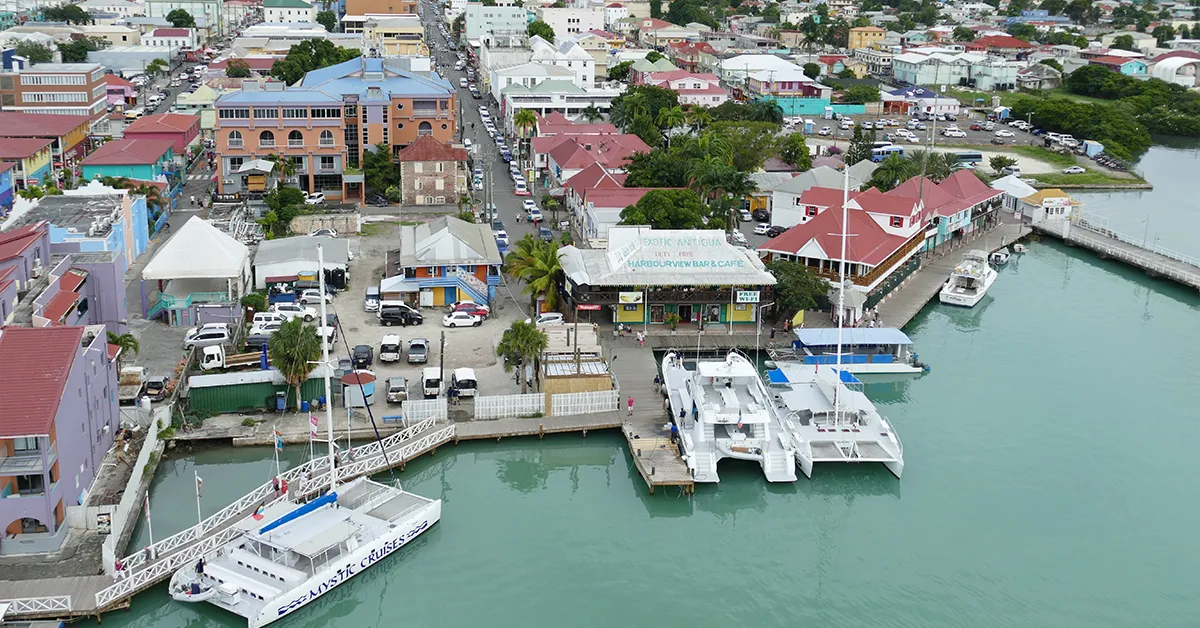
Retiring in Antigua and Barbuda has become an increasingly popular choice for retirees from North America, the United Kingdom and some other European countries. The combination of a stable year-round tropical climate with an average temperature of 27°C, no personal income tax, no inheritance or capital gains tax, a developed healthcare system and a large expatriate community creates an ideal environment for life after work.
Antigua and Barbudahas no dedicated retirement visa like many other countries. Instead, foreign retirees have three main routes to settle: the citizenship by investment programme (CBI) with a minimum of $230,000 USD, the Tax Residency Programme with a flat fee of $20,000 USD a year, and the Annual Resident Permit with simpler requirements. This article analyses in detail the settlement routes for retirees, costs, popular areas to settle and factors to consider.
Look up theQuality of Life Indexof other countries around the world.
Message
Why choose Antigua and Barbuda for retirement
Antigua and Barbuda stands out as a leading Caribbean retirement destination thanks to a range of advantages. A stable tropical savanna climate offers more than 300 sunny days a year and temperatures of 23°C–30°C. The 365 beaches around Antigua form one of the most beautiful coastlines in the Caribbean. English is the official language, removing the language barrier common in many other retirement destinations.
The tax system is one of the biggest advantages:
- No personal income tax: on pension, investment and business income — including worldwide income
- No capital gains tax: on profits from selling real estate, shares or cryptocurrency
- No inheritance tax: no tax when assets pass between generations
- No wealth tax: no annual tax based on the value of assets
- A strong passport: visa-free access to 154 countries after obtaining CBI citizenship
Other factors add to its appeal: political stability since independence in 1981, a legal system based on English common law, the XCD pegged at 2.7:1 to the USD, V.C. Bird International Airport with direct connections to the United States, the United Kingdom, Canada and neighbouring Caribbean islands, and a large, friendly expatriate community.
Considering a residency programme? The Prosperous Living Investment team assesses your profile free of charge and advises on the pathway that fits your goals.
Three main settlement routes for retirees
Tax Residency Programme
The Tax Residency Programme is the most popular settlement route for high-income retirees who want to optimise their tax obligations. Participants receive a Certificate of Residency and a Tax Identification Number (TIN) automatically, and become tax residents of Antigua and Barbuda with full access to its favourable tax system.
Tax Residency Programme requirements:
- Minimum annual income: $100.000 USD
- Annual flat tax: $20,000 USD paid to theInland Revenue Department (IRD)
- Physical residence: at least 30 days a year in the country
- Ownership or long-term lease: of a property in Antigua and Barbuda
- A genuine economic connection: with the country (investment, business or significant spending)
The programme suits retirees with large pensions, investment income or business income from their home country. By becoming tax residents of Antigua and Barbuda, they may be exempt from tax obligations at home (under a Double Taxation Agreement — DTA) while enjoying Antigua’s 0% tax environment. The total annual cost can be significantly lower than taxes in developed countries.
Citizenship by Investment
The citizenship by investment programme (CBI) is the fastest route to full residence rights in Antigua and Barbuda. Unlike the Tax Residency Programme, which grants only tax residence, CBI grants full citizenship and apassport— meaning participants become citizens with all legal rights.
The four current investment options:
- National Development Fund (NDF): $230,000 USD for a family of up to 4 people
- Real estate investment: a minimum of $300,000 USD in a government-approved project, held for at least 5 years
- Business investment: $1,500,000 USD individually or $400,000 USD as a joint investment
- University of the West Indies Fund (UWIF): $260,000 USD — only for families of 6 or more
The physical residence requirement is just 5 days within the first 5 years after receiving citizenship — one of the lowest among Caribbean CBI programmes. Full details of the programme and process are set out in the articleAntigua and Barbuda Citizenship by Investment.
The Annual Resident Permit and the long-term residence route
For retirees who do not want to make a large investment, the Annual Resident Permit is a flexible option. Foreigners can apply for this permit every year at theAntigua and Barbuda Immigration Departmentprovided they demonstrate sufficient funds (usually about $30,000–$50,000 USD a year for an individual), health insurance and a valid reason to reside (long-term travel, retirement, work).
After 4 years of continuous legal residence on an Annual Resident Permit, foreigners can apply for formal Permanent Residency. After a further number of years as permanent residents, they can apply for naturalisation to become full citizens. This route takes longer but does not require a large upfront investment.
Popular areas for retirees
Foreign retirees in Antigua tend to concentrate in a few areas with large expatriate communities and international amenities:
- English Harbour and Falmouth Harbour: the largest yachting hub in the Eastern Caribbean, next to the UNESCO-listed Nelson’s Dockyard. A large British and North American community, upscale harbourside villas, international restaurants and world-class marinas
- Jolly Harbour: a gated marina community on the west side of Antigua with waterfront villas, an 18-hole golf course, townhouses and a private yacht harbour
- Saint John’s and its suburbs: the capital and urban area, with plenty of housing options and easy access to the Sir Lester Bird Medical Centre, markets, supermarkets and amenities
- Dickenson Bay and Runaway Bay: famous beaches with resorts and resort-style apartments, close to the capital
- Hodges Bay and Cedar Valley: upscale residential areas near the golf course, ideal for long-term residents
- Galley Bay and Pearns Point: exclusive villa communities with sea views and private beaches
- Half Moon Bay and Nonsuch Bay: the quiet east coast, with upscale developments and eco-resorts
Rents and property prices vary considerably by area. English Harbour and Galley Bay are the most expensive, with beachfront villas from $1 million to $12 million USD. The suburbs of Saint John’s are more affordable, with 2-bedroom apartments from $200,000–$400,000 USD.
Cost of living for retirees
The cost of retiring in Antigua and Barbuda varies considerably with lifestyle. According to 2026 data:
- A couple living simply: $2,000–$2,500 USD a month
- A couple living comfortably: $3,500–$4,500 USD a month
- A couple living luxuriously: $6,000–$10,000+ USD a month
The main expenses include housing (1,000–3,500 USD a month), food (600–1,200 USD a month), utilities (290–500 USD a month), private health insurance ($240–$375 USD per person a month), transport ($150–$400 USD a month), and entertainment and travel ($300–$1,500 USD a month).
Compared with the cost of retiring in the United States, Canada or the United Kingdom, Antigua and Barbuda is usually 15–25% cheaper for the same standard of living. However, it is significantly more expensive than many Southeast Asian countries such as Vietnam, Thailand or Malaysia. An average US pension ($2,000–$3,500 USD a month) is usually enough for a comfortable lifestyle in Antigua, especially when combined with the Tax Residency Programme to reduce taxes at home.
Healthcare for retirees
Healthcare is a key factor when choosing where to retire. Antigua and Barbuda has the Sir Lester Bird Medical Centre — the main hospital, recognised as one of the most modern medical facilities in the Caribbean, with more than 600 staff including more than 200 specialists. The hospital provides cardiology, urology, ophthalmology, obstetrics and gynaecology, and basic surgery.
The Medical Benefits Scheme (MBS) provides health insurance for legal residents, with contributions of 3.5% of salary — reduced to 2.5% for people aged 60–69 and waived for those over 70. For foreign retirees, private health insurance is very important and in particular should cover medical evacuation for complex cases requiring transfer to the United States, Cuba or neighbouring Caribbean islands.
Private healthcare costs:
- General practitioner consultation: $40-$80 USD
- Specialist consultation: $70-$150 USD
- Private health insurance for people aged 65+: $400–$600 USD a month
- Complex surgery in the United States (via evacuation): $20,000–$200,000 USD depending on the procedure
For retirees with serious health problems, it is important to consider the distance to advanced medical facilities in the United States. V.C. Bird Airport has direct flights to Miami of about 3 hours — a feasible time frame for emergencies.
Activities and lifestyle
Retiring in Antigua and Barbuda offers plenty of outdoor activities and a diverse community. Popular activities for retirees include going to the beach and snorkelling at the 365 beaches, golf at Cedar Valley Golf Club and Jolly Harbour Golf Course, sailing — the country is one of the world’s top sailing destinations — tennis, hiking in Wallings Nature Reserve and on Mount Obama, and scuba diving to explore the coral reefs.
The expatriate community in Antigua is large and friendly. American retirees gather in English Harbour, Falmouth Harbour and Saint John’s. British retirees are common in Jolly Harbour and Hodges Bay. Canadians often choose Dickenson Bay. Facebook groups and TripAdvisor offer useful resources for newcomers: Antigua Expats, Living in Antigua, Antigua Sailing Community.
Major cultural events take place throughout the year: Antigua Sailing Week (late April), Carnival (July–August), Independence Day (01/11) and the Christmas Festival. These are good times to join the local community and to host visiting family and friends from home.
Warnings and factors to consider
Despite its many advantages, retiring in Antigua and Barbuda still involves some risks and factors to consider:
- The Atlantic hurricane season: from June to November. Hurricane Irma in 2017 caused heavy damage on Barbuda. Natural disaster home insurance is a must
- Higher costs than many Southeast Asian countries: for the same standard of living
- Limited specialist healthcare: an evacuation plan is needed for serious illness
- Dependence on imports: most goods are imported from the United States and the UK, and shortages can occur in exceptional circumstances
- The current state of US–Antigua relations: may affect the right to enter the United States
- Distance from family back home: there are no direct flights from Vietnam to Antigua; the journey takes 25–30 hours with several connections
For Vietnamese people, retiring in Antigua and Barbuda may be an option for high-net-worth individuals who want to diversify their residence rights and optimise taxes. However, other options such as Portugal, Spain, Malaysia or Thailand may be more suitable for retirees on a moderate budget or who want to stay closer to family.
Retiring in Antigua and Barbuda — a summary
Retiring in Antigua and Barbuda offers a special combination of a tropical Caribbean environment, the most favourable tax system in the region, three flexible settlement routes and a large expatriate community. For high-income retirees who want to optimise international taxes, diversify their passports and live in an upscale Caribbean setting, it is one of the world’s leading options.
The combination of the Tax Residency Programme and the citizenship by investment programme creates a flexible structure for each individual situation. High earners can choose Tax Residency to reduce taxes immediately. Those who want to protect assets and plan their estate can choose CBI to obtain a second passport for the family.
Accompanying you on your journey in residency investment
The Prosperous Living Investment team advises on pathways, assesses profiles and manages investments transparently for every residency, citizenship and international property objective.
Free profile assessmentWhere life gets prosperous