

Antigua and Barbuda citizenship by investment

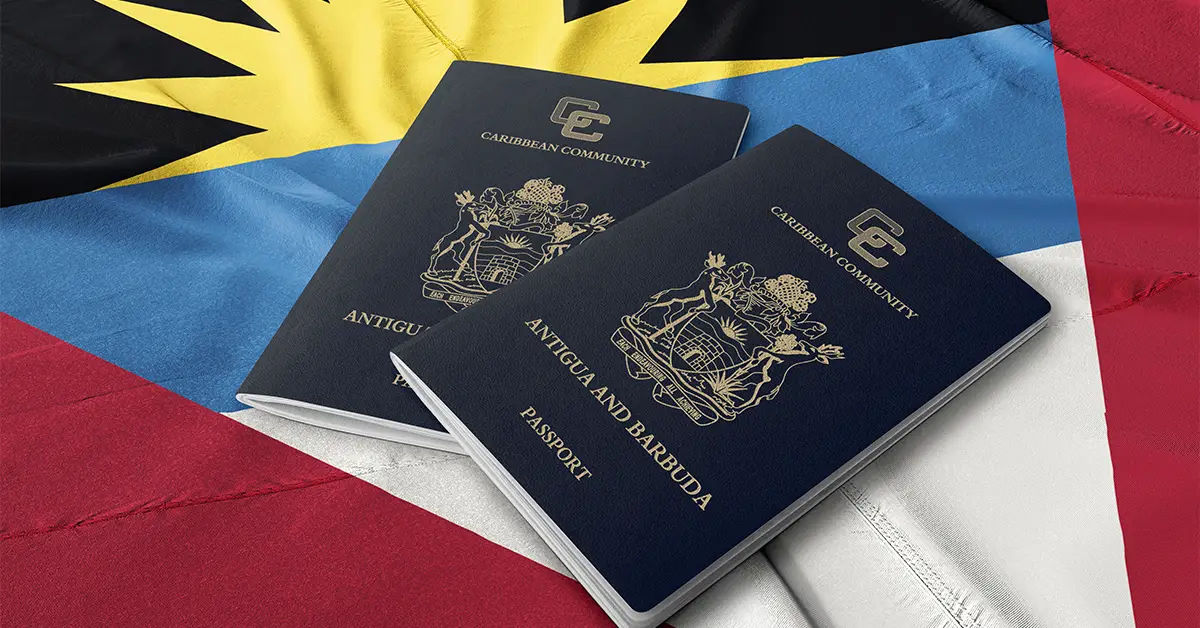
Antigua and Barbuda citizenship by investment is one of the options Vietnamese investors consider when seeking a second passport at a reasonable cost. The programme was established in 2013 and is run by the Citizenship by Investment Unit (CIU) within the Office of the Prime Minister of Antigua and Barbuda.
With a minimum investment of USD 230,000, a processing time of 3-6 months and no residence requirement before approval, this is one of the Caribbean residence-and-citizenship-by-investment programmes favoured by international investors. This article analyses in detail the 4 investment routes, the benefits, the conditions and the application process.
Message
An overview of Antigua and Barbuda
Antigua and Barbuda is a twin-island nation in the Eastern Caribbean, a member of the Commonwealth and of the United Nations. The country covers around 440 km² with a population of approximately 100,000, its economy resting mainly on tourism, which accounts for around 60% of GDP.
According to information fromthe Antigua and Barbuda Citizenship by Investment Unit (CIU), websitehere, the country has 365 beaches with crystal-clear waters, and is regarded as one of the most beautiful destinations in the world. Its main tourist markets comprise the United States, Canada and Europe.
English is the official language. The legal system is inherited from English law. The Eastern Caribbean Dollar (XCD) is pegged to the USD at USD 1 = XCD 2.7, helping to ensure financial stability.
A detailed article onthe country of Antigua and Barbuda.
Considering a residency programme? The Prosperous Living Investment team assesses your profile free of charge and advises on the pathway that fits your goals.
How the Antigua and Barbuda citizenship by investment programme works
The citizenship by investment programme was established under the Citizenship by Investment Act 2013 and the Citizenship by Investment Regulations 2014. This legislation allows the government to grant citizenship to foreign nationals making a substantial economic contribution to the country.
Since its launch, the programme has attracted more than 5,200 investors and granted citizenship to more than 9,000 new citizens. It is one of the 5 Caribbean CBI programmes still operating, alongside St Kitts and Nevis, Dominica,Grenadaand Saint Lucia.
In August 2024, the minimum contribution to the National Development Fund (NDF) was raised from USD 100,000 to USD 230,000. This adjustment came as the Caribbean CBI programmes harmonised their price floors under an agreement with the European Union to maintain Schengen visa-free rights.
Four investment routes to Antigua and Barbuda citizenship
Applicants may choose 1 of 4 investment routes. Each route suits different financial objectives and family sizes.
Route 1: contribution to the National Development Fund (NDF)
This is the most popular route, used by the majority of investors because of its low cost and simple procedure. The contribution is non-refundable and goes to the economic and social development projects of Antigua and Barbuda.
The contribution levels are as follows:
- Main applicant or family of up to 4: USD 230,000
- Each additional member from the 5th onwards: USD 15,000
- Families of 6 or more may consider the UWIF route (see below)
Route 2: contribution to the University of the West Indies Fund (UWIF)
This route is designed specifically for families of 6 members or more. The contribution supports the University of the West Indies, the leading university in the Caribbean region, and includes 1 year’s tuition for 1 family member.
Contribution level: USD 260,000 for a family of 6, including the application processing fee for up to 6 people. Per head, this is the most economical route for large families.
Route 3: government-approved property investment
Applicants buy property in projects approved by the CIU, usually holiday villas, resorts or tourist apartments. The minimum investment is USD 300,000 and the property must be held for at least 5 years.
Two investors may invest jointly in 1 project, each contributing a minimum of USD 200,000. After 5 years, the asset may be resold to another CBI investor. This route suits investors who want to preserve the value of the asset and expect rental returns during the holding period.
Route 4: business investment
This route has 2 options depending on the form of investment:
- Individual investment in an approved business: a minimum of USD 1,500,000
- Joint investment by 2 or more investors in a business project with a total value of USD 5,000,000, each contributing a minimum of USD 400,000
The approved sectors comprise tourism, manufacturing, agriculture and technology. This is the route least chosen by Vietnamese investors because of the high capital level and the requirement to actually manage a business.
Additional costs beyond the main investment
Besides the main investment, applicants need to allow for the following additional fees:
- Government application processing fee
- Due diligence fee: around USD 7,500 for the main applicant, USD 4,000 for the spouse and each dependant aged 12 and over
- Passport issue fee
- Oath of allegiance fee
- Lawyer and licensed agent fees
The true total cost is usually around USD 20,000 – 30,000 above the published floor, depending on the number of family members and the investment route.
The dependants who may be included in an application
The Antigua and Barbuda programme has a relatively flexible family policy compared with the other CBI programmes in the region. The main applicant may include the following dependants in an application:
- A lawful spouse
- Dependent children under 30, together with their spouses and children
- Unmarried siblings
- Dependent parents and grandparents aged 55 and over
A distinctive feature is that the programme allows siblings to be included in an application, where many other CBI programmes have no such option.
The benefits of the Antigua and Barbuda passport
The Antigua and Barbuda passport brings considerable benefits in global mobility, tax and residence rights. This is the main reason this CBI programme attracts international investors.
Visa-free travel rights
Theo Henley Passport Index, the Antigua and Barbuda passport allows visa-free entry or visa on arrival to more than 150 countries and territories, comprising:
- The European Schengen area: stays of up to 90 days in every 180
- The United Kingdom: stays of up to 180 days (because Antigua and Barbuda is a Commonwealth member)
- Singapore, Hong Kong, South Korea, Malaysia
- The other Caribbean countries within CARICOM
Note: Antigua and Barbuda citizens still need a visa to enter the United States, Canada and Australia. However, holders of an Antigua and Barbuda passport may apply for the United States E-2 visa to do business in the United States, a benefit Vietnamese citizens do not have.
Tax advantages
Antigua and Barbuda applies a favourable tax system to non-resident residents:
- No worldwide personal income tax
- No inheritance tax
- No wealth tax
- No capital gains tax
However, actually enjoying the tax advantage depends on the applicant’s country of tax residence, not merely on Antigua and Barbuda citizenship.
Residence rights and passing citizenship to future generations
Antigua and Barbuda citizens have the right to live, work and study in the country. Citizenship is granted permanently and may be passed to future generations by descent. Antigua and Barbuda accepts dual nationality, so investors need not renounce their current citizenship.
Find out more aboutretirement in Antigua and Barbuda.
Residence and citizenship retention requirements
The Antigua and Barbuda programme currently has the lightest residence requirement of the Caribbean CBI programmes. Specifically, new citizens must spend at least 5 days in Antigua and Barbuda during the first 5 years after citizenship is granted.
According to information published on the official CIU website, the government plans to raise the minimum residence requirement to 30 days. This draft is part of the negotiation process with the European Union to maintain Schengen visa-free rights. However, as at April 2026, the 5-day rule remains in force.
There is no residence requirement before filing an application or during processing. This means investors can complete the entire process without setting foot in Antigua and Barbuda.
Eligibility and application documents
To be eligible to apply for Antigua and Barbuda citizenship by investment, the main applicant must meet the following basic criteria:
- Aged 18 or over
- In good health, with no serious infectious disease
- No criminal record
- Lawful financial means, with the origin of the investment capital capable of proof
- Passing a comprehensive security screening
Some countries are on the CIU’s restricted list, including countries under international sanctions. Citizens of these countries may still apply where they emigrated before reaching adulthood or have been continuously and habitually resident in another country for at least 10 years.
The basic document list
The documents to be prepared usually comprise:
- A valid passport with at least 6 months remaining
- Birth certificate (original or notarised copy)
- Marriage certificate (where applicable)
- Police certificates from every country of residence for more than 6 months since the age of 16
- Medical certificate
- Proof of the source of capital and finances
- Bank and professional reference letters
- Passport photographs
All foreign documents must be legalised byApostilleor consular certification depending on the issuing country.
The application process and timescale
The Antigua and Barbuda citizenship by investment process divides into clear stages, usually lasting 3-6 months from the date a complete application is filed:
- Advice and choice of investment route: the licensed agent carries out a preliminary assessment of the case and advises on choosing the appropriate route.
- Preparing the documents: gathering, translating and notarising all the documents required by the CIU.
- Filing through a licensed agent: foreign nationals cannot file directly with the CIU themselves. Under the rules, applications must be filed through an agent licensed by the Government of Antigua and Barbuda (an Authorized Agent or Authorized International Marketing Agent).
- Security screening (Due Diligence): the CIU carries out background, source-of-wealth and international security checks. This is the most important stage and lasts 3-4 months.
- Approval in principle: having passed the screening, the applicant receives the approval in principle letter.
- Making the investment: transferring the NDF/UWIF contribution or completing the property or business transaction.
- Oath of allegiance and receipt of the passport: the applicant signs the oath of allegiance and receives the certificate of naturalisation together with the Antigua and Barbuda passport.
Processing times may vary with the volume of applications at the CIU. In April 2026, some applications are being processed more slowly than the published times because of the rise in application numbers.
A comparison with the other Caribbean CBI programmes
A detailed articlecomparing the Antigua and Barbuda CBI with the other Caribbean citizenship programmes.
Antigua and Barbuda has several distinctive features when compared with the 4 remaining Caribbean CBI programmes:
| Criterion | Antigua and Barbuda | St Kitts and Nevis | Grenada | Dominica | Saint Lucia |
|---|---|---|---|---|---|
| Minimum fund contribution | $230,000 USD | $250,000 USD | $235,000 USD | $200,000 USD | $240,000 USD |
| Minimum property investment | $300,000 USD | $325,000 USD | $270,000 USD | $200,000 USD | $300,000 USD |
| Residence requirement | 5 days/5 years | None | None | None | None |
| Visa-free | 150+ countries | 155+ countries | 140+ countries | 150+ countries | 145+ countries |
| United States E-2 visa | Yes | Yes (treaty) | Yes (treaty) | None | None |
Antigua and Barbuda’s strengths are its reasonable cost for large families (through UWIF), its flexible family policy (including siblings) and Schengen visa-free rights. Its weaknesses are the 5-day residence requirement, light though it is, and processing times that can be longer thanGrenada citizenship by investmentor St Kitts and Nevis at certain times.
For further reference on citizenship by investment or residence by investment programmes, investors may consult theMap of residence and citizenship by investment.
Risks and points to consider
Before deciding on Antigua and Barbuda citizenship by investment, investors need to weigh several risks:
Policy risk
The Caribbean CBI programmes are under growing pressure from the European Union, the United States and Britain. Schengen visa-free rights may be reviewed or suspended where a programme fails to meet the EU’s due diligence standards. From the end of 2026, Antigua and Barbuda citizens will have to register for ETIAS before entering the Schengen area.
Property investment risk
On the property route, the value of the asset on resale after 5 years may not meet expectations. The Caribbean property market depends heavily on the tourism industry and is exposed to natural disasters such as hurricanes.
Screening risk
An application may be refused where inaccurate information or a problem in the criminal record is found. In that case, the due diligence fee is not refunded. Investors need to work with a reputable agent to make sure the application is transparent from the outset.
Conclusion
Antigua and Barbuda citizenship by investment is a sensible option for Vietnamese investors wanting a second passport at a moderate cost, with a clear process and a relatively quick turnaround. The minimum investment of USD 230,000 through the NDF, a family policy flexible enough to include siblings, and visa-free access to more than 150 countries are the programme’s standout features.
However, investors should note that the legal landscape is changing. The Schengen visa-free arrangements may be adjusted in future, and the minimum residence requirement may be raised to 30 days. The timing of an application is therefore also a factor to weigh.
For a clearer understanding of the process, the true costs and the route that suits an individual situation, investors should consult a specialist adviser. PLI provides full advisory services on the Antigua and Barbuda CBI programme as well as the other Caribbean programmes, supporting Vietnamese investors from the preliminary assessment stage through to receiving the passport.
Accompanying you on your journey in residency investment
The Prosperous Living Investment team advises on pathways, assesses profiles and manages investments transparently for every residency, citizenship and international property objective.
Free profile assessmentWhere life gets prosperous