

Healthcare in Antigua and Barbuda

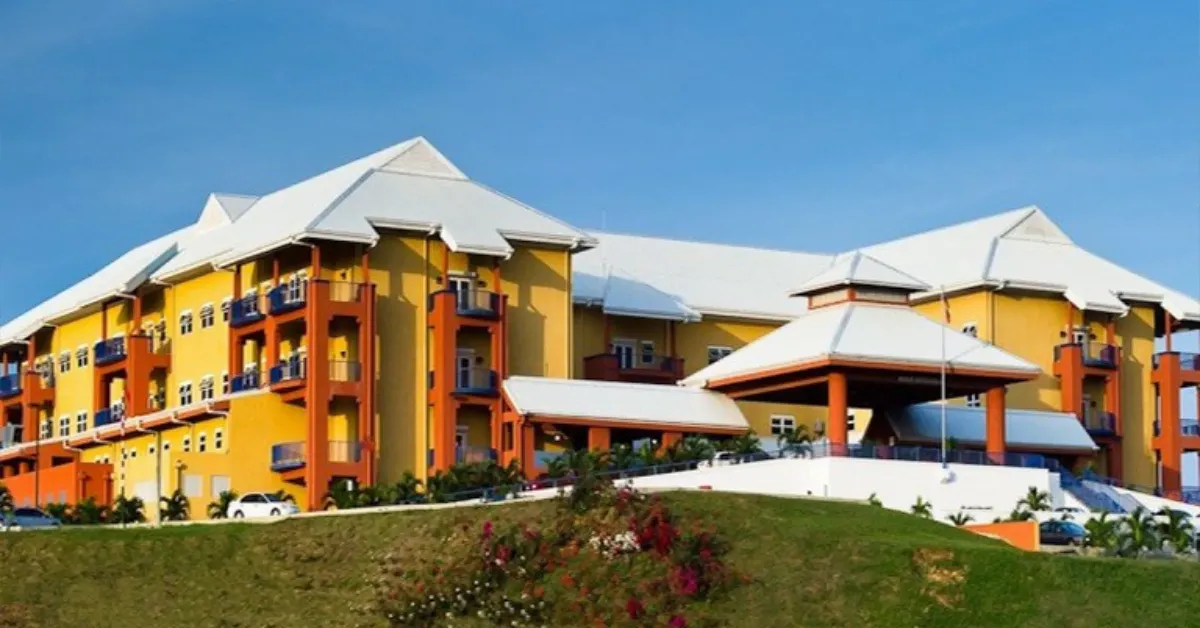
Healthcare in Antigua and Barbuda is a system managed by the Ministry of Health, Wellness and Environment and based on a social insurance model through the Medical Benefits Scheme (MBS). The system provides almost free healthcare to citizens and legal residents, funded through payroll taxes and contributions from employers and employees. Total public health spending is 3.38% of GDP and accounts for 12.64% of government spending.
The health system has two main components: public healthcare provided by the state through the MBS, and private healthcare through private clinics, specialist centres and hospitals. The main hospital is the Sir Lester Bird Medical Centre (formerly Mount St. John’s Medical Centre) in Saint John’s, recognised as one of the most modern medical facilities in the Eastern Caribbean. This article analyses the structure, services and policies of the national health system in detail.
Detailed article onthe country of Antigua and Barbuda.
Message
Legal framework and regulators
The Ministry of Health, Wellness and Environment is the government body responsible for state administration of health. The Ministry develops national health policy, manages public health facilities, accredits private health services, trains health workers and coordinates with international organisations such as the World Health Organization (WHO) and the Pan American Health Organization (PAHO).
According to the official website of theMinistry of Health, Wellness and Environment, the national health system is funded mainly from the Ministry of Finance budget. The government commits about 3% of GDP to health — higher than many middle-income countries. According to World Bank data for 2021, health spending per capita was $923.41 USD — reflecting substantial investment for a small island state.
Antigua and Barbuda has committed to implementing the WHO International Health Regulations (IHR) and is a member of the International Atomic Energy Agency (IAEA), enabling the country to respond to health emergencies, including radiation accidents. Cooperation with PAHO/WHO has been strengthened through financial support projects, workforce training and the transfer of medical technology.
Considering a residency programme? The Prosperous Living Investment team assesses your profile free of charge and advises on the pathway that fits your goals.
Medical Benefits Scheme (MBS)
The Medical Benefits Scheme (MBS) is the national health insurance programme, established to provide financial assistance and medicines to residents of Antigua and Barbuda. The MBS operates as a compulsory social insurance scheme, funded through payroll contributions from employers (3.5%) and employees (3.5%) — a total of 7% of gross salary.
MBS member benefits:
- Examination and treatment at public hospitals: free for most services
- Medicines dispensed at 6 satellite pharmacies: according to the National Drug Formulary
- Reimbursement for services: laboratory tests, X-rays, surgery, ultrasound and dental care
- Smartcard: issued after 6 months of contributions
MBS pharmacies are located on Nevis Street, at Clare Hall and on Browne’s Avenue in Saint John’s. Non-citizens must have lived legally in Antigua and Barbuda for 12 continuous months before enrolling in the scheme. This is an important point for foreigners who want to settle long-term in the country.
Hospitals and medical facilities
The Sir Lester Bird Medical Centre (SLBMC) is the main hospital of Antigua and Barbuda, renamed from Mount St. John’s Medical Centre in 2024. The hospital is located on Queen Elizabeth Highway, Saint John’s, and is the main referral hospital for the whole country. It has more than 600 staff, including more than 200 medical professionals.
SLBMC’s main services:
- Inpatient/outpatient examination and treatment: all core specialities
- Emergency Services: open 24/7
- Diagnostic Imaging: X-ray, CT, MRI, ultrasound
- Specialist treatment: cardiology, urology, ophthalmology, obstetrics and gynaecology, surgery
- Intensive care (ICU): critical care unit
Barbuda has a small SLBMC-run medical facility with 8 beds, providing basic healthcare to the island’s residents. Complex cases are transferred to Antigua by emergency ferry or medical helicopter. The system ensures that people on Barbuda have access to basic healthcare despite living on a small island.
The health system of Antigua and Barbuda is organised into 6 medical districts, each overseen by a medical officer. A total of 25 public health clinics are spread across the country, ensuring every major residential area is within 3 km of a clinic. The clinics provide primary care, dental care, screening for non-communicable diseases and some basic specialist services.
The private health sector and private insurance
Alongside the public system, healthcare in Antigua and Barbuda includes several private clinics and hospitals serving foreigners and those able to pay. Adelin Medical Clinic is the largest private clinic, offering specialist services, day surgery and modern healthcare services. Several smaller private clinics specialise in dentistry, obstetrics and gynaecology, and family medicine.
Indicative private healthcare costs:
- General practitioner consultation: $40–$80 USD per visit
- Specialist consultation: $70–$150 USD per visit
- Simple day surgery: $200-$500 USD
- Private health insurance for a middle-aged person: $240–$375 USD a month (including patient transfer)
Major health insurers operating in Antigua and Barbuda include Sagicor Life, MSH International, BlueCross BlueShield Global and several regional providers. International health insurance is very important for foreigners living in Antigua long-term, and in particular should cover medical evacuation for complex cases requiring transfer to the United States, Cuba or neighbouring Caribbean islands.
Formulary and pharmaceuticals
Antigua and Barbuda has a National Drug Formulary providing 380 different medicines through the public health system. The formulary covers medicines for common conditions: cardiovascular disease, diabetes, high blood pressure, infectious diseases, mental disorders and basic cancer treatment. MBS members receive free medicines for most chronic conditions.
The Antigua Barbuda Central Medical Procurement Unit (ABCMPU) is the central body supplying medicines and medical supplies to SLBMC, public clinics and first responders. ABCMPU ensures a stable supply chain and medicines that meet international quality standards. Medicines are imported mainly from manufacturers in the United States, the United Kingdom, India and some CARICOM countries.
Private pharmacies in Saint John’s and the larger towns provide additional medicines not on the National Formulary. Non-citizens usually buy medicines at private pharmacies at higher prices. Some international prescriptions must be re-confirmed by a local doctor before purchase.
Epidemiological profile
Life expectancy in Antigua and Barbuda is about 76.9 years — higher than the world average (71 years). Women live about 4 years longer than men, a common pattern worldwide. Infant mortality is below 15 per 1,000 live births — reflecting a relatively good maternal and child health system.
Non-communicable diseases (NCDs) are the main health burden:
- Cardiovascular disease: 40% of deaths
- Diabetes: 12.5% of the population (above the global average)
- Cancer: 15% of deaths
- Stroke: 8–10% of deaths
- Obesity and high blood pressure: high prevalence among adults
Infectious diseases have low prevalence: HIV/AIDS below 1% of adults and tuberculosis below 1%. Dengue fever and the Zika virus have caused a few small outbreaks, controlled through mosquito eradication programmes and community education. Antigua and Barbuda is a member of the Caribbean Public Health Agency (CARPHA) — the regional disease surveillance body.
Mental health
Healthcare in Antigua and Barbuda includes mental health services integrated into the MBS system. Clarevue Psychiatric Hospital is the main specialist facility, located in the Skerritts area near Saint John’s. The hospital provides inpatient and outpatient treatment for mental disorders, substance abuse and psychological conditions.
The government has adopted a National Strategic Plan for Mental Health with specific goals: integrating mental health services into primary care, reducing the social stigma of mental illness, strengthening training for health workers and expanding community services. However, mental health remains a challenging area in the country, with rates of depression and anxiety rising after the COVID-19 pandemic and Hurricane Irma in 2017 (for the people of Barbuda).
International cooperation and regional health
Antigua and Barbuda is one of the member states working closely with PAHO/WHO on programmes to strengthen health capacity. According to information published on the website ofPAHO, cooperation projects include expanded immunisation, control of non-communicable diseases, disaster emergency response, health workforce training and building health information systems.
Cooperation with other partners:
- Cuba: a bilateral health cooperation programme — Cuban doctors serve in Antigua, and Antiguan medical students study in Cuba at preferential rates
- United States: specialised medical training, particularly through Embassy programmes
- United Kingdom: cooperation through the Commonwealth
- Cancer Center of the Eastern Caribbean: a public-private partnership (PPP) providing high-quality cancer treatment services
The country also takes part in the Caribbean Disease Screening and Surveillance Network — a regional initiative for sharing data, experience and resources among CARICOM member states.
Healthcare for foreigners and investors
Foreigners who obtain citizenship of Antigua and Barbuda through the citizenship by investment programme (CBI) are entitled to full MBS benefits after meeting the requirements of 12 months’ legal residence and 6 months of contributions. However, since many CBI citizens do not live in Antigua permanently, they usually choose international health insurance rather than relying on the MBS.
Health advice for foreigners:
- International health insurance is essential: with medical evacuation cover for complex cases
- Prepare your regular medicines: bring enough from home for several months
- Find a family doctor in Antigua: set up a personal medical record as soon as you settle
- Keep vaccinations up to date: in line with WHO recommendations for the Caribbean region
- Plan for evacuation: know the procedure for medical transport to the United States or Cuba
For Vietnamese people interested in the citizenship by investment programme, the healthcare system of Antigua and Barbuda is a factor to consider alongside others such as tax, education and the living environment. Details of the investment programme are set out in the articleAntigua and Barbuda Citizenship by Investment.
Healthcare in Antigua and Barbuda — a summary
Healthcare in Antigua and Barbuda is a relatively well-developed system compared with many other Caribbean island states. The combination of the universal MBS insurance scheme, the modern Sir Lester Bird Medical Centre, a network of 25 community health clinics and close cooperation with PAHO/WHO provides a solid foundation for national healthcare.
However, important challenges remain: a high burden of non-communicable diseases, dependence on imported medicines and medical supplies, limited high-end specialist services requiring patients to be transferred abroad, and financial pressure on the public system. Strengthening regional cooperation, investing in medical technology and developing the health workforce will be key to the future.
Accompanying you on your journey in residency investment
The Prosperous Living Investment team advises on pathways, assesses profiles and manages investments transparently for every residency, citizenship and international property objective.
Free profile assessmentWhere life gets prosperous