


Life in Bulgaria is among the lowest-cost in the European Union, while offering all the amenities of an EU, Schengen and eurozone country. According to 2026 data from Numbeo and Bulgaria’s National Statistical Institute (NSI), a single person in Sofia can live comfortably on 800–1,200 EURO a month, while a family of four needs about 2,500–4,000 EURO including rent.
Sau khi Bulgariafully joined the eurozone on 01/01/2026, so price levels have adjusted significantly — especially for services and restaurants. This article analyses in detail the cost of living by city, culture and living environment, transport and healthcare, and specific points for Vietnamese people considering life in Bulgaria after obtaining a residence card.
See thethe Quality of Life Indexof other countries around the world.
Message
Cost of living — the most important factor
The cost of living is the top consideration when assessing life in Bulgaria. Since joining the eurozone in 2026, average spending has risen 10–20% compared with before, especially for eating out and entertainment. However,according to Numbeo data, the overall level is still 50–70% lower than in Western European countries such as Germany, France or the Netherlands.
In Sofia, a single person with a basic lifestyle needs about 800–1,200 EURO a month including rent, and a comfortable lifestyle requires 1,200–1,600 EURO. In Plovdiv — the second-largest city — costs are about 15–20% lower than in Sofia, at 600–1,000 EURO for a single person. Varna is in between, at about 700–1,100 EURO. These are the real costs of living in Bulgaria, excluding special expenses such as international travel or international school fees.
For a family of four, the budget rises accordingly. Sofia requires about 2,500–4,000 EURO a month, Plovdiv 1,800–3,000 EURO and Varna 2,000–3,300 EURO. Higher spending relates to larger rentals (3 bedrooms or more), international school fees (6,000–18,000 EURO a year per child) and family car costs. Life in Bulgaria at an international family standard usually requires a budget of 3,000–5,000 EURO a month in Sofia.
Considering a residency programme? The Prosperous Living Investment team assesses your profile free of charge and advises on the pathway that fits your goals.
Rents in the main cities
Rent is usually the biggest expense when setting up life in Bulgaria. In Sofia, a new studio or one-bedroom apartment in the city centre rents for about 500–800 EURO a month in 2026. Southern and eastern Sofia (Lozenets, Iztok, Vitosha) — areas favoured by many international residents — have rents 10–20% above the average.
A two-bedroom apartment in Sofia rents for 700–1,200 EURO a month depending on location and condition, and a three-bedroom apartment for 1,000–1,800 EURO. The upscale areas of Boyana and Dragalevtsi at the foot of Mount Vitosha have villas renting for 2,500–5,000 EURO a month — suitable for HNWI families who want to live in Bulgaria in a private house with a garden.
In Plovdiv, rents are 30–40% lower than in Sofia. A one-bedroom apartment in the centre costs about 350–550 EURO and a two-bedroom 500–800 EURO. Many foreign residents consider Plovdiv the best choice for balancing cost and quality of life in Bulgaria. Varna has rents similar to Plovdiv in the low season, rising 30–50% in summer due to tourist demand.
The standard deposit is 1–2 months’ rent. Standard residential leases in Bulgaria run for 12 months and are notarised at a local office. Foreign tenants should make sure the deposit refund conditions are set out in writing — a common source of complaints among the international community in Sofia.
Food and service costs
Food is the next major expense in life in Bulgaria. Prices are generally low, especially at discount supermarket chains such as Lidl, Kaufland, Billa and Fantastico. A single person spends 250–400 EURO a month on groceries, and a family of 4 about 600–900 EURO. Fresh produce from local markets (Zhenski Pazar in Sofia, Kapana market in Plovdiv) is 15–25% cheaper than in supermarkets but seasonal.
Eating out has become noticeably more expensive since the euro. A basic meal at a local restaurant costs about 8–15 EURO per person, and 25–50 EURO at an upscale restaurant. Discounted lunch menus at many Sofia restaurants cost 6–10 EURO, including soup, a main course and a drink. Coffee at a local café costs 1.5–3 EURO, and 3–5 EURO at international chains such as Starbucks.
Utility bills for an 80m² apartment in Sofia, including electricity, heating, water and internet, average 100–250 EURO a month depending on the season. In winter, from November to March, heating bills rise significantly in older apartments — reaching 200–400 EURO a month for a 100m² apartment. Fibre-optic internet at 100–500 Mbps costs 15–25 EURO a month — among the best quality in the EU.
Personal care and beauty services are at the EU average. A men’s haircut costs 10–25 EURO, a women’s salon visit 30–80 EURO and a spa massage 40–80 EURO an hour. A standard gym costs 30–60 EURO a month, and premium chains such as Pulse Fitness 80–120 EURO. These are services where quality matches Western Europe at only 50–60% of the price.
The transport system
The transport system is one of the strengths of life in Bulgaria, especially since joining Schengen in 2025. Sofia has the most developed public transport network, with metro, trams, buses and trolleybuses. An unlimited monthly pass costs 26 EURO for adults. A single ticket costs 0.80 EURO on any mode of transport.
Sofia Metro has 2 lines, with 3 more under construction, connecting the airport to the city centre in 30 minutes. It is the most modern infrastructure in Eastern Europe — Sofia Airport handled more than 7 million passengers in 2024, with direct flights to most European capitals since joining Schengen. Plovdiv and Varna rely mainly on buses — they have no metro or trams.
The domestic motorway network connects Sofia with Plovdiv (140 km, 1.5 hours’ drive), Burgas (370 km, 4 hours) and Varna (440 km, 5 hours). Road tolls are paid through a vignette system costing 87 EURO a year for a passenger car. Since Schengen, there are no border checks when crossing into Greece, Romania and other EU countries — a factor that makes cross-border living in Bulgaria easier.
A private car is a popular choice for families setting up life in Bulgaria. New cars cost about the same as in Western Europe (15,000–35,000 EURO for a mid-range family car), insurance costs 200–500 EURO a year and petrol 1.4–1.7 EURO a litre. Newly arrived Vietnamese people can exchange a Vietnamese driving licence for a Bulgarian one through the Bulgarian Embassy in Hanoi — without retaking the test.
Climate and natural environment
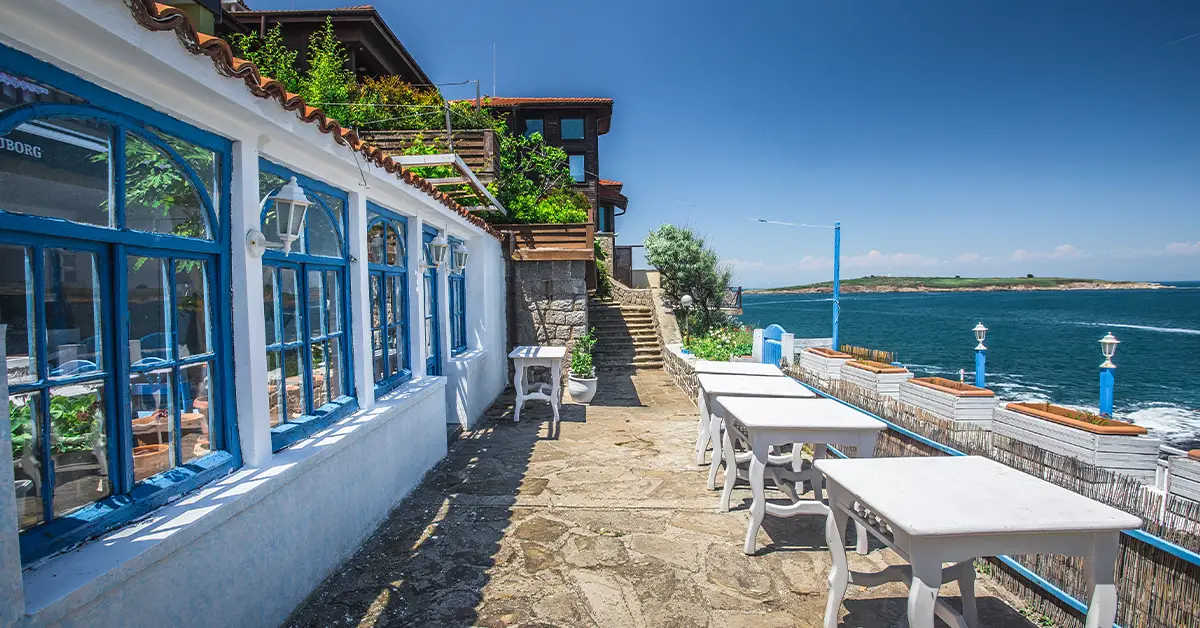
Bulgaria’s climateis transitional between temperate continental and Mediterranean, giving life in Bulgaria its own distinctive character. Winter lasts from November to March, with average temperatures of 0 to -5°C in Sofia and snowfall on 40–60 days a year. Summer, from June to September, is warm, with average temperatures of 25–30°C and lower humidity than Spain and Italy. Spring and autumn are short but beautiful, with green trees and golden leaves.
High mountain areas such as Bansko, Borovets and Pamporovo become Eastern Europe’s leading ski resorts in winter. A one-day ski pass in Bansko costs 35–55 EURO, and in the low season 7-day all-inclusive ski packages cost 400–700 EURO including hotel, ski pass and meals. For families who love winter sports, this is a major advantage of life in Bulgaria compared with the equivalent costs in Austria or Switzerland.
The 354 km Black Sea coast is a summer holiday destination. Sunny Beach, Albena, Sozopol and Sveti Vlas are well-known resorts — an important factor enriching life in Bulgaria. Many Sofia residents have a second home on the Black Sea to escape the summer heat. Coastal property prices range from 1,200 to 2,500 EURO/m² depending on location — significantly lower than in Spain and Italy.
Sofia’s air quality is a common weakness reported by the international community. In winter there is air pollution from coal and wood heating in many suburban households. Southern Sofia (Lozenets, Vitosha) and the northern suburbs have significantly better air quality. Plovdiv and Varna have better air quality than Sofia throughout the year.
The international and Vietnamese communities in Bulgaria
The international community in Bulgaria is spread across many nationalities and purposes of residence. Sofia has large communities from the UK, the US, Germany, France, Russia and China — served through bilateral chambers of commerce, business clubs and international churches. Plovdiv has a smaller but closer-knit community, centred on the old town and the universities.
The Vietnamese community in Bulgaria numbers about 500–800 people as of 2025 — mostly living in Sofia. It is a long-established community dating from the labour cooperation period of the 1980s and now works mainly in restaurants, small businesses and import-export. The Vietnamese Embassy in Sofia is the main point of support for newly arrived Vietnamese.
Some Vietnamese restaurants have been operating in Sofia for more than 20 years, serving phở, bún and Vietnamese rice dishes at 8–15 EURO a portion. Asian supermarkets in the Vitoshka and Mladost areas sell Vietnamese food, spices and hard-to-find products such as fish sauce, dried rice noodles and fresh herbs. However, because the community is small, access to Vietnamese goods is not as varied as in Prague or Berlin.
Compared with the large Vietnamese communities in Germany, France and the Czech Republic, the community in Bulgaria is much smaller. This is worth considering for Vietnamese people who value having a community of compatriots when setting up life in Bulgaria — especially older people unfamiliar with the local language. On the other hand, Vietnamese people in Bulgaria are better able to integrate deeply into local life, without being confined to an “expat bubble” as in larger markets.
Culture and leisure
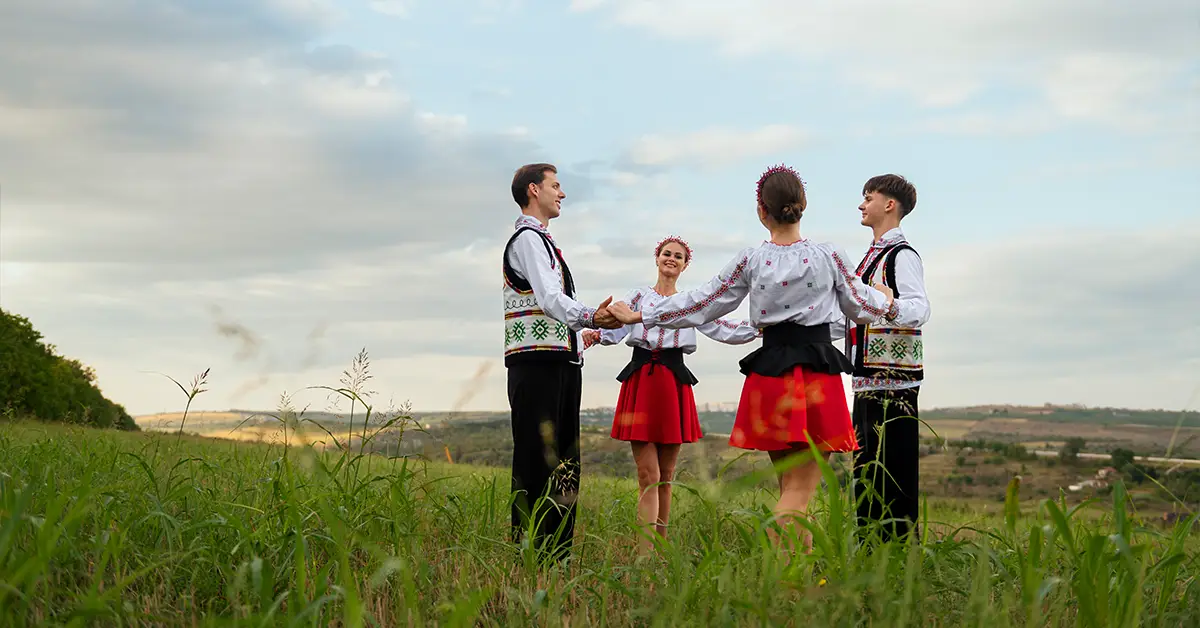
Bulgarian culture is a unique blend of Slavic traditions, Ottoman heritage and Byzantine influence — giving life in Bulgaria its depth. Sofia has more than 30 museums, 20 theatres and dozens of concert halls. The Ivan Vazov National Theatre and the Sofia Opera stage international productions with tickets at 15–60 EURO — 60% cheaper than in Vienna or Milan. The biggest cultural festival is Sofia Music Weeks in summer.
Sofia has a wide range of international restaurants serving Italian, French, Japanese, Korean, Chinese, Middle Eastern and Vietnamese cuisine. A fine-dining meal at a Michelin guide restaurant in Sofia costs 50–120 EURO per person — about 30–50% of the equivalent price in Western Europe. The cafés of Plovdiv’s old town are highly rated for their atmosphere and service.
Life in Bulgaria outside the cities is also varied. Ancient monasteries such as Rila, Bachkovo and Troyan are cultural and spiritual destinations. Agritourism is growing in the Rose Valley around Kazanlak — which produces 70% of the world’s commercial Rosa damascena oil. The annual Rose Festival in June attracts international visitors.
Shopping in Sofia is varied — from modern malls such as Paradise Center and Mall of Sofia to the traditional shopping street of Vitoshka. Popular international fashion brands (Zara, H&M, Massimo Dutti, Mango) all have stores. Luxury goods are concentrated in Lozenets and some high-end malls such as Park Center Sofia.
Steps to setting up life in Bulgaria
For Vietnamese investors consideringBulgaria residency by investment, the pathway to setting up life in Bulgaria follows 5 stages. Stage 1 is preparation in Vietnam — obtaining a Visa D, having documents translated and notarised, buying flights and booking a hotel for the first 30 days.
Stage 2 of starting life in Bulgaria is arriving and dealing with the initial administrative procedures. Within 14 to 90 days depending on the type of visa, submit a residence permit application to the Migration Directorate. Register for a tax number (ЕНЧ — personal identification number for foreigners) and open a bank account with Unicredit Bulbank, DSK Bank or Postbank. Register for national health insurance (NHIF) or private insurance.
- Detailed article onHealthcare in Bulgaria
- Detailed article onBulgaria’s tax system.
Stage 3 is finding long-term housing for life in Bulgaria. Imot.bg and Olx.bg are the two main sources for the rental market. Using an estate agent (broker) can speed up the process, but the fee is equivalent to 1 month’s rent. After signing a lease, register your address at the local residence office (адресна регистрация).
Stage 4 is registering for public services and buying essentials. Get a SIM card with A1, Yettel or Vivacom (15–25 EURO a month for unlimited 4G/5G data). Sign up for fixed internet and television. Buy furniture at IKEA Sofia and electronics at Technopolis or Technomarket.
Stage 5 is social integration — a process lasting 6–12 months. Learn Bulgarian to A1 level (in preparation for the naturalisation requirement after 5 years). Join international community groups such as InterNations Sofia, Sofia Expats and Vietnamese Facebook groups. For families with young children, enrol them in an international school or a bilingual public school depending on the budget.
Summary
Life in Bulgaria offers a balance of low costs, a stable quality of life and full EU amenities following eurozone membership from 2026. Sofia is the best choice for working people and families with children who need international schools, Plovdiv suits those looking for the lowest costs, and Varna is the choice for people who love the sea and a slower pace of life.
For Vietnamese investors consideringGolden Visa BulgariaorBulgarian citizenship, experiencing life in Bulgaria first-hand through 30–90 day visits before committing to an investment is a necessary step. The specific climate, community and living environment may not suit every family — and a decision to invest more than 500,000 EURO should not be based entirely on marketing materials. The combination of low taxes, a strong EUpassportand competitive living costs makes Bulgaria a destination worth considering among EU options.
Accompanying you on your journey in residency investment
The Prosperous Living Investment team advises on pathways, assesses profiles and manages investments transparently for every residency, citizenship and international property objective.
Free profile assessmentWhere life gets prosperous